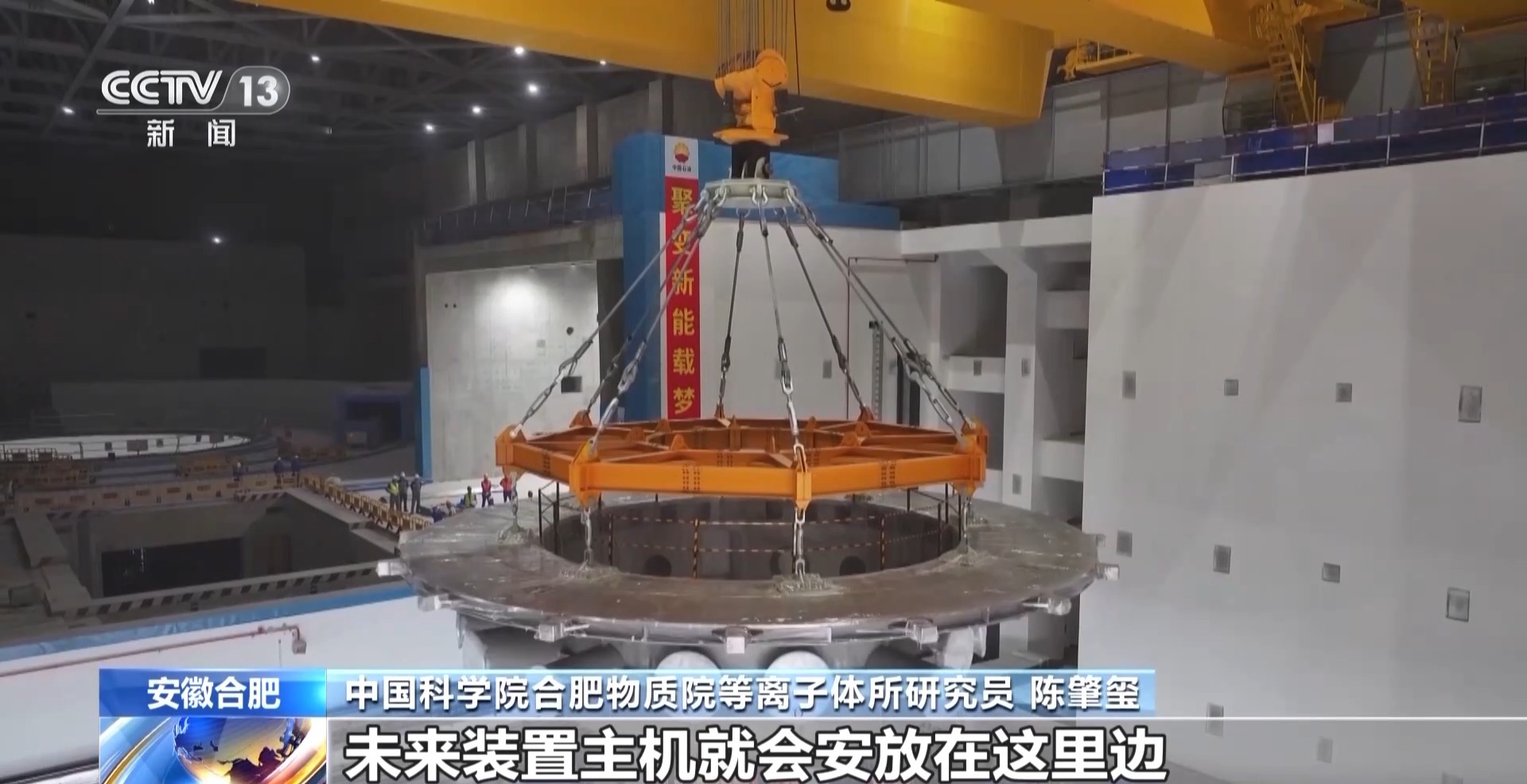
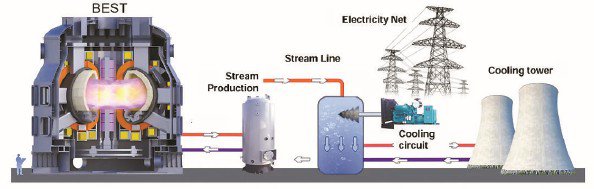
紧凑型聚变能实验装置BEST

Search documents
可控核聚变进入向商业化转型关键时期
Zhong Guo Dian Li Bao· 2026-01-29 03:01
Core Insights - Fusion energy is becoming a global competitive hotspot, transitioning from 'science' to 'energy' with significant breakthroughs in controllable nuclear fusion technology [1] - The industry is entering a critical phase of commercialization, supported by collaboration among academia, research, and industry [1] Investment Trends - Financial capital is rapidly entering the controllable nuclear fusion sector, acting as a crucial lever for technological breakthroughs and industry incubation [2] - The Hefei Future Fusion Energy Venture Capital Fund has been established with an initial investment of 1 billion yuan to support core technology research in the fusion field [3] Fund Management and Selection Criteria - The fund will focus on the comprehensive quality of enterprise teams, emphasizing market insight, financial management, and strategic planning alongside technical capabilities [4] Investment Duration and Strategy - The fund's duration is set at 15 years to align with the long-term development needs of projects, as the industry is still in its infancy and requires substantial funding for research and project implementation [6] - Investment opportunities will vary based on the type of capital, with long-term funds focusing on device companies and short-term funds targeting equipment and materials for quicker returns [6] Technological Developments - Multiple countries are accelerating the commercialization of fusion power, with the goal of achieving fusion electricity generation by 2040 [6] - China is positioned among the leading nations in fusion energy research, with significant achievements such as the EAST device reaching over 1 million degrees Celsius for 1066 seconds [7] Educational Initiatives - The establishment of the "Future Energy College" at the University of Science and Technology of China aims to cultivate talent in controllable nuclear fusion, supported by the Ministry of Education and the Chinese Academy of Sciences [7] Technological Diversity - The controllable nuclear fusion sector is characterized by multiple parallel technological routes, including Tokamak and stellarator, which helps mitigate risks associated with a single technology path [9] - The industry is expected to converge towards a few mainstream technological routes in the future, despite the current diversity [9]
直击2026核聚变能科技与产业大会:从实验室走向产业化 为全球能源转型注入中国力量
Zheng Quan Ri Bao Wang· 2026-01-18 12:25
Core Insights - The 2026 Nuclear Fusion Energy Technology and Industry Conference was held in Hefei, Anhui Province, showcasing the progress of nuclear fusion from laboratory research to industrial application, emphasizing China's role in global energy transition [1] Technological Breakthroughs - The EAST superconducting tokamak achieved over 1 billion degrees Celsius for 1066 seconds in steady-state high-confinement plasma operation, marking a significant milestone in fusion technology [2] - The BEST project has made notable advancements, including the completion of the first PF magnet and the operation of a superconducting linear plasma device, indicating a rapid acceleration in fusion device manufacturing [2][3] - The future of the BEST project will see an increase in the self-sufficiency rate of core components, with 100% proprietary rights for the CRAFT ion cyclotron heating system and the development of high-strength low-temperature steel CHSN01 [3] Industry Development - The nuclear fusion industry has evolved from a conceptual stage to a comprehensive ecosystem encompassing basic research and result commercialization [4] - Significant contracts were signed at the conference, including major procurement agreements for the BEST device, with planned procurement projects exceeding 120 items and a total budget of nearly 10 billion yuan for 2026 [4] - The establishment of the Fusion Financial Institutions Alliance, comprising 130 Chinese financial and investment entities, aims to integrate finance with the nuclear fusion industry, facilitating the transition from research breakthroughs to industrial applications [5] Global Collaboration - China is enhancing international cooperation in fusion research through initiatives like the global release of the BEST project research plan and the signing of the Hefei Fusion Declaration [7] - Multiple countries have expressed interest in participating in the CFETR (China Fusion Engineering Test Reactor) construction, indicating the formation of a global fusion cooperation network [7] - The next five years are expected to see an expansion in global fusion financing, attracting more capital into the sector [7] Ecosystem Development - Hefei has attracted over 60 companies related to the nuclear fusion industry, creating a complete innovation ecosystem from basic research to engineering validation [6] - The conference highlighted the establishment of a new ecosystem for collaborative development among technology, industry, and capital [8]
追光逐日 中国可控核聚变点亮未来
Yang Shi Wang· 2026-01-13 04:09
Group 1 - The core concept of controllable nuclear fusion is to generate immense energy by mimicking the sun's principles on Earth, which has been officially included in China's future industrial system as a new economic growth point [1][5] - The "14th Five-Year Plan" emphasizes the strategic layout for future industries, particularly focusing on hydrogen energy and nuclear fusion energy [1] - The Hefei Future Science City is developing a cluster of large scientific devices for nuclear fusion, including the CRAFT facility and the BEST experimental device, which is expected to be completed by 2027 [3][5] Group 2 - The BEST device aims to achieve stable nuclear fusion reactions, with plans to conduct plasma physics experiments and potentially light the first lamp around 2030, laying the groundwork for commercial fusion power generation [5] - The integration of high-temperature and low-temperature superconducting magnets, along with advanced diagnostic technologies and AI for plasma control, is crucial for the compact design of the BEST device [3][5] - The goal is to achieve a fusion power output that is 20 to 30 times greater than the input, with potential fusion power reaching between 1.5 GW and 2 GW, which can then be converted into electricity for grid connection [5]

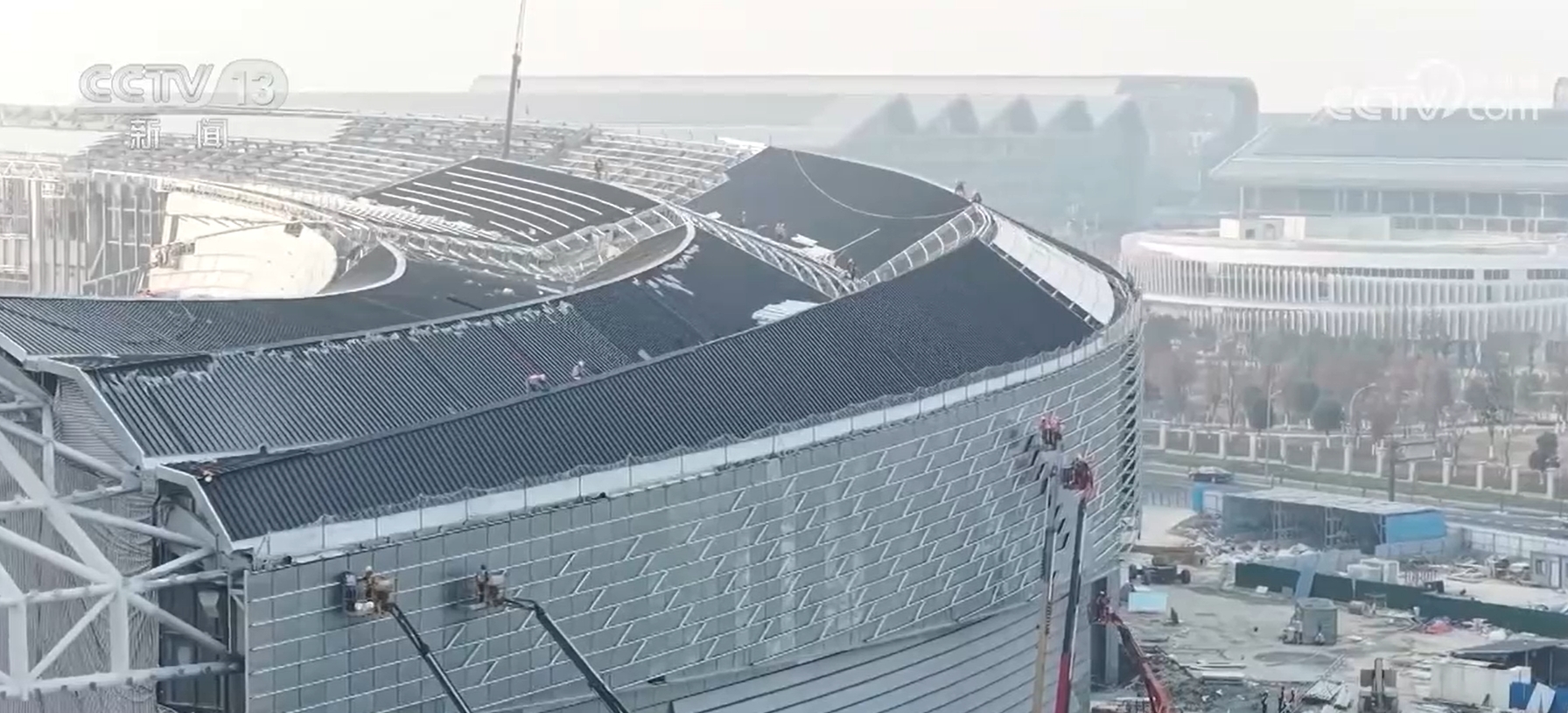
一线见闻丨从科学岛到大科学城 可控核聚变在这里“追光逐日”
Yang Shi Xin Wen· 2026-01-13 01:44
Core Insights - Controlled nuclear fusion is recognized as a future economic growth point in China's "14th Five-Year Plan," emphasizing the importance of hydrogen energy and nuclear fusion energy in the national industrial system [1] - The "15th Five-Year Plan" period is identified as a critical phase for the development of fusion energy in China, with significant advancements being made in Hefei, where three major fusion research facilities are being established [1] Group 1: Project Development - The compact fusion experimental device BEST is currently in the assembly phase, with key components like the vacuum chamber and magnetic support being installed [2] - BEST aims to mimic the sun's energy production through nuclear fusion and is expected to be completed by the end of 2027, with plans to conduct plasma physics experiments by 2030 [6] - The EAST facility has achieved significant milestones, including stable plasma operation for over 400 seconds and simulating conditions necessary for future fusion reactors [12] Group 2: Technological Advancements - The integration of both high-temperature and low-temperature superconducting magnets in the BEST device is intended to enhance its efficiency and compactness, utilizing advanced diagnostics and AI for plasma control [4] - The ongoing upgrades to the EAST facility are designed to support future fusion reactor research, expanding its operational parameters and capabilities [9] Group 3: Industry and Economic Impact - The Hefei region is developing a complete fusion energy industrial chain, with over 200 related enterprises established, covering areas from material development to power plant design and operation [19] - The local government aims to create a robust infrastructure for fusion energy, promoting the commercialization of fusion power and accelerating the application of derived technologies [21]
彰显中国自信!“数”看2025中国科技创新向极端条件迈进收获新突破
Yang Shi Wang· 2026-01-03 10:04
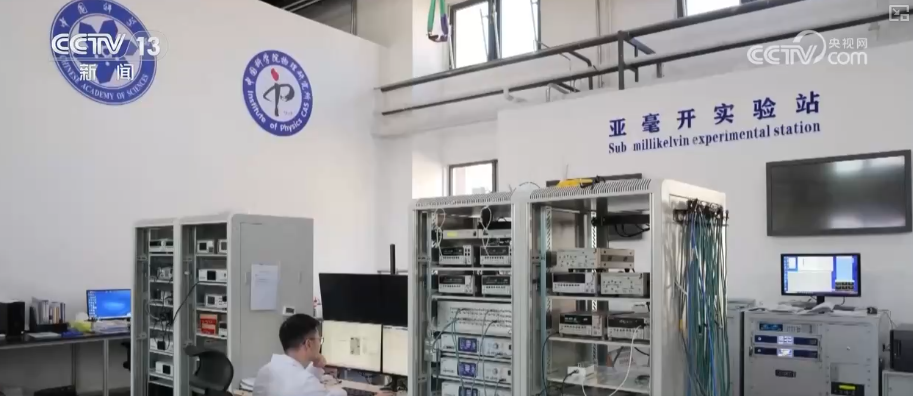
Core Insights - Extreme environments serve as a "touchstone" for technological innovation, enabling in-depth exploration of natural laws and the limits of life, thus driving scientific advancements and new technological breakthroughs [1] Group 1: Breakthroughs in Extreme Conditions - In February 2025, a comprehensive extreme conditions experimental facility was completed, capable of providing temperatures as low as 1 millikelvin, pressures exceeding 300 billion pascals, magnetic field strengths up to 26 teslas, and ultrafast light field pulse widths not exceeding 100 attoseconds, significantly enhancing China's capabilities in material science [2] - In September 2025, the world's largest supergravity centrifuge in Hangzhou was operational, achieving a maximum arm linear speed of 137 meters per second, generating 300 times Earth's gravity, and supporting a maximum load of 20 tons, simulating soil settlement over a century in a single day [4] - In 2025, China's first ice-capable manned deep-sea operation mother ship "Exploration No. 3" and the "Fighter" submersible successfully completed manned deep-sea missions in the Arctic, overcoming extreme conditions of -30°C and approximately 600 atmospheres [5][7] Group 2: Advances in Nuclear Fusion Research - The EAST (Experimental Advanced Superconducting Tokamak) achieved a world record of 100 million degrees Celsius and stable plasma operation for 1066 seconds in 2025, marking a significant leap from basic science to engineering practice in fusion energy research [8] - The EAST facility has conducted over 150,000 plasma operations since its inception in 2006, consistently setting new world records and maintaining international leadership in engineering and physics [15] - The construction of the next-generation fusion experimental device, BEST, is progressing, with plans to demonstrate fusion energy generation by 2030 [16][18] Group 3: Future Prospects in Extreme Condition Research - The establishment of advanced extreme condition experimental facilities is becoming a crucial paradigm in scientific research, aimed at discovering new materials, revealing new laws, and opening new applications [21] - China's focus on extreme conditions in deep-sea, high-altitude, and polar environments is expected to drive the development of multiple disciplines, exploring scientific questions related to material states, life behaviors, and cosmic evolution, thereby supporting innovations in new materials and energy sectors [23]
“合肥科技”闪耀2025十大科技新闻榜单
Xin Lang Cai Jing· 2025-12-25 17:23
Core Insights - Hefei has emerged as a focal city in the technology sector due to breakthroughs in nuclear fusion and quantum computing, as highlighted by the Central Radio and Television General Station's announcement of the "Top Ten Science and Technology News of 2025" [1][2] - The achievements include the "artificial sun" nuclear fusion device setting a record of "hundred million degrees for a thousand seconds" and the "Zuchongzhi No. 3" quantum computing prototype achieving a new world record [1][2] - China's initiation of an international scientific program in the field of fusion energy underscores its leading position in global technological competition [1] Nuclear Fusion Developments - The world's first fully superconducting Tokamak EAST device achieved significant results on January 20, successfully maintaining a high-confinement mode plasma operation at over a hundred million degrees for 1066 seconds, setting a new world record [1] - This achievement marks a critical turning point in fusion research, transitioning from basic scientific research to engineering practice, and significantly advances the development of fusion energy [1] Quantum Computing Advancements - On March 3, the University of Science and Technology of China announced the successful construction of the 105-qubit superconducting quantum computing prototype "Zuchongzhi No. 3," which solved the "quantum random circuit sampling" task at a speed one trillion times faster than the current fastest supercomputer [2] - This breakthrough reinforces the superiority of superconducting quantum computing systems [2] International Collaboration in Fusion Research - On November 24, the International Scientific Program for Burning Plasma initiated by the Chinese Academy of Sciences was launched, introducing the compact fusion energy experimental device BEST research plan [2] - Scientists from over ten countries, including France, the UK, Germany, and Italy, signed the "Hefei Fusion Declaration," advocating for enhanced international cooperation and a spirit of open sharing in fusion research [2]
6000吨“人造太阳”合肥启航
Xin Lang Cai Jing· 2025-12-20 06:42
Core Insights - The core mission of the BEST project is to achieve a stable burning plasma and convert it into electrical energy, marking a significant step towards commercial fusion energy by 2030 [2][9] - The project has commenced its engineering assembly two months ahead of schedule, indicating accelerated progress towards its goals [2] Innovative Breakthroughs - BEST (Burning Plasma Experimental Superconducting Tokamak) is designed to fill the engineering gap between experimental and demonstration fusion reactors, showcasing a "compact and efficient" design that integrates various technologies [3][4] - Compared to the International Thermonuclear Experimental Reactor (ITER), BEST has a diameter of 18 meters and a weight of 6000 tons, which is about one-fourth of ITER's weight, while maintaining comparable core performance [4] Technical Specifications - The plasma current can reach between 4 to 7 megaamperes (MA), with expected fusion power output ranging from 20 to 200 megawatts (MW), sufficient for commercial power generation validation [4] - BEST features a long pulse operation capability exceeding 1000 seconds, significantly surpassing similar devices, which is crucial for stable power supply in fusion energy commercialization [4] Key Technologies - The superconducting magnet system is the backbone of BEST, utilizing a combination of high-temperature and low-temperature superconductors to create a stable structure for plasma confinement [5] - The first wall is designed with a water-cooled tungsten material that can withstand extreme temperatures and neutron bombardment, ensuring longevity and efficiency in fusion reactions [5][6] Energy Self-Sufficiency - BEST includes a tritium breeding and energy extraction system, aiming for tritium self-sufficiency (TBR > 1) to meet its fuel needs, which is essential for sustainable fusion energy production [6] - The initial tritium inventory is set at 110 grams, providing a platform for tritium management and extraction system validation [6] Advanced Systems - The vacuum system maintains an ultra-high vacuum environment of 10^-8 Pa, ensuring plasma purity and enhancing fusion reaction efficiency [7] - An integrated AI control system monitors plasma conditions in real-time, improving response times for safety and operational stability [7] Scientific Goals - BEST aims to explore high-performance deuterium-tritium (D-T) fusion, achieve scientific breakeven (Q ≥ 1), and develop advanced operational modes [8] - The project will address critical challenges in material and plasma-wall interactions, validate the performance of tungsten walls, and optimize energy extraction systems for commercial fusion reactors [8] Future Outlook - BEST is positioned as a pivotal platform for transitioning fusion energy from experimental to commercial applications, with a vision to establish the first commercial fusion reactor within 20 years [9]
聚变新能:聚变能源转化的“探路者”
Shang Hai Zheng Quan Bao· 2025-12-04 19:41
Core Viewpoint - The establishment of Fusion New Energy aims to commercialize fusion energy in China, leveraging its abundant raw materials, high energy density, and pollution-free characteristics as a future clean energy source [1] Group 1: Financing and Capital Structure - Fusion New Energy was founded in Hefei in May 2023 with a registered capital of 5 billion yuan, which has been expanded to 14.5 billion yuan through a combination of equity expansion and capital increase [2] - The new capital structure is primarily dominated by state-owned capital, with significant stakes held by Anhui Energy Group and Hefei Industrial Investment, among others [2] - The company is recognized as a strategic technology innovation entity rather than merely an energy company, attracting long-term investment from various capital sources [2] Group 2: Commercialization Pathway - A strategic action plan has been developed to accelerate the commercial application of fusion energy, outlining a three-step approach: building a compact fusion energy experimental device (BEST), developing a Chinese fusion engineering demonstration reactor (CFEDR), and progressing towards commercial power generation [3] - Fusion New Energy is actively advancing the BEST project and planning for subsequent operational arrangements, with the CFEDR project being essential for future commercial fusion power plants [3] Group 3: Role Definition and Industry Positioning - By 2024, Fusion New Energy has clarified its three main roles: as the sole成果转化平台 for magnetic confinement nuclear fusion, as the chain leader in controllable nuclear fusion energy, and as a pioneer in the industrialization of controllable nuclear fusion in China [4] - The company has filed over 100 invention patents since its establishment, solidifying its intellectual property portfolio [4] - The fusion industry encompasses technology research, equipment manufacturing, material supply, and commercial applications, indicating a long supply chain with diverse materials and significant demand [4] Group 4: Collaborative Efforts and Engineering Development - Fusion New Energy has established 10 working groups focusing on key components, materials, processes, equipment, and testing, collaborating with various stakeholders across the supply chain [5] - The company aims to achieve low-cost applications by working with upstream and downstream enterprises in the construction of engineering and commercial reactors [5]

国泰海通|机械:中国启动聚变领域国际科学计划,低空系统建设规模化加速
国泰海通证券研究· 2025-11-30 14:19
Group 1: Nuclear Fusion Development - China has launched an international scientific program in the field of nuclear fusion, with the aim of completing the experimental device by the end of 2027. This initiative includes multiple leading fusion energy experimental devices and platforms, such as the compact fusion energy experimental device BEST, to collaboratively tackle scientific challenges and illuminate the future of clean energy [1] - The planned experiments will focus on deuterium-tritium burning plasma research, aiming to verify long-pulse steady-state operation capabilities and achieve fusion power output between 20 megawatts and 200 megawatts, demonstrating net energy gain [1] Group 2: Low-altitude Airspace Management - The Central Air Traffic Control Office has strengthened regulations for the construction of low-altitude management systems, marking a significant step towards the large-scale realization of a market projected to reach 1.5 trillion yuan by 2025 and potentially soar to 3.5 trillion yuan by 2035 [2] - The release of the requirements for the low-altitude management system aims to reconstruct the low-altitude management framework, unify industry standards, eliminate data silos, and enable AI-powered precise regulation, thereby accelerating the development of the domestic low-altitude industry [2] Group 3: Humanoid Robotics Development - The Ministry of Industry and Information Technology has announced the establishment of a standardization technical committee for humanoid robots, which is expected to accelerate the development of industry standards and promote the growth of the domestic humanoid robot industry [3] - Google DeepMind has strengthened its presence in the humanoid robotics sector by hiring Aaron Saunders, the former Chief Technology Officer of Boston Dynamics, as Vice President of Hardware Engineering, indicating a significant commitment to research and application in humanoid robotics [3]

从跟跑到领跑 我国核能产业打开应用新图景
Yang Shi Xin Wen Ke Hu Duan· 2025-11-28 02:38
Core Insights - The article discusses advancements in nuclear fusion technology in China, particularly focusing on the construction of the BEST (Broadly Enhanced Superconducting Tokamak) facility in Hefei, which aims to achieve stable nuclear fusion and demonstrate power generation by 2027 [2][4][6]. Group 1: Nuclear Fusion Development - The BEST facility, also referred to as "artificial sun," is designed to replicate the conditions of the sun's core to sustain nuclear fusion reactions [2][4]. - The construction of the facility is currently in the final assembly stage, with key systems like superconducting magnets and heating mechanisms being developed [2][4]. - The facility will consist of millions of components, weighing a total of 6,000 tons, and aims to provide critical data for the commercialization of fusion energy [4]. Group 2: National Strategy and Goals - During the 14th Five-Year Plan, China has made significant breakthroughs in nuclear fusion research, transitioning from basic experiments to engineering applications [6][8]. - The government has prioritized nuclear fusion as a future industry, aiming to integrate it into the broader energy landscape and enhance the industrial chain [8][14]. - The country has established itself as a leader in nuclear power technology, with the largest operational and under-construction nuclear power capacity globally [14]. Group 3: Market and Investment Landscape - The nuclear fusion sector is experiencing rapid investment growth, with over 10 billion yuan raised in the primary market this year, indicating strong market expectations for the development of the fusion industry during the 15th Five-Year Plan [16][18]. - The potential market for controlled nuclear fusion is projected to reach trillions, with China collaborating with over 50 countries and 140 research institutions globally [18].