多源采购

Search documents
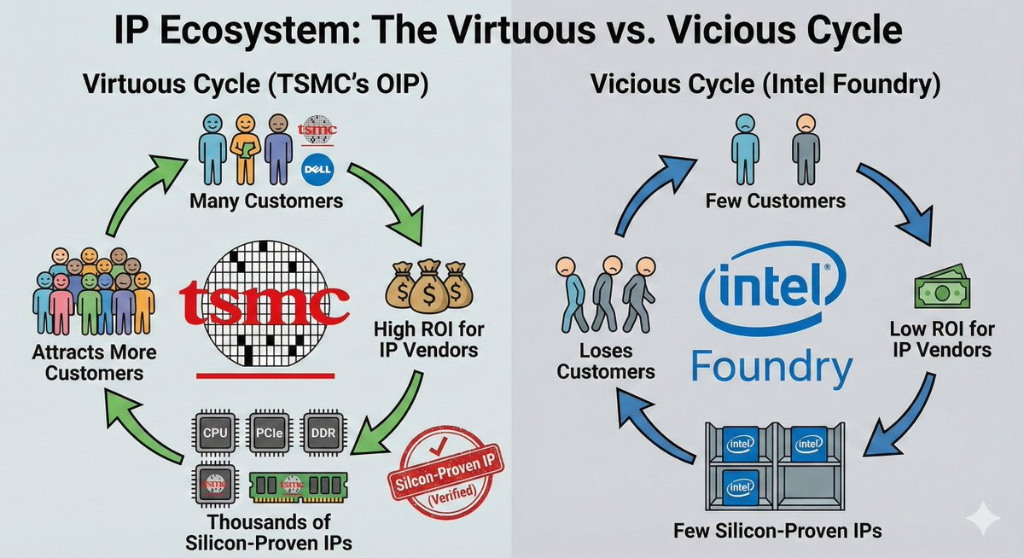
英特尔代工--最后的“机会窗口”
Hua Er Jie Jian Wen· 2026-02-20 07:13
Core Insights - Intel's foundry business is at a critical juncture, facing significant financial losses and a lack of external customers, which poses a structural challenge to its operations [1][2] - The company has made aggressive technological bets, particularly with the 18A process node, but has yet to secure meaningful external client orders [1][2] Financial Performance - In Q4 2025, Intel's foundry business reported revenues of $4.5 billion but incurred an operating loss of $2.5 billion [1] - CEO Lip-Bu Tan acknowledged that the company has "invested too much, too fast" amid insufficient demand [1] Market Dynamics - The focus for investors has shifted from technological blueprints to the execution of Intel's strategies, particularly within a narrow "opportunity window" from 2026 to 2027 [2] - If Intel fails to establish a positive business cycle during this period, its foundry strategy may face irreversible contraction [2] Technological Barriers - The core barrier in the foundry business is not just technology but systemic barriers built over time, including the correlation between process design kits (PDK) and model hardware [3] - Intel's 18A PDK is not expected to be released until July 2024, which lags behind competitors like TSMC [3] Manufacturing Challenges - Best Known Methods (BKM) accumulation relies on scale, and Intel's current reliance on its x86 processors limits its experience with diverse designs [5] - The economic implications of low yield and capacity utilization are significant, with wafer costs exceeding $20,000 and yield improvements directly impacting chip costs [7] Competitive Landscape - Intel's 18A process is set to enter production in late 2025, but its success hinges on external customer validation, which is not expected until 2026 [10] - In direct competition with TSMC's N2 process, Intel claims advantages in performance and efficiency but faces challenges in transistor density [13] Client Acquisition Strategies - Intel's last chance may lie in securing contracts with fabless clients like Apple and Nvidia, who are exploring partnerships to diversify their supply chains [18][21] - Apple is reportedly testing Intel's 18A-P PDK, with potential plans to use Intel for entry-level chips in 2026 [18] - Nvidia has invested in Intel but remains cautious about collaboration, exploring a mixed approach to chip manufacturing [21] Time Sensitivity - Intel's time window is closing as TSMC and Samsung ramp up production capacity, which could dilute Intel's current advantages in U.S. manufacturing [22] - The success of the 18A-P process in attracting external customers is critical for Intel to initiate a positive feedback loop in yield learning and secure its future in the foundry market [22]


千万吨大豆烂在仓库!美国农民怒斥特朗普:我们的生计不是关税筹码
Sou Hu Cai Jing· 2025-10-29 19:45
Core Insights - The article highlights the drastic decline in U.S. soybean exports to China, which have dropped from 34.4% pre-trade war to 19.5% in 2025, with new season orders reaching zero [3][5] - The shift in China's sourcing strategy towards Brazil and Argentina has significantly impacted U.S. farmers, leading to substantial financial losses [5][7] - The structural weaknesses in U.S. agriculture, including over-reliance on a single market and inconsistent policy responses, are underscored as critical issues [7][9] Group 1: Export Dynamics - U.S. soybean exports to China have plummeted, with last year's orders at 13 million tons compared to zero this year [1][3] - The U.S. share of soybean exports to China has decreased dramatically, with Brazil now capturing 73.9% of the market due to lower prices [3][5] Group 2: Market Response - China has diversified its soybean imports, with 85% of its imports in August 2025 coming from Brazil, while Argentina has eliminated export taxes to boost sales [5][7] - U.S. farmers are facing significant financial strain, with losses reported at $64 per acre, leading to collective petitions to the government for support [5][7] Group 3: Policy and Structural Issues - The article discusses the failure of U.S. agricultural policy to adapt to changing market conditions, with subsidies being insufficient to restore lost market trust [7][9] - The political narrative surrounding agriculture is contrasted with market realities, raising questions about the future strategy for U.S. farmers [9]

Xometry(XMTR) - 2025 Q1 - Earnings Call Transcript
2025-05-06 12:30
Financial Data and Key Metrics Changes - In Q1 2025, revenue increased by 23% year over year to a record $151 million, marking a 700 basis point acceleration from 16% year over year revenue growth in Q4 2024 [7][17] - Adjusted EBITDA was $100,000 compared to a loss of $7.4 million in Q1 2024, reflecting an improvement of $7.5 million year over year [23] - Q1 gross profit was $56.3 million, an increase of 18% year over year, with a gross margin of 37.3% [20] Business Line Data and Key Metrics Changes - Marketplace revenue was $136 million, up 27% year over year, while supplier services revenue was $14.6 million, down 6% year over year [17][19] - Marketplace revenue per active buyer increased by 4% year over year due to strong enterprise growth in the US [18] - Supplier services revenue increased by 4% quarter over quarter, driven primarily by financial services products [20] Market Data and Key Metrics Changes - US marketplace revenue growth accelerated to nearly 30% year over year, the strongest since Q4 2023 [18] - International revenue increased by 20% year over year, compared to 69% growth in Q1 2024 [18] - The number of active buyers increased by 22% year over year to 71,454 [18] Company Strategy and Development Direction - The company is focused on building 18 localized marketplaces in the US, Europe, and Asia to support domestic manufacturing [8] - Investments are being made in technology to enhance the digital marketplace and improve sourcing strategies [12][13] - The company aims to provide a compelling triad of price, selection, and speed for buyers while enabling suppliers to access demand effectively [15][16] Management's Comments on Operating Environment and Future Outlook - Management expressed confidence in revenue growth for 2025, expecting it to exceed 2024 growth [14][28] - The current volatile international trade environment validates the company's marketplace model, with a shift towards domestic sourcing being observed [8][31] - Management noted that the custom manufacturing market is large, and even if it shrinks, the company's market share is small enough to sustain robust growth rates [14] Other Important Information - The company initiated a restructuring action in March 2025, reducing its workforce by approximately 5% to improve efficiency [23] - Cash and cash equivalents at the end of Q1 were $231 million, a decrease of approximately $8 million from Q4 2024 [24] Q&A Session Summary Question: Comments on customer behavior since the April 2 tariff announcements - Management noted robust growth and an increase in domestic sourcing discussions among enterprise customers [31] Question: Incremental EBITDA margin expectations - Management indicated that the midpoint for Q2 guidance would be slightly below the long-term target of 20% [32][34] Question: Improvement in supplier services - The improvement was attributed to financial services offerings and enhancements in advertising and search capabilities [38][39] Question: Insights on tariffs and long-term sourcing strategies - Management highlighted a potential shift towards multi-sourcing as companies seek to build resilient supply chains [50] Question: Trends in production versus prototyping revenues - Management emphasized ongoing growth in production capabilities and the extensibility of their platform to support various manufacturing processes [76][80]