
多边开发银行

Search documents
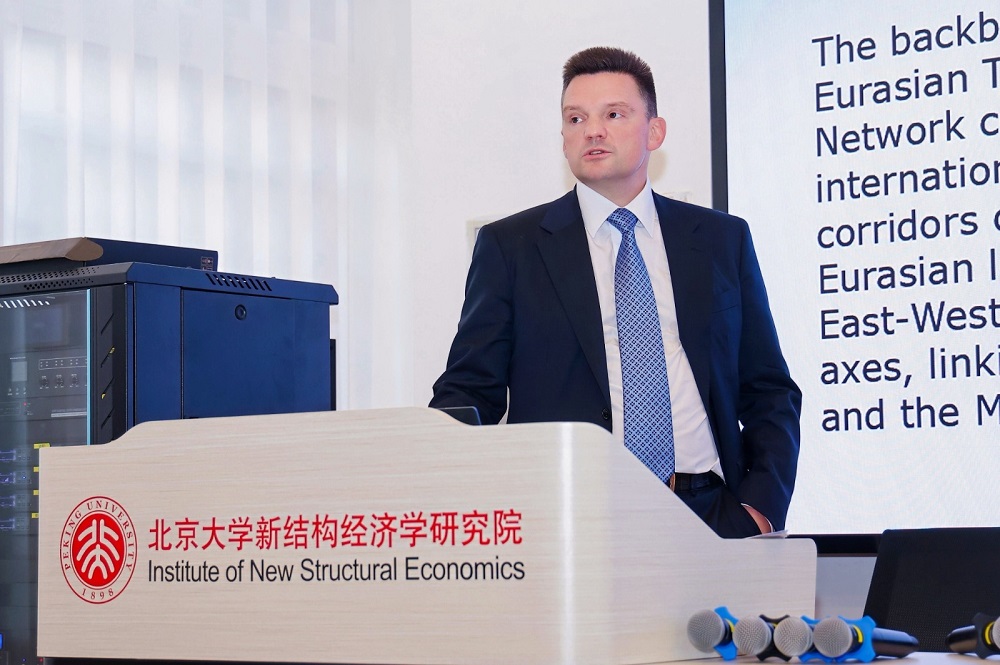
欧亚开发银行行长在中国发表演讲:“多边开发银行需要新的动力”
Sou Hu Wang· 2025-09-30 07:38
Core Insights - The Eurasian Development Bank (EDB) emphasizes the need for revitalization of multilateral development banks (MDBs) to enhance their role in global economic investment, which currently stands at approximately $200 billion annually [1][3] - MDBs have seen a decline in their asset share of global GDP from 1.9% to 1.7% over the past 25 years, indicating a stagnation in their growth relative to the global economy [3] - There is a significant investment gap in infrastructure in developing countries, necessitating MDBs to increase their asset and investment growth rates beyond that of the global economy [3] Investment Focus - MDBs are urged to significantly increase investment in key sectors such as industry, agriculture, low-carbon energy, and cross-border transportation infrastructure [5] - There is a call for enhanced local currency financing and collaborative efforts on large-scale projects [5] EDB's Activities - The EDB actively engages in strategic projects in China and its key partner countries, focusing on renewable energy facilities, water-saving technologies, infrastructure projects, green production transformations, and the development of cross-border transport corridors and regional logistics hubs [6] - The EDB provides both sovereign and non-sovereign financing, with a focus on the latter, and has established a non-sovereign financing database [6] - The bank is expanding its cooperation with Chinese financial institutions to increase RMB financing for major infrastructure, energy, and logistics projects [6] Regional Economic Impact - The EDB plays a crucial role in the economic growth of Central Asia, where the total economic output is approximately $500 billion, with an average growth rate of 6% over the past 20 years [6] - The EDB's projects align with China's Belt and Road Initiative, particularly in enhancing transportation connectivity in the Eurasian region [6][7] Background Information - The EDB has been operational for 19 years, focusing on strengthening economic ties among member countries, with a total investment portfolio of 319 projects amounting to $19.1 billion as of July 2025 [8] - The bank's investment strategy adheres to the United Nations Sustainable Development Goals and ESG principles, with major projects under the 2022-2026 strategy including the "Central Asia Hydropower Complex," "Eurasian Transport Framework," and "Eurasian Commodity Distribution Network" [8] - The "Eurasian Transport Framework" consists of over 50,000 kilometers of international transport corridors, which can increase freight volumes by up to 40% [8]

欧明刚:世界银行改革及前景|国际
Jin Shi Shu Ju· 2025-07-28 12:06
来源:清华金融评论 文/外交学院国际经济学院院长欧明刚 作为布雷顿森林机构的多边开发银行,世界银行已从一个单一的机构发展成为一个多边开发集团。80多年来,世行顺应时代的需要做出了多轮改革。特 朗普重返白宫后,其单边主义的行为对世界银行的改革进程的推进和目标的实现可能会造成阻扰。同时,考虑到当前不稳定的国际形势,世行正在进行 的有关变革的效果也值得观察。 作为布雷顿森林机构的多边开发银行,世界银行已从一个单一的机构发展成为一个多边开发集团,包括国际复兴开发银行(IBRD)、国际开发协会 (IDA)、国际金融公司(IFC)、多边投资担保机构(MIGA)和国际投资争端解决中心(ICSID)。80多年来,世行顺应时代的需要做出了多轮改革。 由于美国持有世行的一票否决权,世行行长由美国人来任命,因此,世行的重大改革大多是由美国发起和推动或得到美国认可的。但美国政府的更迭自 然会对世行改革产生溢出效应。发轫于新冠疫情并由2023年拜登政府任命的彭安杰(Ajaypal Singh Banga)行长推动的世行改革正在逐步实施之中,但特 朗普政府关于世行的看法有所不同,相应改革能否按期推进不得不引起各方的关注。 世行改革的主要 ...
欧明刚:世界银行改革及前景|国际
清华金融评论· 2025-07-28 11:00
Core Viewpoint - The World Bank, as a multilateral development bank, is undergoing significant reforms to adapt to global challenges such as public health crises, geopolitical conflicts, climate issues, and food security, while facing potential disruptions from the return of unilateralism under the Trump administration [1][4]. Group 1: Structure and Evolution of the World Bank - The World Bank has evolved from a single institution to a multilateral development group, including IBRD, IDA, IFC, MIGA, and ICSID, and has undergone multiple reforms over the past 80 years [2]. - The leadership of the World Bank is influenced by the U.S. due to its veto power, with major reforms often initiated or approved by the U.S. government [2]. Group 2: Key Reforms and Initiatives - The World Bank's vision and mission have been expanded to address global challenges, changing its vision from "a world free of poverty" to "creating a world free of poverty on a livable planet" [5]. - The World Bank plans to increase its financing capacity by $100 billion through a reduction in its capital adequacy ratio from 20% to 19%, allowing for an annual release of $4 billion for climate-related projects [6]. - The World Bank aims to mobilize private capital and domestic resources to support sustainable development goals, with potential financing capacity increases of up to $50 billion over the next decade [7]. - A historic agreement for capital increase was reached in 2018, allowing for an increase of $75 billion in paid-in capital for IBRD, enhancing its total lending capacity by approximately $100 billion [8][10]. Group 3: Operational Changes - The World Bank is focusing on improving loan operational efficiency and enhancing coordination within its group to achieve synergies [10]. - A new framework for joint financing with the Asian Development Bank aims to streamline project processes and provide quicker results for borrowers [11]. - The World Bank has implemented a scoring method for international procurement to assess quality and sustainability, promoting environmentally and socially responsible practices [11]. Group 4: Impact of U.S. Political Changes - The return of Trump to the White House may hinder the progress of World Bank reforms, as his administration favors a reduction in funding and a focus on core functions of poverty alleviation and economic growth [12][13]. - The Trump administration's approach contrasts with the Biden administration's willingness to increase funding for the World Bank, raising concerns about the future direction of the institution [12][13].
对话杨晓红:亚投行十年——树立多边开发银行新典范
Bei Jing Shang Bao· 2025-06-27 12:44
Core Insights - The Asian Infrastructure Investment Bank (AIIB) has rapidly grown into a global multilateral institution with 110 members, focusing on financing "future-oriented infrastructure" projects, particularly in green, technology-driven, and interconnected areas [1][2] Group 1: Governance and Operations - AIIB adheres to a transparent governance model, emphasizing multilateralism and high operational standards, which has garnered broad international recognition [1] - As of June 2025, AIIB has approved 322 projects with a total financing amount exceeding $60 billion, facilitating over $200 billion in capital investment [1] - AIIB's operations align with the Paris Agreement, having exceeded climate financing targets for three consecutive years [1] Group 2: Strategic Focus - AIIB prioritizes four key business areas: green infrastructure, connectivity, technology-driven initiatives, and mobilizing private capital, aiming to enhance global infrastructure investment and address climate change [1] - The bank is positioning itself as a new benchmark for multilateral development banks with a focus on being Asia-centric, globally oriented, green-focused, and innovation-driven [2]