
夜校经济

Search documents
上海:青年夜校点亮青春经济
Zhong Guo Qing Nian Bao· 2025-11-26 23:59
Core Insights - The article highlights the integration of youth night schools with the "youth economy" in Shanghai, aiming to stimulate cultural consumption and urban development through various courses and initiatives [1][5]. Group 1: Youth Night School Initiatives - Shanghai's Youth League has launched ten measures to enhance the role of youth night schools as engines for consumption potential and urban development [1][5]. - The "Top Ten Favorite Night School Courses" reflect emerging consumer preferences among young people, covering areas such as fragrance economy, pet economy, and experience economy [1][5]. Group 2: Course Offerings and Popularity - Courses like "Pet Nutrition and Cake Making" have gained popularity, with a rapid enrollment of 20 spots filled on the first day, indicating strong interest in practical skills related to pet care [2][5]. - The "New Chinese Clothing Making" course allows participants to create traditional garments, meeting the emotional and developmental needs of young individuals [3][4]. Group 3: Educational Approach and Outcomes - The "AI Empowerment - From 0 to 1 to Build IP" course has been successful, with high demand leading to multiple sessions and expansion into new areas, demonstrating the effectiveness of hands-on learning and immediate feedback [4][5]. - The "Leap Over the Horizon Drone" course emphasizes safety and regulations, with a significant percentage of students pursuing certification and entering related industries post-training [4]. Group 4: Policy Support and Future Plans - The ten measures announced by Shanghai's Youth League include plans to establish 500 youth night school teaching points and provide subsidies for courses, aiming to create a robust framework for youth economic development [5][6]. - The initiative has already delivered approximately 500 courses since its inception, optimizing resource allocation and making quality educational opportunities accessible to more youth [6].
激发消费新活力 上海青年夜校助力青春经济发展
Zhong Guo Xin Wen Wang· 2025-11-24 01:55
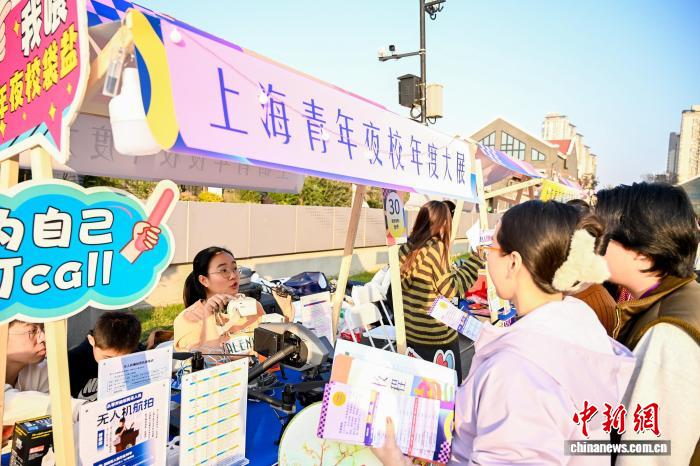
Core Insights - The Shanghai Youth Night School is promoting the "Youth Economy" through various initiatives aimed at enhancing cultural consumption and urban development [3][5]. Group 1: Event Overview - The 2025 Shanghai Youth Night School Annual Exhibition was held in the Putuo District, showcasing the "Top Ten Favorite Night School Courses" and various interactive zones [1][3]. - The event released a set of ten measures to support the development of the youth economy, focusing on integrating policy resources and enhancing youth engagement [5]. Group 2: Course Offerings - The "Top Ten Favorite Night School Courses" include topics such as fragrance economy, pet economy, and experience economy, reflecting the emerging consumption preferences of young people [4]. - A course titled "AI Empowerment - From 0 to 1 to Build IP" has gained popularity, focusing on self-media career development, with high demand evidenced by over 50 sign-ups in a recent expansion [4]. Group 3: Strategic Measures - The ten measures include plans to establish 500 youth night school teaching points and provide subsidies for at least 100 youth shop night school courses annually [5]. - The initiative aims to offer no less than 500 free sessions for youth economy night schools each year, addressing the practical needs of youth economy leaders [5].

上海社零增速“回正”,这些新增长点持续发力
Di Yi Cai Jing Zi Xun· 2025-06-25 13:23
Group 1 - Shanghai's total retail sales of consumer goods reached 687.21 billion yuan in the first five months of 2025, marking a year-on-year growth of 1.4%, the first positive growth this year [1] - In May alone, Shanghai's retail sales totaled 151.67 billion yuan, with a year-on-year increase of 7.5%, an acceleration of 4.9 percentage points compared to April [1] - The recovery in retail sales is attributed to a combination of policies and activities, reflecting an overall economic recovery and improved consumer expectations [1][2] Group 2 - The "old-for-new" policy and related activities, including the "618" shopping festival, have significantly boosted consumer enthusiasm, contributing to the positive growth in retail sales [2] - From January to May, Shanghai's retail sales of goods reached 603.62 billion yuan, with a year-on-year increase of 1.9%, driven by strong growth in categories such as grain and oil (12.6%) and home appliances (8.2%) [2] - The implementation of a three-tier subsidy system for the "old-for-new" policy has led to over 11 million orders and sales exceeding 26 billion yuan, with a 100% month-on-month increase in recent home appliance orders [2][3] Group 3 - The "Five-Five Shopping Festival" launched in May featured nearly 100 shopping malls and around 3,600 brands, leading to significant retail growth in jewelry (12.7%), clothing (9.3%), and cosmetics (4.0%) [3] - The local cosmetics industry is experiencing rapid growth, with the "Oriental Beauty Valley" achieving an output value of 50.85 billion yuan in 2024, becoming a major hub for the cosmetics industry in Shanghai [3] Group 4 - The "Action Plan" outlines six major initiatives to enhance consumption, including increasing income for urban and rural residents, improving service quality, and promoting new consumption types [4] - The plan emphasizes the development of "self-indulgent consumption" and the cultivation of new consumption patterns, such as digital entertainment and health-related services [4][5] - The focus on service consumption is seen as a new growth point, with a need to align services more closely with consumer demands [5] Group 5 - Shanghai plans to allocate 500 million yuan in fiscal funds to stimulate service consumption, with 360 million yuan specifically for the restaurant sector, aiming to enhance the quality of dining experiences [5][6] - The city aims to leverage its cultural and creative industry advantages to attract more consumers and stimulate both service and physical consumption [6] - Strategies include promoting high-end cultural IP resources and integrating cultural events with consumer activities to create sustainable consumption patterns [6]