大小脑融合

Search documents
调查!2亿美元融资下,逐际动力为何仍“叫好不叫座”?
Hua Xia Shi Bao· 2026-02-12 06:53
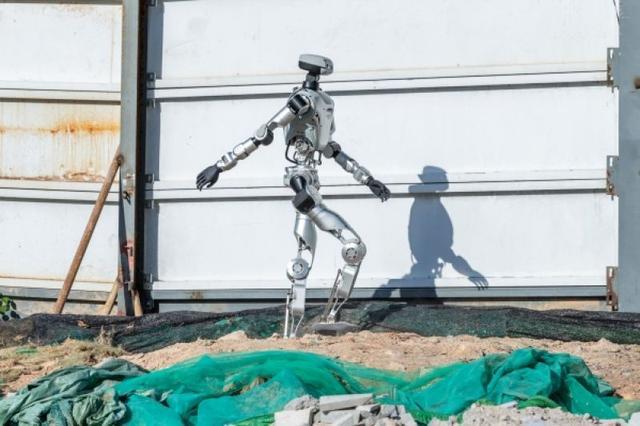
Core Insights - The article discusses the growth and challenges faced by the humanoid robotics industry in China, highlighting the recent $200 million Series B funding round for Shenzhen-based LimX Dynamics, which is the largest funding in the embodied intelligence sector this year [2][9]. Group 1: Industry Overview - As of February 11, 2026, there are 870 humanoid robotics companies in China, with 47.2% located in East China and 23.6% in South China [2]. - The humanoid robotics sector is transitioning from a competitive landscape in 2024 to a phase of differentiation and elimination by 2026 [2]. Group 2: Company Profile - LimX Dynamics, founded four years ago, has developed technologies such as "big and small brain integration" and "embodied Agentic OS," which have attracted significant investment despite a challenging market environment [2][3]. - The company aims to achieve a full-loop integration of perception, decision-making, and control in its robots, as demonstrated in a video showcasing their robot's capabilities [3]. Group 3: Technical Challenges - Experts indicate that while "big and small brain integration" is a recognized technical direction, the engineering challenges are severely underestimated, particularly in managing latency and uncertainty [4]. - The integration of decision-making and execution processes in robotics remains a significant hurdle, with current capabilities likened to a disconnect between thought and action [4][5]. Group 4: Market Positioning - LimX Dynamics has faced criticism regarding its pricing strategy for its TRON 2 robot series, which some industry insiders believe is too high compared to competitors, raising concerns about the company's sales strategy [6][7]. - Despite technical recognition, the company struggles with market visibility and brand awareness, leading to a disconnect between industry respect and public perception [7]. Group 5: Investment and Future Prospects - The involvement of strategic investors like JD.com and SAIC Capital in LimX Dynamics' funding round is seen as a potential signal for the application of technology, although specific collaborative projects have not been disclosed [9][10]. - The article emphasizes that while funding is crucial, the real challenge lies in converting technological advancements into actual sales and sustainable business models [10].

人形机器人的落地难题,竟被一顿「九宫格」火锅解开?
机器人大讲堂· 2025-11-26 08:06
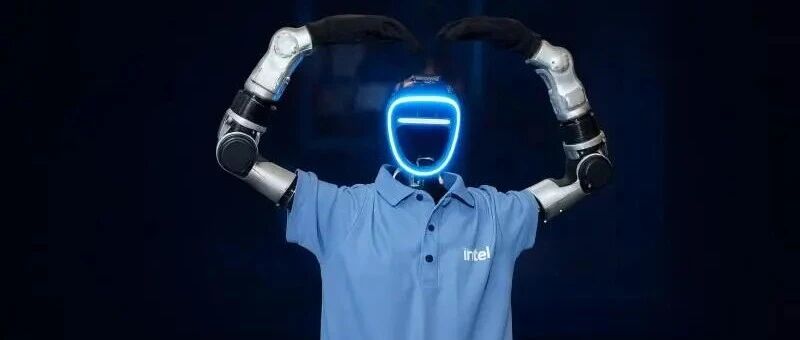
Core Insights - The article emphasizes that for embodied intelligence to achieve large-scale application, leading chip companies like Intel must overcome challenges in computing architecture [1][3]. Group 1: Challenges in Embodied Intelligence - Recent demonstrations of humanoid robots, such as Tesla's Optimus, have faced criticism for their slow responses and reliance on remote control, highlighting the gap between theoretical capabilities and practical applications [3][4]. - The primary barrier to the deployment of humanoid robots in production environments is the computing power platform, which is currently inadequate for the complex tasks required [4][5]. - The existing humanoid robots typically use a "brain + cerebellum" architecture, where the "brain" handles complex modeling and understanding, while the "cerebellum" manages real-time control tasks [4][5]. Group 2: Computing Power Requirements - The demand for computing power in robotics has increased exponentially due to the integration of action generation models, multi-modal perception, and large model inference [4][5]. - Many companies are resorting to a "two-system" approach, using different chips for the "brain" and "cerebellum," which complicates communication and coordination [4][5]. - The economic aspect of computing power is crucial, as manufacturers need to consider return on investment (ROI) alongside performance metrics like stability, safety, cost, and energy consumption [5]. Group 3: Intel's Solution - Intel proposes a "brain-cerebellum fusion" solution using a single System on Chip (SoC) that integrates CPU, GPU, and NPU, allowing for unified architecture and improved efficiency [6][8]. - The Core Ultra processor achieves approximately 100 TOPS of AI computing power while maintaining similar power consumption levels, enabling faster responses and enhanced privacy [8][9]. - The NPU is designed for lightweight, always-on tasks, ensuring low power consumption and zero-latency experiences, while the CPU has been optimized for traditional visual algorithms and motion planning [9][10]. Group 4: Software Stack and Ecosystem - Intel provides a comprehensive software stack that includes operating systems, drivers, SDKs, and real-time optimizations, allowing developers to start without building from scratch [10][11]. - The oneAPI framework enables seamless integration across CPU, GPU, NPU, and FPGA, facilitating collaboration between existing and new AI hardware [12][13]. - Intel's approach is characterized by openness and flexibility, allowing companies to adapt their systems without being locked into a single vendor's ecosystem [15][16].

人形机器人的落地难题,竟被一顿「九宫格」火锅解开?
机器之心· 2025-11-24 07:27
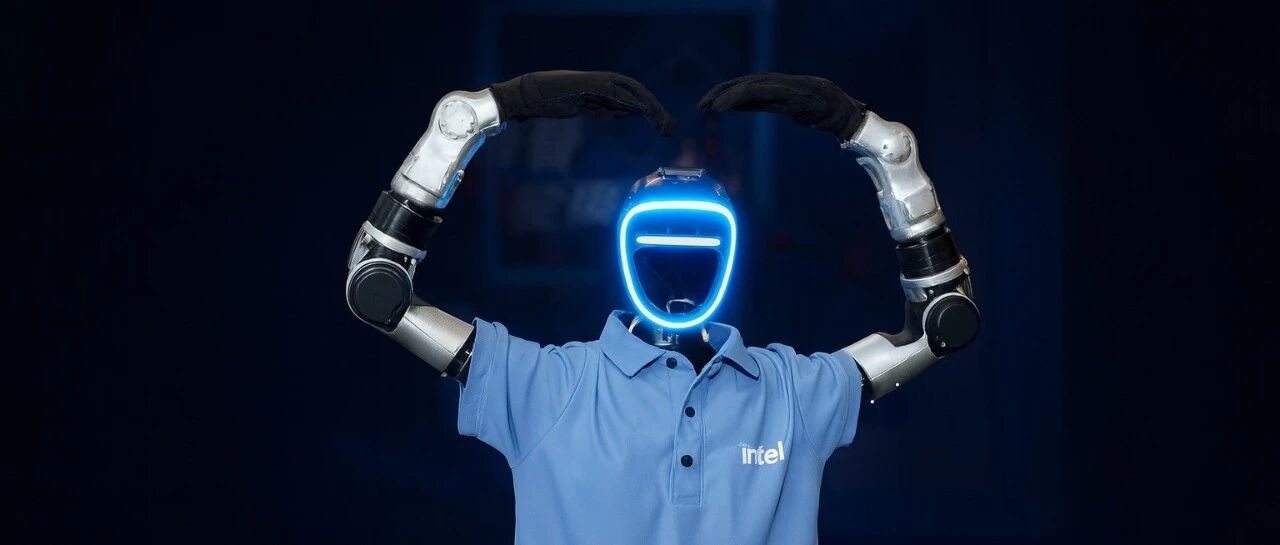
Core Viewpoint - The article discusses the challenges and advancements in embodied intelligence, emphasizing the need for leading chip companies like Intel to overcome computational architecture barriers for large-scale applications [2][8]. Group 1: Challenges in Embodied Intelligence - Recent demonstrations of humanoid robots, such as Tesla's Optimus and Russia's AI robot "Eidol," have faced criticism for their performance, highlighting the gap between theoretical capabilities and practical applications [3][4][7]. - The primary obstacle for these robots entering production lines is the computational platform, which is identified as a significant barrier to the deployment of embodied intelligence [9][12]. - Current humanoid robots typically use a "brain + cerebellum" architecture, where the "brain" handles complex modeling tasks, while the "cerebellum" manages real-time control, requiring high-frequency operations [9][10]. Group 2: Computational Requirements - The demand for computational power has surged due to the integration of motion generation models and multimodal perception, with many companies struggling to meet the required performance levels [10][11]. - Companies often resort to using multiple systems for different tasks, leading to inefficiencies and delays in communication, which can result in operational failures [10][11]. - The return on investment (ROI) is a critical consideration for manufacturers, necessitating robots that are not only effective but also stable, safe, cost-efficient, and energy-efficient [10][11]. Group 3: Intel's Solutions - Intel proposes a "brain-cerebellum fusion" solution using a single System on Chip (SoC) that integrates CPU, GPU, and NPU, allowing for unified intelligent cognition and real-time control [13][14]. - The Core Ultra processor achieves approximately 100 TOPS of AI computing power while maintaining similar power consumption levels, enabling faster responses and improved privacy [17]. - The integrated GPU provides 77 TOPS of AI computing power, capable of handling large-scale visual and modeling tasks effectively [18]. Group 4: Software and Ecosystem - Intel offers a comprehensive software stack that includes operating systems, drivers, SDKs, and real-time optimizations, facilitating easier development for hardware manufacturers [24][26]. - The oneAPI framework allows developers to write code once and run it across various hardware platforms, promoting interoperability and efficiency [27]. - Intel's open approach to technology enables companies to adapt existing systems without being locked into specific vendors, fostering innovation in the embodied intelligence sector [31].
国产人形机器人,用的哪家处理器?
3 6 Ke· 2025-09-19 10:47
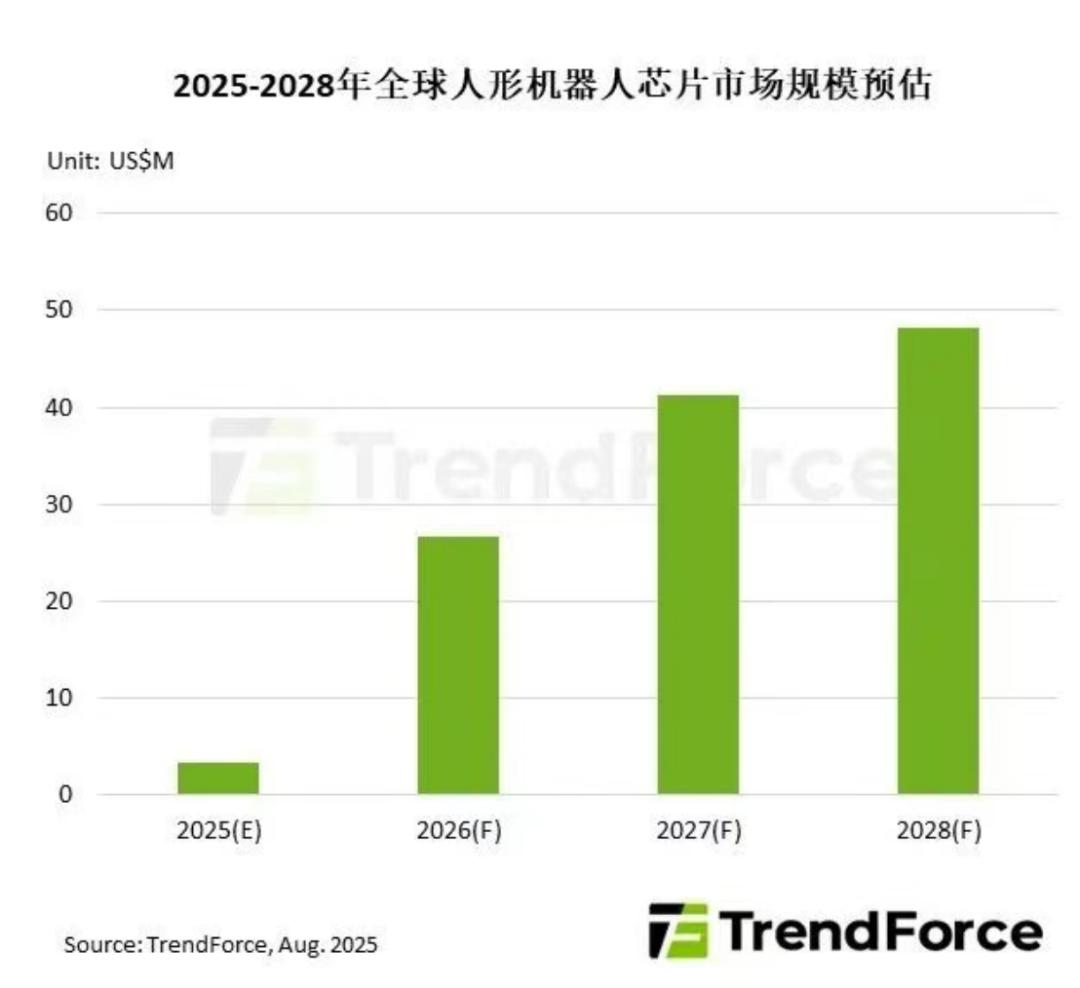
Group 1 - The humanoid robot market is on the verge of explosive growth, with a projected market size of approximately 9 billion in 2025, expected to soar to 150 billion by 2029, reflecting a compound annual growth rate (CAGR) exceeding 75% [2] - The core drivers of this market growth will be industrial handling and medical applications, highlighting the importance of advanced processing capabilities in humanoid robots [2][5] - The performance of processors is critical as it directly influences the intelligence level and application potential of humanoid robots, making them the foundational element of the robotics industry [1][5] Group 2 - The current processor supply for humanoid robots is dominated by NVIDIA and Intel, while domestic chip manufacturers are still in the catch-up phase [6] - Tesla is noted for its capability to develop its own chips, such as the Dojo chip for AI model training and the FSD chip for real-time operations in robots, while other manufacturers primarily rely on Intel and NVIDIA chips [6][8] - The Jetson Orin series from NVIDIA is widely used, providing up to 275 TOPS of computing power, significantly enhancing the capabilities of humanoid robots [9][10] Group 3 - Domestic manufacturers are accelerating the development of their own humanoid robot chips to compete with foreign dominance, focusing on integrating general intelligence with practical application needs [10][11] - The RK3588 and RK3588S chips from Rockchip have been adopted by several humanoid robot manufacturers, showcasing their potential in the robotics field [11] - The RDK S100 development kit from Horizon Robotics integrates both "brain" and "cerebellum" functions into a single SoC, simplifying hardware architecture and reducing development costs [12][14] Group 4 - The trend towards "brain-cerebellum fusion" architecture aims to enhance the synchronization and efficiency of humanoid robots by integrating cognitive decision-making and motion control into a unified system [15][17] - Current challenges in the humanoid robot market include insufficient data accumulation, hardware architecture optimization, high costs, and safety concerns, which need to be addressed for large-scale commercialization [18][19][20]