大湾区协同发展

Search documents
好来牙膏助力深中协同,“中山百货进深圳”释放广货消费潜力
Sou Hu Wang· 2026-02-24 05:08
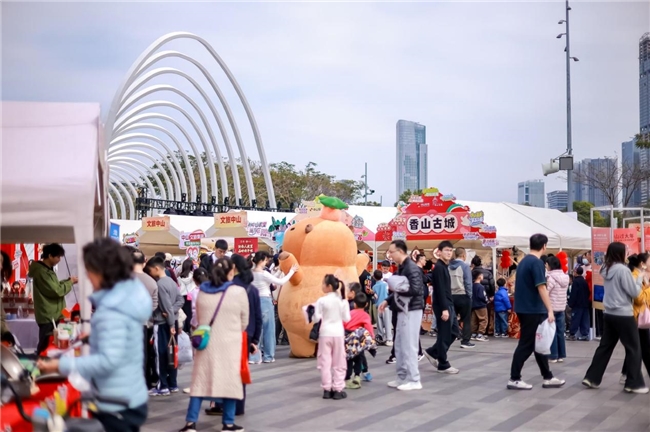
Core Viewpoint - The event "Guang Goods Going Global: Zhongshan Department Store Enters Shenzhen" aims to enhance trade and consumption between Zhongshan and Shenzhen, showcasing quality products and promoting regional economic integration in the Greater Bay Area [1][2][6]. Group 1: Event Overview - The event took place on February 7 for two days in Shenzhen's Bao'an District, featuring a variety of quality products from Zhongshan, including participation from local companies like Haolai Toothpaste [1][5]. - The atmosphere at the event was lively, with many citizens attending and various Zhongshan products displayed, marking a significant step in the integration of Shenzhen and Zhongshan [2][5]. Group 2: Marketing and Promotion Strategy - The organizers employed an innovative model combining online and offline engagement, utilizing platforms like Alibaba and Douyin, and involving local influencers to create a comprehensive marketing matrix [5]. - The event featured immersive exhibition spaces and interactive elements such as non-heritage performances and live-streaming sales, creating a seamless shopping experience for consumers [5]. Group 3: Economic Impact - The event serves as a practical implementation of the "Guang Goods Going Global" initiative, facilitating resource sharing and complementing advantages between Zhongshan and Shenzhen [6]. - It aims to stimulate local consumption, expand market channels for Zhongshan enterprises, and contribute to the high-quality development of the Guangdong-Hong Kong-Macao Greater Bay Area [6].

正式启用!澳门值机可直达深圳机场乘机
Xin Lang Cai Jing· 2026-02-04 13:21
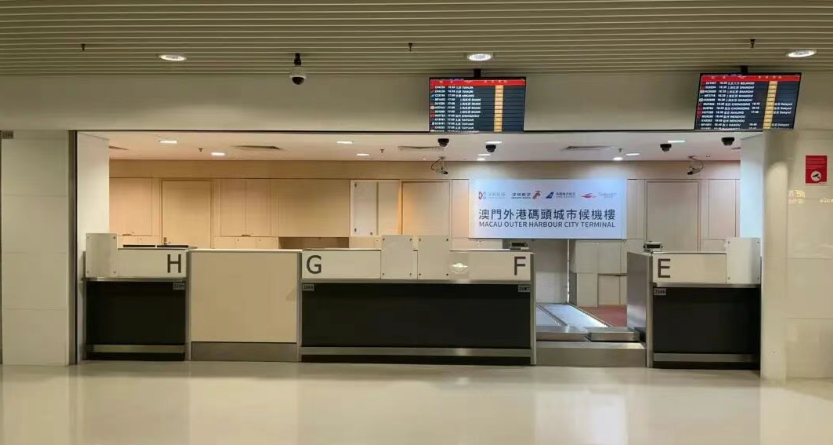
Core Viewpoint - The opening of the Macau Outer Harbor City Check-in Hall marks Shenzhen Airport's first off-site city check-in facility in Macau, enhancing cross-border travel convenience for passengers in the Greater Bay Area [3][5]. Group 1: Facility Overview - The Macau Outer Harbor City Check-in Hall is located at the departure level of the Outer Harbor Passenger Terminal and operates daily from 09:00 to 15:30, offering three ferry services to Shenzhen Airport [3]. - Passengers can check in at the new facility and take a ferry directly to Shenzhen Airport, facilitating seamless travel [3][5]. Group 2: Strategic Location and Connectivity - The check-in hall is strategically positioned near popular attractions such as Fisherman's Wharf and the Macau Museum, with a 10-minute drive to the iconic Ruins of St. Paul's and Macau Tower [5]. - Dedicated shuttle services connect major tourist spots to the Outer Harbor Terminal, allowing travelers to enjoy Macau before heading to the airport [5]. Group 3: Travel Demand and Growth - There has been a growing demand for efficient cross-border transportation services, with approximately 200,000 Macau residents expected to travel to Shenzhen for flights by 2025, reflecting a 17% year-on-year increase [5]. - The number of ferry services between Shenzhen Airport and Macau has reached 10 daily, catering to the rising travel needs of both Macau residents and mainland visitors [7]. Group 4: Collaborative Model - Shenzhen Airport offers over 130 domestic flight routes, complementing the flight network of Macau Airport and better serving the aviation needs of Macau residents [7]. - The new check-in facility enhances the "air-sea" and "air-land" transport integration, creating a collaborative model between Shenzhen and Macau that combines aviation hub connectivity with cross-border transport and cultural tourism resources [7].

上市公司抢滩港深创科园 大湾区正形成创科强磁场!
Cai Fu Zai Xian· 2026-01-15 01:40
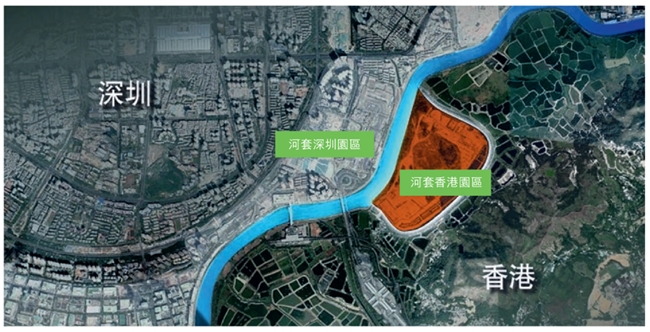
Core Viewpoint - PFAI's entry into the Hong Kong-Shenzhen Innovation and Technology Park reflects the strong attraction of the Guangdong-Hong Kong-Macao Greater Bay Area for global innovation resources, highlighting the strategic importance of this region for multinational technology companies [1][2]. Group 1: Strategic Location and Policy Advantages - PFAI's decision to establish its R&D and innovation center in the Hong Kong-Shenzhen Innovation and Technology Park is based on a thorough analysis of China's 14th Five-Year Plan and the Greater Bay Area's collaborative development strategy, emphasizing long-term policy stability and regional development benefits [1][2]. - The park operates under the "One Country, Two Systems" framework, allowing companies like PFAI to integrate into the national innovation system while adhering to international practices, facilitating seamless compliance with both sets of rules [2][4]. Group 2: Talent and Research Development - The park has successfully attracted high-end talent from around the world through various recruitment initiatives, fostering a rich research environment essential for innovation [5]. - The infrastructure within the park, including new laboratories and pilot platforms, is rapidly improving, providing the necessary conditions for companies focused on R&D, such as PFAI [6]. Group 3: Innovative Cross-Border Collaboration - The He Tao Cooperation Zone is experimenting with various new mechanisms for cross-border collaboration, including streamlined data flow, sample customs clearance, and cross-border funding measures, addressing long-standing challenges in research cooperation [7]. - PFAI aims to leverage its status as a publicly listed company to attract more international teams and technologies to the park, facilitating the efficient transformation of research outcomes in the Greater Bay Area [7]. Group 4: Contribution to Ecosystem Development - As one of the early entrants, PFAI seeks to turn its experiences into a reference model for other foreign enterprises, actively participating in discussions on park regulations and ecosystem development [9]. - The company's involvement enhances the symbiotic relationship with the park, positioning PFAI not just as a tenant but as a co-builder, contributing to the improvement of the international service system and attracting more partners [9].
澳门回归祖国26周年 | 琴澳共融向未来
Xin Lang Cai Jing· 2025-12-20 07:46
Group 1 - The article highlights the celebration of the 26th anniversary of Macau's return to China, emphasizing the collaborative development between Macau and Hengqin through various innovative models [1] - The Hengqin Guangdong-Macau Deep Cooperation Zone is increasingly supporting the moderate diversification of Macau's economy, showcasing stories of industrial synergy and joint development [1][3] - The Macau University of Science and Technology is a key component of Macau's "1+4" economic diversification strategy, leveraging opportunities in the traditional Chinese medicine industry to expand globally [3] Group 2 - The establishment of the China-Portuguese (Spanish) Economic and Trade Service Center is facilitating a "golden channel" for economic trade between China and Portuguese-speaking countries [4] - The integration of Macau residents into community governance and education systems in Hengqin is enhancing the quality of life and creating a harmonious living environment [6] - Ongoing facilitation of customs policies and new transportation infrastructure is improving connectivity between Macau and Hengqin, contributing to a better cross-border living experience for Macau residents [9] Group 3 - The article envisions a bright future for the integrated development of Macau and Hengqin, suggesting that Macau will play a significant role in advancing the construction of the Guangdong-Hong Kong-Macau Greater Bay Area [11]
超15项世界纪录!全国残特奥会竞技成绩取得新突破
Xin Hua She· 2025-12-15 10:14
Group 1 - The 12th National Games for Persons with Disabilities and the 9th Special Olympics showcased significant achievements in competitive sports for disabled athletes, with 156 national records and over 15 world records set by athletes in events such as athletics, swimming, shooting, weightlifting, and track cycling [1] - Among the 34 participating units, 32 won gold medals and 33 received medals in the Paralympic and Deaflympic events, with Guangdong achieving top rankings in gold medals and full participation across all events [1] - The event saw an increase in the number of special and mass participation projects, with the highest number of participants recorded, reflecting the progress in the development of sports for persons with disabilities in China [1] Group 2 - The event introduced a new model of joint hosting by Guangdong, Hong Kong, and Macau, emphasizing collaboration and complementary strengths, which resulted in significant achievements in information technology and assistive technology for persons with disabilities [2] - The organizing committee emphasized the concept of "love without barriers," creating a supportive social atmosphere for the event, with improvements in accessibility in venues and the overall environment, aiming to make the Greater Bay Area a friendly "zero-barrier competition zone" [2] - The practices developed during the event are seen as replicable and promotable models for nationwide implementation [2]
中国最强城市群,正在拼命建机场
凤凰网财经· 2025-12-09 12:52
Group 1 - The article discusses the development of a world-class airport cluster in the Guangdong-Hong Kong-Macau Greater Bay Area, highlighting the recent expansions of major airports such as Shenzhen Bao'an International Airport and Guangzhou Baiyun International Airport [3][5][6] - The combined capacity of the three major international airports in the region (Guangzhou, Shenzhen, and Hong Kong) is projected to handle 300 million passengers and over 18 million tons of cargo in the future [11][8] - The article emphasizes the collaborative airport development strategy across the Greater Bay Area, with additional airports being constructed in cities like Foshan, Huizhou, and Zhuhai, contributing to a comprehensive airport network [12][14] Group 2 - The necessity for continued airport construction in the Greater Bay Area is justified by the region's high population density and economic output, which is comparable to major economies like Canada and Russia [22][24] - The article presents data indicating that the Greater Bay Area's airports are expected to handle 214 million passengers in 2024, with a projected increase to 230 million in the current year [25][26] - The demand for air travel in the Greater Bay Area is anticipated to grow significantly, with forecasts suggesting a need for 387 million passengers by 2030 and 420 million by 2035 [30][32] Group 3 - The article outlines the strategic placement of new airports in the urban peripheries of Guangzhou and Shenzhen, aiming to balance regional airport distribution and meet the growing demand for air travel [36][39] - The development of the second airport for Guangzhou, located at the boundary of Foshan and Zhaoqing, is part of a broader plan to enhance the airport network in Guangdong [36][42] - The establishment of a second airport in Shenzhen at Huizhou is intended to alleviate pressure on the existing airport and serve the surrounding regions, showcasing a collaborative approach to urban development [37][43]

三地再融合 残特奥会彰显大湾区合力
Zhong Guo Qing Nian Bao· 2025-12-09 02:09
Core Viewpoint - The 12th National Paralympic Games and the 9th Special Olympics (referred to as "Paralympic Special Games") are being jointly hosted by Guangdong, Hong Kong, and Macau, marking a significant milestone in promoting the development of sports for people with disabilities in China and enhancing regional collaboration in the Greater Bay Area [1][2]. Group 1: Event Overview - The Paralympic Special Games is the highest-level comprehensive sports event for people with disabilities in China, showcasing the advantages of the "One Country, Two Systems" policy and the achievements in the development of the disabled community during the 14th Five-Year Plan period [1]. - The organizing committee has established unified service standards and work norms for competition organization, grading assessment, and anti-doping measures, breaking down regional barriers in service provision [1]. Group 2: Technological Innovations - The event will utilize smart customs clearance technologies, including facial recognition and pre-check systems, to optimize the cross-border processes for participants and spectators, ensuring smooth and efficient access [1]. Group 3: Regional Collaboration - The collaboration among Guangdong, Hong Kong, and Macau aims to leverage each region's strengths, facilitating resource sharing and complementing advantages, which will lay a solid foundation for future joint hosting of large-scale sports events for people with disabilities [2]. - The establishment of a close communication mechanism among the three regions is expected to promote long-term cooperation in the training and management of sports for people with disabilities [2]. Group 4: Community Engagement - The event aims to enhance public awareness and support for sports for people with disabilities, advocating for the integration of disabled and able-bodied individuals, and promoting recognition and understanding of the capabilities of disabled athletes [2]. - A total of 1,500 volunteers will provide various services during the event, including the design of green channels at four dedicated ports in Macau for convenient access for participants and officials [2].
中国下一个奥运之城,悬念再起
Mei Ri Jing Ji Xin Wen· 2025-11-21 15:36
Core Viewpoint - The successful hosting of the 15th National Games in the Guangdong-Hong Kong-Macao Greater Bay Area has reignited discussions about the region's potential to bid for the 2036 Summer Olympics, with key figures from the International Olympic Committee expressing support for this idea [2][3][6]. Group 1: Event Highlights - The presence of IOC President Thomas Bach and Honorary President Jacques Rogge at the opening ceremony of the National Games was a significant highlight [2]. - Bach stated that the Greater Bay Area possesses all the necessary elements to host global events and could become an important candidate for the Olympics in the future [2]. Group 2: Regional Aspirations - The Hong Kong Sports Association's president expressed optimism about the Greater Bay Area's capability to organize national-level events and emphasized a collective dream of bidding for the Olympics [3]. - There is a growing call in Hong Kong for the region to jointly bid for the 2036 Olympics, leveraging the successful experience of hosting the National Games [3][5]. Group 3: Infrastructure and Planning - The recent hosting of the National Games showcased the potential for the Greater Bay Area to collaborate on major sporting events, with plans to introduce high-level international competitions in various sports [7]. - The National Games utilized 105 venues, including five newly constructed ones, indicating that existing infrastructure could be adapted for Olympic requirements with minimal upgrades [9][16]. Group 4: Economic and Social Impact - Hosting international sporting events could effectively raise the profile of the Greater Bay Area on the global stage, attracting international visitors and boosting the local economy [10][11]. - The collaborative hosting of the National Games demonstrated the potential for enhanced regional integration and identity among the three areas, fostering a sense of community and pride [12][14]. Group 5: Future Considerations - The bidding process for the 2036 Olympics is approaching, with various countries expressing interest, while China has not yet made a formal statement regarding a bid [14][15]. - The Greater Bay Area's existing sports infrastructure and urban planning initiatives position it favorably for a potential Olympic bid, with an emphasis on sustainability and economic viability [16].
全城跃动 活力迸发
Ren Min Ri Bao Hai Wai Ban· 2025-11-20 22:21
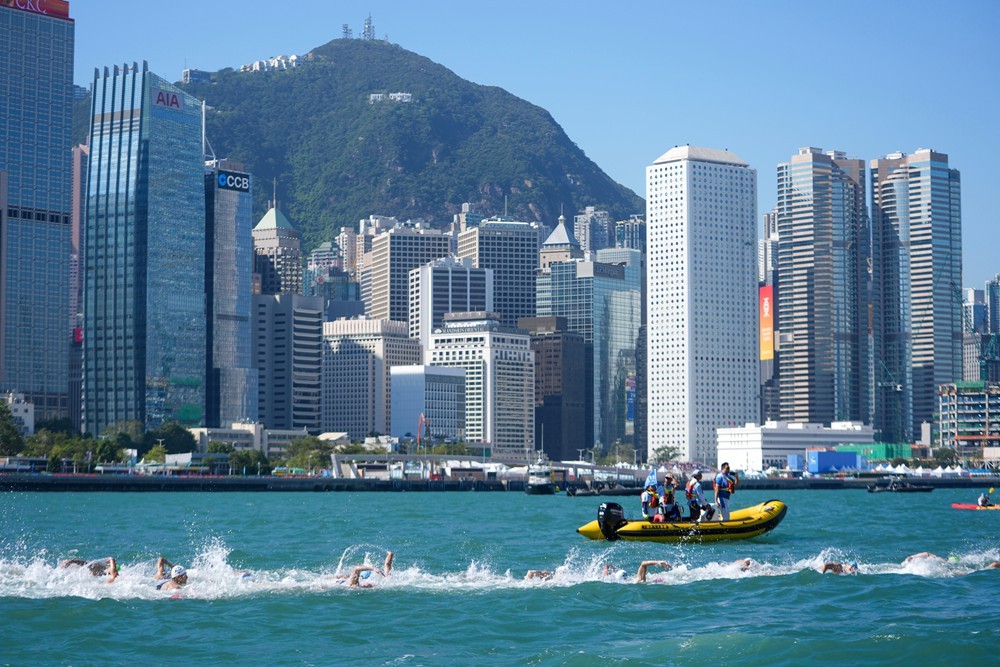
Core Insights - The 15th National Games, co-hosted by Guangdong, Hong Kong, and Macau, marks a significant milestone in regional collaboration and showcases the support for the Greater Bay Area's development [1][2] Event Overview - The event has attracted significant public interest, with venues like the Kowloon City Sports Centre filled with enthusiastic spectators, including young couples, retirees, and children [1] - The cross-border marathon was a highlight, allowing participants to run seamlessly between Shenzhen and Hong Kong without needing a pass, demonstrating improved logistical capabilities [3] Infrastructure and Preparation - Hong Kong utilized existing sports facilities instead of building new ones, enhancing its ability to host large-scale events while minimizing disruption to urban operations [4] - The Hong Kong government has invested heavily in sports infrastructure, with a budget of approximately HKD 7.9 billion for 2024-2025, doubling the amount from ten years ago [7] Economic Impact - The event has stimulated local economic activity, with increased foot traffic in commercial areas and a surge in demand for sports-related services and products [8] - The successful hosting of the Games has positioned Hong Kong as an attractive market for international sports organizations, with plans for financial incentives to draw them to the region [8] Athletic Achievements - Hong Kong's athletes have excelled, winning a total of 9 gold medals, including significant victories in rugby and swimming, which have fostered a sense of pride and identity among residents [10] - The Games have provided a platform for local athletes to enhance their skills and gain exposure, contributing to the overall development of sports in Hong Kong [6] Community Engagement - The event has encouraged community participation, with initiatives like "All City Sports Day" allowing residents to engage with various sports, thereby increasing awareness and involvement in athletic activities [10] - The atmosphere during the Games has strengthened the connection between the community and the national identity, promoting unity and pride [11]
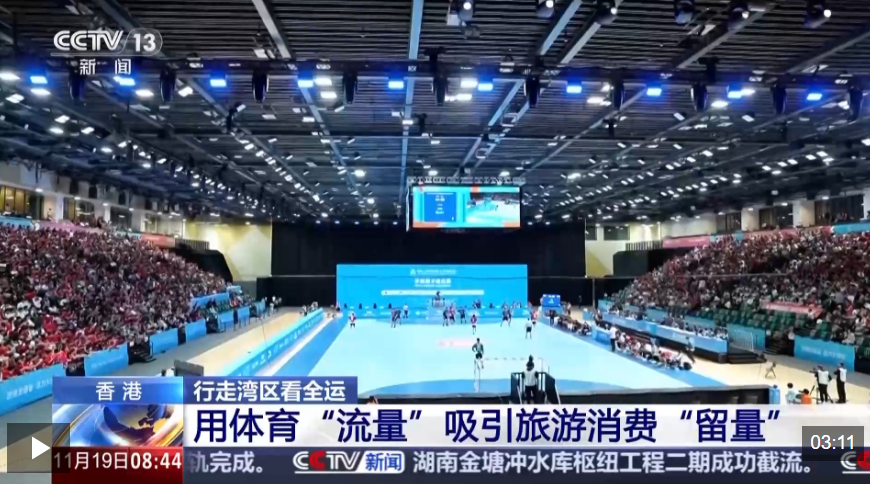
行走湾区看全运丨接住这波体育“流量” 香港的“留客”密码藏在街头巷尾
Yang Shi Xin Wen· 2025-11-20 02:07
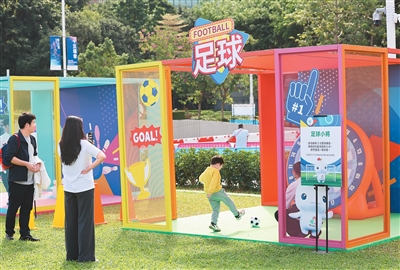
Core Viewpoint - The 15th National Games is the first large-scale national comprehensive event jointly held by Guangdong, Hong Kong, and Macau, showcasing the collaboration and shared glory of these regions [1] Group 1: Event Overview - The Hong Kong Sports Park, the main venue for the National Games in Hong Kong, was completed in March after six years of construction, making it the largest and newest sports facility in the region [3] - The design of the sports park emphasizes extreme space utilization, featuring a three-layered wall that changes color with light and a versatile floor that can switch between sports and performance modes [3] Group 2: Economic Impact - The event aims to attract tourism and consumption, with ticket prices starting as low as 50 HKD, allowing visitors to enjoy half a day of exciting competitions [4] - The concept of "event economy" has been promoted in Hong Kong, leveraging international sports events and cultural exhibitions to boost tourism and consumption [4] - The West Kowloon High-Speed Rail Station has seen a peak in daily inbound travelers, exceeding 50,000, with direct high-speed rail access from 96 mainland stations [4] Group 3: Community Engagement - The National Games has sparked a significant sports enthusiasm in Hong Kong, with many major events selling out in advance and the largest-ever delegation participating [6] - Hong Kong residents actively engage in various sports, utilizing both natural parks and urban spaces for recreational activities [7][8] Group 4: Talent Exchange - There has been an increase in sports talent exchange between Hong Kong and mainland China, with numerous coaches from the mainland assisting Hong Kong athletes [9] - The ongoing collaboration has led to the development of previously less popular sports, enhancing overall interest and participation [9] Group 5: Regional Integration - The event exemplifies the deep integration of the Greater Bay Area, with over 6,000 participants expected to travel from the mainland to Hong Kong for the games [12] - The implementation of convenient cross-border measures has facilitated smooth travel for participants, enhancing regional cooperation [12] Group 6: Economic Development - Over 300 mainland enterprises established regional headquarters in Hong Kong last year, contributing to the local economy [13] - Hong Kong continues to strengthen its position as a global economic hub, with new initiatives supporting its integration into national development [14]