太空+AI

Search documents
“宇宙订单”,能拯救这个行业吗?
财富FORTUNE· 2026-02-11 13:05
Core Viewpoint - The article discusses the emergence of a new term "Mars Chain" in the context of China's manufacturing industry, highlighting the potential shift in the solar photovoltaic (PV) sector due to Elon Musk's interest in deploying solar energy in space for AI applications [1][4]. Group 1: Industry Dynamics - The visit of Musk's team to Chinese solar companies has revitalized an industry struggling with price wars, positioning it at the intersection of "space + AI" [1][3]. - Musk predicts that within 36 months, space will become the cheapest location for deploying AI, leveraging unlimited solar energy, which could significantly enhance the appeal of the solar manufacturing sector [3][5]. - Following the news of Musk's visit, stock prices of leading solar companies like Jinko, Trina Solar, and Longi surged, reversing a prolonged period of underperformance [3][5]. Group 2: Technological Advancements - The transition from the "Fruit Chain" era, where Chinese companies primarily acted as manufacturers for Apple, to the "Mars Chain" era signifies a shift where Chinese firms are becoming core technology and material suppliers in the space solar industry [4][5]. - Key technological demands for space solar PV include higher energy conversion efficiency, lightweight and durable materials, and rapid scalability of production [5][6]. - Musk's team is particularly interested in two technological pathways: Heterojunction (HJT) and Perovskite technologies, which promise significant improvements in efficiency and adaptability to extreme conditions [6][7]. Group 3: Market Positioning - Chinese solar companies dominate the global supply chain, controlling over 90% of solar cell supply and 95% of polysilicon production, far surpassing U.S. capabilities [7][8]. - The cost of solar cells is expected to drop to historical lows of $0.20-$0.30 per watt by 2024-2025, making Chinese solar products significantly cheaper than those produced in the U.S. and Europe [8][9]. - Despite the excitement around space solar, the current market dynamics indicate that it may not be sufficient to resolve the overcapacity issues faced by the Chinese solar industry [9][10]. Group 4: Long-term Implications - The "Mars Chain" phenomenon offers a new valuation anchor for solar companies, potentially allowing them to be viewed as technology firms rather than traditional manufacturers [11]. - It encourages companies to climb the value chain by focusing on advanced technologies like HJT and Perovskite, which could differentiate them in a competitive market [11][12]. - The shift towards space solar could help re-educate the industry mindset, moving away from price competition towards a focus on performance and technological advancement [12].


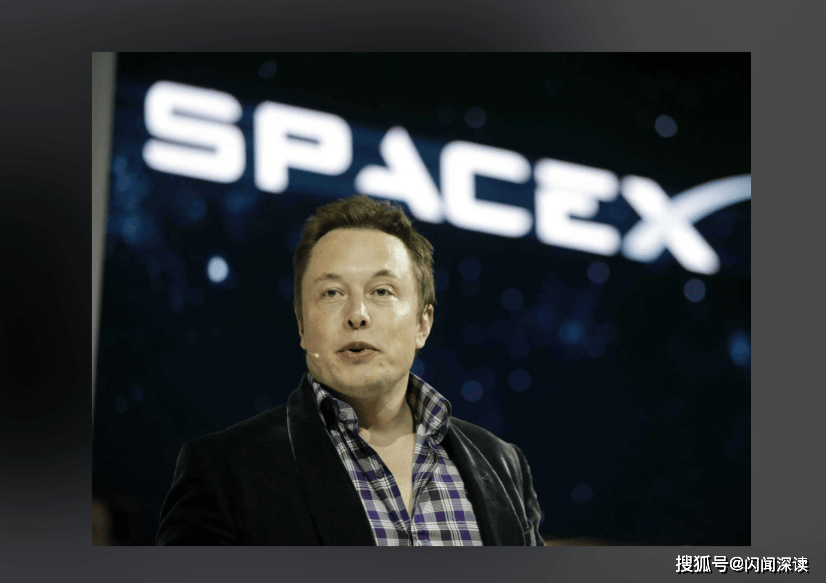
SpaceX与xAI合并 马斯克主导“太空+AI”布局 估值达1.25万亿美元
Sou Hu Cai Jing· 2026-02-03 06:11
Core Viewpoint - The merger between SpaceX and xAI aims to create a vertically integrated innovation engine that combines space exploration and artificial intelligence, marking a significant step in Elon Musk's "Space + AI" strategy [1][3]. Group 1: Merger Details - The newly formed entity will integrate four core capabilities: xAI's AI technology, SpaceX's rocket launch technology, Starlink's satellite internet, and communication technology that connects mobile devices [3]. - The merger is expected to result in a share price of approximately $527, with an overall valuation reaching $1.25 trillion, making it the most valuable private company globally [3][4]. - The merger will be executed through an all-stock transaction, with initial details shared via an internal memo to SpaceX employees [4]. Group 2: Strategic Vision - The core vision of the merger is to overcome the computational power bottleneck in AI development by relocating resource-intensive AI computing projects to space, leveraging the advantages of solar energy and low temperatures [4]. - SpaceX has already initiated plans to launch up to 1 million satellites to create an orbital data center constellation, which is expected to significantly enhance AI computing capabilities [4]. Group 3: Business Synergies - The merger will create synergies where xAI's AI technology will enhance SpaceX's operations, optimizing rocket launch scheduling and spacecraft navigation [5]. - SpaceX's infrastructure will provide unique support for xAI, helping it to differentiate itself in the competitive AI landscape against giants like OpenAI and Google [5]. - xAI will benefit from SpaceX's financial backing, alleviating cash flow pressures from its high R&D expenditures, which are projected to reach several billion dollars in 2024 [5]. Group 4: Industry Impact - The merger is expected to reshape the global technology competition landscape by establishing a dual computational barrier of "ground + space," widening the gap with traditional tech giants [6]. - The integration is anticipated to drive demand in related industries such as satellite computing chips, space photovoltaics, and inter-satellite communication, rapidly expanding the global space economy [6]. - The new entity plans to initiate a super IPO in mid-2026, aiming to raise $50 billion, which could set a record for global IPO fundraising [6]. Group 5: Future Outlook - The merger signifies the beginning of a new development phase in the global tech industry, where space computing will become a critical competitive advantage in AI [7]. - This development is expected to lead to breakthroughs in both human understanding of the universe and advancements in artificial intelligence [7].