
好房子时代

Search documents
滨江集团董事长戚金兴:2026年销售目标800亿元
Mei Ri Jing Ji Xin Wen· 2026-01-22 14:48
Core Insights - In 2025, Binjiang Group achieved a sales revenue of 101.7 billion yuan, maintaining its position as the tenth largest real estate company in China and the largest private real estate company [1] - The chairman, Qi Jinxing, emphasized that while the real estate industry is undergoing significant adjustments, there will always be opportunities for capable enterprises [1][2] - The company aims to focus on quality over quantity, adapting to the evolving market demands for better housing [2] Financial Performance - By the end of 2025, Binjiang Group's interest-bearing debt was reduced to 26.2 billion yuan, with a financing cost of 3.0% [1][4] - The company achieved a balance between deposits and loans, with cash reserves of 26.1 billion yuan [4][5] - The target for 2026 is set at a sales goal of approximately 80 billion yuan, with plans to further reduce interest-bearing debt by over 10% [10][11] Strategic Focus - Binjiang Group's strategy has shifted from "crawling forward" to "standing up and preparing to charge," indicating a readiness to seize opportunities while maintaining financial health [4][5] - The company is concentrating its efforts in Zhejiang, particularly in Hangzhou, which is seen as a key market due to its economic vitality and favorable business environment [6][9] - The investment strategy includes a focus on land acquisition, with planned investments between 15 billion to 20 billion yuan, prioritizing 60% of funds for Hangzhou [11] Market Positioning - The company defines "good housing" as not necessarily expensive but characterized by quality construction, good design, and excellent service [7] - Binjiang Group has committed to maintaining product quality and has no plans to reduce standards, viewing this as essential for long-term success [7][8] - The company aims to set a benchmark for quality housing in Shanghai, leveraging partnerships with established state-owned enterprises for strategic expansion [11][12]

专访滨江集团董事长戚金兴:2026年销售目标800亿元
Sou Hu Cai Jing· 2026-01-21 01:59
Core Insights - In 2025, Binhai Group achieved a sales revenue of 101.7 billion yuan, marking the sixth consecutive year of exceeding the 100 billion yuan threshold, ranking tenth among national real estate companies and first among private firms [1] - Chairman Qi Jinxing emphasized that while the real estate industry is undergoing significant adjustments, there will always be companies that can navigate the challenges effectively [4][5] - The company aims to transition from a focus on scale to one on quality, with a projected national housing sales figure of over 8 trillion yuan in 2025, indicating the sector's enduring importance in the economy [4] Financial Performance - By the end of 2025, Binhai Group reduced its interest-bearing debt to 26.2 billion yuan and achieved a financing cost of 3.0%, indicating a balanced financial position [1][7] - The company maintained a land acquisition amount of 19.2 billion yuan, ranking seventh nationally and first among private firms [7] Strategic Direction - The company has shifted its strategy from "crawling forward" to "standing up and preparing to charge," focusing on financial stability and readiness for future opportunities [7] - For 2026, Binhai Group set a sales target of approximately 80 billion yuan, aiming to maintain over 1% of the national market share despite longer construction cycles [11] Market Positioning - Binhai Group is committed to the "good house" concept, which emphasizes quality over price, defining it through five key attributes: good architecture, good landscape, good decoration, good facilities, and good service [9] - The company plans to focus its investments primarily in Hangzhou, with 60% of funds allocated there, while also targeting Shanghai for expansion, marking a strategic shift from previous approaches [12] Industry Perspective - The real estate sector is viewed as a critical component of the Chinese economy, with a persistent demand for improved living standards, suggesting that the industry will evolve rather than disappear [4][5] - Binhai Group's resilience and commitment to quality serve as a confidence symbol in the private sector, demonstrating that well-managed companies can thrive even in challenging market conditions [8]

马云预言成真?2026年房子真要“葱价”了?四大转折已悄悄逼近!
Sou Hu Cai Jing· 2026-01-14 18:39
Core Viewpoint - The prediction made by Jack Ma about housing prices becoming as cheap as scallions by 2026 is increasingly being seen as plausible, with significant changes anticipated in the real estate market that could impact everyday life [1] Group 1: Market Trends - First turning point: Even first-tier cities may face a price correction, with potential declines spreading from suburban areas to city centers and affecting both old and new properties [3] - The price-to-income ratio in first-tier cities has exceeded 40, making homeownership unattainable for many, while income growth is stagnating, leading to a potential sell-off by investors [4] Group 2: Sales Model Changes - The era of selling pre-sale properties is ending, with a shift towards selling completed homes, allowing buyers to inspect properties before purchase, thus reducing risks associated with unfinished projects [5][6] - This change is expected to enhance buyer confidence and compel developers to focus on quality construction [5] Group 3: Quality of Housing - The market is transitioning to a buyer's market where consumers demand higher quality homes, leading developers to prioritize better construction standards and innovative designs [8] - Policies are encouraging the construction of high-quality homes, moving away from subpar developments [8] Group 4: Transparency in Sales - The elimination of shared areas in property sales is gaining traction, with cities like Zhaoqing and Zhangjiakou already implementing sales based on usable area, which could lead to greater transparency in the housing market [9] - This shift is expected to reduce costs for buyers and promote industry transparency, making it harder for unscrupulous developers to exploit loopholes [9] Group 5: Implications for Consumers - The anticipated changes reflect a broader shift in the real estate market from speculation to genuine housing needs, urging consumers to be cautious about investment and focus on personal housing requirements [11]
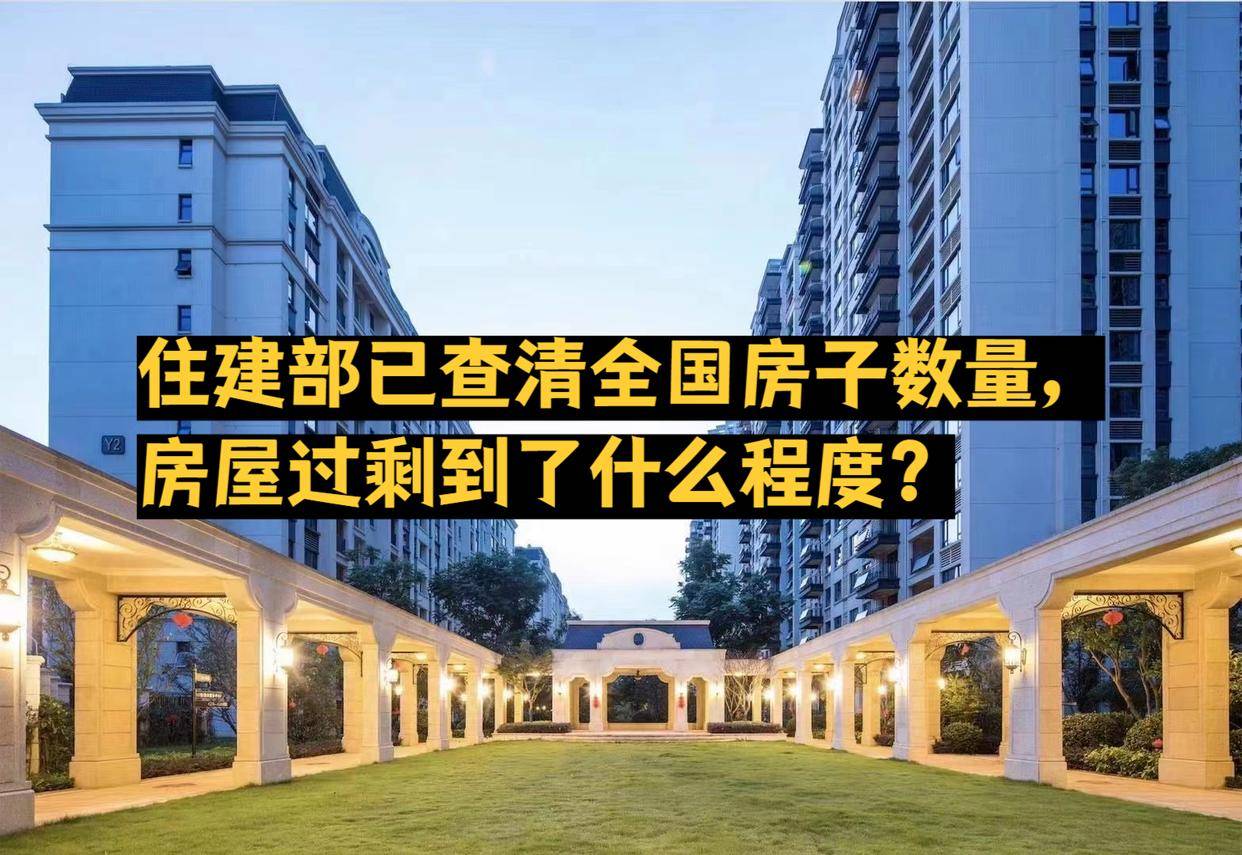
全国房子数量已查清,房屋过剩到了什么程度?楼市或将迎来新变局?
Sou Hu Cai Jing· 2025-12-08 07:00
Core Insights - The Ministry of Housing and Urban-Rural Development's national housing census reveals a significant surplus in housing, with 660 million buildings nationwide and over 120 million vacant units, capable of accommodating 360 million people, while the actual population is only 1.4 billion [1][2] Group 1: Housing Supply and Demand - The total housing stock in China has reached 600 million units, with urban areas accounting for 330 million and rural areas for 270 million. This indicates a severe oversupply, as the housing could theoretically accommodate 3 billion people, far exceeding the actual population [1] - There is a stark contrast in housing demand between first and second-tier cities versus third and fourth-tier cities. High-quality housing in prime locations is in high demand, while many new developments in lower-tier cities remain unsold, with some areas experiencing a sales cycle exceeding 30 months [1][2] Group 2: Causes of Housing Surplus - Population migration has led to a mismatch in housing distribution, with many young people moving to first and second-tier cities where housing supply cannot keep pace with demand, while third and fourth-tier cities have excess inventory due to overbuilding [4] - Speculative investment in real estate has resulted in many properties being held as assets rather than being occupied, particularly in lower-tier cities where the demand has diminished [5] - Historical urban planning practices have led to blind expansion, creating new districts without sufficient population or infrastructure support, resulting in many "ghost towns" [6] - Developers misjudged market conditions, leading to excessive land acquisition and construction during a period of rising prices, which has now resulted in significant inventory in the market [6] - The reliance on land sales for local government revenue has driven excessive residential land supply, particularly in smaller cities with declining populations [7] Group 3: Housing Market Dynamics - Families face challenges in finding suitable housing despite the overall surplus, highlighting a structural mismatch where the available housing does not meet the needs of families, particularly those with elderly and young dependents [9] - The Ministry of Housing plans to implement differentiated policies based on census data, focusing on targeted measures for different city tiers to address the surplus and improve housing availability [10] - The introduction of property taxes is anticipated, which could discourage speculation and increase housing supply by incentivizing owners of multiple properties to sell or rent [10] - The rental market is expected to receive more support, promoting a balanced housing system where renting becomes a viable option for many, especially younger generations [11] - The demand for higher quality housing is increasing, with future developments expected to focus on better design, community amenities, and sustainability [12]
财报抢先看!万科上半年销售额近750亿元,经营服务业务收入稳步增长
Di Yi Cai Jing· 2025-08-22 13:04
Core Viewpoint - Vanke is making steady progress in reform and risk management, achieving significant financial results and operational efficiency in the first half of 2023 [1][2][5]. Financial Performance - Vanke reported a revenue of 105.3 billion, with sales income nearing 70 billion and a high-quality delivery of over 45,000 units [1]. - The company achieved a sales collection rate exceeding 100%, with project opening absorption rates above 90% in multiple locations [1][2]. - Vanke has successfully revitalized nearly 800 billion in saleable value since the beginning of 2023, with a total of 60 billion in cash recovery from revitalization efforts [1][2]. Operational Efficiency - The company has implemented cost reduction and efficiency enhancement measures, resulting in a decrease in both management and marketing expenses [1]. - Vanke's operational service business generated a total income of 28.4 billion, maintaining a leading position in the industry [1]. Product Development - Vanke is evolving its "Three Good" residential product standards, receiving positive market feedback, with projects in cities like Chengdu, Wenzhou, and Tianjin achieving over 90% absorption rates [2]. - The company has delivered over 45,000 homes in the first half of the year, with more than 50 projects achieving "delivery and certification" simultaneously [2]. Business Segments - Vanke's property service business, including Wanwu Cloud, achieved a revenue of 18.2 billion, maintaining industry-leading capabilities in the stock residential market [3]. - The long-term rental apartment segment remains the largest in scale and efficiency, managing over 270,000 units and serving over 6,200 corporate clients [3]. Technological Innovation - Vanke is leveraging technology to enhance product services, with innovations in smart construction and property management systems [4]. - The company has completed over 320,000 smart inspections and developed a real-time response network for property service requests [4]. Strategic Partnerships - Vanke is actively strengthening its collaboration with major shareholder Shenzhen Metro Group, exploring new business opportunities in housing rental and integrated development [5]. - The company is also looking to innovate in logistics and other sectors through strategic partnerships with government and industry leaders [5].

速读万科半年报:营收1053亿、偿债有序推进、多举措降本增效
Xin Lang Cai Jing· 2025-08-22 12:18
Core Viewpoint - Vanke is committed to returning to healthy development through decisive actions and comprehensive efforts, achieving significant financial results and operational efficiency in the first half of 2025 [1][2][5] Financial Performance - Vanke reported a revenue of 105.3 billion and sales income of nearly 70 billion, with over 45,000 high-quality deliveries and a sales collection rate exceeding 100% [1] - The company has revitalized nearly 800 billion in saleable value since 2023, with a total of 60 billion in cash recovery from revitalization efforts [1][2] Operational Efficiency - Vanke's management and marketing expenses decreased due to lean management and comprehensive marketing strategies, while operational services revenue reached 28.4 billion, maintaining industry-leading efficiency [1][3] - The company achieved a sales gross margin of 16% with an investment realization rate of 85% for new projects since 2022 [2] Product and Service Innovation - Vanke is advancing its "good house" residential product standards, receiving positive market feedback, with project sell-through rates exceeding 90% in cities like Chengdu and Wenzhou [2] - The company has implemented technology in construction and property services, including a large model for architectural drawings and automated operations in long-term rental apartments [4] Strategic Partnerships - Vanke is enhancing collaboration with its major shareholder, Shenzhen Metro Group, exploring opportunities in housing rental, logistics, and comprehensive development [5] - The company is actively seeking to innovate and build strategic partnerships with government entities, state-owned enterprises, and industry leaders to strengthen its market position [5]
滨江集团(002244):2024年报点评:“好房子”时代受益者,盈利有望逐渐修复
Huachuang Securities· 2025-04-30 08:43
Investment Rating - The report maintains a "Recommended" rating for the company with a target price of 11.4 yuan, based on a projected 12 times PE for 2025 [4][8]. Core Views - The company is expected to benefit from the "Good House" era, with profitability gradually recovering. In 2024, the company is projected to achieve total revenue of 69.152 billion yuan, a year-on-year decrease of 1.83%, and a net profit attributable to the parent company of 2.546 billion yuan, a year-on-year increase of 0.66% [2][4][8]. Financial Performance Summary - **Revenue and Profit Forecasts**: - 2024: Revenue of 69.152 billion yuan, net profit of 2.546 billion yuan - 2025: Revenue of 72.550 billion yuan, net profit of 2.987 billion yuan - 2026: Revenue of 70.279 billion yuan, net profit of 3.281 billion yuan - 2027: Revenue of 62.982 billion yuan, net profit of 3.331 billion yuan [2][9]. - **Growth Rates**: - Revenue growth rates: -1.8% (2024), 4.9% (2025), -3.1% (2026), -10.4% (2027) - Net profit growth rates: 0.7% (2024), 17.3% (2025), 9.9% (2026), 1.5% (2027) [2][9]. - **Earnings Per Share (EPS)**: - 2024: 0.82 yuan - 2025: 0.96 yuan - 2026: 1.05 yuan - 2027: 1.07 yuan [2][9]. - **Valuation Ratios**: - PE ratio: 12 (2024), 10 (2025), 10 (2026), 9 (2027) - PB ratio: 1.1 (2024), 1.1 (2025), 1.0 (2026), 0.9 (2027) [2][9]. Market Position and Strategy - The company has a strong market presence in Hangzhou, with 69% of its sales coming from this region. It has been the sales champion in Hangzhou for seven consecutive years, indicating significant scale advantages [8][9]. - In 2024, the company plans to focus its investments primarily in Hangzhou, with an investment intensity of approximately 40%. The company has acquired 23 new land reserve projects, with only one located outside Hangzhou [8][9]. - The company aims to achieve a sales target of around 100 billion yuan in 2024, despite a projected 27% decline in sales amount [8][9]. - The report highlights the company's strong cost control capabilities and operational efficiency, which are expected to support a gradual recovery in gross margins as older projects are completed [8][9].