
宁朴毋华

Search documents
《杨振宁传》:他留下的8字箴言,让我顿悟了人生的至高境界
洞见· 2025-10-30 12:20
Core Viewpoint - The article reflects on the life and contributions of physicist Yang Zhenning, emphasizing the values of simplicity and diligence in achieving true success and understanding in science [4][6][15]. Group 1: Yang Zhenning's Academic Journey - Yang Zhenning is celebrated for his significant contributions to particle physics, statistical mechanics, and condensed matter physics, earning a Nobel Prize for his work [4]. - He exemplified hard work and dedication, often spending decades on academic problems without seeking shortcuts, as seen in his development of gauge theory [6][8]. - His approach to research was characterized by thoroughness, as he meticulously reviewed existing literature to validate his theories, leading to groundbreaking discoveries [6][12]. Group 2: Personal Philosophy and Lifestyle - Yang Zhenning lived a life of simplicity, avoiding material excess and focusing on his academic pursuits, which allowed him to maintain clarity and dedication to his work [11][12]. - He maintained a modest lifestyle throughout his career, often seen riding an old bicycle and living in a sparsely furnished home, reflecting his belief in prioritizing intellectual over material wealth [11][12]. - His teaching philosophy emphasized the importance of foundational knowledge, as he returned to teach at Tsinghua University, focusing on undergraduate education rather than pursuing personal accolades [16][18]. Group 3: Legacy and Impact - Yang Zhenning's legacy is not only in his scientific achievements but also in his embodiment of the principles of humility and hard work, which serve as a model for future generations [15][18]. - He believed that true wisdom comes from simplicity and authenticity, stating that his greatest achievement was living a genuine life rather than merely excelling in physics [18]. - The article concludes with a call to embrace simplicity and diligence in one's own life, inspired by Yang Zhenning's example [18].

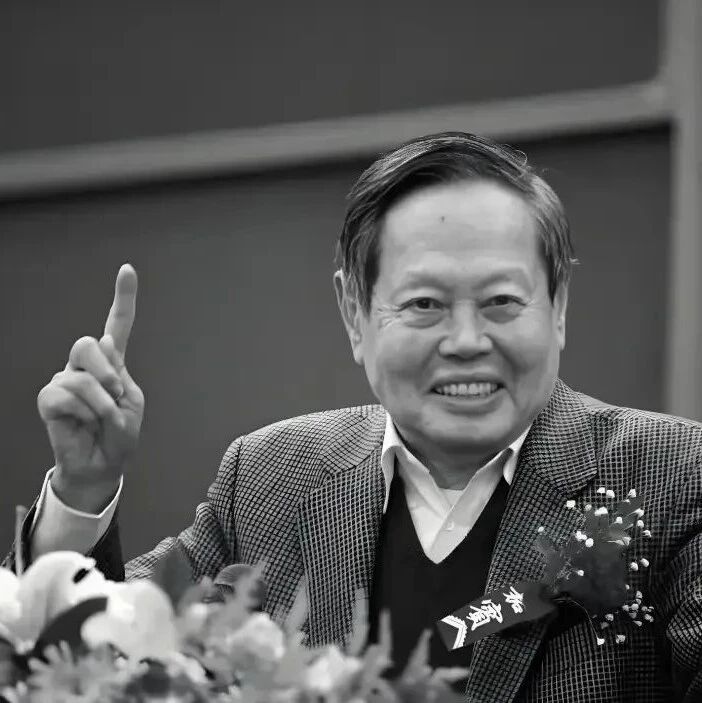
读懂杨振宁的“宁拙毋巧,宁朴毋华”(观象台)
Ren Min Ri Bao· 2025-10-21 22:39
Core Viewpoint - The article emphasizes the importance of a grounded and sincere approach to scientific research, advocating for the principle of "宁拙毋巧,宁朴毋华" (prefer clumsiness over cleverness, prefer simplicity over extravagance) as a guiding philosophy for researchers in China [1][3]. Group 1: Scientific Attitude and Values - Yang Zhenning, a renowned physicist, exemplifies the value of perseverance and dedication in scientific inquiry, demonstrating that significant discoveries often stem from persistent effort rather than quick success [1][2]. - The article highlights Yang's commitment to rigorous research, noting his extensive time spent on experiments and theoretical work, which ultimately led to groundbreaking contributions in physics [1][2]. - The notion of "clumsiness" in research is framed as a form of academic discipline, where thorough understanding and attention to detail are prioritized over superficial achievements [1][3]. Group 2: National Pride and Educational Commitment - Yang Zhenning's dedication to his homeland is evident in his ongoing contributions to education, including teaching at Tsinghua University and establishing the Tsinghua University Institute for Advanced Study [2]. - The article underscores the importance of nurturing a sense of responsibility towards one's country in the pursuit of scientific excellence, suggesting that researchers should integrate patriotism into their work [3]. - The call for researchers to adopt a humble and earnest approach is positioned as essential for advancing China's scientific endeavors and achieving long-term success in technology [3].
103岁杨振宁逝世:走得稳的人,往往走得最远
3 6 Ke· 2025-10-20 00:06
Core Points - The article discusses the passing of renowned physicist Yang Zhenning at the age of 103, highlighting his significant contributions to physics and his dedication to Chinese scientific research [1][5]. Group 1 - Yang Zhenning was the first Chinese Nobel laureate and is regarded as one of the greatest physicists of the 20th century, second only to Einstein [1][2]. - His most important contribution is the Yang-Mills theory, which is foundational in particle physics, with seven Nobel Prizes awarded based on this theory [3]. - In 2003, at the age of 81, Yang returned to China, sold his house in the U.S., and dedicated himself to advancing scientific research in China, including teaching at Tsinghua University and founding the Tsinghua University Institute for Advanced Study [4]. Group 2 - Yang's philosophy emphasized the importance of hard work and persistence over seeking shortcuts, advising students to focus on solid foundational skills [9][10]. - He believed that success comes from practical experience and hands-on efforts, encouraging individuals to engage actively in problem-solving rather than merely theorizing [13][20]. - Yang advocated for a method of addressing challenges by categorizing them into three parts: immediate solutions, waiting for the right moment, and accepting unchangeable facts [22][25]. Group 3 - He stressed the necessity of enduring solitude for significant academic achievements, equating deep work with a degree of loneliness that fosters focus and creativity [29][34]. - Yang's insights on perseverance highlight that true success often requires enduring repetitive tasks and maintaining inner motivation despite external recognition [36][38].