
对华政策

Search documents
连续3次喊话中国后,特朗普撒下弥天大谎,把3亿多美国人当猴耍
Sou Hu Cai Jing· 2026-02-26 09:22
Core Viewpoint - The article discusses the implications of the U.S. Supreme Court's ruling on Trump's trade policies, highlighting the administration's frantic attempts to communicate with China amidst a loss of leverage due to the invalidation of tariffs [1][3][5]. Group 1: Supreme Court Ruling and Immediate Reactions - The U.S. Supreme Court ruled 6-3 against the Trump administration's use of the International Emergency Economic Powers Act, rendering it ineffective [3]. - Following the ruling, senior trade representative Greer was dispatched to send signals to China, urging them not to exploit the situation and to adhere to previous trade agreements [3][5]. Group 2: Economic Context and Domestic Pressures - The article notes that the U.S. economy is facing significant challenges, with the GDP growth rate for Q4 2025 at only 1.4%, a sharp decline from 4.4% in Q3 [6][7]. - Despite claims of economic prosperity, public sentiment regarding Trump's handling of the economy, inflation, and tariffs is low, with approval ratings below 40% [9][10]. Group 3: Strategic Avoidance of China in Public Discourse - During the State of the Union address, Trump notably avoided mentioning China, despite discussing other international issues, indicating a strategic decision to prevent potential backlash from a trade dispute [10][12]. - The avoidance of direct confrontation with China is seen as a tactic to maintain a facade of control and to prepare for an upcoming visit to China, aiming to create a more favorable diplomatic atmosphere [14][15].


被打疼!这个挑衅中国的国家想认错了
Xin Lang Cai Jing· 2026-02-08 13:25
Core Viewpoint - Lithuania's new Prime Minister acknowledges a significant error in its China policy, particularly regarding the establishment of a "Taiwan Representative Office," which has led to severe diplomatic and economic repercussions [1][2]. Group 1: Economic Impact - Lithuania's exports to China have plummeted by over 50%, severely affecting key industries such as timber and dairy [1]. - The phenomenon of "de-Lithuanization" in the global high-tech supply chain has emerged, indicating a shift away from Lithuanian suppliers [1]. - The throughput of the Klaipeda deep-water port has significantly decreased due to the rerouting of China-Europe freight trains [1]. Group 2: Political Reactions - Both the Prime Minister and President of Lithuania express a desire to visit China soon, indicating a shift towards repairing bilateral relations [1]. - The Prime Minister reflects on the lack of appreciation from the international community for Lithuania's previous stance, suggesting a need for more sincere actions to rectify past mistakes [2]. - In contrast, leaders from other Western nations, such as the UK, Canada, Finland, and Ireland, are actively visiting China to strengthen cooperation [1].
反对党就访华在议会胡搅蛮缠,英国首相回击:你们就像把头埋在沙子里一样逃避现实
Xin Lang Cai Jing· 2026-02-03 04:22
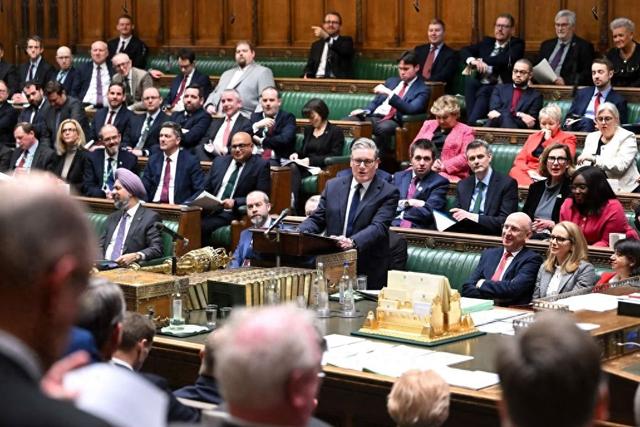
Core Viewpoint - The visit of UK Prime Minister Keir Starmer to China is seen as a significant step towards improving UK-China relations and enhancing economic cooperation, despite criticism from opposition parties regarding the outcomes of the trip [1][10]. Group 1: Economic Cooperation - Starmer's visit included discussions on various topics such as whisky tariffs and visa-free travel to China, indicating a focus on trade and economic collaboration [7][10]. - The UK business delegation accompanying Starmer expressed optimism about the opportunities in China, highlighting the need for a proactive approach to seize these opportunities [10][11]. - The bilateral trade between the UK and China is projected to reach $103.7 billion by 2025, with service trade expected to exceed $30 billion [11]. Group 2: Political Reactions - Opposition leader Kemi Badenoch criticized Starmer's approach to China, labeling it as weak and short-sighted, while also making unfounded accusations regarding espionage [1][5]. - Starmer countered the criticism by emphasizing the importance of engagement with China and the need for a mature relationship that acknowledges both cooperation and differences [8][9]. - There are mixed reactions within the UK political landscape, with some supporting Starmer's engagement strategy while others express concerns about the UK's position in these discussions [9][10]. Group 3: Cultural Exchange - Starmer's visit also included cultural exchanges, with representatives from cultural institutions participating, indicating a broader approach to UK-China relations beyond just economic ties [11][13]. - The importance of learning Chinese was highlighted as a way to strengthen bilateral relations, with initiatives like university exchange programs being considered [13].
德媒:“对北京来说,正是好时机”
Xin Lang Cai Jing· 2026-01-27 00:43
Core Viewpoint - The recent dialogue meeting indicates a shift in the dynamics between the U.S. and Germany regarding China, with the U.S. showing little interest in coordinating policies with Germany, leading to a lack of coherent strategy towards China [1][6]. Group 1: U.S.-Germany Dialogue - The U.S. and Germany have held regular "U.S.-Germany dialogue on China" meetings for 14 years, but this year's meeting revealed a significant change in approach [1][6]. - The meeting took place on January 21-22, coinciding with tensions between Europe and the U.S. over Greenland [1][6]. Group 2: U.S. Participation and Internal Disputes - U.S. participation in the meeting was notably low, with no government representatives present, highlighting a lack of interest in coordinating with Germany on China [3][8]. - There are ongoing internal disputes within the U.S. government regarding the direction of China policy, described as "conceptual differences" [3][8]. Group 3: China's Position - China is leveraging the U.S.'s negative impact on other countries to position itself as a reliable partner, with Canada recently shifting its stance towards China [4][8]. - The urgency for Germany to reduce its dependency on both China and the U.S. has increased, as indicated by the handling of the Greenland issue by the Trump administration [9].
马克龙威胁话音刚落,德国送来定心丸,德外长当面表态不会奉行保护主义!
Sou Hu Cai Jing· 2025-12-11 06:07
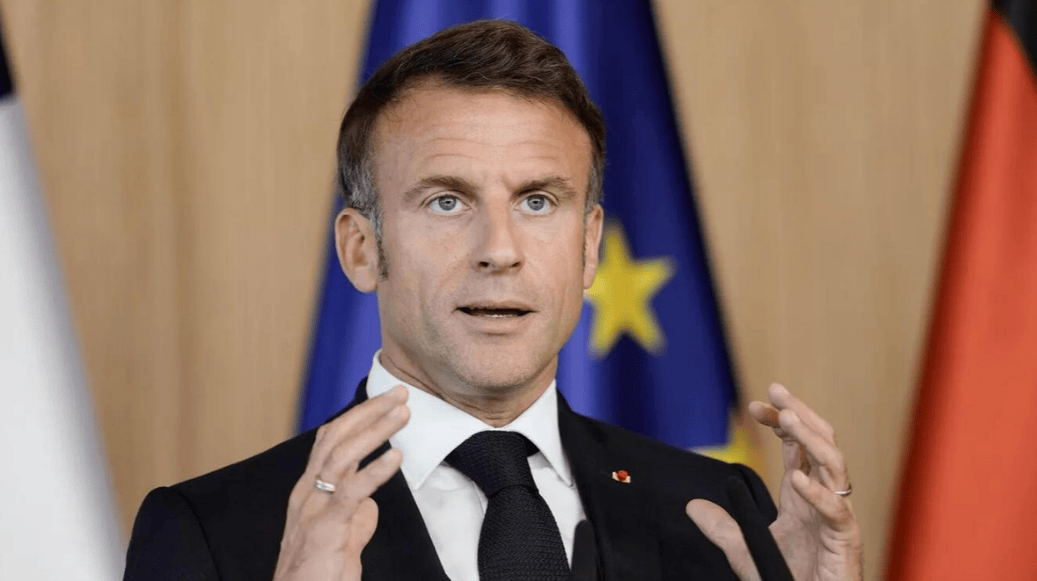
Core Viewpoint - The recent diplomatic interactions between France and Germany regarding China have revealed significant policy divergences, with France adopting a more confrontational stance while Germany emphasizes continued cooperation [1][3]. Group 1: France's Position - President Macron's initial visit to China aimed to strengthen economic ties, particularly in high-tech and green energy sectors, but he later proposed increasing tariffs on China to address trade deficits upon returning to France [1][3]. - Macron's shift in tone reflects an attempt to respond to rising nationalist sentiments domestically, balancing economic interests with the need to maintain a cooperative relationship with China [3][8]. Group 2: Germany's Position - Germany, represented by Foreign Minister Baerbock, has taken a pragmatic approach, expressing a commitment to deepening cooperation with China and rejecting protectionist policies [3][5]. - The German government recognizes that stable relations with China are crucial for its economic recovery and industrial competitiveness, especially as China is Germany's largest trading partner [5][8]. Group 3: EU's Stance - The EU's overall attitude towards China is evolving, with EU Foreign Minister Kaja Kallas emphasizing the bloc's significant economic influence and ability to exert pressure on China [6]. - This shift aims to strengthen internal unity within the EU while supporting France's tougher stance, contrasting with Germany's more flexible approach [6][8]. Group 4: Implications for Future Relations - The divergence in Franco-German policies towards China highlights the complexities of the global economic landscape and the potential for increased tension within the EU [8]. - The ability of Germany to maintain its independent stance within the EU framework while managing its extensive trade relations with China remains a critical point of observation [8].
X @外汇交易员
外汇交易员· 2025-10-21 05:43
Geopolitical Stance - The report indicates a confrontational stance towards China, defining it as a fundamental "economic and strategic threat" to Japan [1] - The report highlights the need to monitor China to protect Japan from danger [1] Economic Security and Cooperation - The report suggests strengthening cooperation with Taiwan in semiconductors, energy, and AI to build a "non-red supply chain" [1]