
中文教育服务

Search documents
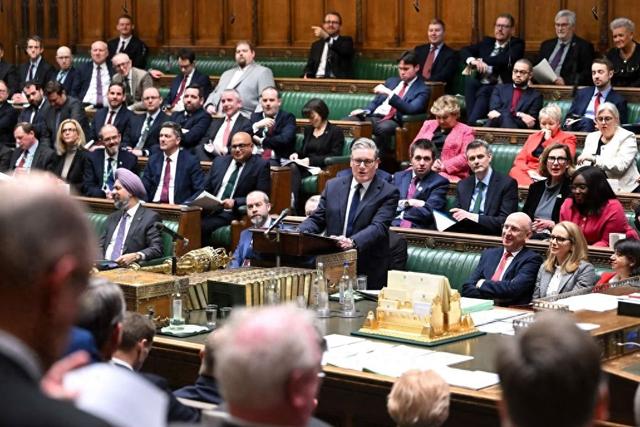
反对党就访华在议会胡搅蛮缠,英国首相回击:你们就像把头埋在沙子里一样逃避现实
Xin Lang Cai Jing· 2026-02-03 04:22
Core Viewpoint - The visit of UK Prime Minister Keir Starmer to China is seen as a significant step towards improving UK-China relations and enhancing economic cooperation, despite criticism from opposition parties regarding the outcomes of the trip [1][10]. Group 1: Economic Cooperation - Starmer's visit included discussions on various topics such as whisky tariffs and visa-free travel to China, indicating a focus on trade and economic collaboration [7][10]. - The UK business delegation accompanying Starmer expressed optimism about the opportunities in China, highlighting the need for a proactive approach to seize these opportunities [10][11]. - The bilateral trade between the UK and China is projected to reach $103.7 billion by 2025, with service trade expected to exceed $30 billion [11]. Group 2: Political Reactions - Opposition leader Kemi Badenoch criticized Starmer's approach to China, labeling it as weak and short-sighted, while also making unfounded accusations regarding espionage [1][5]. - Starmer countered the criticism by emphasizing the importance of engagement with China and the need for a mature relationship that acknowledges both cooperation and differences [8][9]. - There are mixed reactions within the UK political landscape, with some supporting Starmer's engagement strategy while others express concerns about the UK's position in these discussions [9][10]. Group 3: Cultural Exchange - Starmer's visit also included cultural exchanges, with representatives from cultural institutions participating, indicating a broader approach to UK-China relations beyond just economic ties [11][13]. - The importance of learning Chinese was highlighted as a way to strengthen bilateral relations, with initiatives like university exchange programs being considered [13].

今年将出台扩大入境消费政策措施
Zhong Guo Zheng Quan Bao· 2026-01-26 20:54
Group 1: Foreign Trade and Investment - The Ministry of Commerce aims to expand high-level foreign investment and enhance the "Invest in China" brand by 2026, amidst a complex external environment with both opportunities and challenges [1][2] - A comprehensive policy approach will be adopted to support foreign trade, including new policies and measures to assist enterprises in international exhibitions and trade promotion activities [1][3] - The Ministry will focus on optimizing foreign investment support policies, ensuring equal treatment for foreign enterprises in various economic activities [3] Group 2: Service Trade Development - The Ministry plans to improve the negative list management system for cross-border service trade and promote the opening of service markets, including the establishment of national service trade innovation development demonstration zones [2][3] - There will be an emphasis on enhancing the international service capabilities of professional service institutions and promoting traditional service exports such as Chinese medicine and cuisine [2] - A national-level overseas comprehensive service platform will be launched to provide a one-stop service for enterprises going abroad, covering various support areas [2] Group 3: Consumer Market and Domestic Demand - The Ministry will focus on expanding domestic demand as a strategic priority, with initiatives to promote the replacement of old consumer goods and stimulate consumption in durable goods like automobiles and electronics [4] - Efforts will be made to improve the consumption environment by developing international consumption center cities and creating new consumption scenarios [4] - The Ministry will also work on removing unreasonable restrictions in service consumption sectors to encourage fair competition and enhance service supply [4]
2026年如何提振消费、稳定外贸、拓展双向投资?
Xin Lang Cai Jing· 2026-01-26 16:55
Group 1: Consumer Promotion and Service Sector Growth - In 2026, the Ministry of Commerce will optimize the implementation of the old-for-new consumption policy to boost sales of durable goods such as automobiles and home appliances [2] - The service sector is identified as a key driver for domestic demand expansion and transformation, with initiatives to enhance the supply levels in cultural, entertainment, tourism, and healthcare sectors [2] - The Ministry will continue to promote service consumption quality improvement actions and remove unreasonable restrictions in service consumption areas [2] Group 2: Foreign Trade Stability and Innovation - The Ministry of Commerce aims to stabilize the foreign trade base through a combination of policies and support for cross-border e-commerce development [4] - Service trade and digital trade are highlighted as important areas for innovation, with plans to establish national service trade innovation development demonstration zones [4] - The Ministry will promote the "Export China" brand and leverage major trade exhibitions to expand imports from countries involved in the Belt and Road Initiative [4][5] Group 3: Attracting Foreign Investment - In 2026, efforts will be made to enhance the attractiveness of foreign investment by expanding access in sectors like telecommunications, healthcare, and education [7] - The Ministry will implement policies to support foreign enterprises in participating in consumption stimulation and government procurement activities [7] - A national-level overseas comprehensive service platform will be established to provide a one-stop service for companies going abroad, integrating various service resources [8]
泰国教育部民教委与泰国华文教师公会签约推动中文教育
Xin Lang Cai Jing· 2026-01-19 16:10
Group 1 - The Thai Ministry of Education and the Thai Chinese Teachers Association signed a memorandum to promote cooperation in Chinese education [1] - The memorandum aims to institutionalize cooperation mechanisms to standardize the development of Chinese education in private schools in Thailand [1] - Key initiatives include supporting the construction of Chinese curricula, innovating teaching models, enhancing training for Thai Chinese teachers, and expanding channels for students to learn Chinese and Chinese culture [1] Group 2 - The Thai Chinese Teachers Association, established in 1979, has been dedicated to the development of Chinese education in Thailand [2] - Recent efforts by the association include the formulation of a five-year development plan, improving local teachers' Chinese proficiency, increasing Chinese course hours, and establishing a Thai version of the teacher qualification examination system [2] - These initiatives provide institutional support for the sustainable and high-quality development of Chinese education in Thailand [2]
让华裔青少年找到回家的路
Ren Min Ri Bao Hai Wai Ban· 2025-06-23 01:20
Core Viewpoint - The article highlights the journey of Lin Weihua, a Chinese immigrant in Spain, who established a Chinese language school, Konglin Academy, to promote Chinese culture and education among overseas Chinese children [1][2][3]. Group 1: Background and Establishment - Lin Weihua, originally a teacher in China, moved to Spain in 2005 to reunite with his wife and initially engaged in various businesses before returning to education [1]. - In 2015, Lin Weihua founded Konglin Academy in Barcelona, securing a public school venue and actively recruiting students [1][2]. Group 2: Educational Approach - Konglin Academy employs a small class teaching model, with around 25 students per class and a total enrollment of over 300 students [2]. - The school offers a comprehensive curriculum that includes Chinese language classes, as well as cultural courses such as Chinese painting, dance, and martial arts [2]. Group 3: Cultural Exchange and Activities - Lin Weihua emphasizes the importance of cultural exchange, organizing annual events like the "Konglin Education Cup" poetry recitation and essay competitions to foster a love for Chinese culture among students [2][3]. - The academy facilitates cultural trips to China, allowing students to explore their heritage and participate in activities that deepen their understanding of Chinese culture [3][4]. Group 4: Impact on Students - Students express that participation in cultural exchange programs enhances their understanding of Chinese traditions and fosters friendships, contributing to their personal growth [4]. - Lin Weihua believes that these experiences are crucial for the students to retain their cultural roots and become ambassadors of Chinese culture in the future [4].