寻租

Search documents
解读:特朗普突批H200入华,抽成25%背后的大棋局
未可知人工智能研究院· 2025-12-09 10:01
Core Viewpoint - The article discusses the recent shift in U.S. technology policy regarding the export of AI chips to China, highlighting the implications of this decision for both American companies and the global AI chip industry. It emphasizes the complex interplay of business interests, national security, and the evolving landscape of China's domestic chip industry. Group 1: Policy Shift and Its Implications - On December 8, 2025, President Trump announced the approval for NVIDIA to export H200 AI chips to China, with the U.S. government taking a 25% cut from each sale, marking a significant policy reversal from previous export bans [1][2] - The decision followed a closed-door meeting between NVIDIA CEO Jensen Huang and U.S. government officials, where Huang sought to restore chip exports to mitigate NVIDIA's declining sales in China, which had resulted in a write-down of approximately $5.5 billion [4][5] - The U.S. government aims to balance maintaining its chip market position while ensuring technological superiority and extracting financial benefits from the deal [5][6] Group 2: Economic Analysis of the Deal - Industry estimates suggest NVIDIA could export between $2 billion to $5 billion worth of chips quarterly to China, meaning the U.S. government could earn $500 million per quarter, totaling $2 billion annually without any investment in R&D or manufacturing [6][7] - This arrangement is characterized as "rent-seeking," where the U.S. government collects a "protection fee" from NVIDIA, which still finds the deal beneficial compared to the zero revenue it faced under the export ban [7][8] Group 3: China's Response and Market Dynamics - Despite the U.S. expectations, the Chinese market's response to the H200 chips has been more cautious than anticipated, with concerns over reliability and cost-effectiveness [29][30] - Factors influencing China's reluctance include a broken trust in U.S. supply chains, the high cost of H200 due to the 25% fee, and the potential security risks associated with U.S. technology [31][33][34] - The Chinese government is actively promoting domestic chip development, which further limits the market for imported chips [36] Group 4: The Rise of China's AI Chip Industry - Reports predict that by 2026, Huawei will capture 50% of the Chinese AI chip market, while NVIDIA's share could plummet from 39% to just 8% [13][15] - The growth of domestic chip manufacturers like Huawei, Cambricon, and Baidu is accelerating, with significant advancements in AI chip technology and production capacity [16][18][19] - The rapid development of China's AI chip industry is seen as a response to U.S. export restrictions, with the potential to reshape the global semiconductor landscape [19][24] Group 5: Long-term Consequences and Strategic Miscalculations - The U.S. government's strategy of using national security as a pretext for economic gain may backfire, accelerating China's technological independence and reducing global reliance on U.S. technology [20][40] - The contrasting approaches of the Trump and Biden administrations highlight a fundamental tension in U.S. policy towards China, with implications for international trust in U.S. technology [22][40] - Ultimately, the article suggests that true victory lies in fostering domestic innovation rather than relying on outdated technology imports, emphasizing the long-term nature of technological competition [44]


企业在社会中的角色
Hua Xia Shi Bao· 2025-09-30 13:16
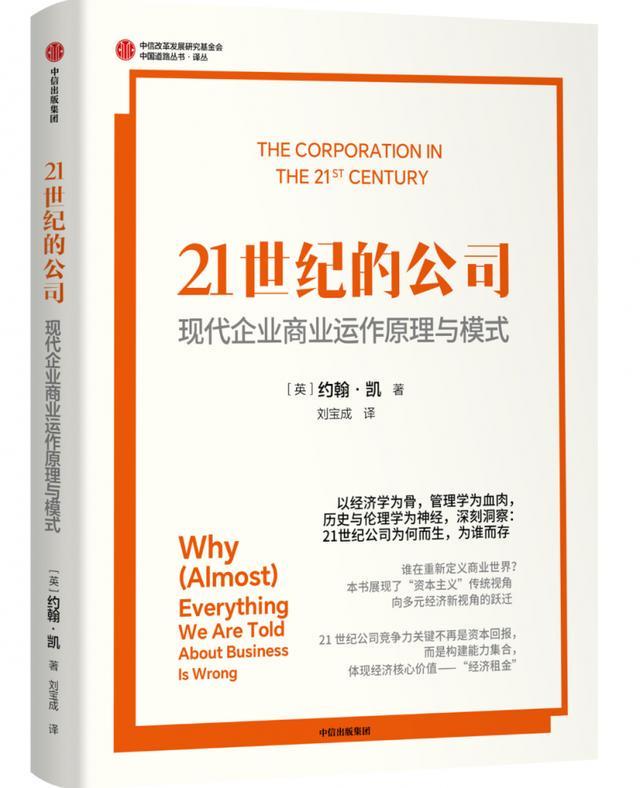
Core Insights - The article discusses the historical rise and fall of major corporations, emphasizing that even dominant companies can decline over time due to competition and market changes [3][5][12] - It highlights the shift from traditional manufacturing-based companies to modern tech-driven firms, which rely less on heavy capital investment and more on intellectual assets and collective knowledge [6][8][10] - The concept of "economic rent" is introduced, explaining how companies like Apple and Amazon generate excess profits through innovation and differentiation, contrasting with traditional views of profit [9][10][12] Historical Context - John Morgan established U.S. Steel in 1901, which was one of the largest companies globally, while John Rockefeller consolidated the oil industry, controlling about 90% of refined oil products in the U.S. [2] - The rise of management-oriented companies in the 20th century, such as General Motors and DuPont, marked a significant shift in business structure and global expansion [2][3] Decline of Major Corporations - Companies like General Motors and DuPont faced significant challenges, leading to bankruptcy and restructuring, while others like Sears have nearly disappeared [3][5] - The article suggests that the decline of these companies is not due to a decrease in demand for their products but rather their inability to adapt to changing market needs [3][5] Modern Business Dynamics - The emergence of "FAANG" companies (Facebook, Apple, Amazon, Netflix, Google) and the subsequent addition of Nvidia, Tesla, and Microsoft reflects a new era of tech-driven business models [4][5] - These companies operate with less reliance on physical assets and more on intellectual capital, allowing for greater flexibility and innovation [6][8] Economic Concepts - "Economic rent" is defined as the excess returns generated by companies due to their unique capabilities and market positions, contrasting with traditional profit definitions [9][10] - The article argues that this form of economic rent is beneficial for innovation and competition, as opposed to "rent-seeking" behaviors that exploit market inefficiencies [11][12] Future Implications - The text warns that the current leading companies may also face decline, similar to past industrial giants, emphasizing the cyclical nature of business success [5][13] - It calls for a reevaluation of how businesses are understood and managed in the context of modern economic realities, advocating for a focus on collective knowledge and innovation [7][12][14]