寒武纪思元系列芯片

Search documents
国产算力崛起:内外双轮驱动下的自主生态突围
Guotou Securities· 2026-03-04 10:43
Investment Rating - The industry is rated as "Outperform" [6] Core Insights - The domestic computing power industry is experiencing a historical window of opportunity driven by both internal and external demand, with significant advancements in technology and policy support [1][3] - The supply side of domestic computing power has made substantial breakthroughs in technology and ecosystem construction, particularly in hardware and software, enabling the large-scale deployment of high-end AI chips [2][3] - The domestic computing power ecosystem is transitioning from a "usable" alternative to a "well-functioning" mainstream solution, with expectations for large-scale deployment in key sectors by 2026 [3] Summary by Sections 1. Overseas Cloud Vendors Entering a New Cycle - North American cloud vendors are expected to maintain high growth in AI chip shipments in 2026, with their capital expenditure (CapEx) cycles influencing global computing power investments [11][12] - The CapEx of North American cloud giants has shown a consistent three to four-year cycle, with significant upgrades corresponding to major shifts in computing architecture [12][13] 2. U.S. Chip Restrictions and China's Domestic Computing Power - U.S. export controls on semiconductors have evolved from hardware restrictions to encompass software and cloud services, significantly impacting China's semiconductor industry [18][19] - The restrictions have prompted rapid advancements in China's domestic computing power systems, leading to a competitive response in various technological areas [18][19] 3. Domestic Supply Side Breakthroughs - Domestic hardware advancements, particularly in AI chips, have been achieved through innovative technologies like Chiplet, which enhance performance and cost efficiency [2][3] - The software ecosystem is evolving through a combination of compatibility layers and independent software stack development, aiming to reduce dependency on foreign technologies [2][3] 4. Strategic Opportunities for Domestic Computing Power - The domestic computing power industry is expected to see significant growth in capital expenditure from 2025 to 2026, driven by urgent demand for AI computing and the maturation of the domestic ecosystem [17] - Key sectors such as government, finance, and smart manufacturing are anticipated to realize substantial value from domestic computing power infrastructure [3]
解读:特朗普突批H200入华,抽成25%背后的大棋局
未可知人工智能研究院· 2025-12-09 10:01
Core Viewpoint - The article discusses the recent shift in U.S. technology policy regarding the export of AI chips to China, highlighting the implications of this decision for both American companies and the global AI chip industry. It emphasizes the complex interplay of business interests, national security, and the evolving landscape of China's domestic chip industry. Group 1: Policy Shift and Its Implications - On December 8, 2025, President Trump announced the approval for NVIDIA to export H200 AI chips to China, with the U.S. government taking a 25% cut from each sale, marking a significant policy reversal from previous export bans [1][2] - The decision followed a closed-door meeting between NVIDIA CEO Jensen Huang and U.S. government officials, where Huang sought to restore chip exports to mitigate NVIDIA's declining sales in China, which had resulted in a write-down of approximately $5.5 billion [4][5] - The U.S. government aims to balance maintaining its chip market position while ensuring technological superiority and extracting financial benefits from the deal [5][6] Group 2: Economic Analysis of the Deal - Industry estimates suggest NVIDIA could export between $2 billion to $5 billion worth of chips quarterly to China, meaning the U.S. government could earn $500 million per quarter, totaling $2 billion annually without any investment in R&D or manufacturing [6][7] - This arrangement is characterized as "rent-seeking," where the U.S. government collects a "protection fee" from NVIDIA, which still finds the deal beneficial compared to the zero revenue it faced under the export ban [7][8] Group 3: China's Response and Market Dynamics - Despite the U.S. expectations, the Chinese market's response to the H200 chips has been more cautious than anticipated, with concerns over reliability and cost-effectiveness [29][30] - Factors influencing China's reluctance include a broken trust in U.S. supply chains, the high cost of H200 due to the 25% fee, and the potential security risks associated with U.S. technology [31][33][34] - The Chinese government is actively promoting domestic chip development, which further limits the market for imported chips [36] Group 4: The Rise of China's AI Chip Industry - Reports predict that by 2026, Huawei will capture 50% of the Chinese AI chip market, while NVIDIA's share could plummet from 39% to just 8% [13][15] - The growth of domestic chip manufacturers like Huawei, Cambricon, and Baidu is accelerating, with significant advancements in AI chip technology and production capacity [16][18][19] - The rapid development of China's AI chip industry is seen as a response to U.S. export restrictions, with the potential to reshape the global semiconductor landscape [19][24] Group 5: Long-term Consequences and Strategic Miscalculations - The U.S. government's strategy of using national security as a pretext for economic gain may backfire, accelerating China's technological independence and reducing global reliance on U.S. technology [20][40] - The contrasting approaches of the Trump and Biden administrations highlight a fundamental tension in U.S. policy towards China, with implications for international trust in U.S. technology [22][40] - Ultimately, the article suggests that true victory lies in fostering domestic innovation rather than relying on outdated technology imports, emphasizing the long-term nature of technological competition [44]


甲骨文大象起舞,带飞国产算力!芯原股份收购芯来,强化ASIC竞争力!科创人工智能ETF(589520)盘中涨近3%
Xin Lang Ji Jin· 2025-09-12 02:07
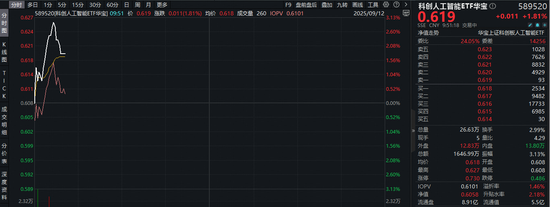
Core Viewpoint - The domestic AI industry is experiencing significant growth, driven by strong policy support, technological advancements, and surging market demand, particularly highlighted by the performance of the domestic AI-focused ETF and its constituent stocks [1][4][5]. Group 1: Market Performance - The domestic AI-focused ETF (589520) saw an intraday price increase of nearly 3%, currently up 1.81%, marking a three-day consecutive rise [1]. - Key constituent stocks such as Chipone Technology surged over 15%, while Cambricon and Yuke Tech rose by more than 4% and 3% respectively [1]. - The ETF's trading threshold was reduced from approximately 120 yuan to about 60 yuan following a 1:2 share split, making it more accessible for investors [5]. Group 2: Industry Trends - Major global tech companies, including Oracle, Microsoft, Google, and Meta, are significantly increasing their capital expenditures on AI infrastructure, indicating a robust demand for high-end chips and related hardware [3]. - The Chinese government's policies are strongly supporting the integration of AI across key sectors, with initiatives like the "Artificial Intelligence+" action plan aiming for deep integration by 2027 [4]. Group 3: Technological Advancements - Domestic companies are making rapid technological breakthroughs, with Huawei and Alibaba Cloud demonstrating advancements in large-scale computing capabilities [4]. - The processing capacity in China has dramatically increased, with daily token processing volume soaring from 100 billion to 30 trillion within a year and a half [4]. Group 4: Investment Opportunities - The ETF is positioned to benefit from the ongoing domestic AI industry growth, with a focus on companies that are well-placed in the AI supply chain [6][7]. - The ETF's top ten holdings account for over 71.66% of its weight, with semiconductors being the largest sector, representing over 54.1% [7].

英伟达H20受限中国市场,国产AI芯片替代多点开花方为正解
Tai Mei Ti A P P· 2025-04-20 00:52
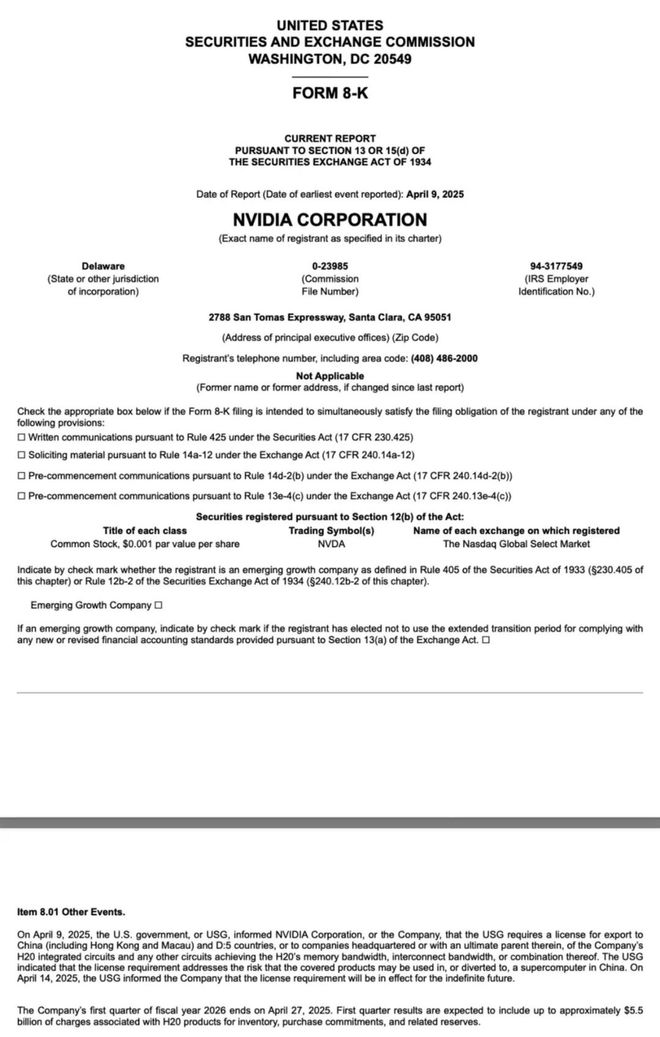
Group 1 - The U.S. government has imposed export controls on NVIDIA's H20 chip, requiring licenses for sales to China, which indicates a significant tightening of trade regulations in the AI chip sector [2][6] - NVIDIA's CEO Jensen Huang visited China again, expressing a desire to continue collaboration, highlighting the impact of these export restrictions on the industry [1][2] - The restrictions on H20 and similar AI chips from AMD and Intel create a substantial opportunity for domestic Chinese AI chip manufacturers to capture market share previously held by NVIDIA [6][14] Group 2 - Huawei's Ascend 910C chip is currently the most prominent domestic alternative, with its latest generation products being integral to China's AI infrastructure [7][14] - The Ascend 910C chip achieves a computing power of 800 TFLOP/s (FP16) and a memory bandwidth of 3.2 TB/s, which is approximately 80% of NVIDIA's H100 performance [7][10] - Despite its advantages, the Ascend 910C faces challenges such as increased power consumption and potential interconnect bottlenecks, which could hinder its efficiency in large-scale AI training tasks [9][11] Group 3 - The production of the Ascend 910C chip relies heavily on TSMC for manufacturing, as domestic foundries like SMIC struggle with yield rates and production capacity [12][13] - The supply chain for critical components, such as HBM memory, is also a concern, as it involves complex logistics and potential legal issues [13][14] - A diverse ecosystem of domestic AI chip companies, including Alibaba, Baidu, and Tencent, is essential for reducing risks and ensuring stability in the AI chip market [14][15] Group 4 - Companies like Cambrian and Moore Threads are emerging as significant players in the AI chip market, with innovative designs and capabilities that can compete with NVIDIA's offerings [15][16] - The development of a unified software platform by Moore Threads aims to facilitate the transition for users from NVIDIA's CUDA to their own architecture, enhancing user experience and performance [16] - The collaboration among various domestic firms is crucial for building a resilient and self-sufficient AI chip ecosystem in China, moving away from reliance on uncertain supply chains [17]