
H200人工智能芯片

Search documents
英伟达业绩光环下的阴影:高端芯片缺席中国市场,H200入华仍存变数
Hua Xia Shi Bao· 2026-02-27 09:29
Core Viewpoint - Nvidia has achieved record high performance in its financial results for the fourth quarter and the entire fiscal year 2026, driven by exponential growth in AI computing demand, despite challenges in the Chinese market [3][4]. Financial Performance - For the fiscal year 2026, Nvidia reported total revenue of $215.94 billion, a 65% year-over-year increase, and a net profit of $120.07 billion, also up 65% [3]. - In the fourth quarter alone, Nvidia's revenue reached $68.13 billion, a 73% increase year-over-year and a 20% increase quarter-over-quarter, with a net profit of $42.96 billion, up 94% year-over-year and 35% quarter-over-quarter [6]. - The gross margin for the fourth quarter was 75%, compared to 73% in the same period last year [6]. Market Dynamics - Nvidia's data center segment remains its largest revenue source, generating $62.31 billion in the fourth quarter, a 75% year-over-year increase, primarily due to the continued release of Blackwell and Blackwell Ultra products [8]. - The gaming segment reported revenue of $3.73 billion, up 47% year-over-year, while the professional visualization segment saw a 159% increase to $1.32 billion [8]. - Nvidia's revenue is significantly influenced by major cloud computing companies, which are expected to reach $700 billion in capital expenditures in 2026 [9]. Challenges in the Chinese Market - Despite the U.S. government's approval for limited exports of the H200 AI chip to China, Nvidia has not yet generated revenue from this product in the Chinese market, and future imports remain uncertain [4]. - Nvidia's market share in China for high-end AI chips has dropped from 95% to 0%, resulting in substantial revenue loss [4]. - The absence of Nvidia's high-end chips in China has allowed local competitors to gain market share, with some recently completing initial public offerings [5]. Future Outlook - Nvidia's CEO expressed confidence in the ongoing demand for AI computing, stating that the utility of AI has been widely validated across global enterprises, leading to explosive growth in computing needs [9]. - The company anticipates revenue of approximately $78 billion for the first quarter of fiscal year 2027, supported by the upcoming mass production of Rubin architecture chips [8].


英伟达芯片售华又难了,“美方正推更严格限制措施”
Guan Cha Zhe Wang· 2026-02-04 07:12
Core Insights - Nvidia's CEO Jensen Huang reached a significant agreement with former President Trump in December, reigniting hopes for Nvidia's return to the Chinese market, which could reach an annual scale of $50 billion [1] - Despite Trump's approval for exports, the final approval for Nvidia's H200 AI chip sales to China remains unresolved due to ongoing "national security reviews" by the U.S. government [1][3] - The U.S. Department of Commerce has relaxed restrictions on H200 chip exports to China but requires reviews from the State Department, Defense Department, and Energy Department, with the State Department advocating for stricter measures [1][4] Group 1 - Nvidia has instructed its supply chain to increase H200 chip production in anticipation of high demand from Chinese customers, but the approval process has stalled, leading some suppliers to halt production of key components [3] - The agreement reached in December also applies to other AI chip companies like AMD and Intel, indicating a broader impact on the industry [3] - The approval process for export licenses has become more complex due to the unique approach taken by Trump, which involves agreeing to issue licenses before setting conditions [4] Group 2 - Concerns regarding the potential military use of the chips by Chinese companies are influencing the approval process, with significant risks highlighted by experts [4] - Huang expressed hope that China would allow the sale of H200 chips, noting that the decision now lies with Chinese authorities, who are still deliberating [4] - As of January 29, Huang indicated that Nvidia had not received any new orders for H200 chips from Chinese customers, despite the product being well-suited for the market [4]
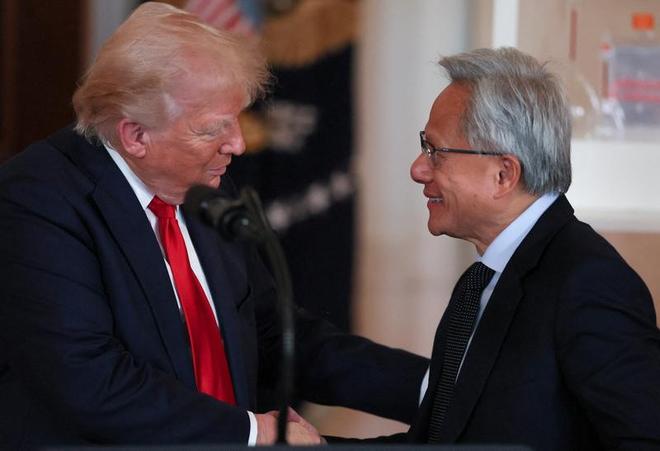
美国对华芯片限制升级,中企订单直接取消!马斯克点破真相:只是开始?
Sou Hu Cai Jing· 2026-02-01 01:50
Core Viewpoint - The U.S. government's approval for NVIDIA to export H200 AI chips to China comes with stringent conditions, leading to significant order cancellations from Chinese companies, which contradicts U.S. expectations of leveraging technology dependence to restrain China [1][4]. Group 1: U.S. Strategic Calculations - The release of H200 chips is a strategic move by the U.S. to alleviate pressure on American companies, as evidenced by Intel's record loss of $16.6 billion in Q3, the highest in 56 years, and significant stock declines of 25%-35% for major equipment firms [4]. - The U.S. aims to create a dependency in China's AI sector through limited technology exports, thereby delaying China's independent innovation efforts, similar to past strategies in high-end materials markets [4]. Group 2: China's Resilience and Growth - China's semiconductor exports are projected to exceed 1 trillion yuan in 2024, with a year-on-year growth of 21.4% from January to October, and a nearly 10 percentage point increase in self-sufficiency in chip production over the past decade [4][6]. - Domestic chip supply has improved, with Huawei's Ascend AI chips supporting over 40 large model applications, and SMIC's 28nm mature process capacity accounting for 25% of the global market [4]. Group 3: Impact of U.S. Restrictions - The "boomerang effect" of U.S. chip restrictions is evident, as China fills technological gaps through rapid innovation, with domestic chip equipment market share rising from 16% in 2020 to 28% in 2024 [6]. - Non-U.S. companies like ASML and Tokyo Electron are increasing their market presence in China, with ASML's DUV lithography machines capturing a 35% market share [6]. Group 4: Energy and Infrastructure Advantages - China's advantage in the AI race is bolstered by its energy capacity, with electricity generation reaching twice that of the U.S., potentially tripling by 2026, which supports high-energy AI data centers [7]. - The efficiency of infrastructure development in China allows for faster completion of data centers compared to the U.S., enabling China to leverage scale in computing power despite current chip performance disadvantages [7]. Group 5: Long-term Industry Outlook - China's advancements in the semiconductor industry are attributed to a comprehensive approach across the entire supply chain, achieving synergy in design, manufacturing, and packaging [9]. - Despite U.S. sanctions, Chinese chip companies have not only survived but have established a foothold in mature process markets and are extending into high-end sectors, indicating a robust competitive landscape [9].
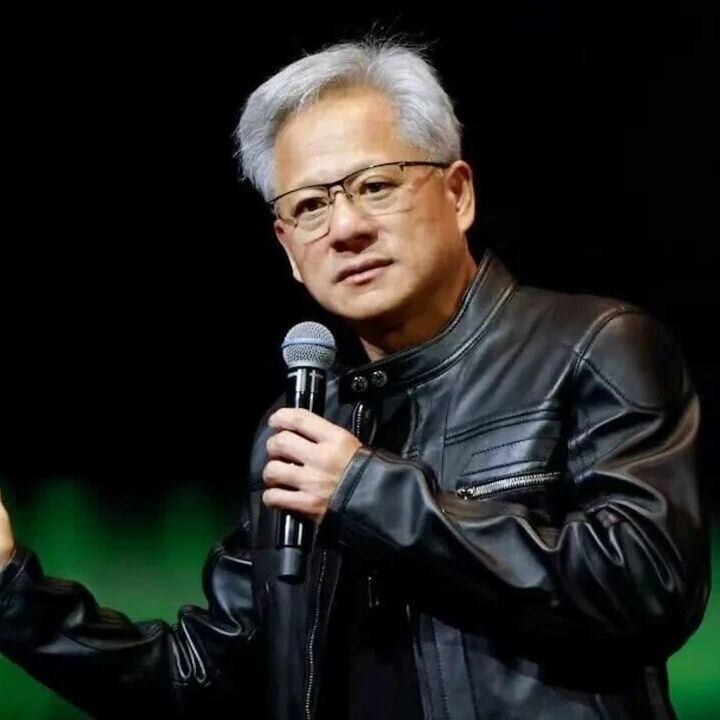
黄仁勋:还没收到任何中国客户H200订单!
国芯网· 2026-01-30 13:58
Core Viewpoint - The article discusses the current situation regarding NVIDIA's H200 AI chip and its potential sales in China, highlighting the ongoing deliberations by Chinese authorities on whether to allow imports of the chip [2][4]. Group 1: NVIDIA's H200 Chip Situation - Huang Renxun revealed that NVIDIA has not yet received orders for the H200 AI chip from Chinese customers due to ongoing decisions by Chinese authorities regarding the import of the chip [2]. - Huang expressed hope that China would permit the sale of the H200 chip, emphasizing that the decision lies with Chinese authorities, who are still considering the matter [4]. - Huang noted that the H200 chip is well-suited for the Chinese market, and there is significant demand from customers in China [4]. Group 2: Market Context and Regulatory Environment - NVIDIA is actively seeking to revitalize its business in China, the largest semiconductor market globally, amidst a backdrop of stringent U.S. export restrictions aimed at curbing China's technological development [4]. - Previous reports indicated that the sale of the H200 chip in China might be approved, but purchasing companies would need to buy corresponding domestic GPUs alongside it [5].
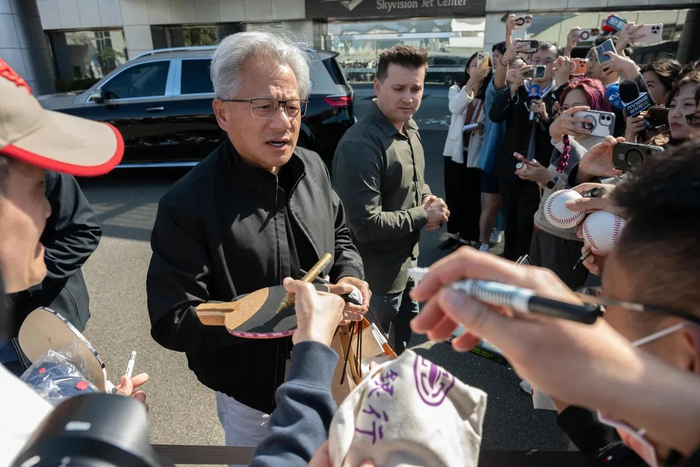
A股盘前市场要闻速递(2026-01-30)
Jin Shi Shu Ju· 2026-01-30 01:27
Group 1: Industry Developments - China plans to develop more "Space+" future industries, focusing on commercial aerospace and related applications, with initiatives including space resource development and space tourism [1] - The State Council issued a plan to accelerate the cultivation of new growth points in service consumption, targeting key areas such as transportation, home services, and inbound consumption [3][4] Group 2: Company News - Guizhou Moutai denied rumors of participating in SpaceX's Series A financing, with its stock closing at 1437.72 CNY per share, up 8.61%, and a market cap exceeding 1.8 trillion CNY [2] - Jiangbolong expects a net profit of 1.25 billion to 1.55 billion CNY for 2025, representing a year-on-year growth of 150.66% to 210.82% due to rising storage prices driven by AI server demand [2] - BlueFocus anticipates a net profit of 180 million to 220 million CNY for 2025, recovering from a loss of 290 million CNY in the previous year, supported by growth in overseas business [3] - Sichuan Gold forecasts a net profit of 420 million to 480 million CNY for 2025, a year-on-year increase of 69.23% to 93.4%, attributed to increased sales of gold concentrate and rising gold prices [7] - Green Harmony expects a net profit of 115 million to 130 million CNY for 2025, reflecting a growth of 104.74% to 131.45%, driven by the recovery in the industrial robot market and expansion in overseas markets [8] - Shengyi Technology predicts a net profit of 3.25 billion to 3.45 billion CNY for 2025, with an increase of 87% to 98% due to rising sales of copper-clad laminates [9] - China Shipbuilding anticipates a net profit of 7 billion to 8.4 billion CNY for 2025, representing a growth of approximately 65.89% to 99.07%, driven by improved operational efficiency and high-value ship deliveries [10] - Century Huatong expects a net profit of 5.55 billion to 6.98 billion CNY for 2025, a significant increase of 357% to 475%, supported by continuous revenue growth and successful overseas expansion [11]
“还没收到任何中国订单,我们正在耐心等待”
Xin Lang Cai Jing· 2026-01-29 15:22
Core Viewpoint - Nvidia's CEO Jensen Huang is actively seeking to re-establish business in China, the largest semiconductor market, but is currently facing challenges due to export restrictions and the approval process for the H200 AI chip [1][3]. Group 1: Nvidia's Current Situation - Nvidia has not received any orders for the H200 AI chips from Chinese customers as the Chinese government is still deciding on import permissions [1]. - Huang expressed hope that China would allow the sale of the H200 chips, emphasizing that the decision lies with the Chinese authorities [1][3]. - The H200 chip is considered highly suitable for the Chinese market, and there is significant demand from customers [1]. Group 2: Market Potential and Challenges - The AI chip market in China is currently valued at approximately $50 billion and is projected to grow to $200 billion by the end of 2030 [3]. - Huang noted that the inability of American companies to participate in this market is unfortunate, as it represents a significant revenue opportunity [3][4]. - Previous U.S. export restrictions have led to a halt in Nvidia's chip sales to China, with expectations of zero sales for the next two quarters if barriers remain [3][4]. Group 3: Recent Developments - The U.S. government has recently approved Nvidia's export of the H200 chip to China, but with restrictions on quantity and security protocols [4]. - Huang has been vocal about the importance of the Chinese market in his public appearances, indicating that the H200 chip is competitive but may not remain so indefinitely [4].
花旗:中国批准采购H200芯片 腾讯控股成最大受益者
Xin Lang Cai Jing· 2026-01-29 09:28
Group 1 - The core viewpoint of the article is that Chinese regulatory authorities have approved Alibaba-W (09988), Tencent Holdings (00700), and ByteDance to purchase NVIDIA's (NVDA.US) H200 AI chips, which could positively impact these companies and the overall Chinese internet industry if confirmed [1][2] - The report highlights that the positive impact is most significant for Tencent, which previously indicated a potential shift to "leasing" GPU computing power as an alternative due to restrictions on direct purchases [1][2] - Citi believes there is an increased risk of capital expenditure rising in 2026, particularly in the AI sector, with a favorable outlook for Tencent, followed by Alibaba, and then Baidu Group-SW (09888) [1][2]

花旗:中国批准采购H200芯片 腾讯控股(00700)成最大受益者
智通财经网· 2026-01-29 08:52
Group 1 - The core viewpoint of the article is that Chinese regulatory authorities have approved Alibaba-W (09988), Tencent Holdings (00700), and ByteDance to purchase NVIDIA's (NVDA.US) H200 AI chips, which could have a positive impact on these companies and the overall Chinese internet industry if confirmed [1] - Citi's report highlights that the positive impact is most significant for Tencent, which previously indicated a potential shift to "leasing" GPU computing power due to procurement restrictions [1] - The report anticipates an increase in capital expenditure risks by 2026, particularly in the AI sector, ranking the companies in the order of Tencent > Alibaba > Baidu Group-SW (09888) in terms of outlook [1]
黄仁勋新年访华行程曝光,英伟达中国战略面临微妙调整
Sou Hu Cai Jing· 2026-01-28 10:29
Core Viewpoint - Despite challenges in its relationship with China, Nvidia's founder Jensen Huang continues to visit China annually, indicating the importance of the Chinese market to the company [2][5][19]. Group 1: Jensen Huang's Visits - Jensen Huang's recent visit to China marks his third consecutive year of New Year visits, which typically include meetings with local employees and participation in company events [2][4]. - Huang's visits are characterized by a mix of self-arranged activities and official invitations, with a focus on engaging with employees and local culture [2][4]. - The visits serve to strengthen relationships with Chinese government officials and local tech leaders, reflecting Nvidia's strategic interest in the Chinese market [5][20][21]. Group 2: Nvidia's Market Position in China - Nvidia's sales in China are projected to exceed $17 billion by 2025, accounting for approximately 13% of its global revenue, making it a crucial overseas market [8]. - The Chinese market is significant for Nvidia due to its high-quality customer base and robust industrial ecosystem, particularly in sectors like AI and automotive [9][10]. - Major Chinese tech companies such as Tencent, ByteDance, and Baidu are key customers for Nvidia, highlighting the company's reliance on the Chinese market for growth [10]. Group 3: Regulatory and Competitive Landscape - Nvidia faces regulatory scrutiny from both the U.S. and Chinese governments, with recent discussions around the security risks of its H20 chip impacting its operations [3][5]. - Despite these challenges, there are indications of a shift in the attitude of Chinese regulatory bodies and tech companies towards Nvidia, as they seek a balance between purchasing Nvidia chips and developing domestic alternatives [6][11]. - Huang's emphasis on the importance of the Chinese market is underscored by the company's ongoing efforts to adapt its product offerings to meet local regulatory requirements [23]. Group 4: Talent and Innovation - Nvidia's Chinese operations employ over 4,000 staff across key cities, focusing on advanced fields such as AI algorithms and autonomous driving [18]. - The company has faced talent challenges, with former employees joining competitors, which has prompted Huang to reinforce the importance of maintaining morale and loyalty within the Chinese team [15][17][19]. - Huang's recognition of China's innovation capabilities and his positive remarks about local companies reflect Nvidia's strategy to align closely with the Chinese tech ecosystem [23].
黄仁勋:无知是一种超能力,“没有终极目标” 成就了英伟达
Ge Long Hui· 2026-01-26 04:31
Core Insights - Huang Renxun, CEO of Nvidia, reflects on his 30+ years leading the AI chip giant, emphasizing the company's growth from adversity to becoming one of the most valuable tech companies globally [1] Group 1: Personal Reflections and Leadership Philosophy - Huang views "ignorance" as a superpower that allowed him to pursue entrepreneurship without being deterred by the challenges ahead [3][4] - He believes that the current generation of young people is overly exposed to information, leading to increased cynicism compared to his own generation [5] - Huang emphasizes that Nvidia's lack of a definitive long-term goal has been a strength, with the primary focus being on survival and operational continuity [6][7] Group 2: Company Culture and Resilience - The character of a company is forged in times of hardship, and Huang shares that he distributes the burden of challenges among his team rather than shielding them from difficulties [8] - He describes the role of a CEO as one filled with vulnerability, stating that they are often the most fragile members of the organization [9][11] - Huang highlights that Nvidia's decisive advantage lies not in technological superiority but in the culture developed through enduring challenges [13] Group 3: Market Position and Future Outlook - Nvidia has officially become TSMC's largest customer, surpassing Apple, which is a significant milestone for the company [15][17] - Huang asserts that the investments in AI will fundamentally change how computers operate, transitioning from human-programmed to self-learning systems guided by humans [18] - He predicts that while all job roles will evolve due to AI, the overall workload will increase rather than decrease, suggesting that AI could provide new opportunities for those currently unemployed [19][21] Group 4: Importance of the Chinese Market - Huang's recent visit to China underscores the significance of the Chinese market for Nvidia, especially in the context of AI and high-performance computing [27] - The U.S. government has allowed Nvidia to sell its H200 AI chips to China, subject to a 25% fee, highlighting the complexities of international trade and the importance of the Chinese market for Nvidia's growth [25][26][27]