工人运动

Search documents
张难先与大革命时期的梧州工人运动
Xin Lang Cai Jing· 2026-01-14 22:45
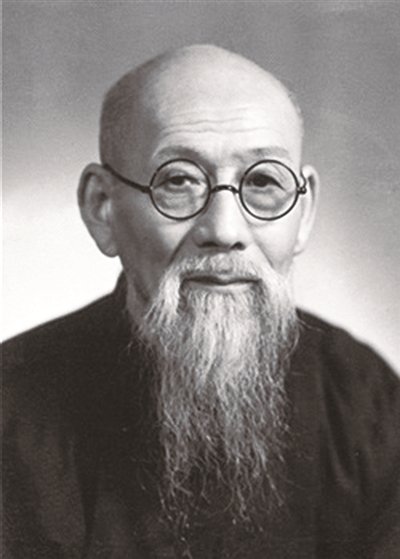
Core Viewpoint - Zhang Nanxian, a prominent figure in the Xinhai Revolution and a supporter of the Nationalist-Communist cooperation, played a significant role in the political and labor movements in Wuzhou, contributing to the establishment of a favorable political environment for revolutionary activities [4][6][11]. Group 1: Contributions to Political Movements - Zhang Nanxian actively supported the first Nationalist-Communist cooperation in Wuzhou, helping to create a social and political foundation for labor movements [6][7]. - He was instrumental in the establishment of the Wuzhou Special Party Branch of the Nationalist Party, which became the first city party branch in Guangxi after the reorganization of the Nationalist Party [6][7]. - Zhang Nanxian's leadership in the Wuzhou government allowed him to report on local political situations to the Nationalist Central Party, facilitating communication and coordination with the Communist Party [7][8]. Group 2: Support for Labor Movements - Zhang Nanxian supported the Wuzhou workers' movement, including the response to the "May 30th Movement" and the provincial and Hong Kong general strike, mobilizing local communities for demonstrations and support [8][9]. - He initiated the establishment of the Wuzhou Workers' Children's Education Institute, providing free education for workers' children, and supported the formation of various labor unions [9][10]. - Under his leadership, the Wuzhou Workers' Union Federation was established, which included multiple industry unions, significantly increasing membership and participation in labor activities [9][10].

“始终要为无产阶级利益奋斗”——纪念罗登贤同志诞辰120周年
Ren Min Ri Bao· 2025-10-29 00:16
Core Viewpoint - The article commemorates the 120th anniversary of the birth of Luo Duxian, highlighting his significant contributions as a leader in the Chinese labor movement and the anti-Japanese resistance in Northeast China, emphasizing his unwavering commitment to the revolutionary cause and the working class [1][12]. Group 1: Early Life and Labor Movement - Luo Duxian was born in 1905 in Guangdong and began working at a young age, which instilled in him a strong class consciousness and fighting spirit against imperialism and capitalism [1][2]. - He actively participated in labor movements before the founding of the Communist Party, notably leading a successful strike for wage increases in 1920 [1][2]. Group 2: Leadership in Labor Movements - After the establishment of the Communist Party, Luo responded to the Hong Kong seamen's strike in 1922, organizing workers and achieving wage increases, which heightened the fear of capitalists [2][3]. - He played a crucial role in the Hong Kong and Guangzhou general strikes, demonstrating his leadership and organizational skills, and was appointed as a key figure in the Hong Kong Metal Workers' Union [3][4]. Group 3: Resistance During White Terror - During the White Terror in 1927, Luo remained active in organizing and leading armed struggles, participating in the Guangzhou Uprising and later working in the Soviet government [4][5]. - He was appointed to significant positions within the Communist Party, contributing to the recovery and development of the labor movement during a period of severe repression [5][6]. Group 4: Anti-Japanese Resistance - In 1931, Luo was appointed to lead the Communist Party's efforts in Northeast China, where he organized resistance against Japanese aggression following the September 18 Incident [8][9]. - He emphasized the importance of creating armed resistance and mobilizing the masses, leading to the formation of anti-Japanese guerrilla forces that became central to the struggle in Northeast China [9][10]. Group 5: Legacy and Ideals - Luo Duxian's life, though short, was marked by a commitment to revolutionary ideals, and he is remembered as a model of loyalty and courage in the face of adversity [12][13]. - His contributions to the labor movement and anti-Japanese resistance are celebrated as part of the broader narrative of the Communist Party's history and the fight for national liberation [14][15].
“始终要为无产阶级利益奋斗”
Ren Min Ri Bao· 2025-10-28 22:30
Core Points - The article commemorates the 120th anniversary of the birth of Luo Duxian, a prominent leader in the Chinese labor movement and a key figure in the Northeast anti-Japanese resistance [1][12] - Luo Duxian's life was marked by his unwavering commitment to the proletariat's interests and his active participation in various labor movements and revolutionary activities [1][12] Group 1: Early Life and Labor Movement Involvement - Luo Duxian was born in 1905 in Guangdong and began working at a shipyard at the age of 11, which instilled in him a strong class consciousness and fighting spirit [1][2] - He participated in the 1920 Hong Kong mechanical workers' strike, which was supported by workers in Guangzhou, leading to a victory that reinforced his belief in collective action [1][2] Group 2: Leadership in Labor Movements - After the establishment of the Communist Party, Luo Duxian played a significant role in the Hong Kong seamen's strike in 1922, which resulted in wage increases and heightened tensions with capitalists [2][3] - He was instrumental in the formation of the Hong Kong Metal Workers' Union and became one of its leaders, continuing to advocate for workers' rights [2][3] Group 3: Revolutionary Activities and Theoretical Contributions - Luo Duxian was a key figure in the 1925 anti-imperialist movements, leading the Hong Kong workers' participation in the province-wide strike and organizing protests against imperialist actions [3][4] - He contributed to the theoretical exploration of labor movements, emphasizing the need for unity among workers and advocating for armed struggle against oppressive regimes [6][7] Group 4: Anti-Japanese Resistance - In 1931, Luo Duxian was appointed to lead the Communist Party's efforts in Northeast China, where he organized resistance against Japanese aggression following the September 18 Incident [8][9] - He emphasized the importance of creating armed resistance groups and mobilizing the masses to fight against Japanese imperialism, leading to the establishment of various anti-Japanese guerrilla units [9][10] Group 5: Legacy and Recognition - Luo Duxian's dedication to the revolutionary cause and his sacrifices during imprisonment are highlighted as exemplary of the spirit of resistance and commitment to the proletariat [12][13] - His life and contributions are celebrated as a model for future generations, emphasizing the importance of faith in communism and dedication to the party's ideals [12][15]
经典常谈 | 实行极严格的纪律
Zhong Yang Ji Wei Guo Jia Jian Wei Wang Zhan· 2025-05-27 00:29
Group 1 - The core viewpoint emphasizes the importance of strict discipline within the workers' movement as a prerequisite for success and unity [2][4][5] - Marx and Engels highlighted that the working class must engage in political struggle for true liberation, contrasting with the more moderate approach of Proudhonists who favored economic means [1][2] - Engels condemned the Proudhonists for undermining the principles of the International Workers' Association by misinterpreting its charter, which aimed to maintain revolutionary goals [1][3] Group 2 - Lenin stressed that the organizational discipline of the proletariat is crucial for its effectiveness and victory, especially during challenging times [3][4] - The Bolshevik Party's adherence to strict discipline was vital for maintaining power during the revolutionary period, as any laxity could lead to failure [4] - The emphasis on discipline has been a consistent theme in Marxist thought, with historical examples illustrating its necessity for party cohesion and success [3][4][5] Group 3 - The Chinese Communist Party has inherited and developed the principle of strict discipline, viewing it as essential for the party's survival and effectiveness [4][5] - Xi Jinping has reinforced the need for strict discipline within the party, integrating it into the broader framework of party governance and risk management [5]
报社与北化大开展共建活动
Zhong Guo Hua Gong Bao· 2025-05-21 02:02
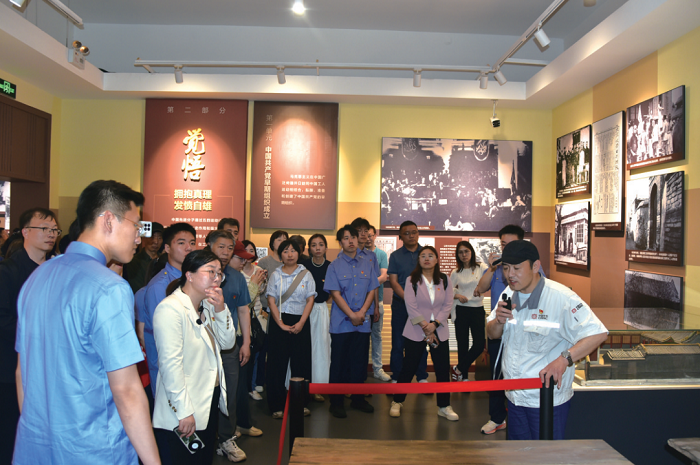
Core Points - The event "Seeking the Roots of the Labor Movement, Continuing the Century-Old Original Intention" was organized by the trade union of China Chemical Industry News and Beijing University of Chemical Technology, with around 70 representatives participating [2][3] - The Longxindian Erqi Memorial Hall is highlighted as a significant site for the Chinese labor movement, where the first industrial trade union in northern China was established [3] - The event aims to strengthen collaboration between the two organizations, focusing on practical cooperation in areas such as corporate culture, talent development, and industry services [3][4] Group 1 - The Longxindian site is recognized for its unique role in combining Marxism with the labor movement and contributing to the founding of the Communist Party of China [3] - The trade union leaders emphasized the importance of remembering the history of the labor movement and the revolutionary spirit to foster innovation and collaboration [3][4] - Participants expressed a commitment to inherit the "red gene" of following the Party and to contribute to the development of the industry and the rejuvenation of the Chinese nation [4]