数字员工

Search documents
百度集团-SW(09888):AI新业务增速强劲,新增50亿回购、将加大资本开支
Guoxin Securities· 2026-03-01 13:21
Investment Rating - The investment rating for Baidu Group is "Outperform the Market" [5][27]. Core Insights - Baidu Group's total revenue for Q4 2025 was 32.7 billion yuan, a year-on-year decrease of 4%. The core revenue was 26.1 billion yuan, down 6% year-on-year, while iQIYI's revenue increased by 3% to 6.8 billion yuan [1][9]. - The adjusted net profit attributable to shareholders for Q4 2025 was 3.9 billion yuan, a decline of 42% year-on-year, with an adjusted net profit margin of 12% [1][9]. - AI new business revenue reached 11.3 billion yuan, with AI high-performance computing facility subscription revenue growing by 143% year-on-year [2][21]. - The company plans to increase capital expenditure significantly, maintaining a scale of 10 billion yuan over the next 12-24 months, while also initiating a stock repurchase plan of 5 billion dollars [3][27]. Financial Performance Summary - For Q4 2025, Baidu's core revenue decreased by 6%, while iQIYI's revenue increased by 3%. Online marketing revenue fell by 16%, while non-online marketing revenue rose by 13% [11][14]. - The operating expenses for Q4 2025 were 13 billion yuan, up 6% year-on-year, primarily due to increased expected credit losses and one-time employee severance costs [9]. - The forecast for adjusted net profit for 2026-2027 is 22.1 billion yuan and 22.8 billion yuan, respectively, with an additional forecast for 2028 of 27.3 billion yuan [27][29]. Business Segment Analysis - The AI business is divided into three segments: 1. Intelligent Cloud Infrastructure, which generated 5.8 billion yuan in revenue, up 34% year-on-year. 2. AI Applications, with revenue of 2.7 billion yuan, a 5% increase year-on-year. 3. AI Native Marketing Services, which saw revenue of 2.7 billion yuan, growing by 110% year-on-year, accounting for 18% of Baidu's core online marketing revenue [2][21]. Market Outlook - The report expresses optimism about the potential impact of AI technology on marketing and intelligent cloud business, despite challenges in advertising revenue due to macroeconomic conditions [3][27].

别只盯着春晚机器人,这股AI力量已悄然接管生活
Sou Hu Cai Jing· 2026-02-22 18:33
Core Insights - The article discusses the significant integration of AI into everyday life during the Chinese New Year, highlighting its rapid advancements and public engagement with AI technologies [2][4] - It emphasizes the transition of AI from a high-tech concept to a practical tool that enhances cultural experiences and personal interactions [5][6] Group 1: AI Adoption and Market Trends - The AI industry is expected to transition from a phase of heavy investment to profitability by 2026, marking a pivotal year for revenue generation [5] - Human-like robots gained immense popularity during the Spring Festival, with a reported 150% increase in orders within two hours of a major event [5] - The global AI agent market is projected to grow at over 40% annually, potentially exceeding $50 billion by 2030, indicating a robust demand for digital employees across various sectors [9] Group 2: Digital Employees and Their Impact - Digital employees are becoming a prominent form of AI that is easily accessible and usable, with applications in tourism, retail, and customer service [6][8] - The integration of digital employees in various industries is expected to enhance operational efficiency, with examples such as AI customer service handling over 150,000 inquiries daily with a 90% resolution rate [8] - The emergence of platforms like OpenAI is anticipated to accelerate the development of multi-agent systems and digital employees, pushing the industry towards comprehensive integration and systematic implementation [8][9] Group 3: Engineering and Implementation Challenges - The successful deployment of digital employees requires overcoming significant engineering challenges, including the need for advanced understanding and processing of complex data [11][13] - Companies like Baidu are leading the way in developing digital employees that can effectively engage with users, providing emotional value and operational efficiency [13][14] - The article highlights the importance of safety, cost-effectiveness, and the ability to deliver tangible results as critical factors for the successful implementation of digital employees in businesses [15]



找钢网集团创始人王东:中国是全球最大的AI应用市场
Xin Lang Cai Jing· 2026-01-28 11:36
Core Insights - The ultimate version of AI Agents in the steel circulation industry is expected to be highly standardized, capable of recognizing various documents in procurement and logistics, but currently, AI is primarily used to enhance efficiency [1] - The application of AI in China is anticipated to follow a ToC (Business to Consumer) first, then ToB (Business to Business) approach, with the latter being slower due to the nature of B2B e-commerce [1] - The competition in large models is seen as a competition between China and the US, with a focus on application in China, which is expected to be the largest AI application market globally, especially in the ToB sector [2] Industry Application and Efficiency - The AI capabilities of the company have been embedded in key scenarios such as trading, logistics, finance, and internal management, aiming to systematically enhance industry efficiency and collaboration [2] - The company has developed 12 AI Agents that form four products, focusing on core business scenarios like AI procurement and sales assistants, as well as digital employees that enhance internal knowledge [3] - The company’s AI-related products currently generate a few hundred million yuan annually, with projections indicating that AI Agent transaction facilitation could account for 10% of total revenue by 2025, with a gross margin of 5% [3] Precision and Depth of Application - The current accuracy of the company's AI in document recognition is 95%, with goals to improve this to a higher level, particularly in recognizing industry-specific terminology [5] - Future iterations of AI products will focus on enhancing dialogue capabilities, allowing AI to handle inquiries and negotiations that currently require human intervention [5] - The company aims to expand its AI applications beyond steel and electronic components to include logistics, thereby increasing the depth of AI application across various scenarios [5]
李礼辉:金融行业、金融机构价值取向将影响AI替代的速度和深度
Bei Ke Cai Jing· 2026-01-15 09:09
Core Insights - The banking industry is undergoing a significant transformation due to the unprecedented breadth and depth of artificial intelligence (AI) integration [1] - The speed and depth of AI replacement in the financial sector will depend on the value orientation of financial institutions, the professionalism and reliability of AI agents, regulatory assessments, and employment policies [2] Group 1 - The establishment of a legal status for financial AI agents is essential, which includes defining their behavioral boundaries, legal relationships with clients, and managerial responsibilities [2] - Financial scenarios are becoming a crucial application area for AI agents, with banks like Guangfa Bank and Dalian Bank issuing tenders for AI development and application [2] - The term "digital employees" is increasingly used in communications between bank management and investors, indicating a shift towards AI integration in banking operations [2] Group 2 - AI agents can serve as professional financial representatives, particularly in high-value, technology-intensive areas such as market analysis, risk assessment, investment advisory, wealth management, quantitative trading, product customization, internal auditing, and digital employee roles [2] - Smart investment advisors, which have been gradually upgraded, can enhance the professional level of investment advice, with some executives believing they could replace over 60% of traditional investment advisor roles [3] - The deployment of financial AI agents requires advanced security technologies to mitigate risks such as malicious attacks and accidental security breaches, emphasizing the need for safety and trustworthiness in various applications [3]
李剑阁:AI催生金融新业态 智能投顾、数字员工等将持续涌现
Feng Huang Wang Cai Jing· 2025-12-29 10:48
Core Insights - The integration of artificial intelligence (AI) in the financial sector has transitioned from pilot testing to large-scale implementation and ecological collaboration, becoming a key driver for the transformation and upgrading of the industry [1][2] - AI technology is deeply embedded in the entire financial business chain, enhancing risk prevention, investment decision-making, customer service, and operational management [1] - The future will see a closer integration of AI technology with industry scenarios, extending its application to key sectors such as industry, healthcare, and finance, highlighting its role as a core engine for industrial upgrading [1] Group 1 - AI will enhance the quality and efficiency of financial services by optimizing processes and enabling intelligent decision-making, shifting the industry focus from scale competition to quality competition [1] - AI will expand the boundaries of financial services, addressing challenges in inclusive finance, green finance, and digital finance, allowing for more precise and widespread coverage of key areas and weak links in the real economy [1] Group 2 - AI will give rise to new financial business formats and models, such as smart investment advisory, digital employees, and cross-border intelligent finance, continuously enriching and improving the financial ecosystem [2]
李剑阁:“AI+金融”已迈入规模化落地与生态化协同新阶段
Xin Lang Cai Jing· 2025-12-28 02:22
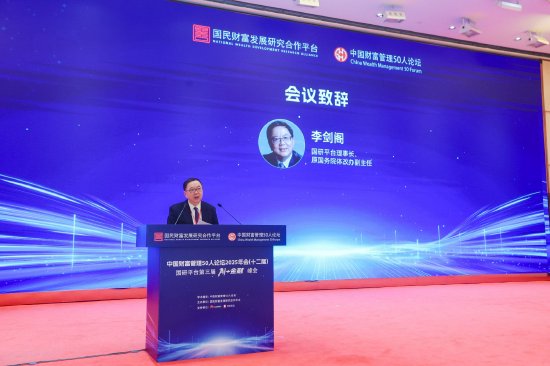
Group 1 - The theme of the China Wealth Management 50 Forum 2025 Annual Meeting is "Towards the Construction of a Financial Power during the 14th Five-Year Plan" [1][5] - Li Jiange emphasized that the "Artificial Intelligence +" initiative is deeply implemented, with AI becoming a core component of national strategy, entering a "dual acceleration" golden period for technological innovation and industrial application [3][7] - In the financial sector, AI has transitioned from pilot verification to large-scale implementation and ecological collaboration, deeply integrating into the entire financial business chain, enhancing risk prevention, investment decision support, customer service, and operational management [3][7] Group 2 - AI will continue to release value in the financial industry across three dimensions: improving financial service quality and efficiency, expanding the boundaries of financial services to address challenges in inclusive finance, green finance, and digital finance, and fostering new financial business models such as intelligent investment advisory and cross-border intelligent finance [3][7] - Under the guidance of the China Wealth Management 50 Forum, a "Financial Investment Alliance" will be established, involving various investment entities to bridge finance and industry, focusing on developing long-term and patient capital to support technological innovation represented by AI [4][8]
杭州劳务品牌:让每个人都有“够得着”的未来
Mei Ri Shang Bao· 2025-12-24 22:18
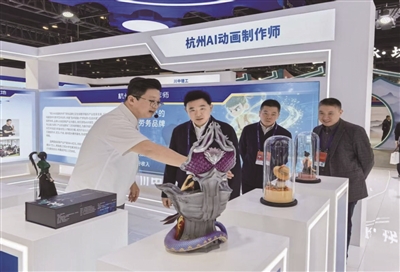
Core Viewpoint - The labor brand in Hangzhou is undergoing a significant transformation, evolving from traditional craftsmanship to new digital roles, reflecting the integration of technology and culture in the labor market [8][9][15]. Group 1: New Labor Brands - The emergence of new labor brands such as "Hangzhou AI Animation Maker," "Hangzhou AI Application Engineer," "JianDe Tofu Bun Master," and "ZhongTai Bamboo Flute Maker" showcases a path towards shared prosperity in the digital age [9][10]. - The "ZhongTai Bamboo Flute Maker" brand has a production ecosystem that includes R&D, manufacturing, sales, and training, with an annual sales volume of 4.5 million flutes, accounting for over 85% of the global market share, and generating an industry output value of 350 million yuan [9][10]. - The "JianDe Tofu Bun Master" brand has trained over 10,000 certified masters and created 50,000 jobs, with an annual output value exceeding 5 billion yuan through a standardized production and sales process [10]. Group 2: Digital Integration and Training - The "Hangzhou AI Animation Maker" brand utilizes AIGC technology, achieving a 10-fold increase in efficiency for animation production and a 70% reduction in costs for e-commerce advertising [11]. - The "Hangzhou AI Application Engineer" brand focuses on training professionals to develop AI applications, with over 1 million practitioners and more than 1 million AI applications generated [11][12]. - Hangzhou has cultivated 58 labor brands, involving over 320,000 enterprises and training more than 514,600 individuals annually, contributing to an industry output value exceeding 490 billion yuan [12]. Group 3: Ecosystem Development - Hangzhou has established a "four-dimensional integrated" ecosystem to support the growth of labor brands, leveraging policies, digital empowerment, brand development, and industry-education integration [13][14]. - The city promotes a collaborative approach to talent cultivation, bridging the gap between education and industry needs, and has initiated a digital skills talent training evaluation alliance [14][15]. - The ongoing development of labor brands in Hangzhou is redefining the concept of "skills" in the digital era, aiming for standardization, specialization, and branding of labor services [15].
智联招聘:18%的企业已大规模使用AI
Zheng Quan Ri Bao Wang· 2025-12-22 13:12
Core Insights - The core viewpoint of the report is that the integration of artificial intelligence (AI) and big data has become the primary method for companies to drive new productivity in 2025 [1][2] Group 1: AI Adoption and Impact - 18% of companies are now using AI on a large scale, while 37% are applying AI in some products or services, and 26% are in the research and exploration phase [1] - The CEO of Zhaopin, Kang Yan, emphasizes that the transformation is not about "replacing humans with AI," but rather "liberating humans with AI," allowing employees to shift from being "execution machines" to creators [1] - The report indicates that 36% of companies are providing substantial support for employees to use AI, a significant increase from 23% in 2024, indicating a strategic shift towards "empowering people through AI" [2] Group 2: Digital Employees and Workplace Dynamics - 10.3% of employees are in companies that have officially deployed "digital employees," with 47.4% of these used in high-frequency customer interaction scenarios [2] - Digital employees are also taking on tasks in HR, finance, and legal processes, with over 34.7% involved in data analysis and strategic simulation [2] - The deepening human-machine interaction is leading to a restructuring of workplace relationships, with employers recognizing that talent is the core of business development and that AI technology is essential for competitiveness [2]
智联招聘:2025雇佣关系趋势报告
Xin Lang Cai Jing· 2025-12-22 11:21
Core Insights - The article discusses the transformative impact of artificial intelligence (AI) on workplace dynamics, emphasizing the shift from human-AI collaboration to co-creation, where AI acts as a digital partner rather than just a tool [11][12]. Group 1: AI Integration in Organizations - AI technology is enhancing organizational development by optimizing resource allocation, empowering employee efficiency, and adjusting team collaboration structures, leading to a more adaptive and intelligent organization [15]. - 36% of companies provide useful resources for AI learning, with significant increases in support for AI capability building among employees [16][20]. - The proportion of employees who feel that their companies provide substantial AI resources has increased from 10.4% to 18.1% [16]. Group 2: Employee Engagement with AI - 64.9% of employees report being able to complete tasks independently with AI assistance, indicating a shift towards greater individual autonomy in the workplace [62]. - 78.2% of employees use AI weekly, with 27.8% using it 1-2 times per week, reflecting the deep integration of AI into daily work routines [45]. - 51% of employees use AI tools for document writing and editing, while 45.6% utilize them for professional knowledge queries and skill enhancement [49]. Group 3: Emotional Interaction with AI - Over 40% of employees express their work frustrations to AI tools, indicating a trend where AI is perceived as a companion that can provide emotional support [51]. - This emotional interaction is particularly prevalent among employees in marketing and public relations roles, where 58.3% engage in emotional exchanges with AI [51]. Group 4: New Work Paradigms - The rise of project-based work is breaking down traditional organizational boundaries, allowing for more dynamic resource allocation and cross-functional collaboration [28]. - 18.4% of companies are implementing cross-departmental project-based work, enhancing agility and innovation within organizations [28]. Group 5: Trust and Reliability in AI - 38.2% of employees frequently verify the accuracy of AI outputs, indicating a cautious approach to trusting AI capabilities [66]. - 46% of employees cite information discrepancies as a major concern regarding AI performance, highlighting the need for improvements in AI reliability [69]. Group 6: Cultural Shifts in the Workplace - The concept of "anti-involution" is gaining traction, with employees seeking to balance work and personal life while pursuing diverse skills and interests outside traditional job roles [77]. - 37.5% of employees are self-learning new skills to enhance their competitiveness, reflecting a shift towards individual empowerment in career development [77].
爱分析:2026年企业AI落地趋势研究报告
Sou Hu Cai Jing· 2025-12-19 01:47
Core Insights - The report emphasizes the transition of AI from a system tool to a digital employee, with 76% of global executives recognizing AI as capable of independently creating business value [1][12][14] - The evolution of digital employees is categorized into three levels: assistant, collaborator, and autonomous employee, with increasing decision-making capabilities and task complexity at each level [1][15][19] - The assessment framework for AI is shifting from technical metrics to business value indicators, focusing on per capita productivity as a core measure of AI's value [1][19][20] Group 1: Cognitive Shift - The recognition of AI as a digital employee rather than a mere tool is crucial for unlocking large-scale applications [12][14] - This cognitive shift influences technology development trends, application scenarios, and budget allocation priorities [21][22] - The report outlines a complete implementation framework for integrating digital employees into business processes, aiming for a significant productivity leap by 2026 [12][22] Group 2: Technological Trends - Digital employees are expected to achieve breakthroughs in three key capabilities: general capabilities for complex tasks, specialized capabilities for specific problems, and organizational capabilities for team collaboration [23][24] - By the end of 2026, foundational models will be able to complete complex tasks equivalent to an 8-hour workday, significantly enhancing productivity [24][26] - The multi-modal understanding ability of digital employees is projected to improve, enabling them to process longer video content and complex multimedia information [29][32] Group 3: Application Scenarios - Digital employees are increasingly embedded in core business functions, moving beyond simple data analysis to more complex operational tasks [42][43] - The methodology for identifying AI application scenarios has evolved from a focus on process optimization to task decomposition, allowing for greater efficiency and productivity [43][45] - A case study in aluminum production illustrates how digital employees can assist in optimizing production processes, enhancing overall quality and efficiency [48][49] Group 4: Budget Allocation - The overall IT budget for enterprises is expected to remain stable, while the proportion of AI budgets is significantly increasing, indicating a shift towards comprehensive AI deployment [50][51] - Approximately 80% of enterprises plan to allocate at least 10% of their IT budget to AI, with nearly half expecting AI budgets to account for 20-30% of total IT spending [52][53] - This budgetary shift reflects growing confidence in AI's potential to drive business value and efficiency [50][52]