
市场顶部

Search documents
随着涨势逆转,黄金和白银价格暴跌
Xin Lang Cai Jing· 2026-01-30 14:29
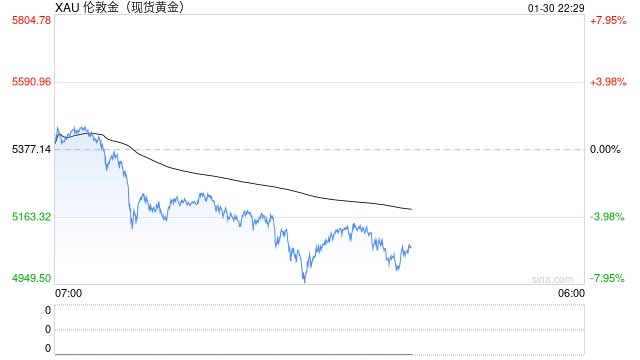
Core Viewpoint - The significant drop in gold and other metal prices was triggered by the nomination of Kevin Warsh as the next Federal Reserve Chairman, ending a strong upward trend in the precious metals market that had previously driven silver, copper, and platinum to historical highs [1][6]. Price Movements - Gold prices peaked at nearly $5,600 per ounce on Thursday but fell by 8% on Friday to a low of $4,957 per ounce, before slightly recovering to close down 6.7% at $5,034 per ounce [1][6]. - The decline in gold prices extended to the entire precious metals sector, with silver prices dropping by 15% and platinum prices falling by 13% [2][7]. Market Sentiment - Analysts describe the current market conditions as a typical "market top" scenario, filled with confusion and uncertainty, as investors seek clear direction [2][7]. - The nomination of Warsh has strengthened the dollar, as he is perceived as a more orthodox economist who may take a firmer stance on inflation, which has been a core concern for gold bulls over the past year [2][7]. Volatility and Future Outlook - Given the extreme price movements, the market is expected to maintain high volatility, with a belief that gold will benefit from diversification strategies by central bank reserve managers and other investors [2][7]. - The recent price drop is seen as a result of stop-loss selling from buyers after gold prices experienced one of the most extreme rises relative to long-term averages in decades [2][7]. - The surge in implied volatility indicates that the market may have become overbought in the short term, necessitating a more cautious approach [3][8].

关于“AI泡沫”,“中选政治”和“推翻关税”,来自美银Hartnett的判断,他说“顶部是一个过程,而底部是一个瞬间”
Hua Er Jie Jian Wen· 2025-11-09 04:40
Core Viewpoint - The formation of a market top is a gradual process rather than an instantaneous event, with key indicators emerging from the credit conditions of AI giants, political pressures from the public regarding living costs, and potential disruptive changes in U.S. tariff policies [1][2]. Group 1: Credit Market Dynamics - AI giants are facing severe challenges in their financing models, leading to a significant increase in bond market activity, with $120 billion in bonds issued over the past seven weeks, resulting in a widening credit spread from 50 basis points to nearly 80 basis points [3]. - The current situation mirrors the pre-burst conditions of the 2000 internet bubble, with rising risk aversion among investors [3]. Group 2: Political and Economic Pressures - Recent election results indicate strong voter dissatisfaction with affordability issues, suggesting increased government intervention to control prices, which could squeeze corporate profits [2][4]. - The political landscape is shifting, with potential implications for inflation control and budget deficits becoming critical as public anger over living costs grows [4]. Group 3: Policy Changes and Market Implications - A possible overturning of current tariff rulings by the U.S. Supreme Court could reshape market dynamics, reducing inflation expectations and creating structural opportunities in emerging markets [5]. - The shift in tariff policy may weaken the U.S. government's leverage in global influence through technology and decrease tariff revenues, while also aiding in lowering inflation expectations [5]. Group 4: Labor Market and Economic Outlook - The U.S. labor market is showing signs of cooling, with over 1 million layoffs reported this year, indicating a K-shaped economic recovery where certain groups feel poorer rather than wealthier [6]. - Structural unemployment driven by AI advancements is accelerating, and the best hedge against potential recession signals is to go long on zero-coupon bonds [6].
Bitcoin Drop May Be Warning for Stocks: Crypto Daybook Americas
Yahoo Finance· 2025-11-03 12:15
Market Overview - The crypto market is experiencing downward pressure in October, with Bitcoin (BTC) dropping 3% to $107,500 in the past 24 hours, while other major cryptocurrencies like ETH, XRP, BNB, and SOL have seen even larger losses. The CoinDesk 20 Index has fallen over 4% [1] - Among the top 100 cryptocurrencies, only ICP, ASTER, and HASH have shown positive performance, with ASTER's rise attributed to Binance co-founder ChangPeng "CZ" Zhao's exposure to the token [1] Bitcoin and Market Trends - Bitcoin has recently decoupled from the tech-heavy Nasdaq index, with potential upside limited by profit-taking from long-term holders [2] - The decoupling of BTC from traditional stocks could signal early warning signs for the stock market, as historical patterns suggest that BTC peaks may precede stock market tops [3] - Despite current pressures, bulls remain optimistic as BTC prices hold above the $100,000 mark [3] Historical Performance and Predictions - November has historically been a strong month for BTC, averaging returns above 40% over the past decade, with improving macro conditions potentially supporting a continuation of the uptrend [4] - However, some technical analysts are cautious, with one veteran analyst noting a "megaphone" pattern on the BTC chart that typically indicates a price drop [4] Security Concerns - The ongoing trend of hacks in the crypto space raises concerns about blockchain infrastructure security, as evidenced by a recent hack of Balancer for millions [5] Regulatory Developments - The European Commission is reportedly preparing to enhance central oversight over key financial infrastructures, including stock and crypto exchanges, to reduce market fragmentation and improve competitiveness within the bloc [6] Traditional Market Insights - The yield on the U.S. 10-year Treasury note is near three-week highs as traders await significant economic data releases, including ADP employment figures and ISM PMIs [7]