
平等对话

Search documents
访华官宣不到24小时!美底牌就被撕烂,英媒:中国发现了美国弱点
Sou Hu Cai Jing· 2026-02-27 05:32
Group 1 - Trump's planned visit to Beijing in April aims to address long-standing trade disputes through direct dialogue, focusing on trade balance, agriculture, and market access commitments from China [1] - The global market reacted slightly positively to the news, with stock markets showing minor gains as there are expectations for progress in trade negotiations [1] - The visit is expected to include high-level meetings addressing core issues such as energy and supply chains, amidst ongoing trade tensions characterized by tariffs and export restrictions [1] Group 2 - The U.S. Supreme Court ruled that tariffs imposed by the Trump administration under emergency economic powers were illegal, stating that such powers are meant for temporary measures, not long-term taxation [3] - The ruling has prompted importers to prepare to reclaim substantial amounts paid in tariffs, indicating a significant financial impact on businesses [3] - The court emphasized that the purpose of the tariffs was to force changes in China's trade practices, which did not align with the legal framework for emergency actions [3] Group 3 - Following the court's decision, Trump expressed dissatisfaction, claiming it undermined national security plans, leading to urgent meetings among White House lawyers to assess the ruling's implications [5] - The automotive and technology sectors are particularly affected, as companies report increased costs and supply chain disruptions due to tariffs [5] - Trump's negotiation strategy is now under reevaluation, as the tariffs that were once leverage have lost their effectiveness [5] Group 4 - British media highlighted that U.S. companies are reluctant to leave the Chinese market, which is a significant revenue source, and warned that restrictions could backfire on U.S. interests [6] - The U.S. dependency on China for rare earth elements poses a risk, particularly for military aircraft production, which relies heavily on these materials [6] - The combination of debt issues and trade deficits limits Trump's ability to act unilaterally in trade negotiations [6] Group 5 - The internal divisions within the U.S. regarding trade policy are becoming more pronounced, with European leaders pursuing business agreements with China, indicating a shift in focus towards practical business rather than U.S.-led containment efforts [8] - U.S. farmers are concerned about the potential impact of export disruptions on their political support base, especially with upcoming midterm elections [8] - China's response to U.S. weaknesses has been measured, leveraging debt and supply chain dependencies to alleviate pressure [8] Group 6 - Trump's executive order aimed at restoring negotiation leverage through global tariffs is seen as ineffective compared to previous tariff policies, as it requires congressional approval and has limited duration [10] - Many industries express that they cannot withdraw from China due to the market's importance for their revenues, particularly in the semiconductor sector [10] - The production of military aircraft is significantly hindered by China's control over rare earth materials, leading to production delays [10] Group 7 - Concerns over export stagnation among U.S. farmers could affect electoral outcomes, highlighting the political ramifications of trade policies [12] - The U.S. is facing increasing pressure from European companies that have already signed trade agreements with China, indicating a loosening of the U.S. containment strategy [12] - Trump's attempts to negotiate compromises have been met with skepticism from Congress, as Beijing perceives insufficient U.S. sincerity [12] Group 8 - The changing international landscape suggests that U.S. unilateralism is becoming untenable, with Trump's visit to China reflecting a recognition of this reality [14] - The combination of debt, electoral pressures, and supply chain dependencies is forcing the U.S. to engage in equal dialogue rather than unilateral actions [14] - The Supreme Court's ruling effectively nullified the tariff strategy, catching Trump off guard just before his planned visit [14] Group 9 - British media noted that China has effectively identified U.S. vulnerabilities, including high debt and reliance on supply chains, which limits Washington's ability to exert pressure [15] - China's position remains firm against unilateral tariffs, advocating for mutually beneficial cooperation [15] - The shift in strategy towards non-tariff cooperation by the Trump administration reflects a significant reduction in negotiating power [15]

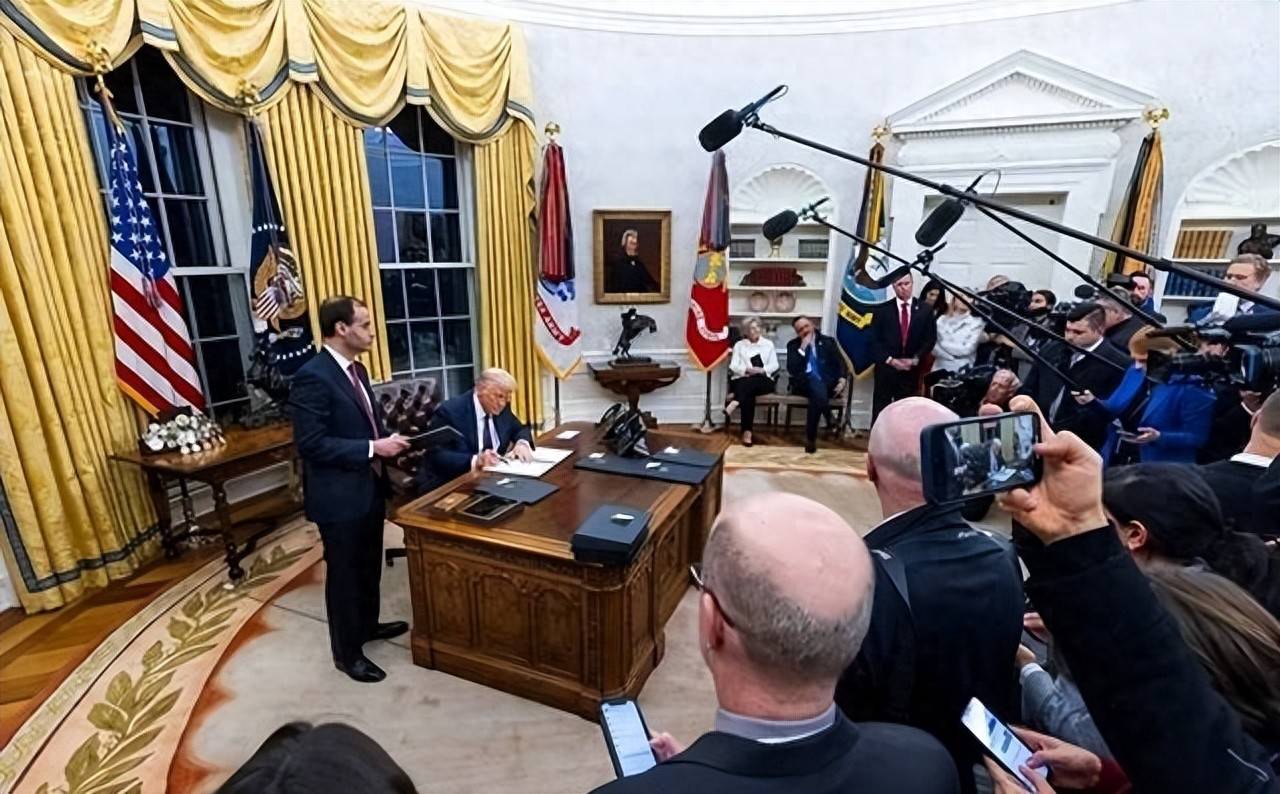
美国代表来华谈2500万吨大豆贸易,中国必须买?没有诚意一切免谈
Sou Hu Cai Jing· 2025-11-09 20:12
Core Insights - The trade dynamics between China and the U.S. in the agricultural sector are crucial, with the U.S. being a major exporter and China a primary importer [1] - Recent negotiations have led to commitments from China to purchase significant amounts of U.S. soybeans, reflecting political motivations tied to upcoming elections in the U.S. [3][4] - China maintains a cautious stance regarding U.S. procurement commitments, emphasizing that decisions will be based on market conditions and actual demand [6] Group 1: Trade Commitments and Political Context - Following recent talks, China has committed to purchasing 12 million tons of U.S. soybeans by the end of 2025 and at least 25 million tons annually from 2026 to 2028 [3] - The political backdrop includes the importance of U.S. farmers' support for the Republican Party, especially with the midterm elections approaching in 2026 [3] Group 2: China's Agricultural Strategy - China has diversified its soybean import sources, with over 70% of its imports coming from Brazil, reducing reliance on any single country [7] - The domestic soybean industry in China is growing, with production exceeding 20 million tons for three consecutive years, enhancing self-sufficiency and bargaining power in trade negotiations [8] Group 3: U.S. Tariff Policies and Future Relations - The U.S. still faces challenges with its tariff policies, including a 10% fentanyl tariff and other tariffs from the 301 investigation, which could hinder agricultural exports to China [10] - China emphasizes the need for the U.S. to demonstrate sincerity in trade relations through actions, not just verbal commitments, to achieve a mutually beneficial trade relationship [10]
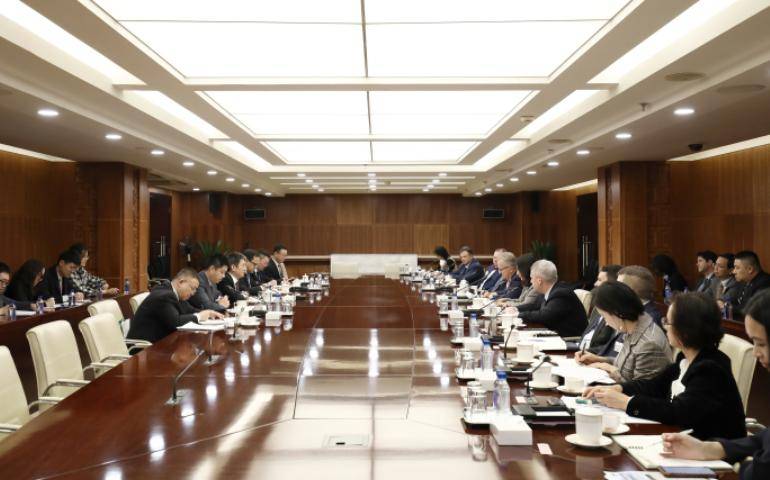
推动中美经贸关系健康稳定发展
Jing Ji Ri Bao· 2025-09-17 22:07
Core Points - The recent China-U.S. economic and trade talks in Madrid resulted in constructive communication and a basic framework consensus to address trade issues and reduce investment barriers, which is beneficial for both countries and the global economy [1][2] - The essence of China-U.S. economic relations is mutual benefit, with trade volumes showing significant growth since 2017, including a projected goods trade of $688.3 billion and services trade of $155.8 billion in 2024, reflecting increases of 18% and 34.7% respectively [1] - The importance of maintaining stable China-U.S. economic relations is underscored by their significant impact on global economic recovery, as their combined economic output exceeds one-third of the world total [2] Group 1 - The talks in Madrid were guided by important consensus from the leaders of both countries, aiming to resolve economic issues through cooperation [1][2] - China has actively promoted the management of conflicts and the resolution of differences to achieve win-win outcomes, with recent talks in Switzerland, the UK, and Sweden contributing positively to bilateral relations [2] - The dialogue must be based on mutual respect and equal negotiation, with China expressing a firm stance on protecting its development interests amid U.S. export controls on Chinese entities [3] Group 2 - The recent U.S. actions to place 23 Chinese entities on an export control list have disrupted the atmosphere for talks and cooperation [3] - China emphasizes the need for the U.S. to show sincerity and remove unreasonable restrictions to foster a conducive environment for stable and sustainable economic relations [3] - The ongoing dialogue is seen as the best way to resolve disputes and eliminate opposition, with both sides encouraged to continue building consensus and trust [2][3]
秉持平等态度 争取双赢结果——写在中美马德里会谈之前
Xin Hua She· 2025-09-14 12:36
Group 1 - The upcoming talks in Madrid between China and the U.S. are crucial for global confidence and stability, with expectations for both sides to maintain dialogue momentum and adhere to mutually beneficial principles [3] - The discussions will address significant economic issues, including unilateral tariffs, export controls, and the TikTok situation, reflecting the importance of equal dialogue in resolving disputes [1][2] - Previous rounds of talks have yielded positive outcomes, highlighting the mutual benefits inherent in the economic relationship between China and the U.S., which serves as a foundation for ongoing dialogue [2] Group 2 - China emphasizes its commitment to data privacy and security, asserting that it does not require companies to violate local laws for data collection, and seeks a fair operating environment for Chinese companies in the U.S. [2] - The relationship between China and the U.S. is characterized by economic complementarity and mutual benefit, which has been cultivated through the efforts of both nations' enterprises and the market's role [2] - Continued dialogue and cooperation are essential for the healthy and stable development of China-U.S. economic relations, ultimately benefiting both countries and the global community [2]
新华时评丨秉持平等态度 争取双赢结果——写在中美马德里会谈之前
Xin Hua She· 2025-09-14 03:33
Group 1 - The upcoming talks in Madrid between China and the U.S. are crucial for global confidence and stability, with expectations for both sides to maintain dialogue momentum and adhere to mutually beneficial principles [4] - The discussions will cover significant economic issues, including unilateral tariffs, export controls, and the TikTok situation, reflecting the importance of equal dialogue in resolving disputes [1][2] - Continuous communication has deepened mutual understanding and reduced differences, emphasizing that dialogue is the best way to resolve issues and prevent conflict [2][3] Group 2 - China's stance on TikTok is clear, emphasizing the importance of data privacy and security, and the need for a fair operating environment for Chinese companies in the U.S. [3] - The essence of China-U.S. economic relations is mutual benefit, which forms the basis for ongoing dialogue and cooperation [3] - The previous rounds of talks have yielded positive outcomes, contributing to global market stability and demonstrating the complementary economic advantages of both countries [3]
新华时评丨秉持平等态度 争取双赢结果——写在中美马德里会谈之前
Xin Hua She· 2025-09-13 15:08
Core Points - The upcoming talks in Madrid between China and the U.S. are crucial for addressing economic and trade issues, including unilateral tariffs, export controls, and the TikTok situation, reflecting the importance of dialogue in resolving disputes [2][4] - The recent series of trade talks since May indicates a commitment to dialogue, with leaders from both countries emphasizing the need for mutual understanding and cooperation to reduce differences and enhance consensus [2][3] - China's stance on TikTok emphasizes the protection of data privacy and the legal rights of its companies, urging the U.S. to create a fair operating environment for Chinese businesses [3][4] Group 1 - The talks will focus on key economic issues, including tariffs and TikTok, highlighting the need for equal dialogue to achieve mutual benefits [2] - Continuous communication has deepened understanding between the two nations, reinforcing the idea that dialogue is the best way to resolve conflicts [2][3] - The essence of U.S.-China economic relations is mutual benefit, which serves as the foundation for ongoing discussions [3] Group 2 - The Madrid talks are seen as a significant interaction that could enhance global confidence and stability [4] - There is an expectation for both countries to maintain the momentum of dialogue and take practical actions to resolve issues [4] - The outcome of these discussions is anticipated to contribute positively to the stability and development of both nations' economies and the global economy [4]