
开源指令集架构

Search documents
RISC-V,正式崛起
半导体行业观察· 2026-01-08 02:13
Core Viewpoint - The global semiconductor industry is undergoing a transformative change with the rise of the open-source instruction set architecture (ISA) RISC-V, which has captured 25% of the global processor market as of January 2026, marking the end of the long-standing x86 and Arm duopoly and ushering in an era of shared resources in chip design [1] Group 1: Technological Evolution - RISC-V's rise is attributed to its modular architecture, allowing designers to customize chips for specific workloads without the legacy bloat of x86 or the strict licensing constraints of Arm [2] - The introduction of the RISC-V vector extension RVV 1.0 is crucial for high-throughput mathematical operations required in modern AI applications, enabling companies like Tenstorrent to develop competitive cores [2][3] - The deployment of out-of-order execution RISC-V cores has achieved single-thread performance comparable to high-end laptop processors, with the ESWIN EIC7702X SoC demonstrating neural processing capabilities of up to 50 TOPS [3] Group 2: Strategic Shifts - Qualcomm's acquisition of Ventana Micro Systems for $2.4 billion signifies a strategic move to independence from Arm, allowing Qualcomm to develop its own high-performance RISC-V cores without royalty payments [4] - Meta Platforms is restructuring its chip strategy towards open ISA, optimizing its Meta Training and Inference Accelerator (MTIA) based on RISC-V, achieving a 30% improvement in performance per watt compared to previous proprietary designs [4] Group 3: Competitive Landscape - RISC-V offers a cost-effective path for large AI labs and cloud service providers to vertically integrate, enabling startups to license high-quality open-source cores and create custom chips at significantly lower costs than traditional licensing [5] - The proliferation of high-performance chips based on RISC-V is disrupting the market positions of Intel and Nvidia, compelling these giants to integrate their own neural network processors (NPU) more aggressively [5] Group 4: Geopolitical Sovereignty - RISC-V has become a core tool for nations pursuing technological sovereignty, particularly in China, where it is seen as a strategic necessity amid strict U.S. export controls on advanced architectures [6] - The EU is similarly leveraging RISC-V through initiatives like the DARE project to reduce dependence on U.S. and U.K. technologies, with companies like Axelera AI delivering RISC-V-based AI units [6] Group 5: Future Outlook - The trend towards "AI PCs" is expected to drive RISC-V's growth, with second-generation RISC-V laptops anticipated to launch by mid-2026, promising superior battery life and dedicated NPU performance [8] - Challenges remain in traditional enterprise environments, as legacy software heavily relies on x86 optimization, but advancements in binary translation technology could facilitate RISC-V's adoption [8] - Successful integration of RISC-V systems could pave the way for achieving 40% to 50% market share by the end of the decade [8] Group 6: New Computing Era - RISC-V's market share reaching 25% signifies a pivotal moment in technology history, transitioning from a "black box" chip era to a transparent, customizable, and globally accessible architecture [9] - The emergence of "pure RISC-V" data centers and flagship devices based on open ISA is anticipated, marking the reality of RISC-V as a third pillar in computing [9]

RISC-V面临的挑战
半导体行业观察· 2025-06-23 02:08
Core Viewpoint - RISC-V is emerging as a potential disruptor in the CPU architecture market, challenging the dominance of ARM and x86, particularly in embedded systems, AI accelerators, and low-power designs [1][10]. Group 1: RISC-V's Unique Features - RISC-V is an open-source instruction set architecture (ISA), allowing manufacturers to use, modify, and extend it without paying licensing fees, unlike ARM and x86 [2]. - The customization capability of RISC-V enables users to design specific core instances, making it suitable for various applications such as AI accelerators and IoT devices [2][4]. Group 2: Market Position and Adoption - RISC-V has gained traction in microcontrollers, AI accelerators, and embedded systems, with companies like SiFive and Alibaba integrating RISC-V processors into diverse products [4]. - Google’s recent support for RISC-V in Android indicates potential for RISC-V smartphones, although widespread adoption is still years away due to uncertainties in implementation [5][10]. Group 3: Challenges Facing RISC-V - RISC-V faces significant challenges in software ecosystem support, as it lacks the extensive optimization that ARM and x86 have developed over decades [7]. - The risk of fragmentation exists due to the customizable nature of RISC-V, which could lead to compatibility issues if manufacturers do not adhere to common standards [3][9]. - Performance optimization is a challenge, as current RISC-V chips generally lag behind ARM in high-performance applications [8][7]. Group 4: Future Outlook - The true potential of RISC-V lies in embedded systems and low-power designs, where cost, efficiency, and flexibility are prioritized over traditional software compatibility [10]. - Major companies like Google, Amazon, and Meta are interested in RISC-V for custom chip designs tailored to specific workloads, which could gradually erode ARM's dominance in the data center market [6].
三年亏50亿!王东升带队赴港上市 !
国芯网· 2025-06-09 11:49
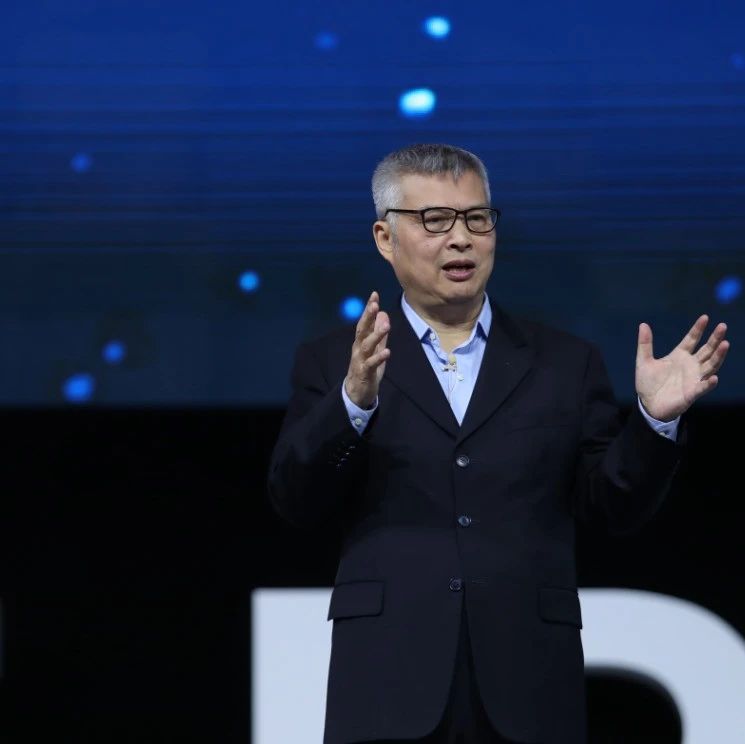
Core Viewpoint - Beijing Yiswei Computing Technology Co., Ltd., founded by Wang Dongsheng, is set to list on the Hong Kong Stock Exchange to raise funds for RISC-V chip development and commercialization, marking a significant move in China's semiconductor industry [1][3]. Group 1: Company Overview - Yiswei Computing aims to become the world's first publicly listed company focused on RISC-V chips, representing a critical breakthrough for China's chip industry in the open-source sector [3]. - The company was established in 2019 by former executives from BOE Technology Group, including Wang Dongsheng, who previously led BOE for 26 years [3][4]. - Yiswei Computing focuses on two main areas: smart terminals and embodied intelligence, providing integrated hardware and software solutions [4]. Group 2: Financial Performance - Yiswei Computing's revenue for 2022 to 2024 is projected at 2 billion, 1.75 billion, and 2.03 billion yuan respectively, with stable revenue in the range of 1.7 billion to 2 billion yuan [4]. - The company reported cumulative losses of 4.96 billion yuan over the same period, with losses of 1.57 billion, 1.84 billion, and 1.55 billion yuan respectively [4]. Group 3: Shareholding Structure - The shareholding structure indicates that Yiswei Group holds 17.74%, Yili Technology 12.72%, and Yixiang Technology 1.09% [5]. - Wang Dongsheng is the general partner of Yiming Technology, holding 63% of the partnership, while other partners hold less than 10% [5]. - Key executives, including Wang Dongsheng and Mi Peng, have agreed to act in concert regarding board and shareholder meeting decisions [5].
爱建证券电子行业周报:开源RISC-V芯片有望获得政策推广-2025-03-11
Shanghai Aijian Securities· 2025-03-11 09:39
Investment Rating - The report rates the electronic industry as "Outperform the Market" [1][3]. Core Insights - The report highlights the potential for RISC-V open-source chips to gain policy support for nationwide promotion in China, emphasizing their advantages in flexibility, modularity, and low power consumption [3][6][11]. - The electronic industry experienced a weekly increase of 2.7%, ranking 9th out of 31 sectors, with notable performances in semiconductor equipment and analog/digital chip design [3][27]. - The launch of new AI models and products, such as Manus and QwQ-32B, indicates a growing competitive landscape in AI technology, with significant implications for market demand in AI servers and related applications [18][23][24]. Summary by Sections 1. RISC-V and Domestic Chip Development - RISC-V is positioned to support the entry of domestic chips into the open-source era, with the Chinese government planning to issue guidelines for its promotion [6][15]. - The advantages of RISC-V include its open-source nature, modular design, and applicability across various fields such as IoT and automotive electronics [11][13]. 2. Global Industry Dynamics - The report discusses the release of the AI product Manus, which has achieved state-of-the-art performance, and compares it to existing models [18]. - Meta Quest 3S has become the best-selling VR device globally, indicating strong market demand in the VR sector [19]. - The QwQ-32B large language model from Alibaba demonstrates competitive performance with significantly fewer parameters than its counterparts [23]. 3. Market Review - The report provides a weekly overview of industry performance, noting that the electronic sector's increase of 2.7% is supported by strong performances in specific sub-sectors [27][30]. - The top-performing stocks in the electronic industry include Xinhuike and Green达, while the worst performers include Zhichun Technology and Aojie Technology [32].