开源路线

Search documents
印度AI峰会献媚美国,用中国机器狗冒充自研,科技展成了站队会
Sou Hu Cai Jing· 2026-02-22 21:10
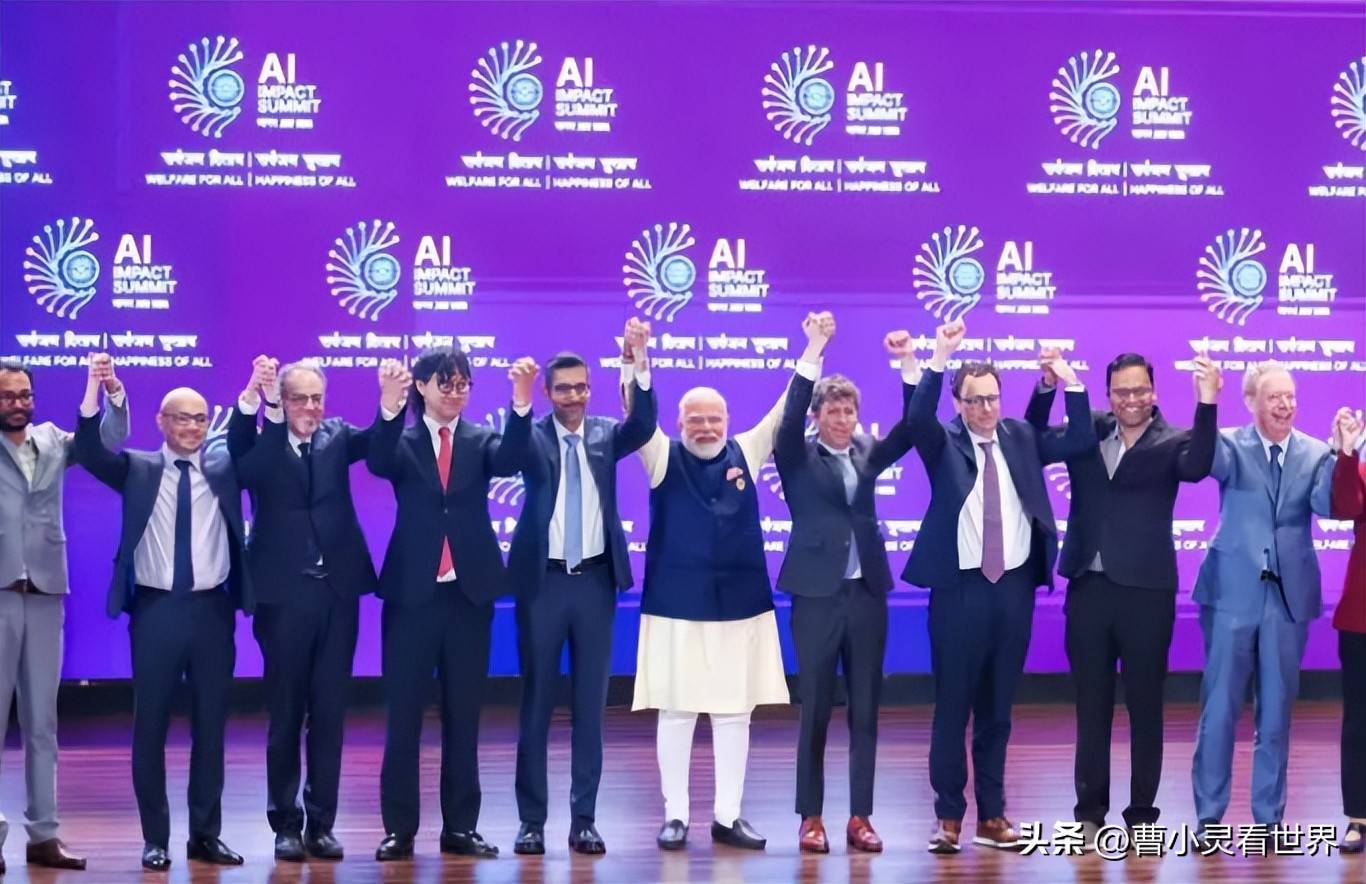
Core Viewpoint - The AI summit in India, intended to showcase technological innovation, devolved into a political spectacle, highlighting the Modi government's alignment with the U.S. while neglecting potential collaboration with China [1][7]. Group 1: India's AI Strategy - The Indian government is heavily investing in partnerships with U.S. tech giants like Google ($15 billion), Microsoft ($17.5 billion), and Amazon ($35 billion) to build data centers, despite the potential benefits of adopting China's open-source AI models [1]. - India recognizes its inability to independently develop AI technologies and is leveraging U.S. investments to utilize its vast data resources, aiming to create a so-called sovereign AI ecosystem [6][9]. - The Modi administration's focus on political alignment over technological collaboration has led to missed opportunities for cost-effective solutions that could be provided by Chinese technology [7][9]. Group 2: Challenges and Criticism - The organization of the AI summit faced significant logistical issues, including security chaos and lost exhibits, undermining India's credibility in leading the AI revolution [7]. - Despite inviting a Chinese delegation with viable cooperation proposals, the summit prioritized U.S. companies, showcasing India's political bias over practical technological needs [7]. - The long-term outlook for India's AI ambitions remains bleak, as reliance on U.S. support may lead to restrictions similar to those faced by Taiwan's TSMC, raising questions about the sincerity of U.S. commitments to building a complete AI industry chain in India [9].

LeCun创业首轮估值247亿!Alexandre当CEO
量子位· 2025-12-19 01:01
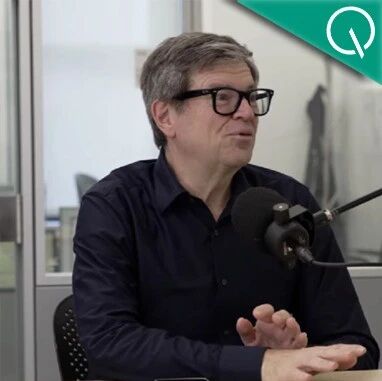
Core Insights - The article discusses the establishment of a new company named Advanced Machine Intelligence Labs (AMI Labs), founded by Yann LeCun, which aims for a valuation of €3 billion (approximately ¥24.7 billion) and plans to officially launch in January 2026 [2][11]. Group 1: Company Overview - AMI Labs will focus on the research direction of "world models," which LeCun has been advocating, and will adopt an open-source approach while maintaining collaboration with Meta [3][5]. - The company is seeking to raise €500 million (approximately ¥4.1 billion) in its first round of funding [11]. - The CEO of AMI Labs will not be LeCun but rather Alexandre LeBrun, a former subordinate of LeCun [4][14]. Group 2: Technical Direction - AMI Labs will pursue a more challenging path than mainstream large language models (LLMs) by focusing on "world models," as LeCun believes that current LLMs have fundamental logical flaws and do not truly understand the physical world [6]. - The company will utilize a Joint Embedding Predictive Architecture (JEPA) to build its technological foundation, emphasizing "abstraction" and "planning" rather than predicting every pixel like video generation models [8][9]. - This approach aims to enable AI to focus on understanding key dynamic changes, akin to human or animal reasoning and planning capabilities [9]. Group 3: Leadership and Background - Alexandre LeBrun, the new CEO, has a strong background in AI and has previously worked closely with LeCun at Meta, where he was responsible for engineering at FAIR [25][28]. - LeBrun's experience includes founding the AI company Nabla and has a history of successful entrepreneurship in the tech sector [17][24]. - The leadership structure at AMI Labs is expected to be a dual-core model, with LeCun focusing on research and LeBrun on commercial aspects [29].
AI圈大变天!阿里千问硬刚ChatGPT,开源免费掀翻行业规则
Sou Hu Cai Jing· 2025-11-21 08:48
Core Viewpoint - Alibaba's Qianwen app has launched its public beta, directly competing with ChatGPT by adopting an open-source and free strategy, aiming to disrupt the global AI market [1][4][19] Group 1: Product Launch and Strategy - On November 17, Alibaba announced the public beta of the Qianwen app, targeting ChatGPT with a product based on the high-performance open-source model Qwen3, emphasizing a free strategy [4] - Qianwen integrates Alibaba's ecosystem, allowing users to compare prices, plan trips, and generate meeting minutes, transforming AI from a chat tool to a practical assistant [4] Group 2: Long-term Investment and Development - Alibaba has invested 380 billion yuan in AI infrastructure and has been iterating on the Qwen open-source model, focusing on building a solid foundation before launching [7] - The Qwen3-Max model has surpassed GPT-4 and ClaudeOpus, ranking among the top three globally, while the open-source Qwen series has seen significant adoption, with downloads surpassing Llama [9] Group 3: Competitive Landscape and Market Dynamics - A Stanford report indicates that the performance gap between top AI models in China and the U.S. has narrowed to just 0.3%, highlighting the competitive advancements made by Alibaba [11] - The competition is framed as a battle between two AI philosophies: ChatGPT's closed-source, paid model versus Qianwen's open-source, free approach, which aims to democratize AI access [13][15] Group 4: Industry Implications and Future Outlook - The emergence of Qianwen signifies a shift towards a more inclusive and open AI future, challenging the dominance of closed-source models that have historically defined the industry [19] - As more companies join the open-source movement, the AI industry is expected to return to its essence, allowing everyone to benefit from technological advancements [19]