恶意索赔

Search documents
让恶意索赔者得不偿失(纵横)
Ren Min Ri Bao· 2026-01-22 22:13
Core Viewpoint - The new "Complaint and Reporting Handling Measures" aims to enhance the efficiency of handling complaints and reports while regulating malicious claims and improving the jurisdiction of operators on platforms [1][2]. Group 1: Regulations and Measures - The new regulations prohibit the abuse of complaint and reporting rights and the pursuit of unjust benefits through these mechanisms [1][2]. - Complainants are required to provide real identity information and corresponding factual evidence; false materials or identity impersonation will not be accepted [1][2]. - The measures target market governance issues, deterring behaviors that exploit the system under the guise of "fighting against counterfeits" [1][2]. Group 2: Impact on Market Environment - The enhancement of consumer rights protection laws, such as the Consumer Rights Protection Law and the E-commerce Law, is contributing to a better market environment [1]. - The national 12315 platform has processed over 120 million complaints and reports, helping many consumers recover losses [1]. Group 3: Challenges and Solutions - Malicious claims have become a frequent issue, harming the rights of businesses and disrupting the market ecosystem [2]. - The new measures aim to clarify rights boundaries, empowering legitimate claimants while making it costly for malicious claimants [2]. - Strict enforcement of these regulations is essential to distinguish between legitimate claims and malicious ones, ensuring the complaint and reporting system serves its intended purpose [2].
恶意索赔无遁形 理性维权更高效
Xin Lang Cai Jing· 2026-01-18 01:57
Core Viewpoint - The newly revised "Regulations on Handling Complaints and Reports by Market Supervision" aims to regulate malicious claims and abuse of complaint rights, marking a significant step towards precise regulation of professional claimants [1][3] Group 1: Regulations Overview - The regulations will take effect on April 15, 2026, and specifically outline scenarios where complaints will not be accepted, such as when the consumer cannot prove a legitimate dispute with the seller [1] - Four dimensions are defined for identifying malicious claims: inconsistency in purchasing behavior, excessive complaints from the same individual or collusion among different complainants, inability to prove actual purchase or service receipt, and doubts about the complainant's identity [1] Group 2: Impact on Businesses - Businesses have expressed relief as the new regulations help eliminate "pothole-style claims," allowing them to operate with more confidence and focus on compliance [3] - The regulations are expected to clarify the boundary between legitimate rights protection and malicious claims, thus promoting fair competition and reducing the burden on small businesses [3][4] Group 3: Legal Interpretation - Legal experts emphasize that the core value of the new regulations is to establish a principle against the abuse of rights, providing clear legal standards to differentiate between legitimate claims and malicious ones [4] - The regulations are designed to purify the rights protection ecosystem, ensuring that legitimate consumer rights can still be protected without hindrance from malicious claims [4] Group 4: Enforcement and Penalties - The regulations increase penalties for malicious claimants, stating that those who engage in fraud or extortion will be referred to law enforcement, indicating a shift from civil disputes to potential criminal accountability [5]
将“碰瓷式索赔”拒之门外
Xin Lang Cai Jing· 2026-01-12 23:09
Core Viewpoint - The newly revised "Market Supervision and Management Complaint Handling Measures" aims to enhance the efficiency of handling complaints and reports, specifically targeting malicious claims and improving the jurisdiction of complaints against platform operators [1]. Group 1: Purpose and Scope of the New Measures - The purpose of the complaint handling by market supervision departments is to mediate consumer disputes and combat illegal activities that infringe on consumer rights, thereby maintaining market order [2]. - The new measures explicitly state that complaints not related to actual consumer needs or lacking a substantive relationship with the complaint subject will not be accepted, thus clarifying the boundaries of acceptable complaints [3]. Group 2: Restrictions on Malicious Claims - The measures include a negative list that outlines the types of complaints that will not be accepted, such as those that do not demonstrate a genuine consumer relationship or involve excessive claims that exceed normal consumption patterns [3]. - By rejecting "fishing for compensation" tactics, the new regulations aim to standardize complaint behaviors, purify the complaint ecosystem, and ensure that market supervision resources are allocated to legitimate complaints [3].
打击“碰瓷”式投诉 向恶意索赔亮剑
Xin Lang Cai Jing· 2026-01-10 18:29
Core Viewpoint - The newly revised "Market Supervision Complaint and Reporting Handling Measures" aims to enhance the efficiency of complaint handling and regulate malicious claims in the e-commerce sector, which has seen a significant rise in consumer complaints, accounting for over half of all complaints [1][2]. Group 1: Complaint Handling Regulations - Complaints against platform operators will be handled by the market supervision department at the location of the address publicly disclosed by the platform or the platform's residence [2]. - If the address is not publicly disclosed or cannot be contacted, the complaints will be managed by the market supervision department at the platform's residence [2]. - Platforms are required to provide consumers with the real name, address, and valid contact information of operators, and must fulfill their obligations for identity verification and registration of platform operators [2][4]. Group 2: Addressing Malicious Complaints - The new regulations specifically target "picking quarrels" complaints, where individuals exploit the complaint system for personal gain, thereby disrupting the market environment [3][4]. - The measures stipulate that complaints must adhere to legal standards and cannot be abused for unjust benefits, which could harm legitimate business operations [4]. Group 3: Enhancements in Consumer Rights Protection - The revised measures introduce criteria for non-living consumption factors, such as the frequency and quantity of purchases that do not align with typical consumer behavior, to prevent abuse of the complaint system [4]. - Consumers must provide authentic identity information and evidence of consumer rights disputes, with the market supervision department having the authority to verify this information [4]. Group 4: Improving Complaint Resolution Efficiency - The updated measures aim to lower the transaction costs for consumers in the complaint process by allowing market supervision departments to designate institutions for assessments when parties cannot agree [5]. - The implementation of a unified complaint data standard and user rules through the national 12315 platform will facilitate integrated handling of complaints and enhance real-time market risk monitoring [5].


网购维权有新规 平台内经营者投诉管辖权明确
Xin Lang Cai Jing· 2026-01-10 10:13
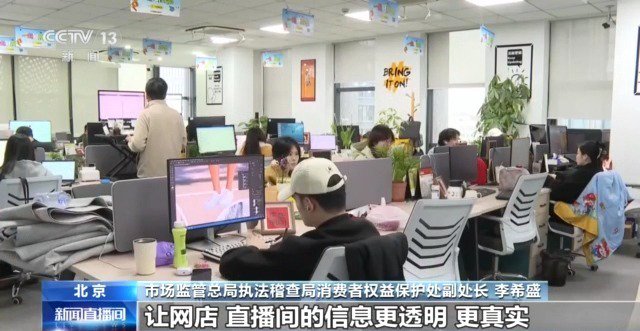
Core Viewpoint - The newly revised "Market Supervision and Management Complaint Handling Measures" aims to address the increasing consumer complaints in the e-commerce sector, which now account for over half of all complaints, by clarifying the jurisdiction for complaints against online stores and live-streaming platforms [1][2]. Group 1: Complaint Handling and Jurisdiction - Complaints against platform operators will be handled by the market supervision department at the county level where the address is publicly listed or where the platform is located [2]. - The revision emphasizes the platform's responsibility to assist in resolving consumer disputes and to provide accurate information about operators, enhancing transparency and accountability [4][11]. Group 2: Regulation of Malicious Claims - The revised measures aim to curb the abuse of the complaint system, which has seen an increase in malicious claims and extortion attempts, thereby protecting legitimate consumer rights and maintaining market order [4][7]. - Specific provisions are included to penalize individuals who engage in fraudulent activities related to complaints, such as fabricating facts or using false identities [9][12]. Group 3: Administrative Mediation and Consumer Rights Protection - The new measures enhance administrative mediation processes, allowing for designated institutions to handle disputes when parties cannot agree on assessment or testing [14]. - The measures also encourage the establishment of consumer rights protection service stations and online dispute resolution systems to preemptively address consumer grievances [16][14]. Group 4: Data Standardization and Integration - The measures mandate a unified standard for complaint data and user rules, facilitating the integration of complaint information through the national 12315 platform, which will enhance market risk monitoring and trend analysis [18][20]. - This integration is expected to improve the efficiency of complaint handling and provide a structured approach to market regulation [20].