情感陪伴机器人

Search documents
量产可期?这款人形伴侣机器人爆火后,创始人回应来了
机器人大讲堂· 2026-02-04 09:04
Core Viewpoint - The article discusses the innovative emotional companion robot Eva.i, which aims to create a "fourth relationship" for humans, providing emotional support without the burdens of traditional social interactions [2][23]. Group 1: Development and Technology - Eva.i features a constant body temperature of 37°C, designed to mimic human warmth and enhance emotional interaction [7][10]. - The development of Eva.i's warm touch was initially an unexpected outcome of creating a high-sensitivity flexible electronic skin, which led to the integration of a graphene temperature control system [10][12]. - The biggest challenge in development was converting research technology into mass production, particularly ensuring the electronic skin's flexibility and sensitivity [12]. Group 2: Interaction and Emotional Recognition - Eva.i utilizes multi-modal emotional recognition to enhance user interaction, combining visual, auditory, and tactile feedback to understand user emotions [14][17]. - The robot can recognize user fatigue through facial expressions and voice tone, responding with appropriate emotional support [14][17]. - Data privacy is prioritized, with local algorithms processing sensitive information, allowing users to control their data [16]. Group 3: Design and User Experience - The design of Eva.i aims to avoid the "uncanny valley" effect, ensuring that the robot appears lifelike and engaging rather than eerie [19][21]. - The robot's eyes are designed to be dynamic and not merely sensors, enhancing the user's sense of connection [21]. - Eva.i promotes a "no burden" companionship model, providing emotional support without the expectations of traditional relationships [23][26]. Group 4: Challenges and Future Plans - As a startup, Eva.i faces challenges related to funding, talent acquisition, and public perception of emotional robots [27]. - The company is working on establishing its own factory to improve production efficiency and cost control, with plans to deliver the first products between May and August [29].


“LOVOT之父”:为何一个“不会说话”的机器人更动人?
Huan Qiu Wang Zi Xun· 2026-01-08 08:09
Core Insights - The article highlights the rapid growth of emotional companion robots in China's AI consumer sector, with AI toy sales expected to surge sixfold quarter-on-quarter and over 200% year-on-year by mid-2025 [1] - LOVOT, a brand that emphasizes a "functionless" approach, aims to redefine human-robot companionship through non-verbal communication, focusing on warmth, eye contact, and ambiguous sounds [1][6] Group 1: Market Positioning - LOVOT's new store in Shanghai IFC Mall represents a strategic move to deepen its market presence in China, creating an immersive healing space rather than a traditional retail environment [3][4] - The store's design encourages natural interactions, allowing visitors to engage with LOVOT without explicit commands, fostering a sense of being loved and accepted [3][4] Group 2: Unique Product Philosophy - LOVOT is designed to evoke emotional connections rather than serve practical functions, positioning itself as a companion that nurtures human affection [6][8] - The robot is equipped with over 50 sensors to capture user interactions and emotions, and it can adapt its behavior based on the frequency of interactions, creating unique personality traits [6][10] Group 3: Target Audience and Expansion - The primary user demographic for LOVOT in China consists of urban women aged 20-30, including those who value quality of life, cannot keep pets, or enjoy independent living [10] - LOVOT is expanding into sectors such as healthcare and corporate environments, serving as an emotional buffer for employees and enhancing team communication [10][12] Group 4: Accessibility and Future Vision - Despite its high price point, LOVOT aims to make emotional companionship more accessible through product diversification, subscription models, and rental services [12] - The company emphasizes the importance of genuine design in the emotional sector, advocating for long-term trust-building rather than short-term trends [12]


深圳硬件公司做AI陪伴机器人,拿下红杉投资,用户量破百万|Insight全球
3 6 Ke· 2025-12-09 01:40
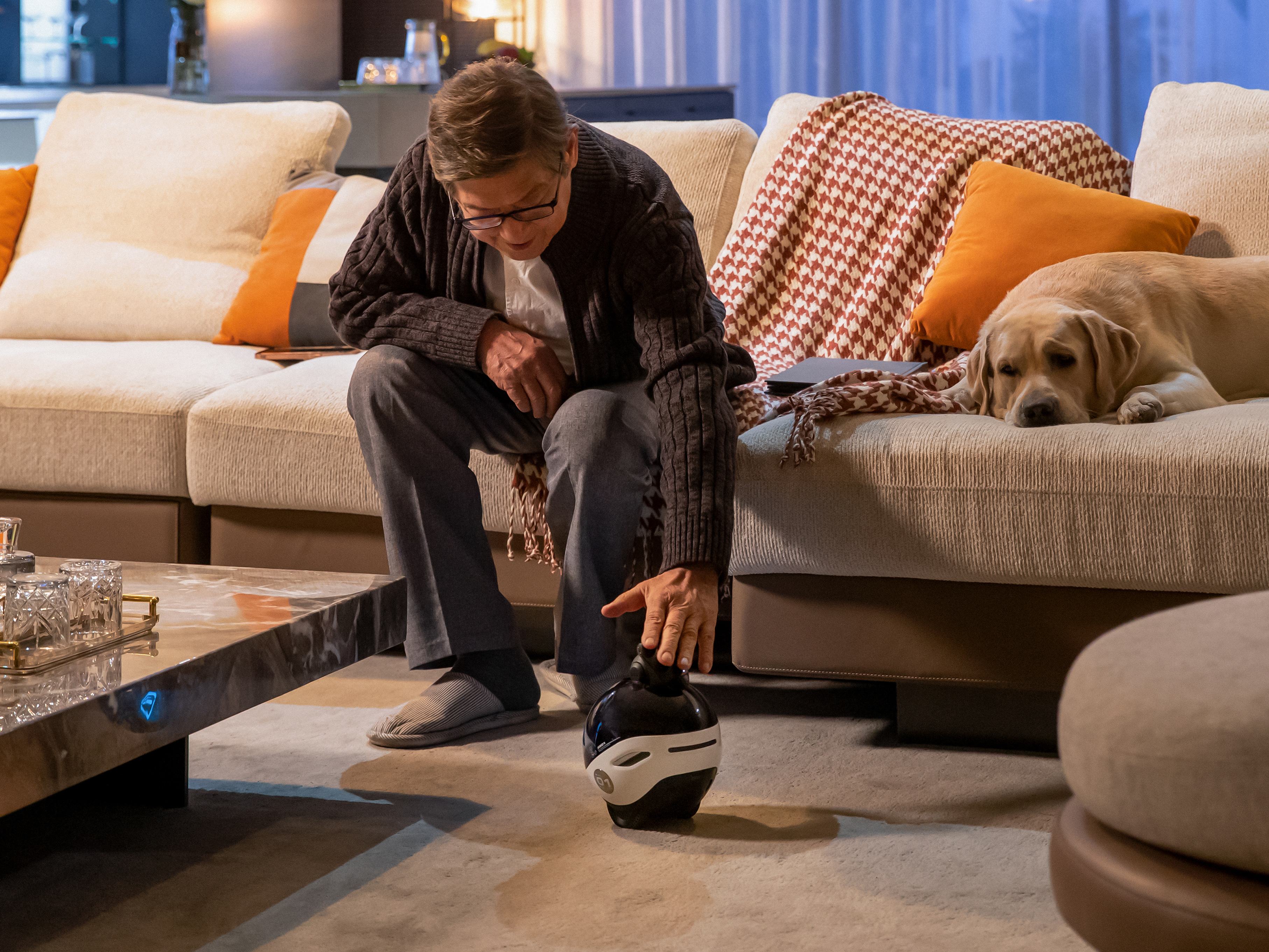
Core Insights - The article discusses the rise of Enabot, a company specializing in companion robots, which has successfully tapped into the emotional companionship market, expanding its user base to over one million globally and entering more than 160 countries by September 2025 [6][2][1] Company Overview - Enabot was founded in Shenzhen in 2018 by a team of former employees from large tech companies, initially focusing on pet companionship robots due to personal experiences with pet care [2][1] - The first product, EBO S, was launched in December 2019, featuring mobile monitoring capabilities and designed to interact with pets, which unexpectedly led to broader applications in human companionship [2][3] Product Development - Enabot quickly expanded its product line beyond EBO S to include EBO X, targeting the needs of elderly and child care [3] - The company has received multiple rounds of funding from top investors such as Sequoia Capital and Longfor Capital, indicating strong investor confidence in its growth potential [6] Market Potential - MarketsandMarkets predicts that the global emotional companion robot market could exceed $10 billion by 2027, with a compound annual growth rate (CAGR) of over 17%, particularly in mobile and emotionally interactive segments [6] - The rise of the "loneliness economy" post-pandemic has increased demand for non-human companions, with over 60% of urban dwellers expressing a need for such products [16] User Experience and Design - Enabot's robots are designed to address specific user pain points, such as limited interaction capabilities of traditional monitoring devices, by incorporating features that allow for remote interaction and emotional engagement [7][10] - The company emphasizes a balance between practical functionality and emotional companionship, ensuring that the robots can provide security while also fostering emotional connections [10][13] Cultural Adaptation - Enabot recognizes the differing needs of users in various cultural contexts, with East Asian markets seeking deeper emotional connections and family bonding, while Western users prefer low-intrusion interactions and emotional resonance [16][19] - The design of Enabot's robots includes features that cater to these cultural differences, such as customizable expressions and remote interaction capabilities for family celebrations [17][19] Industry Trends - The industry is shifting from a focus on functional utility to emotional value, with companies that can accurately understand and meet user needs likely to gain a competitive edge [21] - Enabot's approach illustrates a successful path in the companion robot market, emphasizing the importance of addressing both functional and emotional requirements of users [21]
优必选推出情感陪伴机器人“优崽”
Bei Jing Shang Bao· 2025-12-01 08:49
Core Viewpoint - UBTECH has officially launched the new emotional companion robot "Youzai" from the Meng UU family, with a limited pre-sale of 2,000 units on Tmall and Douyin [1] Product Features - The "Youzai" robot features multiple upgrades in emotional interaction capabilities, based on UBTECH's self-developed "Dianling Intelligent Agent" [1] - It includes a continuous dialogue function and an integrated 4G module, enabling online companionship in both indoor and outdoor settings [1] - The product introduces four distinct "personality color" IP fashion designs, enhancing emotional connection through multi-sensory design elements such as visual and tactile experiences [1]
福莱新材(605488):标签材料拉动营收增长,柔性传感器多维突破
Huaxin Securities· 2025-08-27 08:32
Investment Rating - The report maintains a "Buy" investment rating for the company [9] Core Insights - The company achieved total operating revenue of 1.334 billion yuan in the first half of 2025, representing a year-on-year increase of 15.40%. However, the net profit attributable to shareholders decreased by 19.58% to 51 million yuan [5] - The label materials segment continues to be a growth driver, with revenue of 419 million yuan, up 28.42% year-on-year, benefiting from overseas market expansion and product optimization [5] - The flexible sensor segment has made significant progress, with the establishment of a pilot production line and the launch of first and second-generation tactile sensor products [6] - Strategic partnerships with Tom Cat and Fenda Technology aim to develop AI companion robots, tapping into a growing market driven by demographic changes [8] Summary by Sections Financial Performance - In Q2 2025, the company reported operating revenue of 731 million yuan, a year-on-year increase of 22.42% and a quarter-on-quarter increase of 21.28%. The net profit for the same quarter was 16 million yuan, down 52.51% year-on-year and 53.98% quarter-on-quarter [4][5] Business Strategy - The company is advancing its "industrial integration and application diversification" strategy, which has led to reduced product costs and improved delivery stability [5] - The traditional advertising inkjet printing materials segment generated revenue of 623 million yuan, a year-on-year increase of 3.27%, although it faced margin pressure due to increased competition [5] Growth Opportunities - The flexible sensor business is expanding into high-growth application areas such as robotics and industrial inspection, with a focus on developing flexible electronic skin technology [6] - The emotional robot market is poised for growth, with government subsidies potentially lowering prices and increasing accessibility [8] Profit Forecast - The company is projected to achieve net profits of 123 million yuan, 156 million yuan, and 219 million yuan for 2025, 2026, and 2027 respectively, with corresponding P/E ratios of 76.8, 60.7, and 43.3 [9][11]

傅利叶人形机器人“Care-bot”GR-3正式发布 能否撬动30万亿蓝海市场?
机器人大讲堂· 2025-08-07 08:25
Core Viewpoint - Fourier officially launched its first full-size humanoid robot "Care-bot" GR-3, emphasizing interactive companionship and "touchable" features, marking its second public appearance after the WAIC in Shanghai [1][4]. Product Design and Features - The GR-3 represents the third generation of the GRx series, featuring a soft skin design and a full-sensory interaction system, contrasting with the metallic feel of previous models [3][7]. - Inspired by the character "Baymax" from the movie "Big Hero 6," the GR-3 aims to create emotional connections through visual and tactile interactions, enhancing user affinity [4][9]. - The robot's height is set at 165 cm and weighs 71 kg, with 55 degrees of freedom for more human-like expressions [11]. Interaction and Technology - GR-3 is equipped with a self-developed full-sensory interaction system that integrates auditory, visual, and tactile modules for natural emotional interactions [13]. - The system features a "dual-path response mechanism," allowing for quick responses to single commands and more complex interactions when multiple triggers occur [15]. - The robot includes advanced auditory perception with a four-microphone array, visual recognition capabilities with a structured light and RGB camera, and tactile feedback through 31 touch sensors [15][16]. Commercialization and Market Position - Fourier completed a strategic investment of 300 million RMB in June 2025, following an earlier round of nearly 800 million RMB, positioning the company as a unicorn with a valuation of 8 billion RMB [21][23]. - The company plans to deliver 300 units of the GR-3 in 2025, with all products entering mass production, reflecting a focus on commercializing humanoid robots [23]. - Fourier's rehabilitation robots have reached over 3,000 institutions across more than 60 countries, indicating a strong market presence and potential for growth in the aging economy, projected to exceed 12 trillion RMB by 2025 [24].