
优崽

Search documents
AI玩具困在哪里?
3 6 Ke· 2025-12-08 12:07
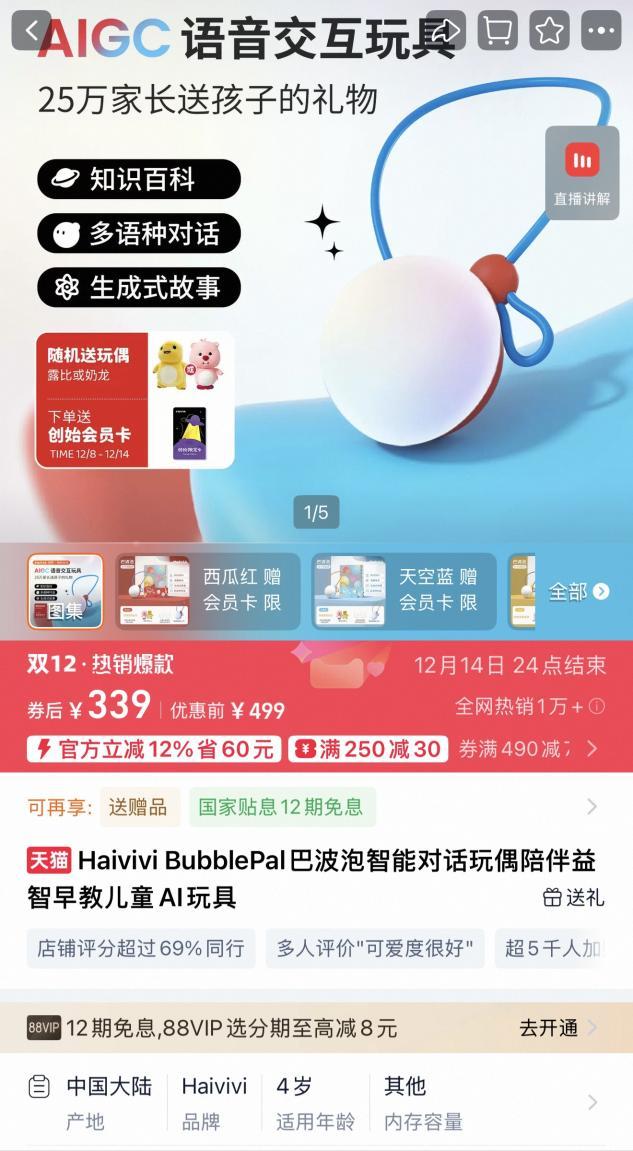
Core Insights - The AI toy sector is expected to thrive in 2025, attracting significant capital investment and interest from both large companies and startups, with strong consumer engagement [1][9][22] - Major players like Huawei and JD.com are entering the AI toy market, collaborating with startups to leverage their core technologies [1][9] - The market is witnessing a surge in registered companies and financing events, indicating a growing interest in AI toys despite the challenges of creating a successful product [9][22] Company Highlights - Companies like Lobo Intelligent and Yue Ran Innovation are gaining attention, with Lobo's "Smart Hanhan" toy selling out quickly after its launch [1][5] - Yue Ran Innovation's "BubblePal" has sold nearly 300,000 units since its launch, generating over 100 million yuan in sales [3][5] - Lobo Intelligent, founded in early 2024, has also seen success with its product "Fuzai," which quickly became a top seller on e-commerce platforms [7][9] Market Dynamics - The AI toy market is characterized by a rapid increase in registered companies, with 1,766 active firms as of June 2025, and a financing boom exceeding 20 billion yuan [9][22] - Despite the growth, the industry faces challenges in producing a breakout product, with many companies struggling to differentiate themselves in a crowded market [2][10][13] - The average return rate for AI toys is high, with reports indicating rates between 20% to 40%, primarily due to unmet consumer expectations [17][18] Consumer Insights - Parents are the primary buyers of AI toys, seeking products that address parenting challenges and enhance children's imaginative play [5][12] - The emotional value provided by AI toys is crucial, with products needing to appeal to both children and parents [11][12] - User retention and engagement remain significant challenges, as many consumers report a decline in interest shortly after purchase [15][18] Financial Performance - AI toys generally have a higher profit margin compared to traditional toys, with margins ranging from 70% to 80% [22] - The dual business model of hardware sales combined with subscription services for content updates is becoming prevalent in the industry [22] Competitive Landscape - The AI toy market faces competition not only from within the sector but also from traditional IP toys and AI companion applications, which may attract price-sensitive consumers [23] - The industry is at a critical juncture, with many products achieving significant sales but lacking a clear market leader [23]

华为“智能憨憨”引发AI玩具热,行业同质化严重智能化不足
证券时报· 2025-12-04 01:06
Core Insights - The AI toy market is experiencing a surge in interest, driven by products like the "Smart Hanhai" emotional companion AI robot from Huawei, which sold out quickly and has a high pre-order volume [1][3] - Despite the growing popularity, the industry faces significant challenges, including severe product homogenization and insufficient intelligence levels in AI toys [5][6] - Major companies are entering the AI toy space, indicating a competitive landscape, with new products being launched by firms like UBTECH and JD.com [2][4] Market Trends - The AI toy market is projected to grow significantly, with estimates suggesting a market size of approximately 246 billion yuan in 2024, increasing to 290 billion yuan in 2025, and potentially exceeding 1 trillion yuan by 2030, with a compound annual growth rate of over 50% [4][8] - The increase in consumer demand for intelligent products is pushing AI toys towards becoming mainstream, especially as traditional consumer electronics face stagnation [4][7] Industry Challenges - The AI toy sector is plagued by high return rates, with initial rates reaching up to 40% due to unmet consumer expectations regarding product functionality [6][8] - Many AI toys utilize common models and hardware, leading to a lack of differentiation and innovation, which contributes to the high return rates and consumer dissatisfaction [6][7] - The industry is currently in a "feature phone" stage, with many products failing to meet the true needs of consumers, resulting in a short-lived novelty [6][9] Competitive Landscape - The market is expected to undergo a significant reshuffle within the next five years, with companies lacking unique intellectual property, data, and comprehensive capabilities likely to exit the market [9] - Three main types of players are anticipated to remain: large consumer electronics firms leveraging their ecosystem, content-driven companies like LEGO and Disney, and specialized service providers focusing on niche markets [9][10] - Companies that can transition from one-time sales to sustainable content subscription models are likely to thrive, while others may struggle to compete [9][10]
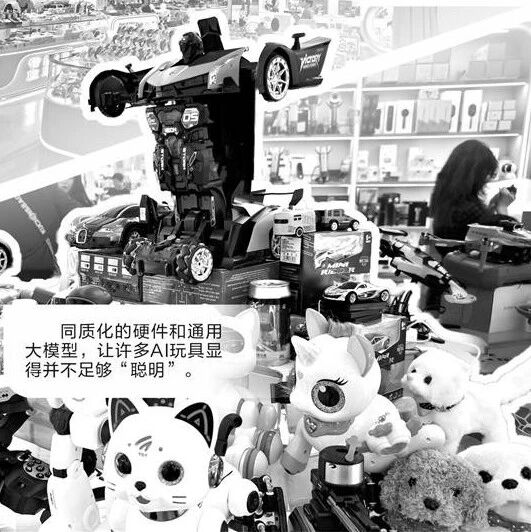
"智能憨憨"引发AI玩具热行业同质化严重智能化不足
Zheng Quan Shi Bao· 2025-12-03 22:40
Core Insights - The launch of Huawei's "Smart Hanhai" AI toy at a price of 399 yuan has sparked a new wave of interest in the AI toy market, with high demand leading to sellouts and significant pre-order volumes [1][2] - Major companies are increasingly entering the AI toy sector, with products like UBTECH's "Youzai" priced at 519 yuan and collaborations between Honor and Aofei Entertainment to develop AI interactive toys [2][5] - The AI toy market in China is projected to grow significantly, with estimates suggesting a market size of approximately 246 billion yuan in 2024, increasing to 290 billion yuan in 2025, and potentially exceeding 1 trillion yuan by 2030 [2][5] Market Trends - The popularity of AI toys is rising, with increased foot traffic in retail locations and a growing number of stores selling AI toys, although many products face challenges such as high return rates and severe product homogeneity [1][3] - Retailers report that while online sales are strong, the "Smart Hanhai" effect has not significantly boosted their sales, indicating a reliance on online channels for AI toy sales [1][3] Industry Challenges - The AI toy market is plagued by issues of product homogeneity, with many toys using similar models and features, leading to consumer dissatisfaction and high return rates, which can reach up to 40% initially [3][4] - The cost of AI toy components is relatively low, with core chip solutions costing around 20 yuan, contributing to the lack of differentiation among products [3][4] Future Outlook - The AI toy sector is expected to undergo a significant transformation within the next five years, with a predicted "boom and bust" cycle, where the initial growth phase will be followed by a market consolidation phase [5][6] - Companies that can innovate and create unique offerings, particularly in niche markets such as early education and elderly care, are likely to survive, while those lacking core competencies may exit the market [5][6]
“智能憨憨”引发AI玩具热 行业同质化严重智能化不足
Zheng Quan Shi Bao· 2025-12-03 22:19
Core Insights - The launch of Huawei's "Smart Hanhai" AI emotional companion robot at a price of 399 yuan has sparked a new wave of interest in AI toys, with high demand leading to sellouts and significant pre-order numbers [1][2] - The AI toy market is experiencing increased attention from major manufacturers, with several companies, including UBTECH and JD.com, entering the space with their own products [2][3] - Despite the growing market, the AI toy industry faces challenges such as product homogeneity and high return rates, which hinder its development [4][5] Market Trends - The AI toy market is projected to grow significantly, with estimates suggesting a market size of approximately 246 billion yuan in 2024, increasing to 290 billion yuan by 2025, and potentially exceeding 1 trillion yuan by 2030 with a compound annual growth rate of over 50% [3] - The popularity of AI toys is leading to increased foot traffic in retail locations, particularly in Shenzhen's Huaqiangbei, where many stores are now prominently displaying AI plush toys [2] Industry Challenges - The AI toy sector is plagued by severe product homogeneity, with many toys utilizing similar models and features, leading to consumer dissatisfaction and high return rates, which can reach up to 40% initially [4][5] - The lack of unique intellectual property and reliance on generic models contribute to the perception that many AI toys do not meet consumer expectations, resulting in a high rate of returns [5] Future Outlook - The AI toy market is expected to undergo a "shakeout" phase within the next five years, where companies lacking unique offerings or comprehensive capabilities may exit the market [6] - Key players likely to survive include major consumer electronics companies, content-driven brands like LEGO and Disney, and specialized service providers focusing on niche markets [6][7]

“智能憨憨”引发AI玩具热行业同质化严重智能化不足
Zheng Quan Shi Bao· 2025-12-03 17:38
Core Insights - The launch of Huawei's "Smart Hanhai" AI toy at a price of 399 yuan has sparked a new wave of interest in the AI toy market, with high demand leading to sellouts and significant pre-order volumes [1][2] - The AI toy market is experiencing growth, with major companies entering the space, indicating a shift in focus from traditional consumer electronics to innovative products [2][3] - Despite the excitement, the industry faces challenges such as product homogenization and high return rates, which hinder its development [4][5] Market Trends - The AI toy market is projected to grow significantly, with estimates suggesting a market size of approximately 246 billion yuan in 2024, increasing to 290 billion yuan in 2025, and potentially exceeding 1 trillion yuan by 2030 with a compound annual growth rate of over 50% [3] - Major companies like UBTECH and JD.com are launching their own AI toys, indicating a competitive landscape where traditional electronics firms are diversifying their product offerings [2][3] Industry Challenges - The AI toy sector is plagued by severe product homogenization, with many toys utilizing similar models and features, leading to consumer dissatisfaction and high return rates, which can reach up to 40% initially [4][5] - The lack of unique intellectual property and reliance on generic models contribute to the perception that many AI toys do not meet consumer expectations, resulting in a high rate of returns [5][6] Future Outlook - The AI toy market is expected to undergo a "shakeout" phase within the next five years, where companies lacking unique offerings or comprehensive capabilities may exit the market [6][7] - Experts predict that the market will eventually be dominated by three types of players: major consumer electronics companies, content-driven firms like LEGO and Disney, and specialized service providers focusing on niche markets [6][7]
华为携“智能憨憨”进军AI玩具领域
Mei Ri Shang Bao· 2025-12-02 23:19
Core Insights - Huawei's AI emotional toy "Smart Hanhai" has gained immense popularity, selling out immediately upon release, indicating strong consumer demand for AI companionship products [1][2] - The stock market has reacted positively, with significant increases in related AI toy concept stocks, including a notable rise in A-share and H-share prices [1][2] Company Developments - The "Smart Hanhai" was developed in collaboration with Luobo Intelligent and is Huawei's first AI emotional companionship product [1] - Other companies like UBTECH, JD.com, and Honor are also entering the AI toy market, showcasing a growing trend in emotional companionship toys [4] Market Trends - The AI toy market is projected to grow significantly, with estimates suggesting a market size of approximately 246 billion yuan in 2024, increasing to 290 billion yuan by 2025 [6] - Global AI toy market is expected to rise from 18.1 billion USD in 2024 to 60 billion USD by 2033, with a compound annual growth rate of about 14% [6] Stock Performance - A-share AI toy concept stocks have collectively reached a market capitalization close to 340 billion yuan, with several stocks experiencing over 50% growth this year [2][4] - Notable stock performances include Gaole Co., which saw a significant increase in share price, reflecting investor confidence in the AI toy sector [2] Consumer Demand - The surge in popularity of AI toys is driven by their perceived value in education and companionship, catering to diverse consumer needs [4][5] - The market is witnessing a shift from simple interactive toys to more complex emotional companionship solutions, appealing to various demographics including children, the elderly, and single adults [4]

AI陪伴机器人陆续推出,科技公司成新时代“情感供应商”
Xin Lang Cai Jing· 2025-12-02 12:05
Core Insights - Since 2025, companies like Lobo Intelligent, LingTong Robotics, UBTECH, and Huawei have launched AI emotional companion robots, transforming them from cold machines into warm "emotional partners" [1][8] Group 1: Product Innovations - UBTECH's "Youzai" was officially launched on December 1, 2025, featuring a unique personality and growth line, enhancing emotional connections with users through a "digital life form" nurturing system [2][9] - Huawei introduced its first chat companion robot "Smart Hanhan" in November 2025, designed for family scenarios, incorporating touch-sensitive technology and a memory system to enhance emotional interaction [3][10] - LingTong Robotics has developed a desktop-level humanoid robot, "NIA-F01," which stands 56 cm tall and features an independent AI personality development system, allowing it to learn user preferences and emotions [4][12] - Lobo Intelligent launched the AI nurturing toy "Fuzozo" in June 2025, utilizing low-latency cellular communication technology to provide real-time companionship, catering to the personalized emotional needs of Generation Z [5][13] Group 2: Market Trends - The AI toy market is poised for significant growth, with AI technology reshaping the traditional toy industry and presenting new opportunities for innovation [7][14] - The ongoing advancements in smart manufacturing technology are expected to enable AI companion robots to penetrate more scenarios, establishing them as vital emotional connection tools in the digital age [7][14]

快讯|优必选推出情感陪伴机器人“优崽”,广西出台机器人政策最高给予 200 万奖励,全球首台双臂协作巡操机器人 “钧仪” 投用
机器人大讲堂· 2025-12-02 09:26
Group 1 - UBTECH officially launched the new emotional companion robot "Youzai" from the Meng UU family, with a limited pre-sale of 2,000 units [2] - The "Youzai" robot features upgraded emotional interaction capabilities, including continuous dialogue and a built-in 4G module for online companionship in various environments [2] - The robot also introduces four distinct "personality color" IP fashion designs to enhance emotional connections through multi-sensory design [2] Group 2 - Guangxi has introduced policies to promote the robotics industry, offering rewards up to 2 million yuan for enterprises [4] - The policies include support for industrial clustering, product and component service systems, and key technology breakthroughs, effective until December 31, 2027 [4] - Specific financial support is provided for key component manufacturers and system integrators, with rewards of up to 200,000 yuan for eligible companies [4][5] Group 3 - The first intelligent weeding robot for alfalfa fields in China has been successfully developed, achieving a weeding rate of over 98% [6] - This robot utilizes a "laser + mechanical" weeding mode, processing 40 weeds per second and exceeding 10,000 weeds per hour [8] - The development addresses the challenges of traditional weeding methods, which are costly and environmentally harmful, by integrating advanced recognition and navigation technologies [8] Group 4 - JianKe Intelligent has launched three smart rebar processing robots, which can increase efficiency by up to 3 times and reduce costs by 75% [9] - The robots automate the entire rebar processing workflow, with features like CAD drawing recognition and dual-head threading efficiency improvements [11] - The technology is expected to save clients over 380,000 yuan annually in costs, significantly lowering labor expenses [11] Group 5 - The world's first dual-arm collaborative inspection robot "Junyi" has been deployed at a 220 kV substation in Guangzhou [12] - This robot is capable of high-precision tasks with a load capacity of 5 kg and a positioning accuracy of ±0.1 mm, designed for complex inspection tasks [14] - The global market for mobile operation robots is growing at a compound annual growth rate of 60.4%, with Junyi positioning its manufacturer as a leader in the field [14]

优必选推出情感陪伴机器人“优崽”
Bei Jing Shang Bao· 2025-12-01 08:49
Core Viewpoint - UBTECH has officially launched the new emotional companion robot "Youzai" from the Meng UU family, with a limited pre-sale of 2,000 units on Tmall and Douyin [1] Product Features - The "Youzai" robot features multiple upgrades in emotional interaction capabilities, based on UBTECH's self-developed "Dianling Intelligent Agent" [1] - It includes a continuous dialogue function and an integrated 4G module, enabling online companionship in both indoor and outdoor settings [1] - The product introduces four distinct "personality color" IP fashion designs, enhancing emotional connection through multi-sensory design elements such as visual and tactile experiences [1]