
成本转嫁机制

Search documents
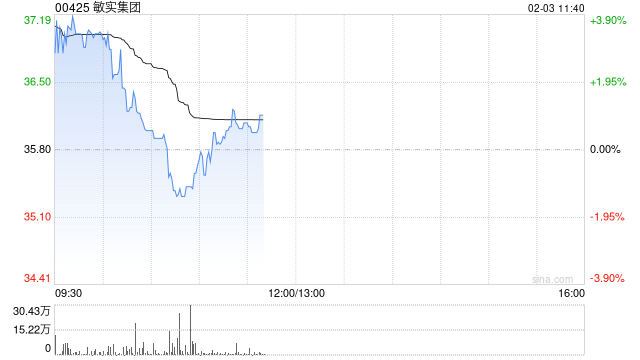
敏实集团涨近3% 公司拥有良好成本转嫁机制 机构料年内毛利将保持平稳
Zhi Tong Cai Jing· 2026-02-06 02:25
Core Viewpoint - Minth Group (00425) is projected to achieve a revenue target of 72 billion RMB by 2030, indicating a compound annual growth rate (CAGR) of over 20% for the next five years, surpassing the bank's forecast of 13% and the market's expectations of 14% to 15% [1] Group 1: Revenue Growth - The company aims for a revenue target of 72 billion RMB by 2030, with a CAGR exceeding 20% [1] - The growth factors include new product lines such as smart exterior components, liquid cooling components, humanoid robot components, electric vertical takeoff and landing aircraft components, and wireless charging components [1] Group 2: Cost Management and Profitability - Despite recent increases in aluminum prices, the company has a strong cost pass-through mechanism, and gross profit margins are expected to remain stable by 2026 [1] - Concerns regarding rising aluminum prices are low, with expectations that the gross margin for aluminum products will benefit from new orders and leverage effects [1] Group 3: Market Catalysts - Recent electric vehicle subsidies introduced in Germany are likely to act as a catalyst for Minth Group's business as a leading supplier of battery enclosures in Europe [1]
大华继显:料敏实集团今年毛利保持平稳 维持“买入”评级
Xin Lang Cai Jing· 2026-02-03 03:41
Core Viewpoint - DWS has released a report stating that Minth Group (00425) aims to achieve a revenue of 72 billion RMB by 2030, with a compound annual growth rate (CAGR) of over 20% for the next five years, exceeding DWS's forecast of 13% and the market's general expectation of 14% to 15% [1][5] Group 1 - DWS maintains a "Buy" rating for Minth Group, raising the target price from 40 HKD to 45 HKD [1][5] - Additional growth is expected to come from new product lines including smart exterior components, liquid cooling components, humanoid robot components, electric vertical take-off and landing aircraft components, and wireless charging components [1][5] - Despite recent increases in aluminum prices, the group has a strong cost transfer mechanism, and gross profit is expected to remain stable by 2026 [1][5] Group 2 - DWS has revised its net profit forecasts for Minth Group for 2025 to 2027, increasing them by 6%, 10%, and 14% respectively, resulting in projected profits of 2.754 billion, 3.229 billion, and 3.866 billion RMB [1][5]

大摩:予小米集团-W“增持”评级 目标价62港元
Zhi Tong Cai Jing· 2025-12-01 09:09
Core Viewpoint - Morgan Stanley has issued a report giving Xiaomi Group-W (01810) an "Overweight" rating with a target price of HKD 62, indicating a positive outlook on the company's stock performance despite rising memory costs in the smartphone industry [1] Group 1: Financial Performance - Historically, during periods of rising DRAM prices (2016-2017, 2019-2021, and 2022-2023), Xiaomi's smartphone gross margin has actually expanded, contrary to market expectations of downward pressure [1] - The company's effective cost transfer mechanism and significant cost increases leading to product price hikes are believed to be key factors in maintaining or improving margins [1] Group 2: Strategic Initiatives - Xiaomi's ongoing product structure upgrades and its strategy to move towards higher-end products are seen as long-term positive drivers for gross margin improvement [1]

大行评级丨大摩:过往DRAM提价时小米智能手机毛利率仍可扩张 评级“增持”
Ge Long Hui· 2025-12-01 03:09
Core Viewpoint - Morgan Stanley's research report indicates that during periods of rising DRAM prices, Xiaomi's smartphone gross margin has expanded due to effective cost transfer mechanisms and significant cost increases leading to product price hikes [1] Group 1: Financial Performance - Historical data from 2016 to 2017, 2019 to 2021, and 2022 to 2023 shows that Xiaomi's gross margin has expanded even when DRAM prices were on the rise [1] - The potential for profit margin recovery exists if high product prices are maintained alongside low costs when market trends reverse [1] Group 2: Strategic Factors - Xiaomi's product structure upgrade and ongoing high-end strategy are identified as long-term positive factors for gross margin [1] - Morgan Stanley has assigned an "Overweight" rating to Xiaomi with a target price of HKD 62 [1]
市场存在误解?大摩:以往内存涨价周期,小米利润率“实际上有所改善”
Hua Er Jie Jian Wen· 2025-12-01 01:50
Core Insights - Morgan Stanley's latest research report challenges the prevailing belief that rising memory prices will negatively impact smartphone manufacturers' profit margins, suggesting instead that it may present an opportunity for margin improvement for terminal manufacturers [1][2]. Group 1: Historical Analysis - Historical data analysis reveals that during the price increase cycles of 2016-17, 2019-21, and 2022-23, Xiaomi's smartphone gross margins actually improved despite rising DRAM prices [2][5]. - This finding indicates that the market may underestimate smartphone manufacturers' ability to pass on costs and Xiaomi's resilience in profitability [1][2]. Group 2: Cost Transfer Mechanism - The effectiveness of the cost transfer mechanism is a key factor, as smartphone manufacturers can restore gross margin levels during price cycles by raising product prices, thereby passing cost pressures onto consumers [5]. - There exists a "time-lag benefit," where after a period of cost inflation leading to price increases, a reversal in inflation can create a favorable scenario of "high prices, low costs," triggering margin recovery [5]. Group 3: Product Strategy - Xiaomi's ongoing high-end product strategy serves as a long-term positive driver for margin improvement, allowing the company to move away from a reliance on low-end models and enhancing its defensive capabilities during cost fluctuation cycles [5]. Group 4: Future Scenarios - Morgan Stanley differentiates future scenarios based on the memory cost cycle: if a super-cycle occurs with prolonged price increases, smartphone gross margins may face sustained downward pressure, while a quick reversal could lead to rapid margin recovery [6]. - Historical experience suggests that once DRAM prices peak and decline, manufacturers like Xiaomi may see margin improvements that exceed market expectations [6].
