
成渝地区双城经济圈协同发展

Search documents
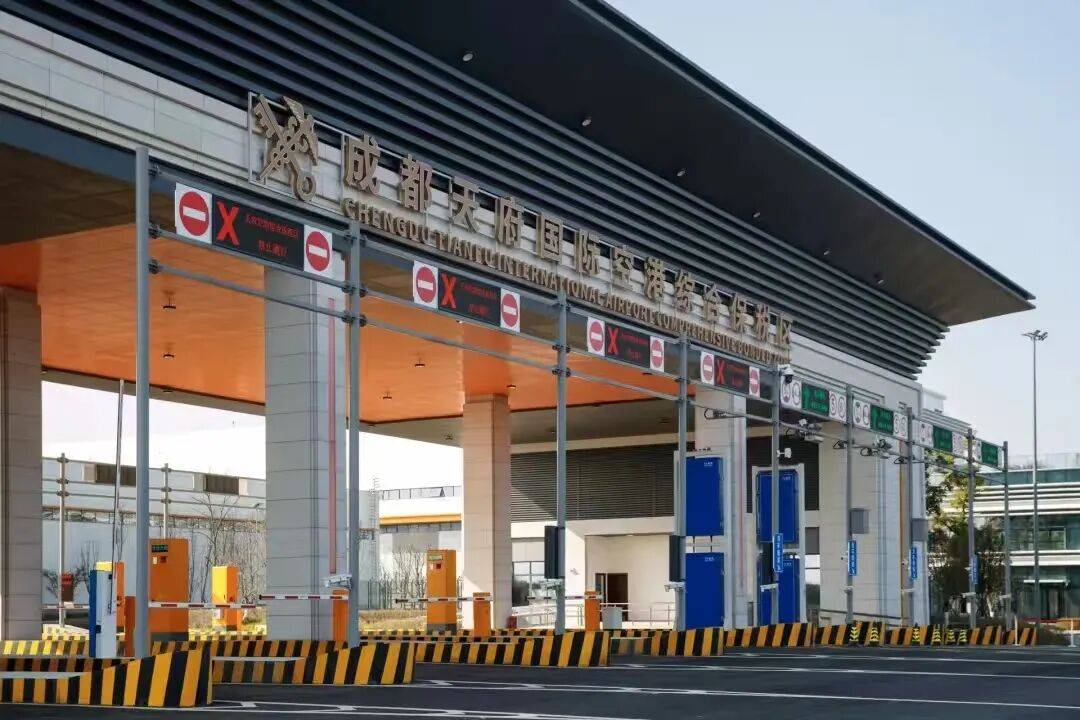
四川省首个空港型综合保税区顺利通过正式验收 开放型经济再添发展新引擎
Sou Hu Cai Jing· 2026-01-08 09:55
Core Insights - The Chengdu Tianfu International Airport Comprehensive Bonded Zone has successfully passed formal acceptance, leveraging the strong cargo capacity of Chengdu Tianfu International Airport to enhance the integration of logistics resources in the Sichuan-Chongqing region and support the development of an international gateway city [1][3] Group 1: Project Overview - The bonded zone was officially approved by the State Council on December 22, 2024, covering an area of 1.08 square kilometers, located in the core area of the Chengdu Eastern New District Airport Economic Zone [3] - The first phase of construction has been completed, with a total building area of approximately 86,000 square meters, including public bonded warehouses, comprehensive office buildings, service buildings, canteens, dormitories, and customs inspection areas [3] Group 2: Strategic Importance - The establishment of the bonded zone aligns with national strategies for coordinated development in the Chengdu-Chongqing region and aims to enhance the economic development of the area [1][3] - Chengdu Investment Group, as a state-owned capital investment and operation platform, has played a crucial role in addressing infrastructure construction and policy implementation challenges, facilitating the efficient progress of core facility construction [3] Group 3: Future Development Plans - The bonded zone aims to attract internationally competitive logistics service providers, supply chain management companies, and trade businesses, focusing on core operations such as international transit, distribution, and re-export trade [5] - Key sectors for development include aviation maintenance manufacturing, cross-border e-commerce, cold chain logistics, bonded research and development, digital trade, and medical cold chain services, aiming to create a diversified and high-end industrial ecosystem [5] - As of January to November 2025, the import and export value of Sichuan's comprehensive bonded zones reached 533.31 billion yuan, a year-on-year increase of 3%, accounting for 57.08% of the province's total import and export value during the same period [5]

2024年成渝协同发展“成绩单”出炉:六大维度稳健向上,部分领域仍需注入新动能
Zhong Guo Fa Zhan Wang· 2025-12-30 02:36
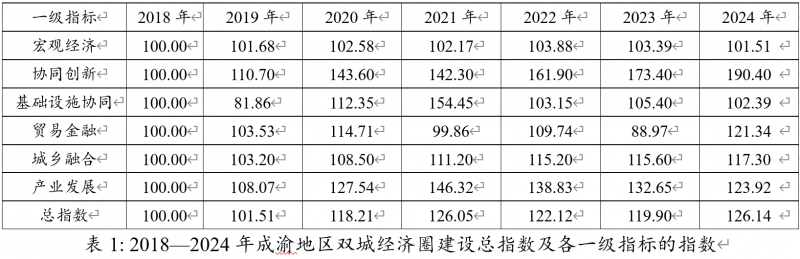
Core Insights - The report from Renmin University evaluates the collaborative development index of the Chengdu-Chongqing economic circle, showing a total index of 126.14 in 2024, a 26.14% increase from the base year of 2018, indicating rapid development and enhanced economic resilience in the region [1] Group 1: Collaborative Innovation - The collaborative innovation index reached 190.4, driven by significant contributions from innovation output and networks, with recommendations to optimize innovation resource allocation and establish a "Chengdu-Chongqing-Mianyang technology innovation triangle" [3] Group 2: Infrastructure Collaboration - The infrastructure collaboration index stabilized around 102.39 in 2024 after previous highs, with a focus on "shortcomings, strong connections, and quality improvement" for future development [4] Group 3: Trade and Finance - The trade finance index showed a notable recovery, reaching 121.34 in 2024, primarily supported by industrial integration, with suggestions to enhance open hub functions and promote financial integration between Sichuan and Chongqing [5] Group 4: Urban-Rural Integration - The urban-rural integration index demonstrated steady growth, with 2024 figures of 116.7 for Chongqing and 117.9 for Sichuan, emphasizing the need for resource optimization and social security system improvements to boost rural revitalization [6] Group 5: Industrial Development - The industrial development index remained resilient, averaging 123.92 in 2024, with recommendations to strengthen support for small and specialized enterprises and enhance the stability of industrial chains [7]
2025成渝协同发展报告发布 专家共议“科创+产业”融合新路径
Zhong Guo Jing Ji Wang· 2025-12-29 06:49
Core Viewpoint - The "2025 Chengdu-Chongqing Economic Circle Collaborative Development Index Report" highlights the importance of the Chengdu-Chongqing economic circle as a strategic initiative for high-quality development in Western China, emphasizing the need for continuous tracking and evaluation of collaborative development outcomes [1][2]. Group 1: Index Overview - The index has shown a fluctuating upward trend from 2018 to 2024, reaching a historical peak of 126.14 in 2024, indicating increasing resilience and vitality in the Chengdu-Chongqing region [2]. - Collaborative innovation has become a strong engine for regional development, with an average annual growth rate of 11%, significantly enhancing innovation output and cooperation networks [2]. - The infrastructure connectivity has transitioned from a rapid construction phase to a steady development stage, with deepening trade finance and urban-rural integration providing stable momentum for regional integration [2]. Group 2: Areas for Improvement - There remains room for improvement in macroeconomic and industrial development, particularly in stimulating frontier economic dynamics and enhancing industrial vitality and market competitiveness [2]. - Structural disparities, such as the development gap between Chongqing and Sichuan, and the divergence between "hard investment" in infrastructure and "soft construction" in institutional frameworks, should be closely monitored [3]. - Some innovation indicators, while growing rapidly, have not yet fully demonstrated their impact on industry, primarily due to delays in the conversion of results, necessitating a stronger focus on integrating technological and industrial innovation [3]. Group 3: Recommendations and Future Outlook - It is recommended to further strengthen the "dual-core" leading role, coordinating efforts in technological innovation, open collaboration, urban-rural integration, and industrial upgrading to cultivate new productive forces [2]. - The report provides a new perspective for regional collaborative development research, combining macro understanding with practical realities, and is expected to reveal new development trends in the Chengdu-Chongqing economic circle during the 14th Five-Year Plan period [3][4]. - Suggestions for enhancing the report include optimizing the index system by adding indicators related to green development, digital collaboration, and equalization of livelihoods, as well as deepening differentiated and cross-regional interactive analyses [4].
成渝双城协同指数六年追踪 创新跑得快,产业为何跟不上?
Jing Ji Guan Cha Bao· 2025-12-29 04:02
Core Insights - The Chengdu-Chongqing Economic Circle's collaborative development index reached a historical high of 126.14 in 2024, indicating strong resilience and vitality in the region's development [1][3] - Despite rapid innovation progress, the conversion of technological achievements into industrial applications remains slow, highlighting a critical bottleneck in the region's development [1][2] Group 1: Development Index and Trends - The collaborative development index has shown a fluctuating upward trend from 2018 to 2024, with an average annual growth rate of 11% in collaborative innovation [3] - Infrastructure connectivity has transitioned from a rapid construction phase to a steady development phase, contributing to regional integration [3] - The report indicates that while collaborative innovation and urban-rural integration are growing, there is still room for improvement in macroeconomic and industrial development [3][4] Group 2: Policy Recommendations and Future Outlook - Experts suggest enhancing the integration of the innovation chain and industrial chain to foster deeper collaboration and improve high-quality development support capabilities [4][5] - The report includes 28 comprehensive recommendations aimed at improving regional cooperation quality and addressing the challenges posed by external environmental changes [5][6] - Future efforts should focus on optimizing the index system by incorporating new indicators related to green development, digital collaboration, and social equity [6][7]
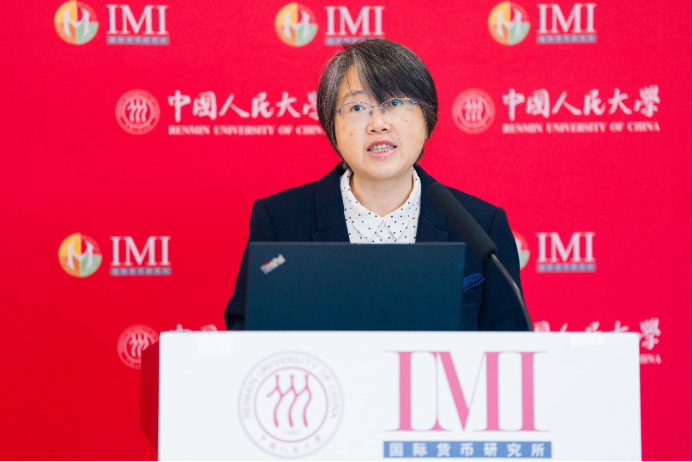
“2025成渝地区双城经济圈协同发展指数报告”发布会在中国人民大学举行
Zhong Guo Jin Rong Xin Xi Wang· 2025-12-28 22:57
Core Insights - The "2025 Chengdu-Chongqing Economic Circle Collaborative Development Index Report" was released, highlighting the importance of the Chengdu-Chongqing Economic Circle as a strategic initiative for high-quality development in Western China [1][3] - The report indicates that the index has shown a fluctuating upward trend from 2018 to 2024, reaching a historical peak of 126.14 in 2024, reflecting the resilience and vitality of the region's development [3][7] - Collaborative innovation is identified as a strong engine for regional development, with an annual growth rate of 11%, emphasizing the need for deeper integration of innovation and industry [3][5] Summary by Categories Research Background and Significance - The construction of the Chengdu-Chongqing Economic Circle is a major strategic deployment by the central government, necessitating continuous dynamic tracking and evaluation of collaborative development effectiveness [1] - The report aims to provide a scientific and systematic approach to assess the collaborative development outcomes in the region [1] Index Performance and Analysis - The index has shown a consistent upward trend, with significant improvements in collaborative innovation, urban-rural integration, and trade finance dimensions [3][7] - The international trade index has decreased to 33.04, indicating the impact of external environmental changes [7] - The report identifies structural disparities between Chongqing and Sichuan, as well as between "hard investment" in infrastructure and "soft construction" in institutional development [5][7] Recommendations and Future Outlook - Future efforts should focus on enhancing the "dual-core" leading role, promoting technological innovation, open collaboration, urban-rural integration, and industrial upgrading [3][5] - The report suggests 28 comprehensive recommendations for policy optimization, emphasizing the need for a more integrated approach to technology and industry innovation [5][8] - The report's index system is designed to provide a macro understanding that aligns with actual conditions, offering a new perspective for regional collaborative development research [7][14]
报告:成渝地区双城经济圈创新产出规模稳步扩大
Zhong Guo Xin Wen Wang· 2025-12-28 10:22
Core Insights - The Chengdu-Chongqing Economic Circle is experiencing steady growth in innovation output, highlighting its strategic importance in China's western region [1][2] - The report evaluates the development of the Chengdu-Chongqing urban agglomeration from 2018 to 2024, focusing on six primary indicators [1] Group 1: Innovation and Economic Development - The innovation output scale in the Chengdu-Chongqing Economic Circle has been steadily expanding, driven by increased innovation output and enhanced innovation network connections [1] - From 2018 to 2024, the regional collaborative innovation index has shown stable growth, with significant increases in R&D funding and a narrowing gap in R&D investment among regions [1] - The overall development index for the Chengdu-Chongqing region has been on an upward trend, supported by stable income levels and human capital formation [2] Group 2: Regional Dynamics - The dual-core cities of Chengdu and Chongqing are increasingly driving the development of surrounding cities, reinforcing the "dual-core leadership and regional linkage" model [2] - The trade finance index has shown steady growth, indicating a stable financial environment for trade activities [2] - The urban-rural integration index has demonstrated robust growth, reflecting an ongoing improvement in integration development levels [2] - The industrial development index is generally showing a stable and positive trend [2]
《成渝地区双城经济圈协同发展指数报告(2025)》发布:总指数2024年创历史新高,协同创新成主要驱动力
Xin Lang Cai Jing· 2025-12-28 06:02
Core Insights - The report from Renmin University evaluates the collaborative development index of the Chengdu-Chongqing economic circle, showing a total index of 126.14 in 2024, a 26.14% increase from 2018, indicating rapid development and economic resilience in the region [1] Group 1: Collaborative Innovation - The collaborative innovation index reached 190.4, driven by significant contributions from innovation output and networks [1] - The region has enhanced knowledge flow and technology transfer through initiatives like the construction of a technology corridor and strengthened industry-academia-research cooperation [1] - Future recommendations include optimizing innovation resource allocation and developing a "Chengdu-Chongqing-Mianyang technology innovation triangle" [1] Group 2: Infrastructure Collaboration - The infrastructure collaboration index stabilized around 100, with a value of 102.39 in 2024, indicating a plateau after previous growth [2] - Key future focuses include "shortboard supplementation, strong linkage, and quality improvement" in infrastructure investment [2] - The aim is to enhance internal connectivity and develop a more balanced "one-hour traffic circle," while promoting digital and green transformations in transportation infrastructure [2] Group 3: Trade and Finance - The trade finance index showed a fluctuating upward trend, reaching 121.34 in 2024, with significant contributions from "industrial integration" [3] - The report emphasizes the need to strengthen the open hub function and create a dual-directional open pattern to support economic collaboration [3] - Enhancing regional cooperation and promoting financial integration between Sichuan and Chongqing are recommended to improve collaborative efficiency [3] Group 4: Urban-Rural Integration - The urban-rural integration index has shown steady growth, with values of 116.7 for Chongqing and 117.9 for Sichuan in 2024 [4] - Recommendations include promoting agricultural modernization and new urbanization, as well as optimizing resource allocation through digitalization [4] - The goal is to enhance rural income channels and improve social security systems to promote comprehensive rural revitalization [4] Group 5: Industrial Development - The industrial development index remains high, with an average of 123.92 in 2024, despite a slight decline from previous years [5] - Recommendations focus on strengthening support for small and specialized enterprises to enhance industrial chain stability [5] - Continuous optimization of the business environment and inter-regional administrative collaboration are suggested to boost market expectations [5]
