战略相持

Search documents
新多极化进程下的中美欧棋局
Xin Lang Cai Jing· 2026-01-05 06:23
Economic Growth and Trends - The United States has shown a steady economic growth rate of nearly 3% annually, with a year-on-year growth of 4.3% in Q3 2025, driven largely by investments in artificial intelligence, which account for 90% of recent investments [1][2] - The European Union's GDP grew by 0.3% quarter-on-quarter and 1.5% year-on-year in Q3 2025, with growth primarily attributed to countries like Spain and Poland, despite overall performance lagging behind the US and China [2] - China's economy is transitioning towards high-quality development, with a year-on-year growth of 5.2% in Q3 2025, significantly impacting global manufacturing, trade, and technology sectors [3] International Relations and Geopolitical Dynamics - The economic scale of China is increasingly approaching that of the US, leading to heightened strategic competition, particularly under the Biden administration, which views China as a significant geopolitical challenge [4][5] - The EU faces challenges in its relationship with the US, as evidenced by the "decoupling" policies and the need for the EU to assert its strategic autonomy in the face of US pressures [5][6] - The trade relationship between China and the EU has seen substantial growth, increasing from $86.7 billion in 2001 to $847.3 billion in 2022, although recent geopolitical tensions have strained this relationship [6] Future Global Trends - The world is moving towards a new multipolarity, characterized by a balance of power among major nations and regional groups, which will require the EU to enhance its strategic independence and capability [7][8] - Various functional collectives in military, technology, and cultural sectors are expected to emerge, complicating global governance and necessitating a more coordinated approach to international relations [8]
傅梦孜:新多极化进程下的中美欧棋局
Sou Hu Cai Jing· 2026-01-04 23:09
Group 1 - The economic growth of the US is driven by investments, particularly in artificial intelligence, with a notable trend of "NVIDIA-ization" where NVIDIA's market value has surpassed $5 trillion, making it 86 times larger than Ford's [2] - The EU shows signs of weak recovery, with a GDP growth of 0.3% quarter-on-quarter and 1.5% year-on-year in Q3 2025, primarily supported by countries like Spain and Poland [3] - China's economy is transitioning towards high-quality development, with a year-on-year growth of 5.2% in the first three quarters of 2025, significantly impacting global manufacturing, trade, and technology sectors [4] Group 2 - The international order is facing challenges from unilateralism, with China advocating for multilateralism while the US views China as a strategic competitor, leading to increased geopolitical tensions [5] - The strategic competition between the US and China has reached a "strategic stalemate," with the EU feeling sidelined in the geopolitical landscape [6] - The trade relationship between China and the EU has grown significantly, from $86.7 billion in 2001 to $847.3 billion in 2022, although recent political tensions have strained this relationship [7] Group 3 - The future of global governance is expected to be characterized by a new multipolarity, where major powers and regional groups play significant roles, necessitating the EU to enhance its strategic autonomy [8] - In a multipolar world, countries must maintain their independence and influence to avoid being dominated by any single power, emphasizing the importance of balanced capabilities in political, economic, and security domains [9] - Various functional collectives will emerge in areas such as military, technology, and public health, complicating global governance and requiring careful consideration of both domestic and international affairs [9]
金灿荣:从“美攻我守”到“互有攻守”,统一的可能性在增大
Guan Cha Zhe Wang· 2025-11-24 05:47
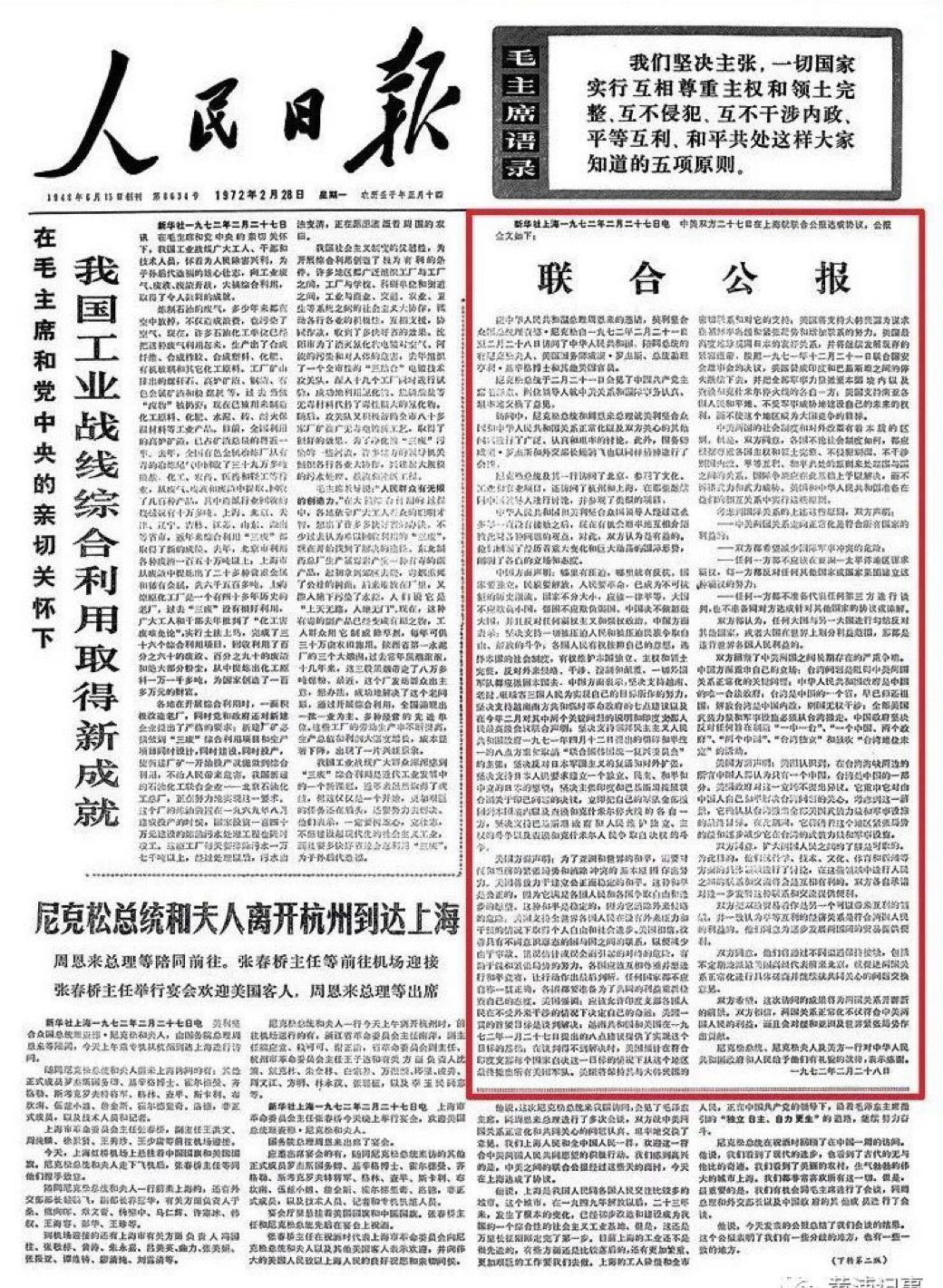
Group 1 - The core viewpoint of the article is that the relationship between China and the United States has entered a phase of structural tension, with both parties viewing each other as the "only" competitor, leading to a comprehensive competitive relationship [1][2][5] - The historical context of China-U.S. relations is divided into several stages, with the first stage being absolute hostility from 1949 to 1972, followed by a period of strategic cooperation against the Soviet Union after the Shanghai Communiqué [2][4] - The Trump administration marked a turning point in U.S.-China relations, officially designating China as the "only strategic competitor" in its national security strategy, leading to a phase of comprehensive strategic competition [5][6] Group 2 - The article discusses the mixed warfare strategy employed by the U.S. against China, which includes trade wars, technology restrictions, and financial pressures, indicating a shift from a defensive to a more aggressive stance by China [6][10] - The recent trade war has seen China adopting a more assertive response, with significant retaliatory tariffs that demonstrate a shift in strategy from previous years [8][10] - The U.S. has faced supply shortages as a result of the trade conflict, leading to a reconsideration of its approach, which highlights the interdependence of the two economies [10][11] Group 3 - The article emphasizes the importance of domestic stability for both China and the U.S., noting that internal challenges such as economic downturns and social issues could impact their international standing [15][16] - China's foreign policy is evolving, moving away from "keeping a low profile" to a more assertive stance, particularly in military capabilities and regional influence [19][20] - The article outlines China's strategic focus on building a unified domestic market and enhancing its international relationships, particularly through initiatives like the Belt and Road [32][34]