
房地产风险出清

Search documents
地方国资下场低价“扫货”法拍房
第一财经· 2026-01-21 13:18
Core Viewpoint - The article discusses the recent trend of state-owned enterprises (SOEs) purchasing distressed real estate assets through judicial auctions, capitalizing on the declining market conditions to acquire properties at significantly lower prices [3][10]. Group 1: SOEs in Judicial Auctions - In various locations, including Guangzhou and Haikou, SOEs have emerged in the judicial auction market, acquiring real estate assets at low prices to alleviate local market pressures and acquire quality assets during a downturn [3][10]. - An example includes the auction of 88 residential units in Guangzhou's Yitao Yayuan, which were sold for a total of 80.41 million yuan, with over 60 units purchased by Guangzhou Nansha Urban Operation Co., a state-owned enterprise [5][6]. Group 2: Market Conditions - The national judicial auction market has experienced a decline in both volume and price, with a total of 719,000 properties listed for auction in 2025, a 6.6% decrease year-on-year, and a total transaction amount of 253.62 billion yuan, down 23.6% [9][10]. - The average transaction price in the judicial auction market was 4,653 yuan per square meter, reflecting a 12.7% year-on-year decline, with an average discount rate of 74.1%, indicating that buyers are acquiring assets at approximately 74% of their assessed value [9][10]. Group 3: Implications of SOE Purchases - The acquisition of distressed properties by SOEs is seen as a strategic move to stabilize the market and manage risks associated with the ongoing real estate downturn [11]. - The future impact of these acquisitions will depend on how the assets are utilized, whether as affordable housing, talent housing, or for other purposes, which will influence the overall market dynamics [11].


批量成交!地方国资下场低价“扫货”法拍房
Di Yi Cai Jing· 2026-01-21 11:32
Core Viewpoint - The article discusses the recent trend of state-owned enterprises (SOEs) purchasing properties from judicial auctions at significantly lower prices than market rates, amidst a declining real estate market in China [1][4]. Group 1: Market Dynamics - The judicial auction market for real estate in China is experiencing a decline in both volume and price, with a reported 71.9 million properties listed for auction in 2025, a 6.6% decrease year-on-year [4]. - The total transaction amount in the judicial auction market reached 253.62 billion yuan, reflecting a substantial 23.6% year-on-year decline [4]. - The average transaction price for properties sold at auction was 4,653 yuan per square meter, down 12.7% from the previous year, with an average discount rate of 74.1% [4]. Group 2: State-Owned Enterprises' Involvement - SOEs are increasingly participating in judicial auctions, acquiring properties at prices significantly lower than current market values, which provides them with an opportunity to obtain quality assets at low costs [5]. - For instance, Guangzhou Nansha Urban Operation Co., a state-owned enterprise, purchased 88 residential units at prices ranging from 6,657 to 7,629 yuan per square meter, while the current market price is between 10,000 and 30,000 yuan per square meter [3]. - The involvement of SOEs is seen as a strategy to stabilize the market and mitigate local pressures by absorbing problematic assets during the ongoing risk clearance in the real estate sector [5]. Group 3: Future Implications - The properties acquired by SOEs may not be immediately resold on the market but could be utilized for affordable housing, talent housing, or as part of urban renewal projects [3][5]. - The long-term impact of SOEs' acquisitions on the real estate market will depend on how these assets are managed and whether they are pushed back into the market or used for social purposes [5].
2025年仍有10家千亿房企 个别企业单月业绩环比涨超100%
Mei Ri Jing Ji Xin Wen· 2026-01-04 02:03
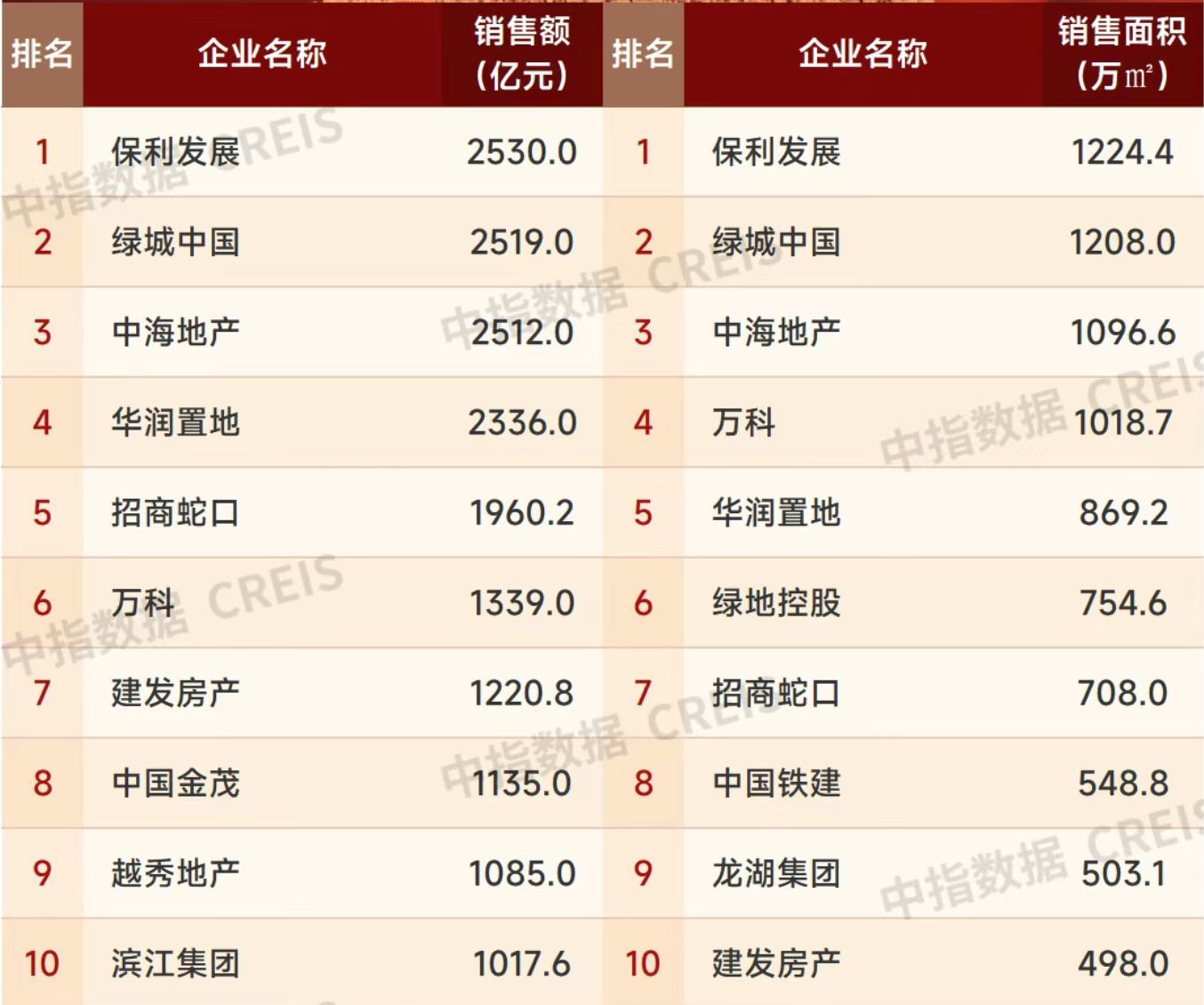
Core Insights - Despite industry challenges, four real estate companies are expected to exceed 200 billion yuan in sales by 2025, with the top 10 maintaining a threshold of 100 billion yuan [1][2] - The companies achieving over 200 billion yuan in sales include Poly Developments (253 billion yuan), Greentown China (251.9 billion yuan), China Overseas Property (251.2 billion yuan), and China Resources Land (233.6 billion yuan) [1][2] Group 1: Sales Performance - In December 2025, nearly 70% of 105 typical real estate companies reported a month-on-month increase in total sales, with almost 50% experiencing a month-on-month growth rate exceeding 20% [3] - Notable performers include Yuexiu Property, China State Construction, and Renheng Real Estate, with some companies achieving month-on-month sales growth exceeding 100% [3] - China Resources Land and China State Construction reported year-on-year sales growth rates exceeding 15% [3] Group 2: Market Trends and Future Outlook - The real estate sector is expected to continue its adjustment phase in 2026, with debt restructuring accelerating and the completion of housing delivery tasks [1][9] - The market is anticipated to seek a new supply-demand balance, with structural recovery possible while overall prices are expected to remain stable [9] - The importance of community amenities and services is expected to increase, with a focus on green, smart, healthy, and safe products gaining premium pricing [9] Group 3: Company Resilience and Strategy - 53 companies have maintained their position in the top 100 for five consecutive years, with firms like Binjiang Group and Longfor Group demonstrating stable operations while maintaining investment levels [8] - Some struggling private companies, such as Country Garden and Sunac, remain in the top rankings due to prior land reserves that support sales and debt restructuring efforts [8] - Regional private companies are focusing on local high-capacity cities through precise strategies and partnerships to mitigate financial pressures [8]




孙宏斌两度现身,融创官宣上岸
2 1 Shi Ji Jing Ji Bao Dao· 2025-12-24 11:02
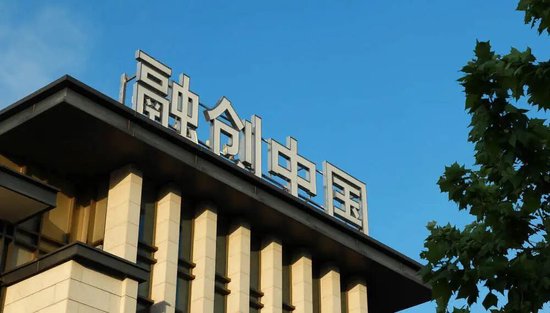
Core Viewpoint - Sunac China has successfully completed a comprehensive restructuring of its offshore debt, amounting to approximately $9.6 billion, marking it as the first major real estate company to achieve full debt restructuring both domestically and internationally, thereby alleviating its debt risks and stabilizing its capital structure [3][4][5]. Group 1: Debt Restructuring Details - The offshore debt restructuring plan was officially effective as of December 23, with nearly 600 billion yuan of debt being reduced, significantly mitigating the company's debt risks [3]. - The restructuring involved the issuance of two types of new mandatory convertible bonds (MCBs) with conversion prices set at HKD 6.80 and HKD 3.85, allowing for conversion within specified timeframes [6]. - A "shareholding stability plan" was introduced to maintain the major shareholders' equity ratio, preventing excessive dilution of shares [6]. Group 2: Company Background and Challenges - Sunac China faced a cash flow crisis starting in 2021, leading to public debt defaults in the first half of 2022, prompting the company to engage in debt restructuring efforts [4][5]. - The company had previously completed a domestic debt extension of 16 billion yuan in January 2023 and a $10 billion offshore debt restructuring in November 2023 [4][5]. - Despite the restructuring, the company still faces challenges in restoring its operational performance and managing its asset-liability structure [11]. Group 3: Industry Context and Future Outlook - As of now, 21 distressed real estate companies have completed debt restructuring, with a total debt reduction of approximately 1.2 trillion yuan, indicating a broader trend of risk clearance in the real estate sector [3][11]. - The Central Economic Work Conference has identified real estate as a key area for risk resolution in the coming year, with expectations that 2026 will be a critical year for clearing corporate risks [11]. - The industry is witnessing a shift towards lighter asset management strategies, such as property management and asset management, as companies aim to recover from their financial difficulties [11].
孙宏斌两度现身,融创官宣上岸
21世纪经济报道· 2025-12-24 10:59
Core Viewpoint - Sunac China has successfully completed its offshore debt restructuring plan, resulting in the full release or waiver of approximately $9.6 billion in debt, marking it as the first large real estate company to achieve comprehensive debt restructuring both domestically and internationally [1][5]. Group 1: Debt Restructuring Details - The total debt reduction amounts to nearly 60 billion yuan, effectively eliminating the debt risk at the listed company level [1]. - The offshore debt restructuring plan was approved by 98.5% of creditors, with a support rate of 94.5% for the debt amount, significantly exceeding the required 75% threshold [6]. - The restructuring involved issuing two types of new mandatory convertible bonds (MCB) to creditors, with conversion prices set at 6.80 HKD and 3.85 HKD per share, respectively [5][6]. Group 2: Company Leadership and Market Signals - Sunac's chairman, Sun Hongbin, has made public appearances twice this year, signaling positive developments in the company's debt restructuring efforts [6]. - The company aims to focus more on project-level risk resolution and asset revitalization following the completion of the debt restructuring [6]. Group 3: Industry Context and Future Outlook - As of now, 21 distressed real estate companies have completed debt restructuring or reorganization, with a total debt reduction scale of approximately 1.2 trillion yuan [1][10]. - The real estate sector is expected to see accelerated risk clearance, with 2026 projected as a critical year for corporate risk resolution [10]. - Despite the completion of debt restructuring, companies still face pressure to adjust their balance sheets and revive operations in a challenging market environment [10].

孙宏斌两度现身 融创官宣“上岸”
2 1 Shi Ji Jing Ji Bao Dao· 2025-12-24 09:52
Core Viewpoint - The completion of Sunac China's debt restructuring marks a significant milestone in the real estate sector, indicating a potential turning point for the industry as it moves towards risk clearance in 2026 [1][9]. Group 1: Debt Restructuring - Sunac China announced the effectiveness of its offshore debt restructuring plan, resulting in the comprehensive release or waiver of approximately $9.6 billion in debt [1]. - The company has completed both domestic and offshore debt restructuring, becoming the first large real estate enterprise to achieve this [1]. - The total debt reduction amounts to nearly 60 billion yuan, effectively alleviating the company's debt risk at the listed company level [1]. Group 2: Industry Trends - As of now, 21 distressed real estate companies have completed debt restructuring or reorganization, with a total debt reduction scale of approximately 1.2 trillion yuan [8]. - The acceleration of debt restructuring among real estate firms is expected to facilitate the overall risk clearance process in the sector [9]. - The central economic work conference has identified real estate as a key area for risk resolution in the coming year [8]. Group 3: Future Outlook - Sunac's chairman, Sun Hongbin, has made public appearances signaling positive developments in the company's debt resolution efforts [5][6]. - The focus will shift towards project-level risk resolution and asset revitalization, with a total land reserve of over 124 million square meters, primarily in core first- and second-tier cities [4]. - The industry is expected to face ongoing challenges in project revitalization and operational recovery despite the completion of debt restructuring [9].
招商银行20250531
2025-06-02 15:44
Summary of China Merchants Bank Conference Call Company Overview - **Company**: China Merchants Bank (招商银行) - **Industry**: Banking and Financial Services Key Points Financial Performance - **ROA and Profitability**: China Merchants Bank has a significantly higher Return on Assets (ROA) compared to peers, showcasing stronger profitability driven by net interest income and fee-based income, particularly in low-cost funding and wealth management [2][4][5] - **Wealth Management Recovery**: In Q1 2025, wealth management income turned positive with a growth of 10%, ending a three-year decline, indicating potential for future growth [2][8] - **Credit Quality Improvement**: The bank's asset quality is improving, with a notable decrease in non-performing loans (NPLs) and generation rates, particularly in real estate-related corporate loans [2][13][14] Competitive Advantages - **Interest Income and Fee Income**: The bank's core advantages lie in its net interest income and fee income, benefiting from low funding costs rather than high loan yields [5][10] - **Deposit and Settlement Strength**: China Merchants Bank has a strong position in corporate deposits and settlement deposits, supported by a robust product system that attracts numerous corporate clients [11][12] - **Wealth Management Leadership**: The bank's extensive retail customer base and steady growth in client numbers enhance its competitive edge in wealth management [8][9] Market Position and Valuation - **Valuation Recovery**: A clear trend of valuation recovery is expected from H2 2024 to early 2025, with the bank positioned as a core asset due to its high dividend yield [3][20] - **Dividend Potential**: The bank's dividend yield is approximately 4.4%-4.6%, with potential to increase the payout ratio to 40%-45% in the coming years, enhancing its attractiveness to long-term investors [17][18] Risk Management - **Real Estate Risk Mitigation**: The bank has effectively managed real estate risks, with the NPL ratio for real estate corporate loans reduced to around 0.96% and a high provision coverage ratio exceeding 400% [14][15] - **Credit Risk Trends**: Improvement in credit quality is noted, particularly in retail loans, with a decrease in overdue rates for credit cards since 2023 [13] Strategic Outlook - **Investment Logic**: The investment logic is based on strong capital, low funding costs leading to high interest margins, and competitive wealth management capabilities, with stable profit growth expected despite macroeconomic pressures [16][22] - **Dividend Strategy**: In 2025, the bank initiated a mid-term dividend strategy, splitting dividends into two parts, which stabilizes shareholder returns and enhances investment appeal [21] Future Growth Drivers - **Economic Recovery Potential**: In a better-than-expected economic scenario, growth may arise from increased retail loan demand, improved wealth management, and better asset quality [19] Changes in Investment Strategy - **Evolution of Investment Logic**: Over the past decade, the bank has maintained a strong governance structure and aligned with cyclical trends, transitioning into a dividend era from 2024, focusing on net interest margin valuation [20][22]
