扩大需求

Search documents
辽宁出台20条新政促进经济向新向好发展
Zhong Guo Fa Zhan Wang· 2026-02-27 09:09
Core Viewpoint - Liaoning Province has introduced a series of policies aimed at promoting economic growth and transformation, focusing on new industries and technologies to enhance development momentum and achieve qualitative and quantitative improvements in the economy [1][2]. Group 1: Policy Characteristics - The new policies emphasize new requirements, focusing on high-quality development areas such as artificial intelligence and low-altitude economy, accelerating the growth of new productive forces [1][2]. - The policies feature concrete measures, aiming for dual supply and demand efforts, and coordinating fiscal and financial strategies while balancing growth stability and quality improvement [1][2]. - The effectiveness of the policies is highlighted, with increased financial support through subsidies, interest discounts, and guarantees, optimizing conditions for implementation [1][2]. Group 2: Policy Measures - A total of 20 policy measures are outlined, targeting four key dimensions: industrial transformation, innovative development, demand expansion, and support for enterprises and citizens [2]. - For industrial transformation, eight measures include promoting intelligent upgrades, supporting artificial intelligence, and enhancing the mining industry [2]. - In innovative development, four measures focus on supporting cutting-edge technology research and encouraging innovation in standards and quality management [2]. - Demand expansion includes four measures aimed at supporting equipment upgrades and fostering cross-border e-commerce [2]. - The support for enterprises and citizens includes four measures to enhance financial products and reduce costs for industrial land [2]. Group 3: Implementation and Monitoring - The Liaoning Development and Reform Commission will work on refining policy implementation details, ensuring clarity on standards and timelines, and enhancing collaboration among departments [3]. - There will be a focus on policy promotion and funding assurance, shifting from "enterprises seeking policies" to "policies seeking enterprises" [3]. - Continuous evaluation of policy effectiveness will be conducted, with dynamic monitoring of implementation and adjustments based on assessment results [3].
辽宁多部门联合发布新举措
Xin Lang Cai Jing· 2026-02-26 23:52
Core Viewpoint - The recent policy measures focus on high-quality development in new fields such as artificial intelligence, low-altitude economy, and technological breakthroughs, emphasizing practical effectiveness through financial support mechanisms [1]. Group 1: New Directions and Measures - The measures can be summarized into four main areas: new directions for industrial transformation, new models for innovative development, new fields for expanding demand, and new initiatives for benefiting enterprises and the public, totaling 20 specific measures [2]. Group 2: Digital Transformation and Support - The provincial industrial and information technology department will establish a provincial "Smart Transformation and Digital Upgrade" diagnostic service platform to provide free assessments for large-scale industrial enterprises, creating tailored transformation plans [3]. - The provincial science and technology department plans to allocate 10 million yuan from the fiscal science and technology special fund to support incubator construction by 2026 [4]. Group 3: Transportation and E-commerce Development - The provincial transportation department will continue the differentiated toll policy for highways until December 31, 2027, focusing on supporting the comprehensive integrated transportation network [5]. - The provincial commerce department aims to accelerate the development of cross-border e-commerce by leveraging industrial belts, parks, overseas warehouses, and key enterprises to cultivate a full-chain ecosystem [6].
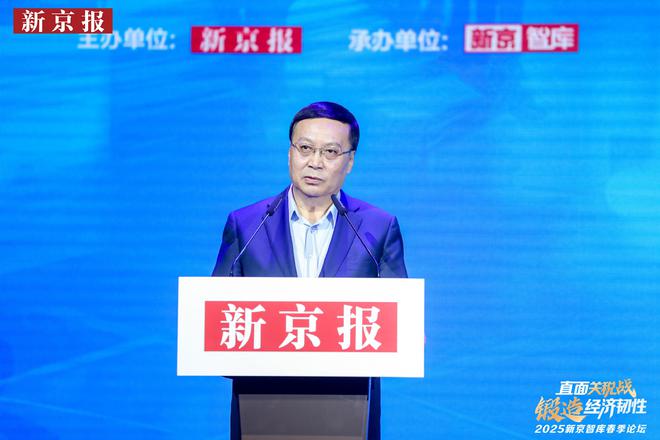
高培勇:提高宏观调控的前瞻性有效性针对性
Xin Jing Bao· 2025-04-23 02:08
Core Viewpoint - The external environment poses new and higher demands on China's macroeconomic regulation, especially in the context of the trade and tariff wars initiated by Trump, necessitating a focus on improving the foresight, effectiveness, and targeting of macroeconomic policies [2] Group 1: Complexity of Current Economic Challenges - The difficulties and challenges in the current economic operation are more complex than in the past, primarily due to weak expectations leading to insufficient effective demand, which in turn causes social supply-demand imbalances [3] - The current macroeconomic issues are dual in nature, involving both the "old" problem of insufficient demand and the "new" problem of weak expectations, requiring simultaneous attention to both aspects in macroeconomic regulation [3] Group 2: Dual Objectives of Macroeconomic Regulation - The dual objectives of macroeconomic regulation must focus on both expanding demand and stabilizing expectations, with the latter supporting the former [4] - It is essential to analyze measures that relate to both demand expansion and expectation stabilization, ensuring that macroeconomic operations are not simplistically equated to demand expansion alone [5] Group 3: Policy and Reform as Dual Engines - Macroeconomic regulation relies on both policy adjustments aimed at expanding demand and reform actions focused on stabilizing expectations, necessitating a dual approach [6] - Policy adjustments play a supportive role in stabilizing expectations, while comprehensive reforms provide the necessary institutional mechanisms to achieve this stability, highlighting the importance of both in addressing current economic challenges [6]