
投机资产

Search documents
数字黄金、未来支付、投机之选?比特币的“叙事”在“信仰巅峰”逐个崩塌
Hua Er Jie Jian Wen· 2026-02-22 01:45
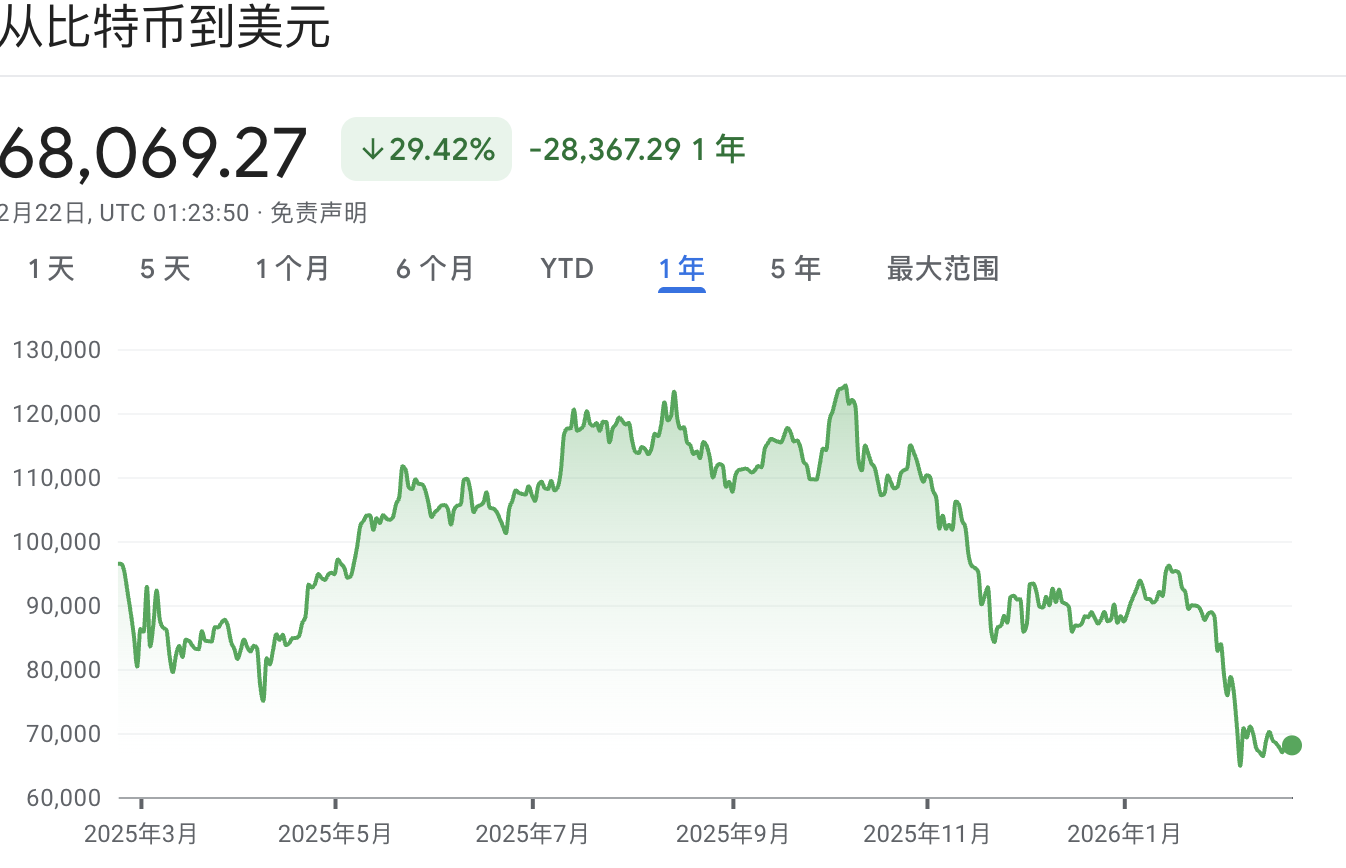
Core Viewpoint - Bitcoin is facing an unprecedented identity crisis, with its value narrative collapsing as it competes with alternatives like stablecoins and traditional gold, leading to a significant price drop of over 40% from its peak [1][3]. Group 1: Market Dynamics - Bitcoin's market capitalization has evaporated by over $1 trillion, despite a friendlier regulatory environment and increased institutional adoption [3]. - The typical rebound scenarios have failed, with bottom-buyers disappearing and the forces that usually drive rebounds now working in reverse [3]. - The core narrative of Bitcoin as a "digital gold" is failing, as it struggles to compete with gold and stablecoins, which are now seen as more reliable and understandable [4][5]. Group 2: Payment and Competition - The payment landscape has shifted, with Jack Dorsey's Cash App now supporting stablecoins, signaling a loss of Bitcoin's dominance in payment solutions [4]. - Stablecoins are becoming the focus of regulatory attention, with bipartisan support for legislation that encourages dollar-backed token infrastructure [4]. - Bitcoin is no longer viewed as a payment mechanism, with other blockchain-driven solutions gaining traction [4]. Group 3: Investment Sentiment - Investors are increasingly recognizing Bitcoin as a speculative asset rather than a reliable store of value or inflation hedge [5]. - The digital asset treasury model, which once bolstered Bitcoin's corporate identity, is collapsing, with many companies trading below the value of their held assets [6]. - Speculative interest is shifting towards prediction markets, indicating a potential decline in overall interest in cryptocurrencies [7]. Group 4: Resilience and Future Outlook - Despite the current crisis, Bitcoin remains the most liquid digital asset, with a robust order book and widespread exchange coverage [8]. - Historical resilience suggests that Bitcoin has survived multiple crises and has the potential to recover from current challenges [8]. - The lack of a unifying narrative poses a significant threat to Bitcoin, as attention and capital may gradually drift away [9].

“央行的央行”警告:黄金已成投机品,50年未见的“股金双爆”风险逼近
Jin Shi Shu Ju· 2025-12-08 13:37
Core Insights - Retail investors have driven the recent surge in gold prices, shifting gold from a traditional safe-haven asset to a more speculative one [1] - The increase in gold prices, approximately 20% since early September, is partly attributed to trend-chasing investors capitalizing on media hype surrounding gold [1] - The International Bank for Settlements (BIS) noted that both gold and stocks have entered an "explosive zone" simultaneously for the first time in at least 50 years [1] Group 1 - The rise in gold prices has been influenced by institutional traders seeking refuge due to concerns over high stock valuations [1] - The expectation of interest rate cuts has encouraged risk-taking behavior and alleviated fears of an economic slowdown [1] - The stock market has continued its rebound since the low point following President Trump's tariff announcement in April [1] Group 2 - Following explosive phases, sharp and rapid corrections typically occur, as evidenced by the 1980 gold case, although the timing of such corrections can vary [2] - Several developed economies issued "huge" debt from September to November, leading to an oversupply of government bonds and a reversal of typical yield spreads [2] - The concept of a "convenience premium" for lending to governments has diminished, as noted by Hyun Song Shin [2]