
抗病毒药物

Search documents
新华制药:获得磷酸奥司他韦干混悬剂药品注册证书
Xin Lang Cai Jing· 2025-12-23 08:57
Core Viewpoint - The approval of the Oseltamivir Phosphate Dry Suspension by the National Medical Products Administration enhances the company's antiviral product line and overall competitiveness, although sales may be influenced by policy and market factors [1] Group 1: Product Approval - The company has received the drug registration certificate for Oseltamivir Phosphate Dry Suspension, classified as a non-prescription chemical drug (Category 3) [1] - The drug is indicated for the treatment of influenza A and B in patients aged 2 weeks and older, and for prevention in individuals aged 1 year and above [1] Group 2: Timeline and Market Impact - The company submitted the application materials in March 2024, which were accepted, and received approval in December 2025 [1] - The estimated sales of Oseltamivir-related formulations in Chinese public medical institutions for 2024 are approximately 5.9 billion [1] Group 3: Competitive Position - The approval enriches the company's antiviral drug product line, thereby enhancing its comprehensive competitiveness in the market [1] - However, the sales of the product may face uncertainties due to various factors such as policy and market conditions [1]

流感阳性率近45%是接近一半人感染?别慌,听听权威说法
Yang Shi Wang· 2025-12-01 23:53
Core Viewpoint - The flu positivity rate among outpatient cases has approached 45%, indicating a significant prevalence of flu-like symptoms, but this does not mean that 45% of the general population is infected with the flu [1][3]. Group 1: Flu Positivity Rate and Symptoms - The flu-like cases refer to patients with respiratory symptoms such as fever and cough who visit outpatient services, and the positivity rate is derived from testing these specific cases [1]. - Among those with flu-like symptoms, the positivity rate for H1N1 (swine flu) exceeds 40%, while over 50% of cases are attributed to other pathogens like rhinovirus and respiratory syncytial virus [3][5]. Group 2: Symptoms in Different Age Groups - In younger populations, symptoms include significant fatigue and muscle aches, with high fever (38°C to 39°C) being common, while sore throat and cough are less pronounced [5]. - Children often experience high fever lasting several days, while elderly patients may not exhibit high fever but have a higher incidence of pneumonia, which can be overlooked [5][8]. Group 3: High-Risk Groups and Treatment - Individuals aged 65 and older are identified as a high-risk group for flu, and early diagnosis and treatment are emphasized to reduce severe outcomes [7][8]. - Antiviral medications should be administered within 48 hours of symptom onset to lower the risk of severe illness [8]. Group 4: Vaccine Efficacy and Infection - Flu vaccines are updated annually based on predictions from the World Health Organization, with effectiveness ranging from 30% to over 60% depending on the accuracy of the predictions [10]. - Even if vaccinated individuals contract the flu, the severity of the illness is generally reduced, and antiviral medications can still be beneficial [11][13].


Merck & Co (NYSE:MRK) M&A Announcement Transcript
2025-11-17 14:02
Summary of Merck & Co. Investor Call on Acquisition of Sedara Therapeutics Company and Industry - **Company**: Merck & Co. - **Acquisition Target**: Sedara Therapeutics - **Industry**: Pharmaceuticals, specifically focusing on antiviral treatments and infectious diseases Core Points and Arguments 1. **Acquisition Announcement**: Merck announced the acquisition of Sedara Therapeutics, focusing on the innovative antiviral agent CD388 designed to prevent influenza infection in high-risk individuals [4][5][19] 2. **Public Health Need**: Influenza poses a significant public health threat, with the CDC estimating up to 82 million infections, 1.3 million hospitalizations, and 130,000 deaths in the 2024-2025 season [9][10] 3. **CD388 Overview**: CD388 is a first-in-class, long-acting antiviral that has received FDA fast-track and breakthrough therapy designations. It is currently in a phase three trial [5][11] 4. **Market Opportunity**: The potential market for CD388 is estimated to exceed $5 billion, targeting approximately 110 million individuals in the U.S. at high risk for influenza complications [5][17][19] 5. **Clinical Data**: In phase two trials, CD388 demonstrated a remarkable 76% efficacy at the highest dose for preventing influenza-like illness, with low immunogenicity and good tolerability [12][18] 6. **Financial Details**: Merck will acquire Sedara for $221.50 per share, totaling approximately $9.2 billion. The transaction is expected to close in Q1 2026, subject to approvals [19][20] 7. **Impact on Financials**: The acquisition will result in a charge of approximately $9 billion to R&D expenses, impacting EPS by about $0.30 in the first year [20][21] Additional Important Content 1. **Manufacturing Strategy**: Merck plans to transition manufacturing to U.S. facilities over time, moving away from reliance on Wuxi-manufactured products [24][25] 2. **Regulatory Considerations**: CD388 does not require ACIP review for launch, which may streamline its market entry [28][64] 3. **Commercial Model**: The product is expected to fit well within Merck's existing commercial infrastructure, targeting high-risk populations already in healthcare systems [60][79] 4. **Pricing Strategy**: Initial pricing research suggests a potential price point of up to $600, which could facilitate access for patients [61][78] 5. **Future Opportunities**: There is potential for CD388's technology to be applied to other infectious diseases beyond influenza [32][34] This summary encapsulates the key points discussed during the investor call regarding Merck's acquisition of Sedara Therapeutics and the anticipated impact of CD388 on public health and the company's growth trajectory.

Cidara Therapeutics (NasdaqCM:CDTX) FY Conference Transcript
2025-11-11 14:02
Summary of Cidara Therapeutics FY Conference Call Company Overview - Cidara Therapeutics is an 11-year-old biotechnology company focused on developing a universal influenza preventative, CD388, based on its Cloudbreak platform [4][5][6] Core Points and Arguments - **Clinical Development**: CD388 has progressed through preclinical testing and multiple clinical phases, with a successful phase 2b study demonstrating a 76.1% efficacy rate against influenza [7][10] - **FDA Interaction**: The FDA has recommended expanding the phase 3 trial to include high-risk populations, specifically those over 65 years old, in addition to immunocompromised individuals [10][12] - **Phase 3 Study Design**: The ongoing phase 3 study involves 6,000 participants testing the 450 mg dose of CD388 versus placebo, with an interim analysis expected by March 2026 [12][13] - **Efficacy Expectations**: The study is designed to be 90% powered to detect a 60% efficacy rate, with the potential for stronger results if the flu season is severe [12][13] - **Real-World Testing**: The phase 3 study allows for vaccination among participants to assess CD388's effectiveness in both vaccinated and unvaccinated individuals [19][20] Market Opportunity - **Target Population**: Cidara estimates over 100 million patients could be eligible for CD388, including 50 million with moderate to severe comorbidities and another 100 million at increased risk according to CDC guidelines [25][26] - **Pricing and Access**: Ongoing market research is being conducted to understand pricing and access opportunities, with updates expected at the upcoming analyst day [26][27] Manufacturing and Supply Chain - **Manufacturing Plans**: Cidara is preparing to have millions of doses ready at launch, with a focus on establishing a domestic supply chain through a contract with BARDA for onshore manufacturing [29][33] Additional Insights - **Safety and Efficacy**: CD388 is characterized as a long-acting antiviral, distinct from vaccines, and is expected to maintain efficacy throughout the flu season [7][20] - **Regulatory Support**: The FDA has indicated that the phase 2b study could support the registration package, enhancing the potential for a broad label upon approval [23] This summary encapsulates the key points discussed during the Cidara Therapeutics FY Conference Call, highlighting the company's strategic direction, clinical advancements, market potential, and operational plans.

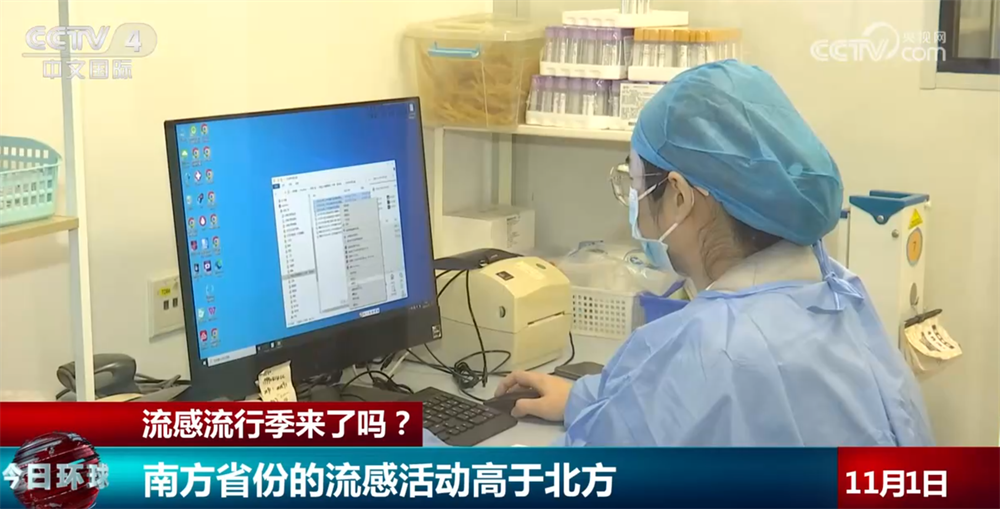
流感流行季来了吗?“打了流感疫苗会导致病毒变异”是真的吗?一文了解
Yang Shi Wang· 2025-11-01 07:07
Core Insights - The flu season in China is expected to arrive earlier this year due to various factors, with the flu virus being the primary pathogen for acute respiratory infections this winter and spring [1] - The current flu activity in China is on the rise, particularly in southern provinces, with Guangdong and Hainan showing higher levels of flu activity compared to other regions [1] Flu Virus Strains - The predominant flu strain currently circulating in China is the H3N2 subtype, accounting for over 95% of the flu viruses detected [3] - H3N2 is not a new subtype; it has been commonly observed in previous flu seasons, with different strains often alternating dominance [3] Symptoms and Treatment - Flu symptoms are typically more severe than other respiratory diseases, including high fever above 38.5°C, muscle pain, and significant systemic symptoms [5] - Common symptoms across different flu virus subtypes (H1N1, H3N2, and B) are similar, and antiviral treatments are effective regardless of the subtype [7] Antiviral Medications - The main antiviral medications used in China for treating flu include Oseltamivir and Marbofloxacin, with Oseltamivir being available in various forms suitable for children [7] - Marbofloxacin, a newer RNA polymerase inhibitor, requires only a single dose, making it particularly suitable for children and the elderly, although it is currently approved for use in individuals aged 5 and older [7] Vaccine and Virus Mutation - There are misconceptions that flu vaccines can cause virus mutations; however, it has been clarified that vaccines do not induce mutations, as the flu virus mutates annually regardless of vaccination [11] - Vaccination is beneficial and does not contribute to virus variation, which is a natural occurrence [11]
广生堂上涨9.83%,报152.11元/股
Jin Rong Jie· 2025-08-25 05:52
Core Viewpoint - Guangshentang's stock price increased by 9.83% on August 25, reaching 152.11 yuan per share, with a trading volume of 2.054 billion yuan and a turnover rate of 10.59%, resulting in a total market capitalization of 24.226 billion yuan [1] Group 1: Company Overview - Fujian Guangshentang Pharmaceutical Co., Ltd. is located in the Fuyuan Industrial Park, Zherong County, Ningde City, Fujian Province, focusing on antiviral and liver health fields [1] - The company has five clinically preferred antiviral drugs for hepatitis B and enjoys a high market share for its main products [1] - In recent years, the company has actively expanded into cardiovascular, male health, and high-end difficult-to-generate drug areas, successfully obtaining approvals for multiple innovative drugs to achieve a leading position in the antiviral drug sector [1] Group 2: Financial Performance - As of March 31, Guangshentang had 14,000 shareholders, with an average of 9,763 circulating shares per person [2] - For the first quarter of 2025, Guangshentang reported operating revenue of 97.608 million yuan, a year-on-year decrease of 18.69% [2] - The net profit attributable to shareholders was -28.489 million yuan, reflecting a year-on-year decrease of 94.56% [2]

广生堂上涨5.5%,报121.8元/股
Jin Rong Jie· 2025-08-07 02:08
Group 1 - The core viewpoint of the article highlights the recent stock performance of Guangshengtang, which saw a 5.5% increase, reaching a price of 121.8 yuan per share, with a trading volume of 597 million yuan and a turnover rate of 3.68%, resulting in a total market capitalization of 19.399 billion yuan [1] - Guangshengtang Pharmaceutical Co., Ltd. is located in Fujian Province and focuses on antiviral and liver health sectors, possessing five major clinical preferred drugs for hepatitis B virus, with a high market share for its main products [1] - The company has been actively expanding into cardiovascular, male health, and high-end difficult-to-generate drug areas, successfully obtaining approvals for multiple innovative drugs to achieve a leading position in the antiviral drug sector [1] Group 2 - As of March 31, Guangshengtang had 14,000 shareholders, with an average of 9,763 circulating shares per person [1] - For the first quarter of 2025, Guangshengtang reported an operating income of 97.608 million yuan, a year-on-year decrease of 18.69%, and a net profit attributable to shareholders of -28.489 million yuan, reflecting a significant year-on-year decline of 94.56% [1]
科兴制药与众生药业签署昂拉地韦片商业化合作协议
Zheng Quan Shi Bao Wang· 2025-08-05 02:49
Group 1 - The core point of the article is that Sinovac Biotech has reached an agreement with Chongqing Zhifei Biological Products Co., Ltd. for the commercialization rights of a new drug, Anladiwei tablets, in Macau [1] - Anladiwei tablets are the world's first innovative drug targeting the PB2 protein of the RNA polymerase of the influenza A virus [1] - This development represents a significant breakthrough for domestic drugs in the antiviral field [1]

