
抗美援朝精神

Search documents
战火记忆丨不能丢下一个战友
Zhong Yang Ji Wei Guo Jia Jian Wei Wang Zhan· 2026-02-09 01:44
Core Viewpoint - The narrative highlights the life and experiences of Li Guangzhu, a veteran who participated in significant battles during the Anti-Japanese War and the Korean War, emphasizing his dedication to serving the people and his comrades in times of conflict [1][2][3][4][5][6]. Group 1: Early Life and Motivation - Li Guangzhu was born in September 1928 in Weihai, Shandong, and grew up in a farming family, receiving a basic education before the Japanese invasion [1]. - The arrival of the Eighth Route Army inspired him to join their ranks, as they were seen as protectors of the people, contrasting with the oppressive behavior of the Nationalist troops [2]. Group 2: Medical Role and Experiences in War - After training as a nurse, Li was assigned to a medical unit where he treated numerous wounded soldiers, often under dire conditions [2][3]. - He expressed a strong desire to join the front lines, demonstrating his commitment to his comrades and the cause [3]. - His experiences included hiding wounded soldiers from enemy forces and risking his life to save them during intense battles [3][4]. Group 3: Contributions and Recognition - Li's bravery during the Battle of the East Section of the Jiaozhou-Jinan Railway earned him membership in the Communist Party [4]. - He served in various capacities, from a medical aide to a military doctor, throughout significant campaigns, including the Korean War, where he faced extreme conditions and threats [5]. - His contributions were recognized with awards, including a third-class merit citation for his service during the Korean War [5]. Group 4: Legacy and Reflection - In 2025, Li received the 80th Anniversary Medal of the Victory of the Chinese People's Anti-Japanese War, reflecting on the sacrifices made by his comrades [6]. - He expressed that the medal symbolizes not only his service but also honors those who sacrificed their lives for the nation [6].
致敬!长津湖“冰雕连”老英雄成了“中国好人”新模范
Xin Lang Cai Jing· 2026-01-24 17:36
Core Viewpoint - The article highlights the recognition of Zhou Quandi, a survivor of the "Ice Sculpture Company" from the Battle of Chosin Reservoir, as a model of "Chinese Good Person," celebrating his resilience and dedication to sharing the spirit of patriotism and perseverance [7]. Group 1: Personal Background - Zhou Quandi, a nonagenarian and former soldier, is honored for his contributions and spirit, representing the enduring values of loyalty and dedication from the Korean War [7]. - He joined the battle at the age of 16, enduring extreme conditions that led to severe frostbite and the amputation of his limbs [8]. Group 2: Achievements and Contributions - After his recovery, Zhou dedicated himself to practicing calligraphy, developing a unique style that has received acclaim and numerous awards [9]. - He has participated in nearly a thousand public speaking events, reaching over 100,000 people, and has gifted around 2,000 calligraphy works, sharing his experiences and inspiring others [10].

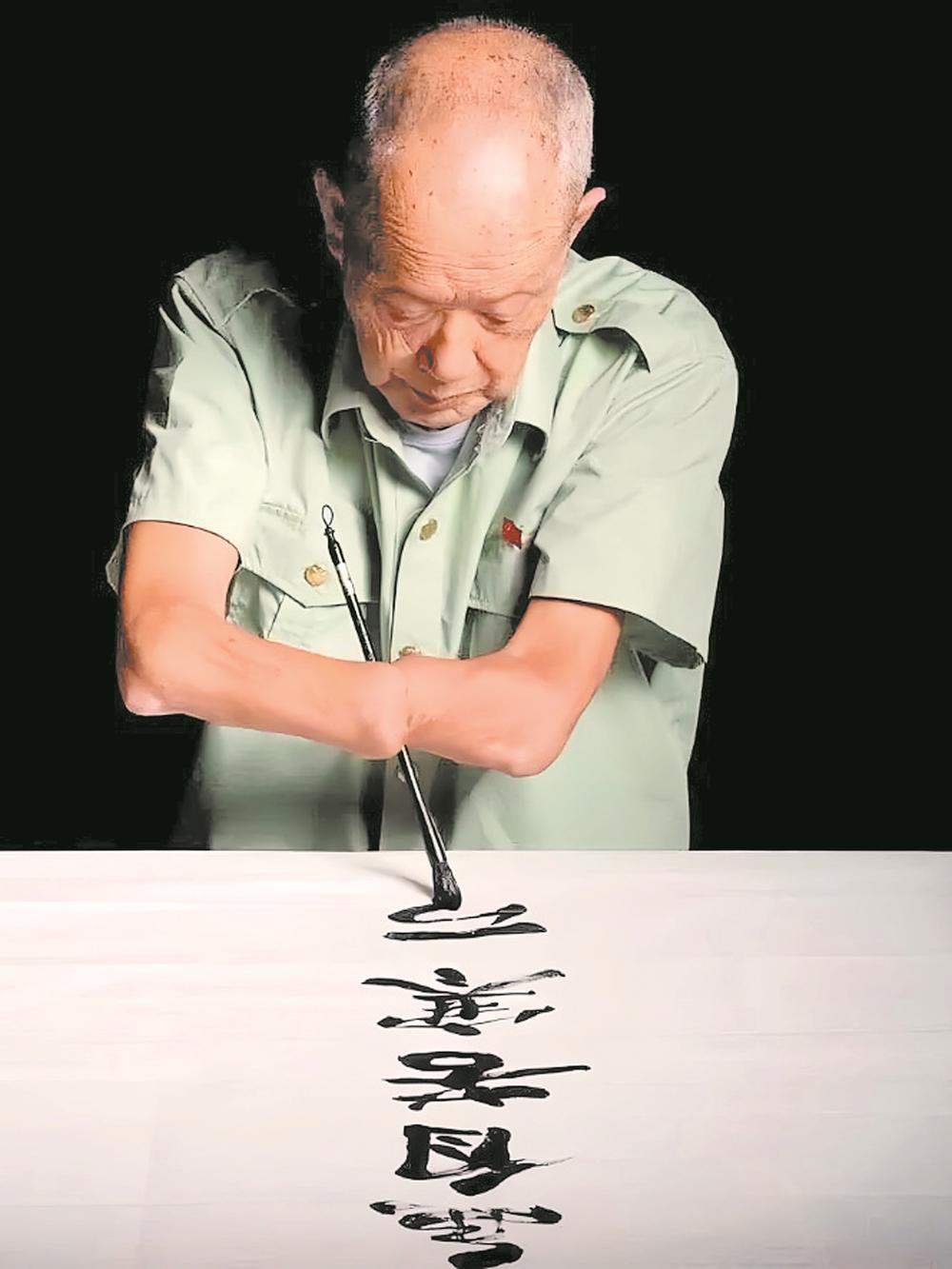
抗美援朝专题全国巡展在京启动
Liao Ning Ri Bao· 2026-01-13 01:07
Core Viewpoint - The exhibition commemorating the 75th anniversary of the Chinese People's Volunteer Army's participation in the Korean War has been launched in Beijing, focusing on the theme of patriotism and the legacy of revolutionary spirit [1] Group 1: Exhibition Details - The exhibition features 75 heroic collective stories from the Korean War, vividly showcasing the historical narrative of this significant event [1] - In addition to traditional display methods, the exhibition incorporates "micro-classroom" formats to enhance public engagement and understanding of the history [1] - Experts in Korean War history are invited to conduct lectures and discussions, enriching the exhibition's content and transforming it into a comprehensive cultural education activity [1] Group 2: Audience Engagement - The exhibition and related activities have attracted over 12,000 visitors from various sectors, effectively promoting patriotism and revolutionary tradition education at the grassroots level [1] - The tour will extend from Beijing to various locations across the country, including museums, military units, schools, and communities, ensuring the enduring impact of the Korean War spirit in contemporary society [2]
跟着总书记学党史丨彭德怀为他佩戴了这枚勋章
Ren Min Wang· 2025-12-08 08:40
Core Viewpoint - The article highlights the significance of the "Anti-American Aid Korea First-Class Warrior Honor Medal," emphasizing its design and the historical context of its creation during the 70th anniversary of the Chinese People's Volunteer Army's participation in the Korean War [2] Group 1 - The medal is made of pure silver and has a diameter of 52 millimeters, featuring an enamel red star set within a ten-pointed star that radiates light [2] - The design includes a rectangular shield surrounded by wheat ears, with a soldier holding a rifle depicted in the center [2] - Xi Jinping's speech at the commemorative event underscores the importance of cultivating a spirit of self-sacrifice and resilience in the face of adversity, which instills fear in enemies and resonates deeply with the nation [2]
一所大学如何挖掘自己的“红色基因”
Zhong Guo Qing Nian Bao· 2025-12-07 02:50
Core Viewpoint - The article emphasizes the importance of "red gene" cultural heritage in Chinese universities, highlighting how it can enhance the cohesion and sense of belonging among students and faculty, while also serving as a valuable resource for ideological education [1][2]. Group 1: Red Gene Cultural Heritage - The "Northward Spirit" is identified as a crucial cultural force for building a strong education system in China, with roots in the contributions of revolutionary figures and educators in Jilin University [1]. - The conference on "University and the Cultural Transmission of Red Genes" gathered over 300 experts and scholars from more than 130 universities to discuss how to excavate and utilize their own "red genes" to enhance educational outcomes [1]. - The concept of "cultural self-awareness" is highlighted, stressing the need for universities to understand the origins and development of their red cultural heritage [2]. Group 2: Educational Strategies - The use of personalized narratives in teaching red culture is suggested to overcome the challenges of integrating red culture into modern education, with a focus on emotional engagement and individual stories [3][4]. - The creation of original plays and immersive experiences, such as the play "The Beginning," aims to transform red resources into educational tools that resonate with students [3][6]. - Regional red resources are seen as advantageous for ideological education, with examples of innovative courses that engage students through historical immersion [6][7]. Group 3: Institutional Initiatives - Various universities are developing programs to promote red culture, such as training red culture narrators and creating oral history projects to preserve the legacy of historical figures [7]. - The "Red Boat Spirit" is being integrated into educational curricula and activities, with initiatives designed to reach a wide audience across multiple universities [7].
铁道兵纪念馆里的抗美援朝记忆
Ren Min Ri Bao Hai Wai Ban· 2025-11-19 23:09
Core Viewpoint - The article commemorates the 75th anniversary of the Chinese People's Volunteer Army's participation in the Korean War, highlighting the significant contributions of the Railway Corps in ensuring logistical support and infrastructure during the conflict [6][15]. Group 1: Historical Significance - The Korean War began 75 years ago, with the Chinese People's Volunteer Army crossing the Yalu River to engage in a protracted and brutal conflict lasting two years and nine months, ultimately achieving a significant victory [6]. - The Railway Corps, consisting of approximately 20,000 soldiers, was crucial for maintaining supply lines and repairing railroads under constant enemy bombardment, with over 190,000 bombs dropped along the railway lines during the war [8][14]. Group 2: Contributions of the Railway Corps - The Railway Corps suffered heavy casualties, with 1,481 soldiers killed and 2,989 wounded, showcasing their bravery and commitment to the mission [8][11]. - The Corps played a vital role in expanding the railway network in North Korea from 107 kilometers to 1,382 kilometers, constructing 212 kilometers of new railways, which were essential for military logistics [14][15]. Group 3: Legacy and Recognition - The Railway Corps received high praise from military leaders, with a significant portion of the success attributed to their efforts in maintaining transportation and supply lines during the war [14]. - After the war, the Railway Corps continued to contribute to the reconstruction of North Korea and later became part of the China Railway Construction Corporation, participating in major infrastructure projects globally [15][24].

抗美援朝记忆里的“七十三号驿站”
Xin Hua She· 2025-10-27 08:42
Core Points - The article highlights the significance of the "No. 73 Station" in Dandong, which served as a vital support hub for Chinese volunteer soldiers during the Korean War, symbolizing the deep bond between the military and civilians [1][9] - The story of the Zhao family, who opened their home to soldiers, reflects a broader narrative of patriotism and sacrifice during the war, marking the 75th anniversary of the Chinese People's Volunteer Army's involvement in the conflict [1][2] Summary by Sections Historical Context - In July 1950, Dandong (formerly known as Andong) was under pressure to accommodate thousands of soldiers preparing for the Korean War, leading to a community mobilization to provide housing [2] - The Zhao family, led by Zhao Lianyou, opened their home to soldiers, embodying the spirit of national support during the war [2][3] Family Contributions - The Zhao family provided not only shelter but also emotional support, with family members actively participating in wartime efforts, including transporting injured soldiers across the Yalu River [4][5] - The family's home became a "transit station" for soldiers, facilitating communication and support for their families back home [2][3] Legacy and Remembrance - The letters exchanged between soldiers and the Zhao family became treasured artifacts, preserving the memories and gratitude of the soldiers [6][7] - The Zhao family has continued to honor this legacy by compiling and donating these letters to memorials, ensuring that the sacrifices made during the war are not forgotten [7][8] Cultural Impact - The "No. 73 Station" has evolved into a symbol of collective memory and patriotism, serving as a reminder of the sacrifices made for peace and the importance of remembering history [9]
辽东学院举办弘扬抗美援朝精神“大思政课”
Xin Hua Wang· 2025-10-27 08:11
Core Viewpoint - The event "Letters in the Flames of War" aims to promote the spirit of the War to Resist U.S. Aggression and Aid Korea through a dynamic and interactive educational experience, engaging students and faculty in a meaningful way [1]. Group 1: Event Overview - The event took place on October 25 at Liaodong University, attended by over 800 participants including experts, scholars, and students [1]. - The performance featured stories of historical figures such as Cao Yuhai and Huang Jiguang, bringing red memories to life and instilling a sense of faith among the audience [1]. Group 2: Educational Impact - The "Great Ideological and Political Class" utilized letters as a medium to break traditional one-way educational models, allowing for interaction between performers and the audience [5]. - Participants expressed that the class was emotionally impactful, deepening their understanding of the rich connotations of the War to Resist U.S. Aggression and Aid Korea spirit [5]. Group 3: Future Initiatives - Liaodong University plans to continue innovating in ideological education by exploring red resources and telling red stories, contributing to the ongoing development of the "Great Ideological and Political Class" [5]. - The university is involved in writing a series of books, including "The Spirit of the War to Resist U.S. Aggression and Aid Korea," aiming to present this significant historical period in a more thought-provoking and readable format [5].

抗美援朝出国作战75周年丨烽火岁月,这些文物静静讲述……
Xin Hua She· 2025-10-25 06:45
Core Viewpoint - The article commemorates the 75th anniversary of the Chinese People's Volunteer Army's participation in the Korean War, highlighting their sacrifices and victories in defending peace and resisting aggression [1][23]. Group 1: Historical Significance - The Chinese People's Volunteer Army crossed the Yalu River 75 years ago, fighting alongside the Korean people and military for nearly three years to achieve a significant victory in the Korean War [1]. - The Anti-American Aid Korea Memorial Hall in Dandong, Liaoning, is the only museum dedicated to showcasing the history of the Chinese People's Volunteer Army and the Korean War, housing over 20,000 artifacts that narrate this historical period [1]. Group 2: Cultural Impact - The song "The Song of the Chinese People's Volunteer Army," which became an anthem for the military, reflects the soldiers' determination and spirit during the war [1][2]. - The creation of a Huqin (a traditional Chinese instrument) from materials sourced in Korea and China symbolizes the cultural resilience and morale of the troops amidst the harsh realities of war [14][15]. Group 3: Military Achievements - The article recounts the heroic actions of the Volunteer Army, such as the successful defense against overwhelming enemy forces at the Shangganling (Battle of Triangle Hill), where they endured heavy bombardment and fought for 43 days [19]. - The signing of the Korean Armistice Agreement on July 27, 1953, marked a significant victory, with the announcement celebrated in the "Volunteer Army" newspaper, emphasizing the sacrifices made by the soldiers [22][23].
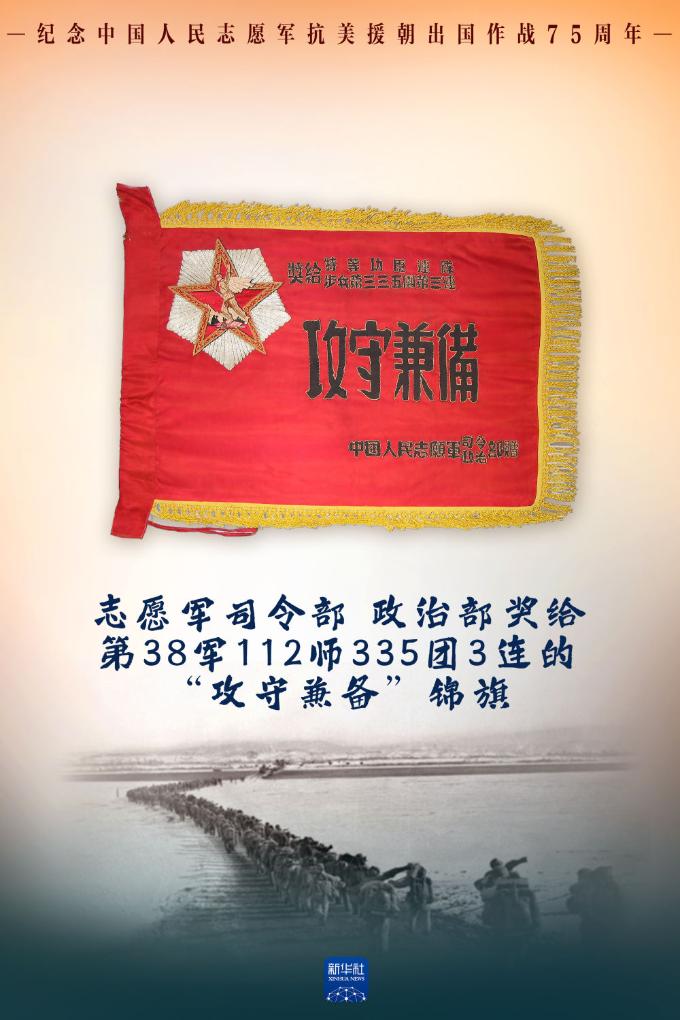
战旗美如画 强军铸荣光
Ren Min Ri Bao· 2025-10-25 01:51
Core Points - The articles commemorate the 75th anniversary of the Chinese People's Volunteer Army's participation in the Korean War, highlighting the heroism and sacrifices of soldiers during this period [1][2][3] - The spirit of the Korean War, characterized by resilience and patriotism, continues to inspire current military personnel and is seen as a vital part of their identity and training [2][5][6] - The legacy of heroes like Yang Gensi and Sun Zhanyuan is emphasized, showcasing their bravery and the enduring impact of their actions on contemporary military culture [4][10][12] Group 1 - The articles reflect on the historical significance of the Korean War and the enduring spirit of the soldiers who fought, emphasizing the importance of remembering their sacrifices [1][2][3] - The narrative includes specific examples of heroism, such as Yang Gensi's declaration of "three untrusts" and Sun Zhanyuan's courageous actions during the Battle of Shangganling, which serve as motivational stories for current soldiers [4][10] - The evolution of military equipment and tactics is discussed, illustrating how modern advancements are built upon the foundational spirit of bravery and sacrifice from the Korean War era [6][7][9] Group 2 - The articles highlight the ongoing commitment of the military to honor the legacy of past heroes through training and cultural practices, ensuring that their stories and values are passed down to new generations [5][11][13] - The role of medical personnel during the Korean War is also acknowledged, with stories of nurses like Zhu Yong who exemplified dedication and courage in the face of danger [12][13] - The current military's achievements and honors are presented as a continuation of the heroic spirit established during the Korean War, reinforcing the connection between past and present [8][10][11]