摇一摇广告

Search documents
太好了,淘宝摇一摇霸屏广告要被治了
3 6 Ke· 2025-11-10 00:07
Core Viewpoint - The article discusses the increasing frustration among users due to aggressive advertising practices by platforms like Taobao, which forcefully redirect users to promotional pages across various apps, leading to widespread complaints and regulatory scrutiny [1][3][7]. Group 1: User Experience and Complaints - Users are experiencing unwanted redirections to Taobao when using other apps, causing significant annoyance and frustration [1][3]. - Complaints have emerged regarding the difficulty in closing these ads, with users often unable to find the close button quickly enough [3][4]. - The issue has escalated to the point where regulatory bodies, such as the Hangzhou Yuhang District Market Supervision Administration, have begun investigating these advertising practices following numerous reports [7]. Group 2: Advertising Techniques and Industry Response - The article highlights the problematic nature of "shake to interact" advertising, which has evolved from a popular feature into a source of user frustration due to its misleading design [16][18]. - Historical context is provided, noting that previous regulations aimed at curbing misleading ads had initially reduced the incidence of such practices significantly, but the industry has since adapted by creating new methods to bypass these regulations [22][23]. - The rise of "shake to interact" advertising is attributed to the need for platforms to maintain advertising revenue, with the technique being widely adopted across the industry despite its negative reception from users [25][28]. Group 3: Industry Innovations and Criticism - The article mentions the controversial figure behind the "shake to interact" feature, Chen Chao, who has been criticized for creating advertising methods that prioritize revenue over user experience [29][32]. - Chen's previous invention, "super pause," which forces ads to take over the screen when a video is paused, has also drawn significant backlash from users [32][33]. - The article speculates on future advertising innovations that may further infringe on user experience, suggesting that as long as there are financial incentives, companies may continue to develop intrusive advertising methods [35].



双十一手机「摇一摇」广告杀疯了,为何越管却越泛滥?
3 6 Ke· 2025-11-05 23:23
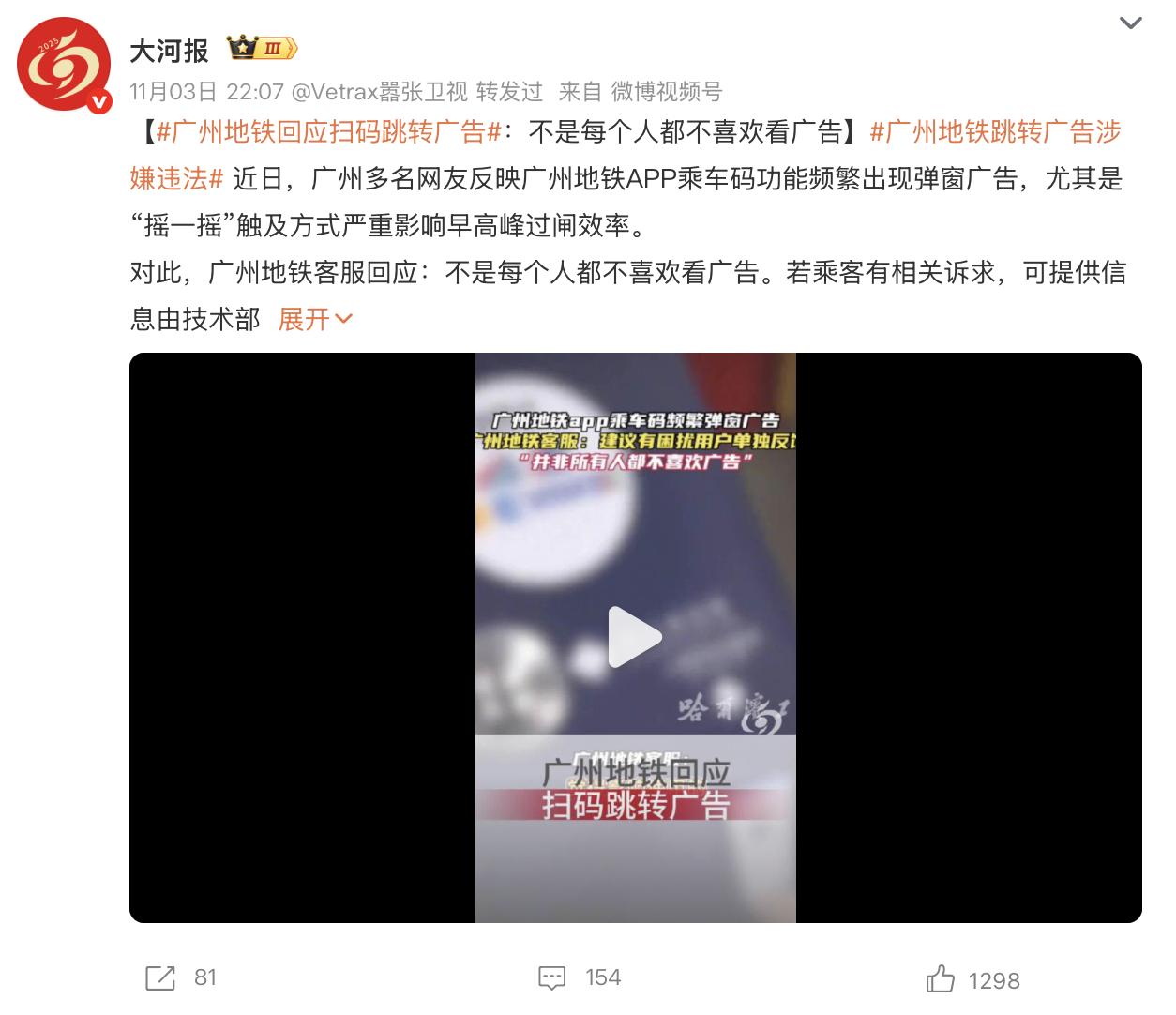
Core Viewpoint - The introduction of the "shake to shake" advertising feature in the Guangzhou Metro app has sparked significant criticism from users due to its intrusive nature, leading to the eventual removal of this feature after public backlash [4][5][6]. Group 1: Advertising Mechanism - The "shake to shake" advertising mechanism is designed to trigger ads when users interact with their phones in specific ways, such as scanning QR codes at metro gates, which has led to user frustration and complaints [4][16]. - Despite the negative reception, this advertising method has proven effective in increasing ad exposure rates, particularly in high-traffic environments like the Guangzhou Metro, which sees around 10 million rides daily [16]. Group 2: Regulatory Response - Regulatory bodies have attempted to address the issues surrounding "shake to shake" ads by establishing standards to prevent automatic ad triggers that do not align with user intent, aiming to protect user rights [5][6]. - The National Cybersecurity Standardization Technical Committee has issued guidelines that specify the conditions under which "shake to shake" ads can be triggered, emphasizing user control and consent [6][12]. Group 3: User Experience and Alternatives - Users have expressed a strong desire for more control over advertising features, with some apps like Bilibili adhering to guidelines by providing options to disable "shake to shake" ads [28]. - For users seeking to avoid intrusive ads, alternatives such as using NFC metro cards or other apps that do not employ such advertising methods are recommended [29][31].
苹果客服回应iPhone17支持关闭摇一摇广告
Qi Lu Wan Bao· 2025-09-11 08:26
Core Viewpoint - Apple has decided to allow users to control the gyroscope permissions starting from iPhone 17's iOS 26, effectively banning the "shake to advertise" feature due to user complaints about its negative impact on user experience [4]. Group 1 - The decision to disable shake advertisements has sparked significant discussion among users, with many expressing approval of the new feature [4]. - Users are curious whether other models will receive the iOS 26 update and if they will also have the option to disable shake advertisements [5]. - Some users noted that similar features have been available on Android devices for years, indicating a competitive gap [5]. Group 2 - Apple customer service indicated uncertainty about whether shake advertisements are solely reliant on the gyroscope or if they also utilize gravity sensing features [6]. - The official website does not confirm if the iPhone 17's iOS 26 will include this feature, and further details are expected after the product launch on September 12 [6]. - Users can currently avoid shake advertisements by disabling software tracking in the settings [6].