政策路径分歧

Search documents
铜月报(2026年2月)-20260227
Zhong Hang Qi Huo· 2026-02-27 12:22
1. Report Industry Investment Rating - No information provided in the report 2. Core Viewpoints of the Report - In March, copper prices are recommended to be treated with a bullish bias on pullbacks. The core logic driving the upward movement of copper prices - the supply gap caused by insufficient global copper mine capital expenditure and the demand increment from new energy and AI computing infrastructure - remains unchanged. If copper prices experience a significant pullback due to weakening macro and fundamental realities, it will be a golden opportunity to lay out long - term long positions [8][9]. 3. Summary According to the Directory 3.1 Market Review - In February, copper prices followed the decline of precious metals and entered a consolidation phase. However, prices showed strong resilience. Shanghai copper fluctuated repeatedly above 100,000 yuan, and LME copper around $13,000. Copper prices remained high during the Spring Festival [9][11]. 3.2 Macro - face - **Overseas**: There are two main focuses: "policy path divergence" and "geopolitical disturbances". In January, the number of non - farm payrolls increased by 130,000, significantly higher than market expectations, the largest increase since April 2025. The unemployment rate unexpectedly dropped slightly to 4.3%, strengthening the expectation of a mild slowdown in the labor market. Geopolitical risks in the Middle East still exist, and attention should be paid to the subsequent progress between the US and Iran. The Fed's interest - rate cut expectations have encountered setbacks, and the ECB has fallen into a "wait - and - see" state [9][15]. - **Domestic**: The domestic economy is driven by domestic demand. China is implementing a special action to boost consumption. The financial data had a stable start in January, with the incremental social financing reaching 7.22 trillion yuan, a record high for the same period. The weighted average interest rate of new corporate loans was about 3.2%, running at a low level. The real - estate policy continued to release stable signals. In March, the "Two Sessions" are a key focus [21]. 3.3 Fundamental - face - **Supply - side**: - **Global copper mines**: There are long - term shortages in capital expenditure, and exploration results have declined significantly. The development cycle of new mines has lengthened, and it is difficult to increase supply significantly in the short term. The spot TC/RC of copper concentrates has been in a deep negative range, and the profit of the smelting end is under pressure. Domestic smelter maintenance will have a deeper impact [9][23]. - **Domestic copper production**: In January 2026, domestic electrolytic copper production was unexpectedly high, reaching 1.1793 million tons, a month - on - month increase of 0.10% - 0.12 million tons and a year - on - year increase of 16.32%. In February, production is expected to be 1.1435 million tons, a month - on - month decrease of 3.04% but a year - on - year increase of 8.06%. In March, production is expected to resume growth [32]. - **Copper imports**: In December 2025, China's scrap copper imports reached 239,000 tons, a month - on - month increase of 14.81% and a year - on - year increase of 9.90%, reaching a new monthly high for the year [35]. - **Demand - side**: - **Traditional industries**: The recovery of traditional fields such as construction and home appliances is slow due to the macro - cycle. However, the real - estate market is showing signs of stabilizing and repairing, and the decline in housing prices in first, second, and third - tier cities has generally narrowed [9][42]. - **New industries**: Copper, as a "computing power metal" and a key material for energy transformation, has its demand growth space systematically re - evaluated. In January 2026, the automotive industry had a stable start, and the production of scale - industrial electricity maintained growth. The new - energy vehicle market was relatively stable, with exports driving overall sales [9][44][46].
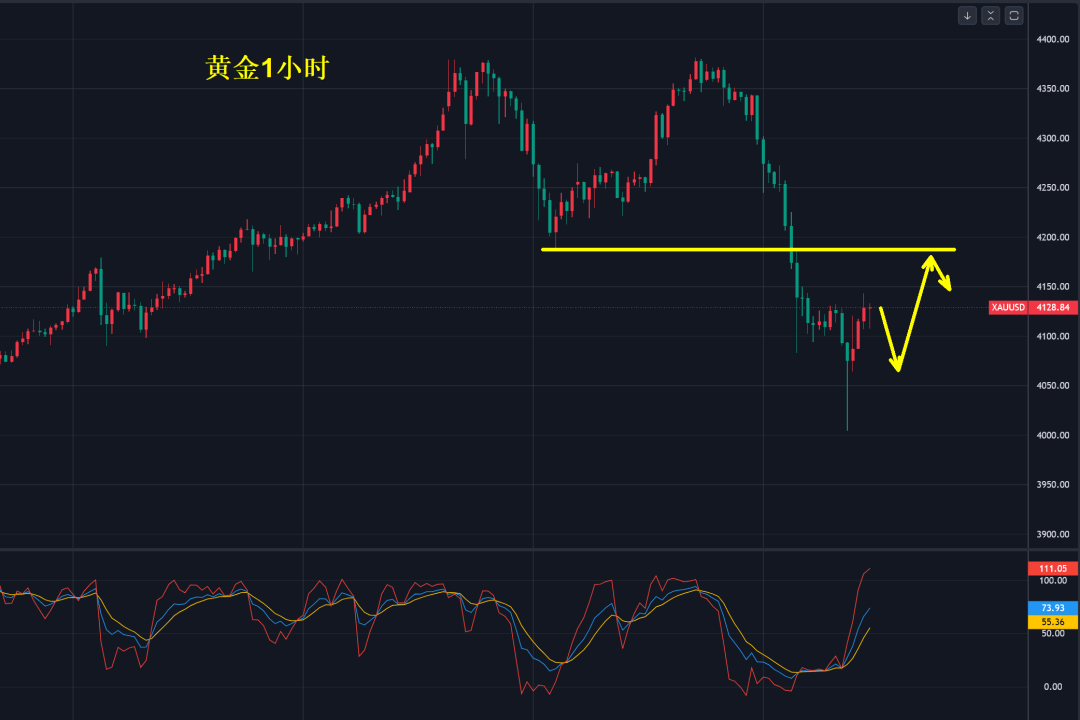
黄金,牛市是否已经逆转?
Sou Hu Cai Jing· 2025-10-22 05:00
Core Viewpoint - The sudden 5% drop in gold prices, marking the largest single-day decline of the year, reflects a collision between market expectations and reality, ending a three-month bullish trend [1] Group 1: Market Expectations - The dovish signals from Federal Reserve Chairman Jerome Powell in August ignited expectations for a rate cut in September, leading to a surge in gold prices from $3,200 to $4,400, a rise of over 37% [2] - The realization of the rate cut led the market to reassess gold's valuation, as the fulfillment of rate cut expectations limited further stimulus potential, causing a shift from expectation-driven to reality-validated momentum [2] Group 2: Data Vacuum - The U.S. government shutdown in November resulted in a "data vacuum," delaying the release of key economic indicators such as non-farm payrolls and CPI, which are crucial for assessing economic fundamentals [3] - The absence of data hindered investors' ability to evaluate inflation pressures or employment market changes, leading to a lack of sustained risk aversion [4] Group 3: Technical Factors - Technically, gold entered an overbought territory around $4,400, with the RSI indicator showing extreme optimism, making it susceptible to negative signals that could trigger technical sell-offs [5] - On November 20, profit-taking by institutional investors initiated a rapid decline in gold prices, resulting in a domino effect of stop-loss triggers and automated sell-offs, shifting the market from buying to panic selling [5] Group 4: Policy Divergence - Despite the rate cut in September, divisions within the Federal Reserve regarding future policy became apparent, with some officials suggesting a pause in rate cuts, indicating a potential shift towards a neutral monetary policy [6] - This divergence contrasted with previous expectations of continued easing, diminishing gold's appeal as a safe-haven asset [7] - The uncertainty surrounding fiscal policy during the government shutdown heightened concerns about "stagflation" risks, challenging gold's value preservation attributes [7] Group 5: Future Outlook - The recent decline in gold prices is viewed as a necessary correction, reflecting a transition from market exuberance to a more sober assessment of reality, as previous gains had already priced in the benefits of rate cuts [7] - Future gold price movements will depend on the Federal Reserve's policy trajectory, the timing of economic data releases, and changes in geopolitical risks, while its safe-haven properties remain intact despite complex price fluctuations [7]