效率与公平

Search documents
论效率和公平-聊聊最近热门的AI鬼作文
付鹏的财经世界· 2026-02-25 09:14
Core Viewpoint - The article discusses the significant shift in the global financial landscape due to the return of conservative policies by the Federal Reserve, which is leading to a reconstruction of market paradigms. It emphasizes the dual focus on the implications of AI technology and the need for a balance between efficiency and fairness in the context of economic changes brought about by technological advancements [2][3][20]. Group 1: Financial Landscape and Policy Shifts - The upcoming closed-door meeting will analyze the major turn in the global financial landscape, particularly the implications of the Federal Reserve's conservative approach and its impact on market paradigms [2]. - The meeting will also explore how the combination of "balance sheet reduction and interest rate cuts" will fundamentally change global liquidity supply [2]. - The article highlights the need to understand the ideological repositioning of central banks in response to these changes [2]. Group 2: AI and Productivity Transformation - A report titled "2028 Global Intelligence Crisis" has sparked widespread discussion about the rapid spread of AI technology and its potential impact on traditional jobs and skills, leading to societal divides [3]. - The article emphasizes that while AI is enhancing productivity and creating unprecedented wealth, it also raises concerns about job displacement and widening skill gaps [3][12]. - The discussion around AI reflects a historical crossroads where society must navigate the balance between technological advancement and its social implications [3]. Group 3: Efficiency vs. Fairness - The article delves into the inherent conflict between efficiency and fairness, suggesting that while they are often seen as opposing forces, they are interdependent [4][5]. - It references Joseph Schumpeter's concept of "creative destruction," which posits that economic progress involves the destruction of old structures to make way for new ones, highlighting the need for a dynamic balance between efficiency and fairness [5][6]. - The historical context of economic cycles illustrates that society oscillates between extremes of efficiency and fairness, with the current AI revolution representing a new phase in this ongoing struggle [8][10]. Group 4: Government's Role in Balancing Change - The article argues that as AI drives efficiency to new heights, it is crucial for governments to implement measures that ensure fairness and mitigate the negative impacts of technological disruption [20][21]. - It suggests that governments should create mechanisms to support those affected by job displacement, such as retraining programs and social safety nets [21][22]. - The need for a balanced approach is emphasized, where both innovation and social equity are prioritized to prevent societal unrest and economic instability [20][23].


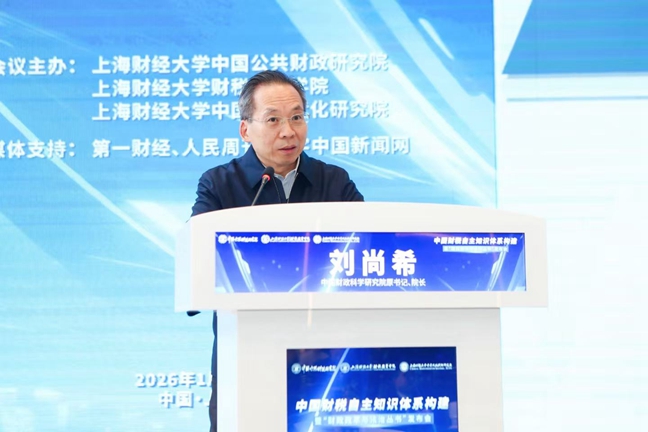
刘尚希:缩小贫富差距,重心要放在底线公平上
Di Yi Cai Jing· 2026-01-23 14:47
Core Viewpoint - The concept of common prosperity challenges traditional development paradigms, emphasizing a shift from material logic to human-centered logic in addressing wealth disparity [1][3]. Group 1: Understanding Wealth Disparity - The focus should be on bottom-line fairness to prevent polarization in living standards and capabilities, rather than merely reducing wealth gaps [1][3]. - The disparity in wealth is rooted in group capability differences, which arise from systemic inequalities in starting points, opportunities, and processes [3]. - Achieving common prosperity involves reconciling efficiency and fairness, suggesting that enhancing human development can simultaneously improve efficiency and promote fairness [3]. Group 2: Strategies for Fairness - Liu Shangxi proposes the "Seven Guarantees" and "Four Basics" to ensure bottom-line fairness, which includes essential needs like education, healthcare, and housing [4]. - After establishing fairness, innovation and competition should be encouraged without imposing ceilings on earnings, promoting equal development opportunities for all [5]. Group 3: Addressing Rural Issues - The rural population, comprising over 900 million individuals, represents a significant challenge in achieving common prosperity, necessitating the dismantling of the urban-rural dual structure [5]. - Reform is needed to integrate rural collective ownership with market mechanisms to stimulate economic growth and expand domestic demand [5]. Group 4: Theoretical and Practical Framework - The transition from wealth accumulation to knowledge accumulation as the foundation for development is supported by both theoretical and practical logic [6]. - The central government’s emphasis on combining investments in material and human capital signals a shift towards a development paradigm focused on human potential [6].
国务院发展研究中心原党组书记马建堂:“投资于人”要更着力于低收入群体、困难群体
Ge Long Hui· 2025-12-16 04:37
Core Viewpoint - The emphasis on a "people-centered" approach in the 20th Central Committee's Fourth Plenary Session recommendations highlights the need to integrate investments in both material and human resources more closely [1] Group 1: Economic Development - The recommendations outline various tasks related to achieving common prosperity for the people, focusing on narrowing income distribution gaps [1] - It is essential to remember that high-quality development must solidly promote common prosperity [1] Group 2: Efficiency and Fairness - The relationship between production and distribution must be correctly managed, prioritizing efficiency while also paying more attention to fairness [1] - The recommendations stress the importance of balancing the "raising" and "lowering" aspects of economic policies, particularly focusing on low-income and disadvantaged groups in social welfare investments [1]
今天在洛杉矶,我看到了“美国的暗面”
虎嗅APP· 2025-09-19 11:10
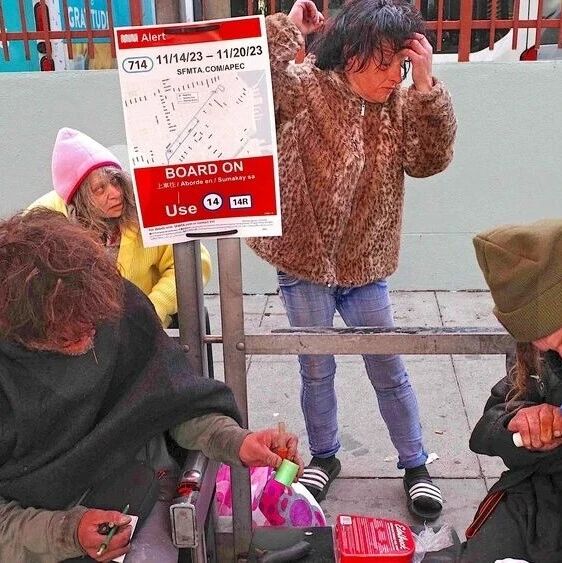
Core Viewpoint - The article reflects on the stark contrast between the glamorous image of America and the harsh realities faced by many, particularly in urban areas like Los Angeles, highlighting issues of wealth inequality and social responsibility [4][8][11]. Group 1: Observations on American Society - The author describes a personal experience of exploring Los Angeles through public transportation, revealing a different side of the city that contrasts with its glamorous reputation [5][7]. - Observations include the presence of homeless individuals and the visible signs of poverty, which starkly contrast with the wealth concentrated in financial districts [8][9]. - The article references Joseph Stiglitz's assertion that 1% of Americans hold over 40% of the nation's wealth, illustrating the deep economic divide [8]. Group 2: Social Responsibility and Welfare Debate - The author raises questions about the moral obligation of the wealthy to assist the less fortunate, emphasizing the need for a humane society that does not allow its citizens to live in indignity [9][10]. - The discussion includes the challenges of balancing welfare policies between generosity and efficiency, suggesting that simply providing financial aid may not address the root causes of poverty [9][10]. - The need for a comprehensive social safety net, including affordable healthcare and job training, is highlighted as essential for restoring dignity and hope to those in need [10]. Group 3: Reflection on Societal Values - The article concludes that true civilization is measured by how a society treats its most vulnerable members, warning against the dangers of prioritizing economic growth over social equity [11]. - It serves as a cautionary tale for other nations, including the author's own, to ensure that rapid economic development does not come at the cost of social welfare and individual dignity [10][11].
今天在洛杉矶,我看到了“美国的暗面”
Hu Xiu· 2025-09-19 00:37
Core Insights - The article presents a stark contrast between the glamorous image of America and the harsh realities faced by many, particularly in urban areas like Los Angeles, highlighting the disparity between wealth and poverty [1][5][10] Group 1: Economic Disparities - The article notes that 1% of Americans hold over 40% of the nation's wealth, with millions unable to afford basic healthcare, illustrating the deep economic divide [5][8] - The "American Dream" narrative is critiqued as being hollow for those born into poverty, emphasizing the lack of opportunities for marginalized groups [5][9] Group 2: Social Issues - The presence of homelessness and drug addiction in urban settings is described, showcasing the visible consequences of systemic failures in social support [4][7] - The article raises questions about the responsibilities of the wealthy to assist the less fortunate, balancing humanitarian needs with concerns about incentivizing dependency [7][9] Group 3: Systemic Challenges - The discussion includes the inadequacies of the social safety net, suggesting that mere financial aid is insufficient to address deeper issues of dignity and hope for the disadvantaged [8][10] - The need for a comprehensive social support system, including affordable healthcare and job training, is emphasized as essential for rebuilding societal trust and opportunity [8][9]