付鹏的财经世界

Search documents
流动性收紧、美伊战争与波动率
付鹏的财经世界· 2026-03-13 06:12
Group 1 - The core viewpoint of the article highlights that after September 2025, the liquidity in the U.S. market is characterized as "ample but fragile," directly impacting the market by leading to a decline in purely valuation-based assets [1] - The frequent use of the Standing Repo Facility (SRF) indicates a lack of liquidity in the private market, with institutions turning to the Federal Reserve to avoid soaring financing costs [1] - The decline in excess reserves and overnight reverse repurchase agreements (ON RRP) suggests that while total liquidity is sufficient, fragmentation and intermittent tightness are increasing, especially around the end of quantitative tightening (QT) [1] Group 2 - If the SRF continues to rebound or reserves continue to decline in March, signs of tightening liquidity will become more evident [2] - The recent geopolitical tensions, such as the U.S.-Iran conflict and the blockade of the Strait of Hormuz, have led to a significant short-term increase in oil prices, complicating the Federal Reserve's decision-making [2] - A resilient job market, characterized by low unemployment rates and strong wage growth, could lead to a "wage-price spiral," making inflation expectations more persistent and potentially delaying interest rate cuts [2] Group 3 - The tightening of liquidity in the U.S. has already started to affect the volatility of major asset classes, with recent discussions in the "Fu Peng Says" video series addressing the decline of the Hang Seng Tech Index and the valuation differentiation in the AI industry [3]


【6月新西兰】以雪为媒,以资为介,奔赴南半球的冰雪秘境,洞见 2026 年资产配置新机遇
付鹏的财经世界· 2026-02-25 09:14
Group 1 - The article presents a unique snow exploration journey in New Zealand, combining financial insights with skiing experiences led by economist Fu Peng [2] - The event is scheduled from June 25 to July 3, 2026, lasting 9 days and 8 nights, with limited seats available [2] - Participants will experience top-notch powder snow at Cardrona and Remarkables ski areas during the day and engage in discussions on global macroeconomic trends at night [2] Group 2 - Day 1 involves traveling from Guangzhou/Shanghai to Auckland, marking the beginning of the winter journey in the Southern Hemisphere [4] - Day 2 includes a visit to Christchurch, featuring attractions like the Avon River and the Botanic Gardens, allowing participants to adapt to the time difference [5][6] - Day 3 focuses on Lake Tekapo, where participants can visit the Church of the Good Shepherd and enjoy a lakeside dinner [6][7] Group 3 - Day 4 features a visit to Aoraki/Mount Cook National Park, offering glacier sightseeing via helicopter or hiking, followed by leisure time at Lake Wanaka [8][10] - Day 5 is dedicated to skiing at Cardrona, catering to both beginners and advanced skiers, with a luxurious stay in Queenstown [10][11] - Day 6 includes an interactive experience at a highland farm, featuring a BBQ lunch and activities like sheep feeding and wool shearing [12][11] Group 4 - Day 7 allows for a full day of skiing at the Remarkables ski area, with opportunities for shopping and dining in Queenstown [13][14] - Day 8 involves returning to Auckland and then flying back to Guangzhou/Shanghai, concluding the memorable journey [15] - The event includes various costs such as transportation, accommodation, meals, and travel insurance, with specific cancellation policies outlined [20][17]

论效率和公平-聊聊最近热门的AI鬼作文
付鹏的财经世界· 2026-02-25 09:14
Core Viewpoint - The article discusses the significant shift in the global financial landscape due to the return of conservative policies by the Federal Reserve, which is leading to a reconstruction of market paradigms. It emphasizes the dual focus on the implications of AI technology and the need for a balance between efficiency and fairness in the context of economic changes brought about by technological advancements [2][3][20]. Group 1: Financial Landscape and Policy Shifts - The upcoming closed-door meeting will analyze the major turn in the global financial landscape, particularly the implications of the Federal Reserve's conservative approach and its impact on market paradigms [2]. - The meeting will also explore how the combination of "balance sheet reduction and interest rate cuts" will fundamentally change global liquidity supply [2]. - The article highlights the need to understand the ideological repositioning of central banks in response to these changes [2]. Group 2: AI and Productivity Transformation - A report titled "2028 Global Intelligence Crisis" has sparked widespread discussion about the rapid spread of AI technology and its potential impact on traditional jobs and skills, leading to societal divides [3]. - The article emphasizes that while AI is enhancing productivity and creating unprecedented wealth, it also raises concerns about job displacement and widening skill gaps [3][12]. - The discussion around AI reflects a historical crossroads where society must navigate the balance between technological advancement and its social implications [3]. Group 3: Efficiency vs. Fairness - The article delves into the inherent conflict between efficiency and fairness, suggesting that while they are often seen as opposing forces, they are interdependent [4][5]. - It references Joseph Schumpeter's concept of "creative destruction," which posits that economic progress involves the destruction of old structures to make way for new ones, highlighting the need for a dynamic balance between efficiency and fairness [5][6]. - The historical context of economic cycles illustrates that society oscillates between extremes of efficiency and fairness, with the current AI revolution representing a new phase in this ongoing struggle [8][10]. Group 4: Government's Role in Balancing Change - The article argues that as AI drives efficiency to new heights, it is crucial for governments to implement measures that ensure fairness and mitigate the negative impacts of technological disruption [20][21]. - It suggests that governments should create mechanisms to support those affected by job displacement, such as retraining programs and social safety nets [21][22]. - The need for a balanced approach is emphasized, where both innovation and social equity are prioritized to prevent societal unrest and economic instability [20][23].

推荐电视剧《年少有为》:聊聊这背后的制度经济学
付鹏的财经世界· 2026-02-11 09:09
Core Viewpoint - The drama "Youthful Ambition" serves as a reflection on modern corporate management, contrasting the inclusive system of the fictional company Tengda Games with the rigid structure of Tianhuo Group, highlighting the impact of institutional frameworks on productivity and innovation [2][6][23]. Group 1: Company Management and Structure - Tengda Games operates under a flexible and inclusive innovation model, allowing employees to express creativity freely, resulting in outstanding performance despite a seemingly chaotic environment [8][11]. - In contrast, Tianhuo Group employs a rigid, hierarchical management style, leading to inefficiencies and employee disengagement, as the system treats workers as mere components rather than individuals [9][10]. - The success of Tengda Games is attributed to its ability to match employee strengths with appropriate roles, fostering a culture of trust and collaboration, while Tianhuo's bureaucratic processes stifle innovation [9][10][26]. Group 2: Employee Experience and Innovation - Employees at Tianhuo face a stressful work environment characterized by strict attendance policies and excessive workloads, which discourages creativity and innovation [10][11]. - Tengda's management encourages a relaxed atmosphere where employees can take risks without fear of repercussions, leading to higher morale and productivity [11][14]. - The drama illustrates that the key to unlocking employee potential lies in creating an environment that values individual contributions and fosters a sense of ownership [17][21]. Group 3: Economic Implications of Institutional Frameworks - The concept of inclusive versus extractive institutions is central to the narrative, with inclusive systems promoting innovation and economic growth, while extractive systems lead to stagnation and inefficiency [23][27]. - Tengda exemplifies an inclusive institution by allowing profit-sharing and decentralized decision-making, which enhances employee engagement and drives company growth [26][27]. - The drama suggests that the principles of institutional economics can be applied to understand broader societal and economic dynamics, emphasizing the importance of adaptable and inclusive frameworks for sustained success [27][38]. Group 4: Generational Conflict and Management Styles - The series highlights generational conflicts in management styles, where older leaders often lack trust in employees, leading to a culture of fear and inefficiency [28][29]. - Tengda's young leader, Pei Qian, embodies a modern approach that prioritizes trust and collaboration, contrasting sharply with the outdated practices of Tianhuo [28][29]. - The narrative suggests that for companies to thrive, they must bridge the gap between generations and foster a culture of mutual respect and innovation [38][40].

沃什的提名:美联储向保守主义的复位与传统原则的回归
付鹏的财经世界· 2026-01-30 23:05
Core Viewpoint - The nomination of Kevin Warsh as the new chairman of the Federal Reserve represents a fundamental reflection and clearing of the past fifteen years of mainstream central banking governance concepts, advocating for a return to conservative liquidity principles and traditional roles of the central bank [2]. Group 1: Historical Context and Central Bank Role - The core mission of central banks is to maintain price stability and promote full employment, acting as guardians of the financial system through interest rate adjustments and monetary supply control [4]. - Historically, the Federal Reserve was seen as the "lender of last resort," focusing on emergency support rather than providing unconditional market assistance [5]. - Over the past decade, the Federal Reserve's role has shifted from crisis responder to a "super participant" in the market, significantly expanding its balance sheet from under $1 trillion pre-crisis to nearly $9 trillion [5][6]. Group 2: Critique of Interventionism - The Federal Reserve's interventionist tendencies have led to a loss of confidence in market self-regulation, creating moral hazard and resource misallocation [6]. - Warsh has criticized the Fed's policies for fostering "zombie firms" that survive on cheap refinancing without contributing to productivity growth, thus crowding out innovative capital [6]. - The Fed's quantitative easing has exacerbated wealth inequality, benefiting the wealthy while ordinary citizens face negative real interest rates [6][8]. Group 3: Return to Traditional Principles - Warsh's approach combines elements of the 1951 Treasury-Fed Agreement and the 1979 Volcker moment, advocating for a return to monetary conservatism and a focus on controlling the money supply rather than merely adjusting interest rates [10]. - The proposed "quantitative tightening" (QT) aims to end the fiscal dominance of the government by reducing the Fed's role as an unlimited buyer of government debt, thereby enforcing market discipline [15]. - Warsh emphasizes that the Fed should focus on its core responsibilities, such as managing inflation expectations and the banking system's solvency, while avoiding involvement in non-core issues like climate change [11][8]. Group 4: Policy Framework of "Tightening Liquidity" - Warsh's policy framework of "QT + rate cuts" represents a fundamental shift in liquidity provision, aiming to restore market discipline while adapting to supply-side changes, particularly the impact of AI on productivity [18][14]. - The combination of QT and rate cuts is designed to support productive investment while constraining speculative behavior, signaling that low-cost capital will be available for productive investments but not for financial speculation [18][19]. - This approach is expected to lead to a steepening yield curve, reflecting real pricing of risks and potentially increasing market volatility as liquidity expansion ends [21]. Group 5: Redefining "Hawkish" and "Dovish" - Warsh's definition of "hawkish" diverges from traditional views, suggesting that true hawks would advocate for rate cuts while firmly supporting QT and avoiding bailouts, thus acknowledging the limits of central bank power [20]. - The anticipated return to traditional principles under Warsh's leadership would challenge the prevailing "big water" liquidity approach, leading to a more stratified liquidity environment where capital flows to productive sectors [21].

欧洲该醒醒了!理想主义与现实主义的永恒张力
付鹏的财经世界· 2026-01-23 23:05
Core Viewpoint - The article discusses the tension between idealism and realism in global politics, particularly focusing on the limitations of both extreme social Darwinism and utopian ideals in explaining human society and international relations [1][2][6]. Group 1: Theoretical Perspectives - Extreme social Darwinism leads to destructive competition, undermining social cohesion and human values, while the ideal of a utopian society overlooks the necessity of competition for innovation and progress [1][2]. - Both extremes fail to provide a comprehensive understanding of human society, highlighting the need for a balance that acknowledges competition while ensuring ethical boundaries [2][6]. Group 2: International Relations Dynamics - The notion of "equality among nations" is criticized as an unrealistic ideal, as powerful countries can dominate agendas through coercion and unilateral actions, undermining true equality [3][4]. - The disparity between wealthy and poorer nations reflects a similar inequality among individuals, complicating negotiations and often leading to superficial agreements that do not resolve fundamental conflicts [3][4]. Group 3: European Integration and Challenges - The European Union's integration efforts, while aimed at fostering cooperation and economic interdependence, face significant challenges due to internal disparities and decision-making inefficiencies [8][9]. - The EU's focus on consensus and regulatory coordination has led to reduced competitiveness compared to more centralized decision-making systems like those in the US and China [9][10]. Group 4: Realism vs. Idealism in Europe - The article highlights the decline of European competitiveness as it clings to idealistic values while failing to adapt to the realities of global power dynamics, leading to a potential loss of influence [14][17]. - The ongoing internal conflicts within the EU, exacerbated by differing economic structures and priorities, threaten the viability of its integration model [10][12]. Group 5: Future Outlook - The article suggests that without a shift from idealistic approaches to a more pragmatic understanding of power dynamics, Europe risks marginalization in the global arena [20][23]. - Historical patterns indicate that overly tight integration without addressing underlying differences may lead to fragmentation, echoing past political dissolutions [21][22].

破局与共生:长白山之巅,论道全球经济变局下的东方新机遇(含闭门会议)
付鹏的财经世界· 2026-01-23 23:05
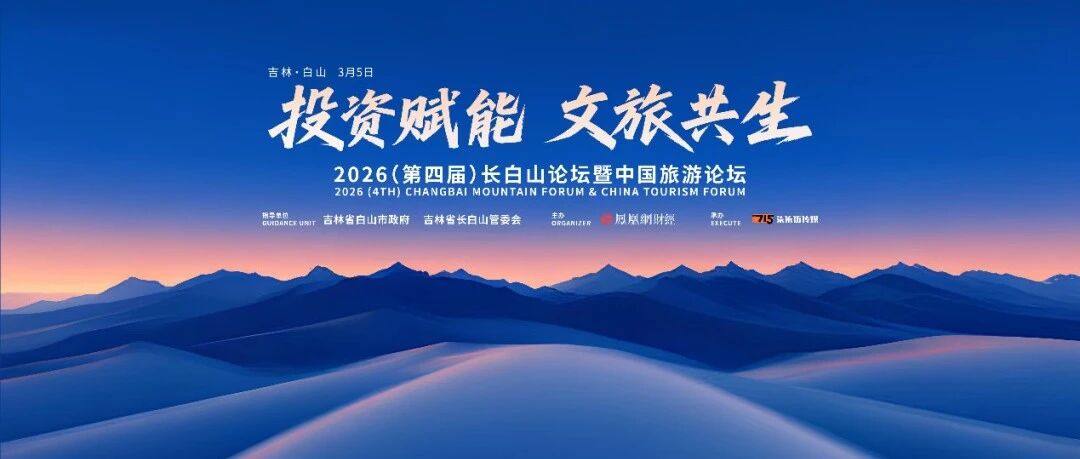
Group 1 - The article emphasizes the transformative power of a new technological revolution reshaping the global industrial landscape amidst geopolitical fluctuations and supply chain restructuring [1] - It highlights the integration of capital, technology, and consumption as barriers dissolve, leading to cross-industry innovation opportunities in China [1] - The article discusses the Northeast revitalization strategy as a significant national regional strategy, leveraging its industrial foundation, natural resources, and unique geographical advantages to find new engines of growth [1] Group 2 - The 2026 Changbai Mountain Forum will focus on "Investment Empowerment and Cultural Tourism Symbiosis," aiming to gather insights and consensus on investment trends and industrial futures in the post-pandemic global economy [1] - The forum will feature prominent experts and entrepreneurs discussing key topics such as "AI Empowering New Productive Forces" and "Capital-Driven Brand Growth" [2] - A closed-door meeting led by economist Fu Peng will delve into the wealth secrets of the AI era, exploring how AI technology can reshape the industrial landscape and drive new productive forces [2]
你看不到我们最近更新的文章!?那八成是因为没做这个
付鹏的财经世界· 2026-01-23 23:05
Group 1 - The article highlights changes in the WeChat public account's push notification rules, which may cause users to miss new content unless they mark the account as a star [1][2] - Users are encouraged to take a moment to star the account "付鹏的财经世界" to ensure they receive timely updates [3] - The article provides a step-by-step guide on how to set the account as a star for immediate notifications [4][6][9][16] Group 2 - The article emphasizes the importance of staying connected in an algorithm-driven environment to avoid missing important information [2] - It outlines two methods for users to star the account, ensuring they do not miss any updates [10][14] - The final call to action encourages users to quickly set the star mark to stay informed about the latest market insights [17]

2025微博财经之夜--发言实录
付鹏的财经世界· 2026-01-15 16:01
Core Viewpoint - The discussion emphasizes the transformation of productivity, production relations, and global order, highlighting the importance of technological advancements and their impact on economic structures [4][12]. Group 1: Productivity and Technological Advancements - The past decade has seen significant shifts in productivity, with a focus on technological revolutions that began around 2015, marking a new industrial and technological era [7][9]. - The emergence of AI and its foundational technologies, such as ChatGPT, represents a critical turning point in productivity enhancement, akin to historical technological milestones [10][11]. - The investment in technological infrastructure is crucial for future productivity gains, paralleling historical discussions on infrastructure's role in economic development [11][12]. Group 2: Production Relations and Economic Structures - The discourse highlights the misalignment of production relations globally, with countries facing challenges in balancing productivity gains with economic realities [13][14]. - The need for a human-centered approach in production relations is emphasized, advocating for increased welfare and compensation to ensure stability in economic systems [14]. - The ongoing tension between productivity advancements and existing production relations suggests that without addressing these discrepancies, economic stability may be at risk [13][14]. Group 3: Global Order and Economic Implications - The current global economic order is under scrutiny, with the potential for significant upheaval if productivity advancements do not align with production relations [12][13]. - The discussion suggests that the future of global economic stability hinges on the successful integration of technological advancements into existing economic frameworks [12][14]. - The potential for a new world order is contingent upon how countries adapt their production relations in response to technological changes [14].

全球化红利与保守转向:门罗主义背后的价格与数量博弈
付鹏的财经世界· 2026-01-14 12:51
Group 1 - The article discusses the benefits of multilateralism and globalization, emphasizing the multiplication effect of price and quantity, where a leading entity can set favorable prices while expanding market size through cooperation [3][4][5] - It highlights the ideal scenario where multilateralism enhances economies of scale, allowing dominant countries to maintain high marginal profits and achieve absolute gains while fostering relative prosperity for followers [5][6] - The article also addresses the challenges posed by technological spillovers and productivity diffusion, which can erode the core advantages of leading countries, leading to increased competition and potential internal conflicts [6][10] Group 2 - The concept of Monroe Doctrine-like strategies is introduced, suggesting that protectionism can be a rational response to maintain price stability by sacrificing some market quantity [9][10] - The article reflects on the shift towards a conservative path in the U.S., characterized by economic protectionism and a focus on core strengths, while still benefiting from technological advancements that drive productivity [14][15] - It concludes that the future of globalization lies in finding a dynamic balance between price and quantity, openness and protection, as well as sharing and monopolization [15]