数字风控

Search documents
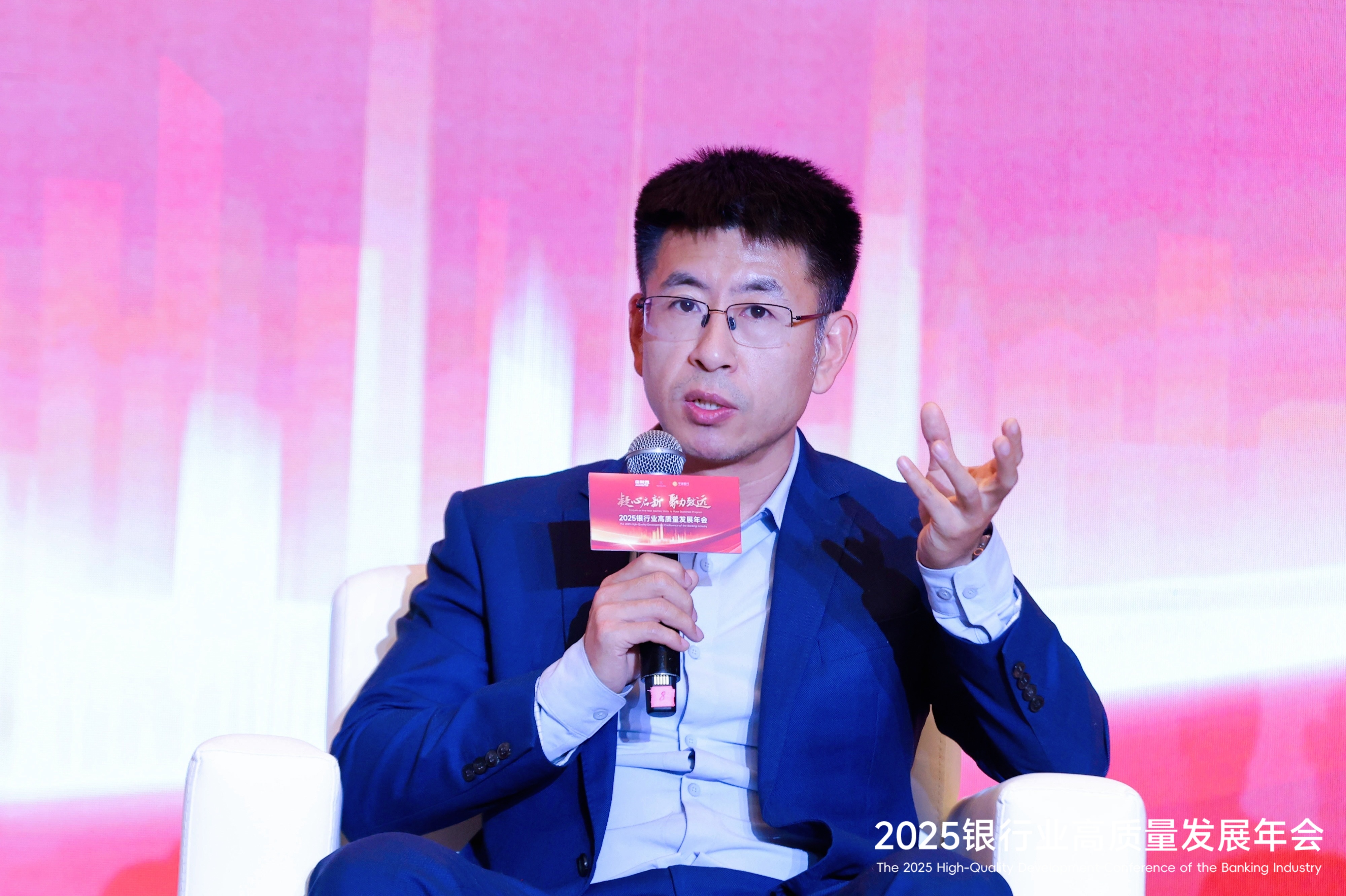
百信银行周北春:AI成银行新质生产力 数字员工重塑风控体系
Jin Rong Jie· 2025-12-28 14:34
Group 1 - The "2025 Banking Industry High-Quality Development Conference" was successfully held in Beijing, focusing on themes such as serving the real economy, digital transformation, AI+financial innovation, and risk prevention [1] - The conference gathered regulatory experts, academic elites, industry leaders, and representatives from technology companies to discuss strategies for high-quality development in the banking sector [1] Group 2 - Zhou Beichun, General Manager of the Big Data Department at Citic Baixin Bank, shared insights on the application of AI in intelligent risk control, anti-fraud, and non-performing asset disposal during a roundtable forum [3] - Citic Baixin Bank, as the first state-owned direct bank and digital native bank in China, has positioned itself as an "AIBank," focusing on data and technology as core competitive advantages in the online, small-amount, high-frequency consumer finance business [3] - The bank has developed a four-layer digital risk control system over eight years, achieving a good industry standard, but faces challenges such as a limited model team of only 22 people managing over 200 quantitative models [3] Group 3 - Citic Baixin Bank aims to reshape its digital risk control system using AI, transitioning from merely experimenting with new technologies to reengineering business processes [4] - Zhou Beichun emphasized that AI has evolved from a tool to a new productive force, indicating that it will certainly replace junior employees in the banking sector [4] - The bank faces two main challenges in AI application: computational power and the need for a fundamental change in AI training models, advocating for treating AI as a highly intelligent digital employee rather than just a tool [4]

工行钦州分行:谱写“五篇大文章” 金融“活水”润泽实体经济
Zhong Guo Jin Rong Xin Xi Wang· 2025-09-17 12:16
Core Viewpoint - The Industrial and Commercial Bank of China (ICBC) Qinzhou Branch is committed to enhancing financial services for the real economy, focusing on green transformation, inclusive finance, and technological innovation to support high-quality economic development [1][2][3][4][5]. Group 1: Green Transformation - The bank prioritizes green credit as a key focus, establishing a dedicated team to meet the financing needs of green low-carbon enterprises and optimizing the credit structure [1]. - Green financial indicators are included in the bank's KPI assessments, with special incentive plans to boost marketing efforts [1]. - As of August 2025, the bank's green loan balance reached 3.558 billion yuan, significantly contributing to energy conservation, environmental protection, and circular economy development in the region [1]. Group 2: Inclusive Finance - The bank enhances operational efficiency by closely listening to the needs of small and micro enterprises, optimizing resource integration, and strengthening collaboration across various lines [2]. - As of August, the inclusive loan balance was 1.838 billion yuan, with an increase of 220 million yuan since the beginning of the year, demonstrating strong support for private small and micro enterprises [2]. Group 3: Technological Empowerment - The bank focuses on the high-quality development of the manufacturing sector, implementing targeted strategies and enhancing supply chain finance to improve industry resilience [3]. - As of August, the loan balance for technology-based enterprises (excluding bills) was 3.333 billion yuan, with an increase of 445 million yuan since the start of the year [3]. Group 4: Pension Services - The bank develops a comprehensive pension product system, addressing the needs of aging populations and enhancing employee training to improve communication skills regarding pension planning [4]. - The bank has successfully established a tripartite fund supervision mechanism for pension institutions, ensuring safe and efficient management of pre-receipt funds [4]. Group 5: Digital Risk Control - The bank promotes a comprehensive risk control system for inclusive finance, utilizing big data and AI to enhance risk identification and management [5]. - The integration of various data sources into a "data lake" improves decision-making capabilities and service efficiency, allowing staff to focus more on customer maintenance and precise marketing [5].

数字金融赋能 第五届数字金融科技大会成功举办
Zheng Quan Ri Bao Wang· 2025-09-12 13:25
Core Insights - The 5th Digital Financial Technology Conference and the 1st "BRICS+" Digital Trade Cooperation Exchange Conference were successfully held in Xiamen, focusing on the theme "Intelligent Connection of BRICS and Digital Driving of the Future" [1] Group 1: Event Overview - The event was supported by the Xiamen Municipal Committee of Political Consultative Conference and organized by various local organizations including the Xiamen Science and Technology Economic Promotion Association and Bai Ge Online [1] - The conference gathered experts, scholars, and representatives from financial institutions to discuss topics such as artificial intelligence, data elements, digital risk control, and the transformation of financial technology achievements [1] Group 2: Strategic Collaborations - Bai Ge Online signed strategic cooperation agreements with Fujian Big Data Group and China Unicom Xiamen Company, aiming to promote the integration of digital technology with the real economy and social livelihood [1] - The conference emphasized the importance of enhancing the enabling role of financial technology in the real economy and optimizing the digital financial service ecosystem [1]
数字金融赋能“金砖+”合作 第五届数字金融科技大会在厦门举办
Sou Hu Cai Jing· 2025-09-12 01:26
Group 1 - The fifth Digital Financial Technology Conference and the first "BRICS+" Digital Trade Cooperation Exchange Conference were held in Xiamen, focusing on the theme "Intelligent Connection of BRICS, Driving the Future" [1] - The conference gathered experts, scholars, and representatives from enterprises and financial institutions to discuss topics such as artificial intelligence, data elements, digital risk control, and the construction of cross-border service channels for "BRICS+" enterprises [1][2] - The event aimed to optimize the digital financial service ecosystem and enhance the empowerment of financial technology on the real economy, injecting new momentum into global digital economic development [1] Group 2 - A series of project signing ceremonies took place, with a focus on leveraging data elements and artificial intelligence to promote the integration of digital technology with the real economy and social livelihood [2] - The conference emphasized the development of digital solutions in areas such as computing power services, digital risk management, low-altitude economy, and new energy travel insurance payment technology [2] - The event was co-hosted by the Xiamen Science and Technology Economic Promotion Association and Baige Online (Xiamen) Digital Technology Company, highlighting the collaborative efforts in the digital finance sector [3]
浦发银行一分行三任行长同时被罚!“数字风控”为何难见成效
Nan Fang Du Shi Bao· 2025-04-10 07:52
Group 1 - The core issue is that seven employees of SPDB Anyang Branch, including three former presidents, have been penalized for inadequate management of personal consumption loans and non-performing loans [2][3][4] - The penalties include a five-year ban from the banking industry for a customer manager and warnings and fines for other executives, indicating serious compliance and internal control issues within the branch [3][4] - The branch has previously been fined 2.45 million yuan for similar issues, highlighting a pattern of regulatory non-compliance [3][6] Group 2 - SPDB has received a total of 25 regulatory fines this year, amounting to 5.59 million yuan, with significant penalties for both institutional and individual violations [6] - The bank has initiated a "digital risk control" strategy under new leadership, aiming to enhance risk management through digital and intelligent tools [6][7] - Despite the implementation of digital risk control measures, ongoing violations suggest a disconnect between strategic planning and execution at the branch level, posing challenges for effective risk management [7]