
消费金融业务

Search documents
陆控复牌程序稳步推进 多项关键工作获实质进展
Jiang Nan Shi Bao· 2026-01-29 08:16
Core Viewpoint - The company has made significant procedural progress in meeting the resumption guidance requirements, including obtaining an extension for annual report submission and ongoing audits, while maintaining normal business operations [1][2] Group 1: Financial Reporting and Auditing - The company successfully received approval from the NYSE for an extension on the annual report submission, primarily due to the need for comprehensive audits by the new auditor, Ernst & Young, covering three consecutive fiscal years from 2022 to 2024 [1] - The management emphasizes the importance of the quality of financial information disclosure, viewing the reasonable delay in audit completion as a common and professional arrangement in the capital market [1] Group 2: Governance and Internal Control - The company is actively enhancing its governance framework by hiring Deloitte as an independent advisor to conduct a systematic review and improvement of its internal control system [1] - This initiative reflects the company's commitment to a "quality first, prudent operation" strategy, aiming to strengthen the governance foundation for long-term development with a focus on investor interests [1] Group 3: Business Performance - The core consumer finance business continues to show growth, with a year-on-year increase in loan balances of 19.0% and an expanding scale of new loans, validating the effectiveness and resilience of the "small and micro + consumer finance" dual-driven model in serving the real economy [2] - As the company steadily implements its established procedures, it is expected to alleviate market concerns and achieve the resumption guidance goals sooner [2]
看不见的“斩杀线”:600家银行退场背后
Xin Lang Cai Jing· 2026-01-05 08:24
Core Insights - The invisible "kill line" is increasingly dragging more banks into historical obscurity, with 312 out of 3529 evaluated banks classified as high-risk, representing only 2.1% of the total banking assets as of mid-2025 [1][12] - The overall operation of banking institutions in China is stable, with financial risks being generally controllable, largely due to continuous reforms over the past few years [2][13] - The banking industry is facing multiple challenges, including a low interest rate environment, insufficient effective demand, real estate risks, and local debt issues, marking the end of the "easy profit" era [3][14] Asset Quality Challenges - As of Q3 2025, the non-performing loan (NPL) ratio for commercial banks slightly increased to 1.52%, with the proportion of special mention loans rising to 2.20%, indicating structural risks [4][15] - Real estate risks are still being released, with one listed bank's real estate NPL ratio soaring to 21.32% in H1 2025, and some state-owned banks exceeding a 5% NPL ratio in real estate loans [4][15] - Retail credit risks are accumulating, with all six major state-owned banks experiencing rising personal housing loan NPL ratios, driven by slowing household income and fluctuating housing prices [4][16] Profitability Compression - The continuous narrowing of net interest margins is approaching a critical point for bank profitability, with the net interest margin at 1.42% as of Q3 2025, still at a historical low [5][17] - Business transformation efforts have not significantly altered the reality of a single income structure, with most small and medium-sized banks deriving over 80% of their net interest income [5][17] - The average interest rate for newly issued corporate loans dropped to around 3.1% in October 2025, complicating the balance between supporting the real economy and maintaining profitability [6][17] Digital Transformation Gap - Digital transformation has become a survival issue, with banks that fail to keep pace being rapidly eliminated by the "kill line" [8][18] - The six major banks have invested over 600 billion yuan in financial technology, while many small banks invest less than 100 million yuan annually, hindering their ability to upgrade infrastructure [8][19] - The gap in transformation quality is critical, with leading banks achieving large-scale application of innovative technologies, while most small banks remain at a basic level of digitalization [8][19] Industry Polarization - The trend of "capacity reduction" in the banking industry is becoming increasingly evident, with resource concentration trends favoring large banks [21][22] - As of H1 2025, the six major banks accounted for over 60% of new loans and over 55% of deposits, exacerbating the first-mover advantage [21][22] - Smaller banks are losing deposits significantly due to a lack of brand influence, while large banks dominate quality credit projects, forcing smaller banks into riskier areas [21][22]
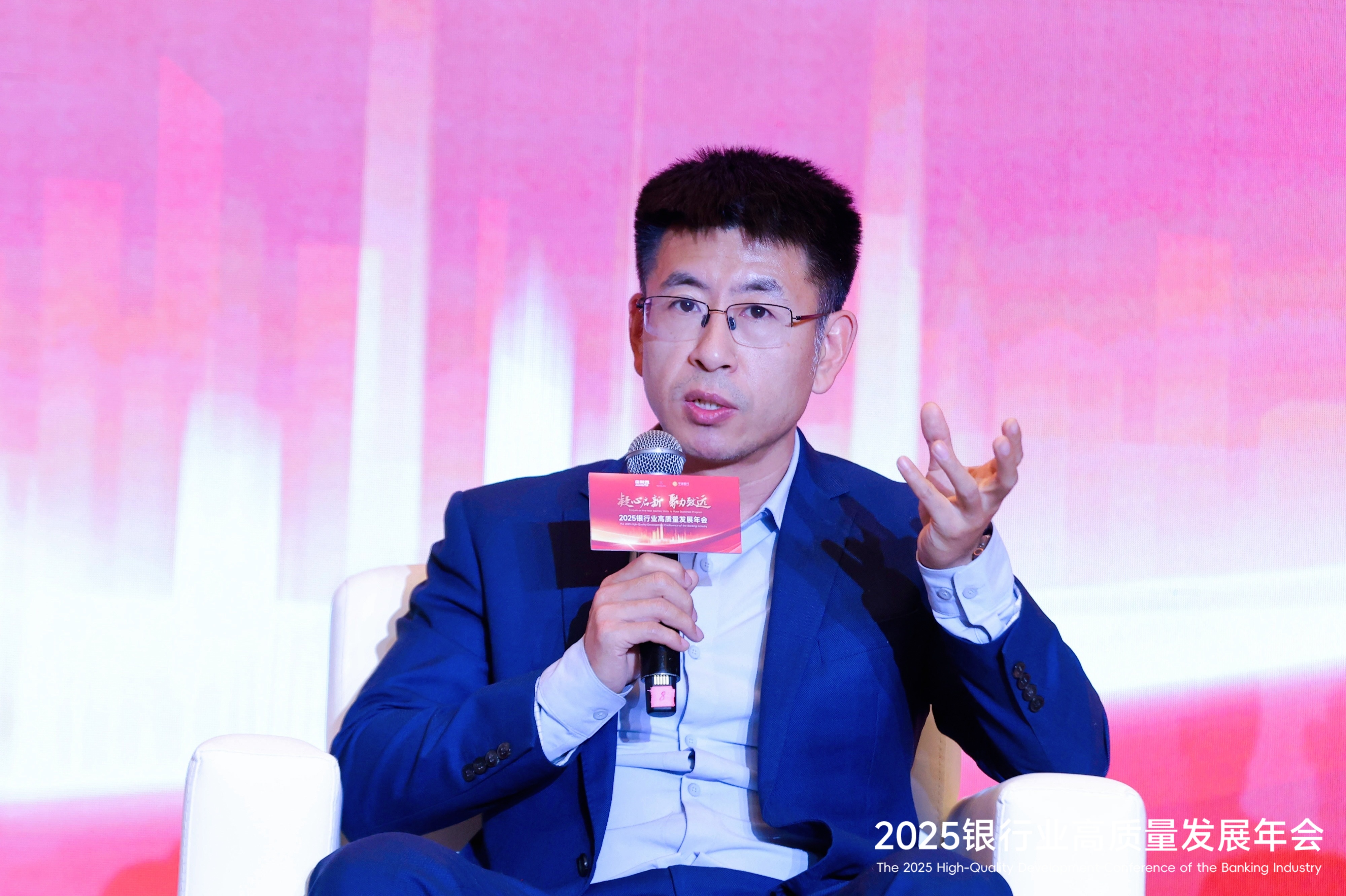
百信银行周北春:AI成银行新质生产力 数字员工重塑风控体系
Jin Rong Jie· 2025-12-28 14:34
Group 1 - The "2025 Banking Industry High-Quality Development Conference" was successfully held in Beijing, focusing on themes such as serving the real economy, digital transformation, AI+financial innovation, and risk prevention [1] - The conference gathered regulatory experts, academic elites, industry leaders, and representatives from technology companies to discuss strategies for high-quality development in the banking sector [1] Group 2 - Zhou Beichun, General Manager of the Big Data Department at Citic Baixin Bank, shared insights on the application of AI in intelligent risk control, anti-fraud, and non-performing asset disposal during a roundtable forum [3] - Citic Baixin Bank, as the first state-owned direct bank and digital native bank in China, has positioned itself as an "AIBank," focusing on data and technology as core competitive advantages in the online, small-amount, high-frequency consumer finance business [3] - The bank has developed a four-layer digital risk control system over eight years, achieving a good industry standard, but faces challenges such as a limited model team of only 22 people managing over 200 quantitative models [3] Group 3 - Citic Baixin Bank aims to reshape its digital risk control system using AI, transitioning from merely experimenting with new technologies to reengineering business processes [4] - Zhou Beichun emphasized that AI has evolved from a tool to a new productive force, indicating that it will certainly replace junior employees in the banking sector [4] - The bank faces two main challenges in AI application: computational power and the need for a fundamental change in AI training models, advocating for treating AI as a highly intelligent digital employee rather than just a tool [4]

债市波动拖累投资收益 银行非息收入增长现分化
Zhong Guo Zheng Quan Bao· 2025-11-06 22:34
Core Viewpoint - In a low interest rate environment, banks are increasingly relying on non-interest income as a key driver for revenue growth, with significant disparities emerging among different banks in terms of non-interest income performance [1] Non-Interest Income Overview - In the first three quarters of this year, 42 listed banks achieved a total non-interest income of 1.22 trillion yuan, an increase of over 300 billion yuan compared to the first half of the year and an increase of 583 billion yuan year-on-year [1] - Among these banks, only 18 reported positive year-on-year growth in non-interest income, while 8 banks experienced a decline in investment income due to bond market fluctuations, and 31 banks reported negative fair value changes [1] Fee and Commission Income - A breakdown of non-interest income shows that net fee and commission income, investment income, and fair value changes significantly impact overall non-interest income [2] - In the first three quarters, 27 banks reported positive year-on-year growth in net fee and commission income, with 12 banks achieving growth rates exceeding 10% [2] - Notable performers include Changshu Bank and Ruifeng Bank, with increases of 364.75% and 162.66% respectively, while major state-owned banks like Agricultural Bank, Postal Savings Bank, and Bank of China also reported steady growth [2] Impact of Bond Market Fluctuations - The bond market's volatility has negatively affected investment income and fair value changes for several banks, leading to declines in non-interest income and overall revenue growth [3] - For instance, China Merchants Bank reported a 4.23% year-on-year decline in non-interest net income, primarily due to reduced returns from bond and fund investments [3] - Other banks, such as Ping An Bank and Huaxia Bank, also reported significant declines in revenue attributed to market fluctuations affecting their non-interest income [3] Regional Bank Performance - Regional banks like Qingdao Bank faced similar challenges, with a year-on-year decrease in investment income and fair value changes due to weaker bond market performance [4] - Conversely, some banks, such as China Construction Bank and Changsha Bank, reported over 100% year-on-year growth in investment income [4] Future Market Outlook - Analysts suggest that the bond market is likely to remain volatile in the short term, with fluctuations in fair value changes being more pronounced for joint-stock and regional banks due to their higher proportion of FVTPL assets [5] - Experts recommend that banks focus on differentiated operations and niche markets to support non-interest income growth, while also balancing short-term gains with long-term risks [6] - The outlook for the bond market indicates a gradual return to fundamentals and liquidity, but uncertainties remain regarding the growth of other non-interest income sources [6]
债市波动拖累投资收益银行非息收入增长现分化
Zhong Guo Zheng Quan Bao· 2025-11-06 20:15
Core Viewpoint - In a low interest rate environment, banks are increasingly relying on non-interest income to drive revenue growth, with significant disparities in performance among different banks [1][2]. Non-Interest Income Overview - In the first three quarters of the year, 42 listed banks achieved a total non-interest income of 1.22 trillion yuan, an increase of over 300 billion yuan compared to the first half of the year and an increase of 583 billion yuan year-on-year [1]. - Only 18 banks reported a year-on-year increase in non-interest income, while 8 banks experienced a decline in investment income due to bond market volatility, and 31 banks reported negative fair value changes [1][2]. Fee and Commission Income - Among the non-interest income components, net fee and commission income, investment income, and fair value changes significantly impacted overall non-interest income [1]. - 27 banks reported a year-on-year increase in net fee and commission income, with 12 banks showing growth exceeding 10%. Notably, Changshu Bank and Ruifeng Bank saw increases of 364.75% and 162.66%, respectively [1][2]. Wealth Management and Consumer Finance - The recovery in domestic consumption and capital markets has created opportunities for wealth management and consumer finance, contributing to the growth of some banks' intermediary business income [2]. - China Bank attributed its growth in net fee and commission income to strong performance in agency, custody, and other entrusted businesses [2]. Impact of Bond Market Volatility - The bond market's fluctuations have negatively affected investment income and fair value changes for several banks. For instance, 8 banks reported a year-on-year decline in investment income, and 31 banks had negative fair value changes [2][3]. - For example, China Merchants Bank reported a 4.23% year-on-year decline in non-interest net income, with a 0.90% increase in net fee and commission income but an 11.42% decrease in other net income due to reduced bond and fund investment returns [2]. Regional Banks' Performance - Regional banks like Qingdao Bank also faced challenges, with a year-on-year decrease in investment income and fair value changes due to weaker bond market performance [3]. - Conversely, some banks, such as China Construction Bank and Changsha Bank, reported over 100% year-on-year growth in investment income [3]. Future Outlook - Analysts suggest that the bond market is likely to remain volatile in the short term, with various factors creating disturbances [4]. - The overall liquidity in the market is expected to remain favorable for the bond market, but the performance of risk assets may weaken the attractiveness of bonds [4][5].
陆控第三季度新增贷款总额按年增13%,新高管加盟持续深化“质量为先 审慎经营”战略
Xin Lang Cai Jing· 2025-11-02 11:04
Core Insights - The company has appointed two senior executives, Ji Xiang as Co-CEO and Wu Tao as Executive Vice President and Chief Marketing Officer, to enhance its management team and drive its "micro + consumer finance" dual strategy [1][2] Group 1: Executive Appointments - Ji Xiang brings nearly 20 years of experience in retail credit, risk management, and investment management from McKinsey & Company, where he served as a global partner [1][2] - Wu Tao has over 30 years of experience in property insurance, automotive services, and the internet industry, previously holding key positions at Ping An Property & Casualty Insurance and as CEO of Autohome [2] Group 2: Strategic Focus - The appointments aim to strengthen the company's strategic execution capabilities and enhance its operational efficiency, aligning with its commitment to "quality first and prudent management" [2] - Ji Xiang's strategic thinking and international perspective, combined with Wu Tao's practical experience in channel management, are expected to create a synergy that supports high-quality business development [2] Group 3: Financial Performance - As of September 30, the company enabled new loans totaling RMB 56.9 billion, a 12.8% increase from 2024, with approximately 28.5 million borrowers [3] - Consumer finance business showed strong growth with new loans of RMB 31.7 billion in Q3, a year-on-year increase of 20.1%, while small micro-loan business also showed signs of recovery with a 26% quarter-on-quarter increase [3] - The effective complementarity of the two business lines validates the resilience and foresight of the "micro + consumer finance" dual-driven model [3]
“信托+消费” 在创新与合规间找到平衡点
Jin Rong Shi Bao· 2025-08-28 02:11
Core Insights - The consumer loan business of trust companies is experiencing growth, accompanied by an increase in business complaints and compliance risks [1][5][6] - Some trust companies are entering the consumer finance sector while others are reducing their scale or exiting due to regulatory pressures [2][3][4] Group 1: Industry Trends - Approximately 53 trust companies are involved in inclusive finance, with 23 companies engaging in consumer finance in 2023, resulting in a business scale of 453.67 billion yuan [2] - The total scale of trust funds reached 19.95 billion yuan by the end of Q2 2024, with 14.83% allocated to financial institutions, marking a 35% year-on-year increase [2] - Trust loan scale reached 3.53 trillion yuan by the end of 2024, showing a growth trend [2] Group 2: Company Performance - Tianjin Trust, Guomin Trust, and Huaxin Trust led in consumer loan business scale in the first seven months of the year, with respective scales of approximately 37.3 billion yuan, 22.8 billion yuan, and 19.6 billion yuan, all more than doubling from the previous year [3] - Guomin Trust reached 196.3 million customers through inclusive finance projects in 2024, with a year-end scale of approximately 26.15 billion yuan [4] Group 3: Compliance and Risks - The "assisted loan" model used by trust companies poses compliance risks, as it relies heavily on partnerships with other financial institutions [5][6] - Complaints related to consumer finance have increased, with Guomin Trust receiving 9,897 complaints in 2024, primarily in the consumer finance sector [6] - Legal and operational risks are prevalent, including issues with electronic contract validity and reliance on third-party risk management [6] Group 4: Future Directions - Trust companies are encouraged to explore business models that align with regulatory guidance and market demand, such as asset securitization and prepayment fund management [7][8] - The industry is expected to play a positive role in boosting domestic demand, with a focus on providing targeted financial services rather than just loans [8]