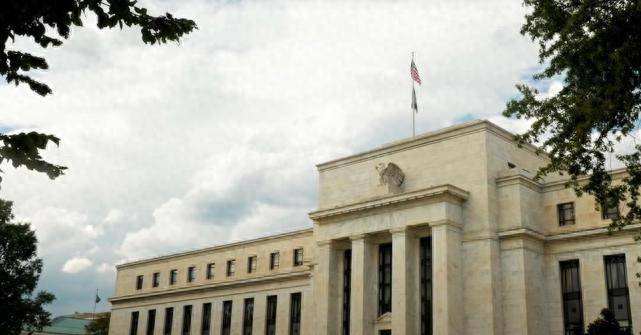
数据缺失

Search documents
今晚非农又没了?美国政府停摆持续,美联储12月降息“难上加难”
Hua Er Jie Jian Wen· 2025-11-07 12:52
Core Insights - The U.S. government shutdown has entered its sixth week, leading to the inability of the Labor Department to release critical non-farm payroll reports for the second consecutive month, creating unprecedented challenges for the Federal Reserve's interest rate decisions in December [1][3][5] - Economists express concerns that key economic data, particularly the unemployment rate for October, may never be published due to the shutdown, resulting in a significant information void for policymakers [1][2][5] Group 1: Economic Data Impact - The shutdown has resulted in a complete halt of government data, making it difficult for policymakers, investors, economists, and the general public to understand the economic situation clearly [3] - The Labor Department's data collection methods differ between business surveys and household surveys, complicating the collection of reliable unemployment data [2][4] - There is a growing risk that the Labor Department may abandon the collection of October data altogether, focusing instead on November data, which would mean the October unemployment rate may never be reported [2][4][5] Group 2: Federal Reserve's Dilemma - The lack of reliable data is exacerbating existing divisions within the Federal Reserve regarding monetary policy, with officials expressing differing views on the need for interest rate cuts [1][8] - Market expectations indicate a slightly higher than 50% chance of a rate cut in December, but the absence of key data complicates the decision-making process for the Fed [1][8] - The Fed's upcoming meeting in December may lack reliable employment data, contrasting with the situation in October, which could lead to further policy disagreements among officials [9] Group 3: Alternative Data Sources - In the absence of official data, the market is turning to private sector data, such as ADP's employment figures, which indicate weak job growth concentrated in specific sectors like education and healthcare [6][7] - However, private data cannot fully substitute for official statistics, particularly regarding inflation, leading to concerns about the quality and reliability of the available information [6][7] - The quality of government data is under scrutiny, with some officials fearing that this could lead to more aggressive rate cuts from those worried about labor market conditions, while others may advocate for a pause due to inflation concerns [7][8]
美国政府停摆,非农数据缺席,全球市场如何应对这场“政治风暴”
Sou Hu Cai Jing· 2025-10-08 10:55
Group 1 - The government shutdown disrupts the flow of essential economic data, which serves as a vital lifeline for policymakers and investors [1][7] - The monthly employment report, including key indicators like non-farm payroll growth and unemployment rates, is crucial for understanding the job market's health [3][5] - The Labor Statistics Bureau (BLS) will pause its operations during the shutdown, halting the release of significant economic data, including the September employment report [5][21] Group 2 - The political deadlock in Washington has led to an unprecedented "information famine" in global markets, with critical economic indicators like retail data and GDP revisions also facing delays [7][24] - The absence of data creates a scenario where market participants must adapt their decision-making frameworks, leading to a revolution in decision-making tools [9][13] - Investors are turning to alternative data sources, such as private sector employment data and commodity prices, to gauge economic conditions in the absence of official reports [15][19] Group 3 - Institutional investors are restructuring their portfolios defensively, shortening the duration of government bonds and increasing holdings in inflation-protected securities [17][19] - Ordinary investors are advised to maintain a cash buffer and adopt a cautious approach to building positions in the market [19][27] - The political dysfunction in Congress is identified as a core risk indicator for the global economy, with potential GDP growth impacts from the shutdown [24][29] Group 4 - The Federal Reserve's reliance on data for policy decisions is severely undermined by the current data vacuum, complicating upcoming monetary policy meetings [21][22] - The current environment is markedly different from previous shutdowns, with higher interest rates amplifying the risks of policy missteps [22][24] - The ongoing "data darkness" serves as a stress test for global markets, compelling participants to rethink and evolve their decision-making models [26][29]