数智风控

Search documents
“十五五”期间银行业科技金融创新的四大维度
2 1 Shi Ji Jing Ji Bao Dao· 2026-01-17 14:19
Core Viewpoint - The importance of technology finance has been elevated to unprecedented heights as it becomes a strategic focus in building a financial powerhouse, with significant investments and policies aimed at enhancing the synergy between technology, industry, and finance [1][2]. Group 1: Current State of Technology Finance - Since 2025, a series of policies have been introduced to promote high-quality development in technology finance, including specific measures for service mechanisms, product systems, and risk control capabilities [2]. - New technological revolutions are reshaping the global economic landscape, necessitating innovative financial services to support emerging industries such as quantum technology and biomanufacturing [2]. Group 2: Challenges in Banking Sector - Despite an improving policy environment, the banking sector faces structural challenges, including a mismatch between rapid industrial development and banks' professional expertise [3]. - The traditional credit approval processes are lengthy and slow, failing to meet the diverse needs of technology enterprises at different stages [3]. - There is a need for enhanced collaborative innovation capabilities to address the limited product offerings against diverse financing demands [3]. Group 3: Systematic Innovation Practices - Banks are adopting systematic innovation practices across four dimensions, including empowering technology industry development and providing tailored services for technology enterprises [4]. - Innovative risk mitigation mechanisms are being explored, such as using intangible assets like patents as financing collateral [4]. Group 4: Future Outlook for Banking Sector - The banking sector is expected to drive high-quality development in technology finance by establishing internal mechanisms that align with modern industrial systems [6]. - A focus on differentiated credit policies is essential, adapting to the characteristics of regional industrial clusters and market changes [7]. - The establishment of a comprehensive technology finance service ecosystem is crucial, integrating various financial services and stakeholders [9]. Group 5: Policy Evolution Trends - Future technology finance policies are likely to emphasize detailed execution, creating clear operational guidelines for financial institutions and enterprises [14]. - The construction of a more comprehensive technology finance ecosystem involving multiple stakeholders will be prioritized [15]. - Policies will focus on providing lifecycle support for technology enterprises, ensuring they receive appropriate financial backing at different growth stages [16].
永安期货入选“十四五”时期全国金融创新优秀案例
Zheng Quan Shi Bao Wang· 2025-11-28 08:46
Core Viewpoint - The "Yong'an Futures 'Fengsui: Supervision Network'" project has been recognized as an excellent case of financial innovation during the 14th Five-Year Plan period, highlighting the company's commitment to risk management and innovation in a challenging market environment [1][2]. Group 1: Project Overview - The "Fengsui: Supervision Network" management platform is a self-developed, comprehensive risk management system aimed at safeguarding corporate value and supporting high-quality development [2][3]. - The system was initiated in April 2023, with a trial run in September 2023 and the 1.0 version set to launch on December 1, 2023, followed by the 2.0 version in March 2025 [9]. Group 2: Risk Management Features - The platform includes five major risk application centers that provide comprehensive coverage of risk management throughout the entire lifecycle, integrating risk identification, measurement, response, monitoring, early warning, and disposal capabilities [3]. - The Panorama Display Center offers a comprehensive view of business data and risk information through dynamic dashboards and multi-dimensional trend analysis, aiding in major business decision-making [4]. - The Indicator Warning Center acts as a "risk sentinel," monitoring hundreds of risk indicators across the company, enhancing the timeliness and accuracy of risk monitoring [5]. - The Event Response Center focuses on the visual analysis of risk events, ensuring early detection, exposure, and resolution of risks [6]. - The Data Application Center facilitates the generation of various risk reports for regulatory bodies and stakeholders, ensuring efficient and accurate data output [7]. - The Comprehensive Management Center serves as the logistical support hub for risk management, ensuring the standardization and traceability of risk management practices [8]. Group 3: Strategic Alignment - The "Fengsui: Supervision Network" platform aligns with the company's customer-centric strategy, enhancing compliance and risk control to empower business development [9][10]. - The company's risk management philosophy emphasizes that everyone is a risk officer, promoting a culture of compliance, integrity, professionalism, stability, and responsibility [10].

九卦 | 浙商银行:提名陈海强任董事长
Sou Hu Cai Jing· 2025-11-17 13:59
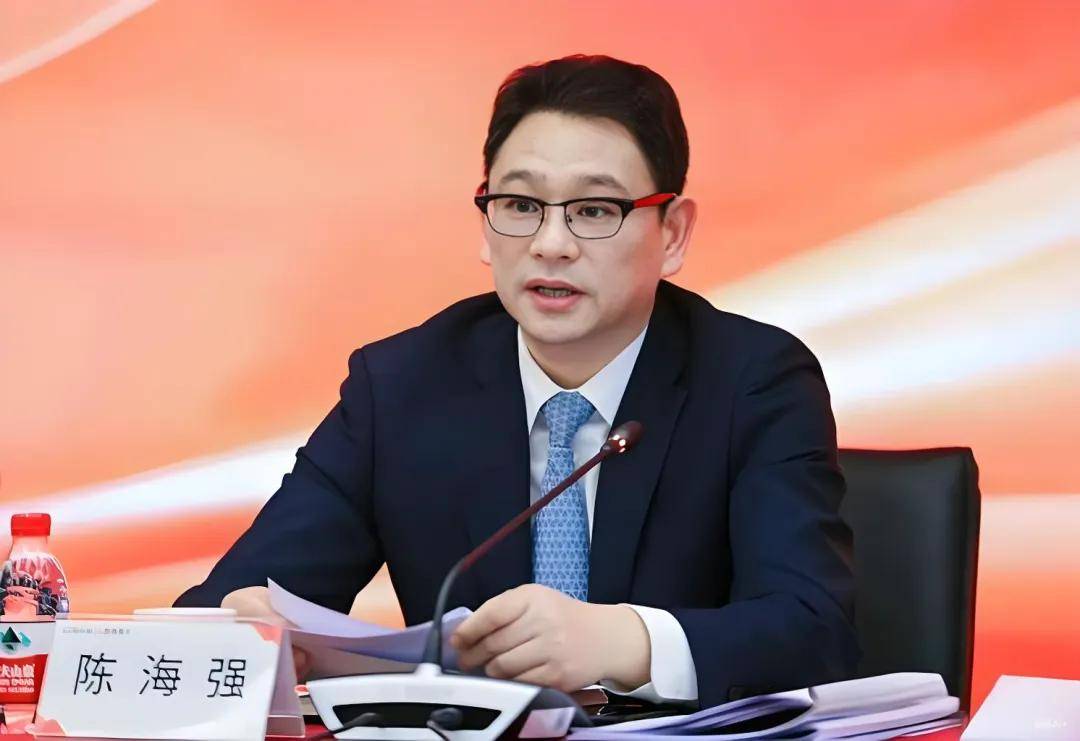
Core Viewpoint - Zhejiang Zheshang Bank has appointed Chen Haiqiang as the new Party Secretary and proposed him as the Chairman, following the resignation of the previous chairman, Lu Jianqiang [1][3]. Group 1: Leadership Changes - Chen Haiqiang was nominated as the President of Zhejiang Zheshang Bank in April and has been acting as Chairman since July [3]. - Chen Haiqiang has extensive experience in the financial sector, having held various positions in both national and local banks [3]. Group 2: Financial Performance - As of the end of September, Zhejiang Zheshang Bank reported total assets of 3.39 trillion yuan, a year-on-year increase of 1.91% [3]. - The bank achieved operating income of 48.931 billion yuan and a net profit attributable to shareholders of 11.668 billion yuan [3]. - The non-performing loan ratio improved to 1.36%, a decrease of 0.02 percentage points from the end of the previous year [3]. Group 3: Strategic Adjustments - The bank is adapting to external pressures by focusing on quality over quantity, shifting its asset structure towards low-risk and stable returns [4]. - It has moved from a focus on single-item returns to a strategy that emphasizes comprehensive returns through scenario-based approaches [4]. Group 4: Risk Management - Zhejiang Zheshang Bank is prioritizing risk control, particularly in key sectors like real estate, and is enhancing its risk management capabilities through AI and other technologies [5]. - The bank's approach is characterized by a prudent and stable risk preference, aiming for sustainable development [5].

慧点科技:数智技术重塑企业风险防控体系
Zhong Guo Chan Ye Jing Ji Xin Xi Wang· 2025-06-17 06:50
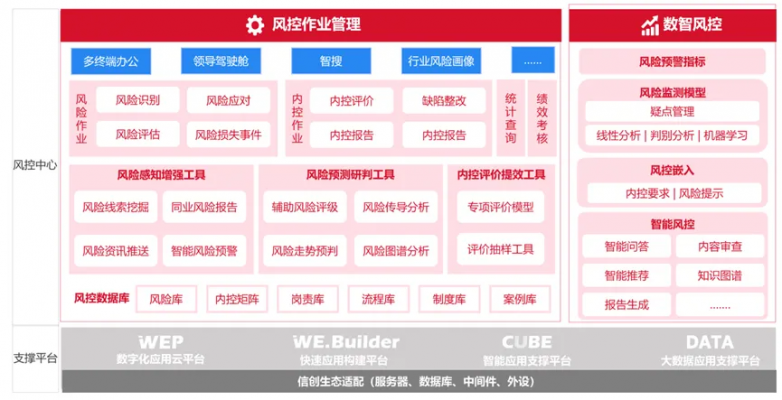
Group 1 - The State-owned Assets Supervision and Administration Commission (SASAC) has issued a notice regarding the construction and supervision of internal control systems for central enterprises by 2025, emphasizing the need for penetrating supervision and intelligent transformation to enhance internal control systems [1] - The notice encourages the exploration of digital intelligence methods to strengthen early identification, early warning, and early disposal of latent, hidden, and cross-sectional risks, thereby improving the ability to identify and warn against major risks [1] Group 2 - Huidian Technology's Smart Risk Control System V9 utilizes embedded technology, natural language processing (NLP), and big data mining to cover the entire process of risk management and internal control, promoting standardized management of risk and internal control business [2] - The system integrates risk prompts and internal control requirements into business systems, automatically alerting and intercepting abnormal operations such as qualification fraud and excessive approvals, thereby enhancing process control [2][4] - By collecting and analyzing internal and external data, the system provides strong support for risk prevention and efficient governance, ensuring stable and sustainable business operations [2] Group 3 - The Smart Risk Control System V9 addresses the disconnect between risk control and business execution by embedding internal control requirements and risk prompts into key business processes, such as contract signing and fund payment [4] - The system builds a risk transmission correlation model to dynamically simulate the transmission paths of risks within business chains and organizational structures, helping to prevent the "butterfly effect" of risks [8] Group 4 - The system implements continuous monitoring of risks in key areas such as bidding procurement, fund approval, and contract management through modeling tools and indicator warning analysis tools [9] - It includes monitoring for relatedness among bidders and checks for integrity in approval chains to identify risks such as collusion and bypassing necessary approval steps [10] Group 5 - Huidian Technology has over 20 years of experience in the management software sector and has served hundreds of clients across various industries, including manufacturing, energy, finance, and real estate, enhancing their risk prevention capabilities and governance levels [11]