整治拒收现金

Search documents
人民币现金收付新规,今起施行!
Sou Hu Cai Jing· 2026-02-02 21:39
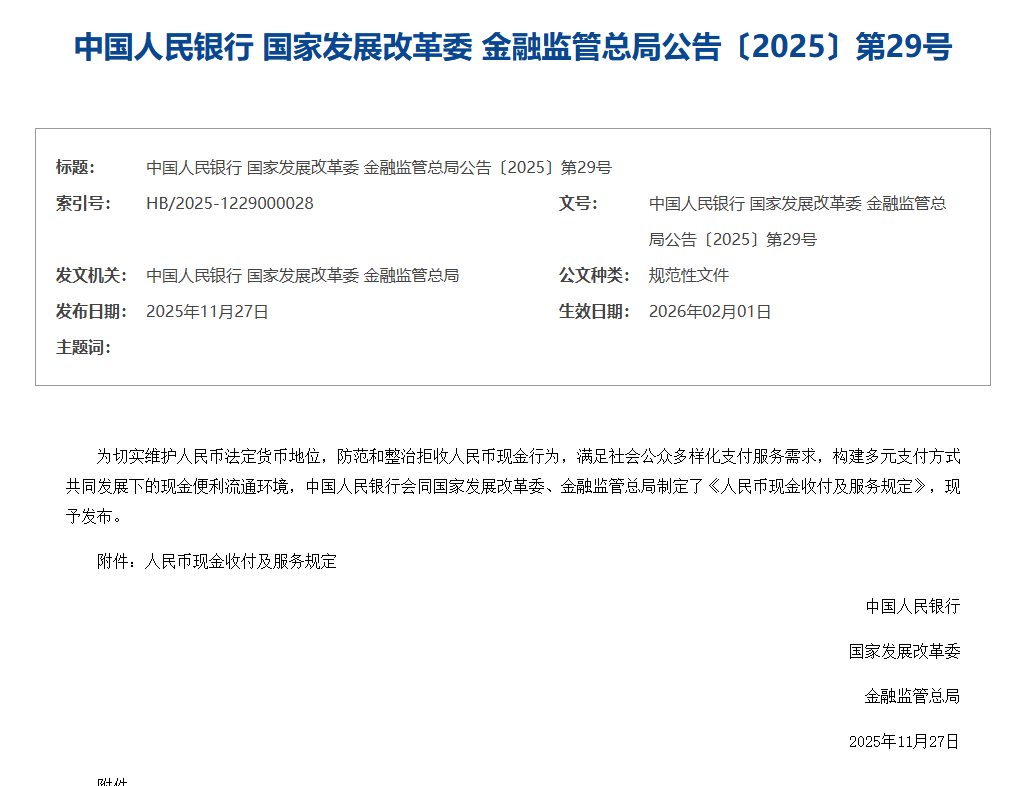
Core Viewpoint - The People's Bank of China, in collaboration with the National Development and Reform Commission and the Financial Regulatory Bureau, has established the "Regulations on Cash Payment and Service of Renminbi" to maintain the legal status of the Renminbi, prevent and rectify the refusal to accept cash, and meet the diverse payment service needs of the public. These regulations will take effect on February 1, 2026 [2][7]. Summary by Relevant Sections Regulations on Cash Payment Behavior - The regulations require that entities providing face-to-face services must support cash payments and maintain reasonable change availability [3]. - For self-service models and locations with unified management, entities must clearly indicate payment methods and provide contact information for cash service [3]. - Entities conducting all transactions online must publicly announce payment methods in advance, respecting the public's right to know and choose [3]. - When delegating cash collection, the principal must require the agent to accept cash through written agreements [3]. - Entities promoting digital governance must consider the public's need for cash and cannot discriminate against cash payments [3]. Requirements for Commercial Banks - Banks must comply with cash management laws and improve cash service quality to meet public and business needs [4]. - Banks with physical locations must handle cash deposits and withdrawals [4]. - Banks should ensure the number and layout of cash service points and self-service machines meet the needs of different customer groups [4]. - Banks must manage the return of Renminbi properly to prevent the circulation of unfit currency and mitigate business risks [4]. Handling Cash Payment Issues - In cases of cash payment difficulties, parties should negotiate amicably to resolve disputes and retain evidence for complaints if cash is refused [5]. - Complaints can be made through various channels, and the People's Bank of China will coordinate with relevant departments to address issues promptly [5]. Principles of the Regulations - The regulations are guided by the principle of serving consumer needs and ensuring public welfare while supporting diverse payment methods and respecting public choice [8]. - A problem-oriented approach is adopted to address new issues in cash payments, with tailored strategies for different sectors and scenarios [9]. - A comprehensive strategy is implemented to regulate cash payment behaviors and encourage banks to enhance cash services simultaneously [10]. Enforcement and Public Engagement - The regulations emphasize the importance of a multi-departmental approach to address cash refusal and ensure smooth cash payment channels [12]. - There will be strict penalties for entities that refuse cash payments, with a focus on high-profile cases to raise public awareness [13].

人民币现金收付及服务迎新规 满足多层次支付需求
Jing Ji Ri Bao· 2025-12-21 06:13
Core Viewpoint - The People's Bank of China, in collaboration with other regulatory bodies, has introduced new regulations to ensure the acceptance of cash payments and to enhance the cash circulation environment in the country, effective from February 1, 2026 [1][2]. Group 1: Regulatory Framework - The new regulations aim to clarify the cash service obligations of various charging units, business entities, and financial institutions, promoting a collaborative effort to maintain a cash-friendly environment [2][3]. - The regulations are based on five fundamental principles: serving the public, problem orientation, comprehensive measures, collaborative governance, and legal punishment [2]. Group 2: Cash Payment Requirements - Specific requirements are set for cash payment behaviors of charging units and business entities, emphasizing the need for cash acceptance in face-to-face service scenarios and maintaining reasonable change availability [3][4]. - Business entities using self-service models or operating in managed areas must clearly indicate payment methods and provide contact information for cash service inquiries [3]. Group 3: Banking Sector Responsibilities - Financial institutions are mandated to strictly adhere to cash management laws, improve cash service quality, and ensure that cash deposit and withdrawal services are available at physical branches [3][4]. - Banks should consider the needs of elderly individuals, disabled persons, and foreign visitors when setting up cash service facilities [4].
人民币现金收付及服务迎新规——满足公众多层次支付需求
Jing Ji Ri Bao· 2025-12-20 22:06
Core Viewpoint - The People's Bank of China, in collaboration with other regulatory bodies, has issued new regulations to ensure the acceptance of cash payments, aiming to protect the legal status of the Renminbi and improve the cash circulation environment in the country [1][2]. Group 1: Regulations and Principles - The new regulations will take effect on February 1, 2026, and are designed to clarify the cash service obligations of various charging units, business entities, and financial institutions [1][2]. - The regulations are based on five fundamental principles: serving the public, problem orientation, comprehensive measures, collaborative governance, and legal punishment [2]. Group 2: Cash Payment Scenarios - The regulations specify that cash payments must be supported in scenarios where face-to-face services are provided, and reasonable change must be available [3]. - For self-service models and locations with unified management, clear signage regarding payment methods and contact information must be displayed [3]. Group 3: Banking Sector Responsibilities - Banks are required to strictly adhere to cash management laws and improve cash service quality to meet the needs of the public and businesses [3][4]. - Banks must ensure that the number and layout of cash service points and self-service machines meet the diverse needs of different customer groups [4]. Group 4: Consumer Rights and Complaints - Consumers are encouraged to retain evidence if cash is refused and to report such incidents through various channels for timely resolution [4].
官方出手,不得拒收现金!
中国基金报· 2025-12-19 16:20
Core Viewpoint - The People's Bank of China, in collaboration with the National Development and Reform Commission and the Financial Regulatory Bureau, has established the "Regulations on Cash Payment and Services in Renminbi" to protect the legal status of the Renminbi and prevent the refusal of cash payments, ensuring a convenient cash circulation environment [1][18]. Summary by Sections Regulations Overview - The regulations aim to maintain the legal status of the Renminbi and address the issue of cash refusal, ensuring a multi-faceted payment environment [2][18]. - The regulations apply to administrative agencies, public service charging units, and business entities, emphasizing the respect for the public's right to choose legal payment methods [2][12]. Cash Payment Support - Charging units and business entities must support cash payments in various scenarios, including self-service models and areas like parks and schools [3][4][8]. - They are required to clearly display payment methods and maintain sufficient change to facilitate cash transactions [7][26]. Handling Cash Payments - In cases where large amounts of coins or small denominations are presented, entities must negotiate solutions rather than refuse cash [9][12]. - Financial institutions are mandated to provide cash deposit and withdrawal services, ensuring that they meet the public's cash service needs [10][34]. Compliance and Enforcement - The regulations stipulate that if cash is refused, the public can gather evidence and report to local branches of the People's Bank of China for legal recourse [12][40]. - Violations of these regulations will lead to public disclosure and penalties for the offending parties [13][18]. Principles of Regulation - The regulations are guided by principles that prioritize public service, address emerging issues in cash payments, and promote coordinated governance among various departments [19][21][24][25].
持续整治拒收现金 三部门携手保障公众支付方式选择权
Xin Hua Cai Jing· 2025-12-19 15:10
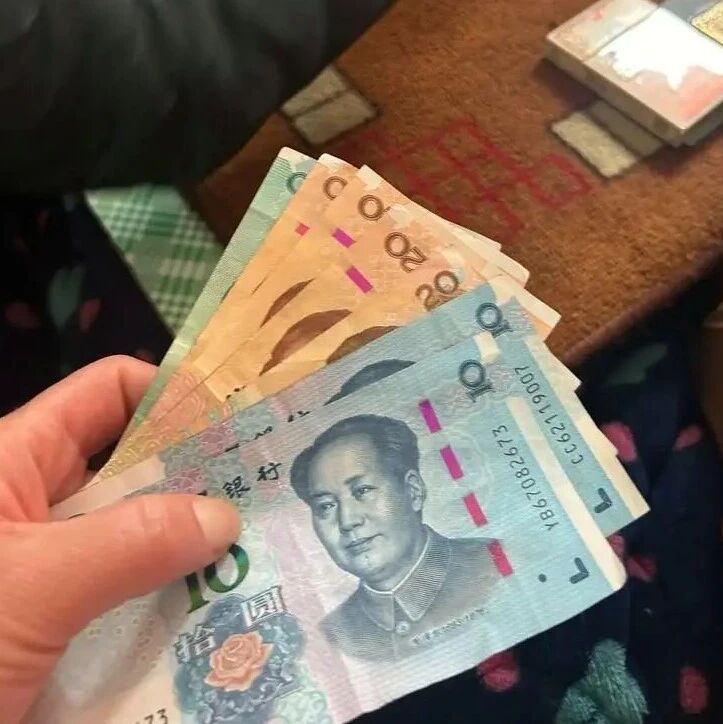
Core Viewpoint - The People's Bank of China, in collaboration with the National Development and Reform Commission and the Financial Regulatory Administration, has issued the "Regulations on Cash Payment and Service" to prevent and address the refusal to accept cash, ensuring diverse payment options for the public [1][2]. Group 1: Regulations Overview - The "Regulations" consist of 19 articles and will take effect on February 1, 2026 [3]. - It establishes basic requirements for cash payments based on classification management and universal applicability, including the obligation to support cash payments in various service scenarios [3]. - Specific provisions include maintaining cash payment options in face-to-face services, ensuring clear signage of payment methods in self-service environments, and requiring advance notice of payment methods in fully online transactions [3]. Group 2: Banking Sector Responsibilities - Banks with physical locations must provide cash deposit and withdrawal services and ensure adequate cash service quality to meet public and business needs [4]. - Financial institutions are required to manage cash circulation properly and prevent the circulation of unfit currency [4]. - Banks acting as payment agents must support cash collection and ensure compliance with cash service obligations [4]. Group 3: Public Awareness and Complaint Mechanism - The public is encouraged to maintain the integrity of the Renminbi and its status as legal tender, and to resolve payment issues amicably with service providers [5]. - In cases of cash refusal or discriminatory practices, individuals should retain evidence and report through various channels, with the People's Bank of China and relevant departments committed to addressing complaints promptly [6].
中信银行南昌洪城支行深入开展整治拒收现金及现金网格化宣传活动
Zhong Guo Jin Rong Xin Xi Wang· 2025-07-21 08:45
Core Viewpoint - The article discusses the efforts of China CITIC Bank's Nanchang Hongcheng Branch to uphold the legal status of the Renminbi and ensure the public's right to use cash, by conducting a campaign against the refusal of cash payments and promoting cash circulation [1][2]. Group 1: Campaign Activities - The bank has launched a comprehensive campaign in cash management areas to address the refusal of cash and promote awareness of relevant laws [1]. - Staff engaged with local communities, merchants, and residents to educate them about the legal implications of refusing cash payments and the importance of respecting cash payment rights [1][2]. - A multi-faceted promotional approach was adopted, combining online and offline methods, including setting up consultation desks, distributing brochures, and using social media platforms to disseminate information [1]. Group 2: Merchant Engagement and Compliance - Bank staff conducted thorough inspections of merchants in cash management areas to identify instances of cash refusal and provided guidance for rectification [2]. - The initiative included understanding the cash usage needs of merchants and residents, offering services such as small change and damaged currency exchanges [2]. - The campaign received positive feedback from merchants and residents, enhancing public awareness of the Renminbi's legal status and reinforcing the importance of cash payment rights [2]. Group 3: Future Plans - The bank plans to continue its efforts in combating cash refusal, improving cash management mechanisms, and increasing the frequency of promotional activities and inspections [2]. - The goal is to maintain the legal status of the Renminbi and provide high-quality, convenient cash services to the public, fostering a safe and efficient cash circulation environment [2].

中信银行南昌分行开展“整治拒收现金提升现金服务”宣传活动
Zhong Guo Jin Rong Xin Xi Wang· 2025-06-30 09:55
Group 1 - The core viewpoint of the article emphasizes the importance of cash services and the need to rectify the refusal of cash payments, highlighting the role of CITIC Bank Nanchang Branch in promoting cash acceptance and consumer rights [1][2] - CITIC Bank Nanchang Branch has established a "cash service consultation desk" in community service centers to enhance cash service management and promote the importance of cash as legal tender [1] - The bank actively engages with merchants and the community to raise awareness about the illegality of refusing cash payments, encouraging merchants to sign commitments to accept cash and display support for cash payment signage [1][2] Group 2 - The bank has initiated a "small change exchange service" by distributing "change bags" and setting up convenient exchange points for small denominations, improving customer experience in cash transactions [1] - The ongoing campaign aims to educate the public about the legal status of the Renminbi and the consequences of refusing cash, reinforcing the bank's commitment to social responsibility and economic security [2]
中信银行南昌红角洲支行:向拒收现金行为“亮剑”
Zhong Guo Jin Rong Xin Xi Wang· 2025-06-05 05:20
Core Viewpoint - The article emphasizes the efforts of China CITIC Bank's Nanchang Hongjiao Zhou Branch to combat the refusal of cash payments, reinforcing the legal status of the Renminbi and protecting consumer rights [1][2] Group 1: Actions Taken - The Nanchang Hongjiao Zhou Branch has actively promoted a special campaign to address cash refusal, utilizing various resources for public awareness [1] - The branch has implemented face-to-face outreach with local merchants, distributing educational materials about the legal status of the Renminbi and the illegality of refusing cash [1][2] - A "change wallet" service has been introduced to assist merchants facing difficulties with cash transactions, addressing the common issue of "difficulty in making change" [1] Group 2: Customer Engagement and Training - A customer feedback mechanism has been established to collect opinions and complaints regarding cash refusal, ensuring timely investigation and response [2] - The bank has enhanced employee training and assessment, focusing on legal regulations and business knowledge to improve service quality and policy promotion [2] - The campaign has successfully increased awareness among local merchants and residents about the legal status of the Renminbi [2] Group 3: Future Plans - The Nanchang Hongjiao Zhou Branch plans to continuously innovate its promotional methods and improve cash service mechanisms to maintain the legal status of the Renminbi and consumer rights [2]
筑牢现金支付防线 护航和谐金融环境
Sou Hu Cai Jing· 2025-05-11 22:22
Core Viewpoint - The article discusses the efforts of Postal Savings Bank of China in Ziyang City to combat the phenomenon of cash refusal, ensuring the legal status of the Renminbi and promoting a harmonious cash circulation environment during the "May Day" holiday [1][2][3][4]. Group 1: Multi-faceted Promotion - The bank organized a series of promotional activities around the theme "Cash service for the people, refusal of cash is illegal," utilizing 181 branches to distribute promotional materials and set up consultation desks [1]. - A cash service promotion team was formed to distribute leaflets in high-frequency cash usage areas, reminding merchants to accept cash payments legally [2]. - The bank emphasized the importance of cash payments by setting up promotional points in public service centers, highlighting relevant laws and regulations [2]. Group 2: Precise Engagement - The bank established communication channels with community merchants through liaison groups, enhancing their understanding of the legal status of the Renminbi [3]. - Merchants were informed about the bank's provision of "small denomination cash reserve" services to meet their reasonable cash needs [3]. - Regular follow-ups with merchants were conducted to track cash payment situations and address issues promptly [3]. Group 3: Long-term Supervision - The bank publicly announced contact information for reporting cash refusal incidents, committing to investigate and provide feedback on such reports on the same day [4]. - A cash service archive for merchants was created, with regular checks and follow-ups to ensure compliance [4]. - The promotional activities reached over 1,000 merchants and more than 30 public service windows, distributing over 3,000 promotional materials [4].