
文化保护与传承

Search documents
高质量推进城市更新释放内需潜力
Jing Ji Ri Bao· 2026-02-11 21:59
Core Insights - The article emphasizes the importance of urban development as a key driver for economic growth and quality of life, highlighting the shift from large-scale expansion to enhancing existing urban structures and services [1][2] Group 1: Urban Development Trends - Urbanization is transitioning from rapid growth to stable development, with a focus on optimizing existing resources rather than expanding urban boundaries [2] - The urbanization rate increase of 1 percentage point can generate approximately 1 trillion yuan in new investment demand and over 200 billion yuan in consumption demand annually [2] - The concentration of population in urban clusters is expected to continue, necessitating adjustments in urban spatial layouts to accommodate new residents and enhance public services [2] Group 2: Consumer Demand and Infrastructure - There is a growing demand for diverse and high-quality living environments, driven by demographic changes and the need for improved public services [3] - The integration of technology in urban development, such as 5G and AI, is crucial for enhancing urban infrastructure and public service efficiency [3][4] - The existing housing stock of approximately 350 billion square meters presents significant opportunities for urban renewal, with an estimated annual demand for 70 million square meters of replacement due to depreciation [4] Group 3: Investment and Economic Growth - Urban renewal is not just about physical space but involves a comprehensive restructuring of urban functions, industries, and culture to stimulate investment and consumption [4][5] - Investment in urban infrastructure and services is essential for enhancing living conditions and creating new job opportunities, thereby driving regional economic growth [4][8] - The need for a sustainable urban development model is highlighted, focusing on quality over quantity in infrastructure investments [7] Group 4: Social Services and Community Development - There is a pressing need to invest in social services that cater to the entire population across different life stages, particularly in elderly and childcare services [8] - Enhancing public resource allocation to match the needs of the resident population is critical for improving living standards and community well-being [8][9] - The integration of cultural heritage into urban renewal efforts can stimulate cultural consumption and enhance the overall quality of urban life [6][10] Group 5: Governance and Community Engagement - Effective urban governance is essential for addressing community needs and enhancing the quality of urban life [10] - The article advocates for a responsive governance model that utilizes technology to identify and address urban challenges effectively [10] - Promoting cultural activities and improving public cultural services are vital for fostering community engagement and enhancing urban identity [10]
“欲观真正中国文化精神,必于北京”
Bei Jing Ri Bao Ke Hu Duan· 2025-12-18 22:51
Core Viewpoint - The book "Yandu Zhanggu" by Qu Xuanying, edited by Hou Lei, explores the rich cultural history of Beijing, emphasizing its significance in understanding Chinese culture and history [2]. Group 1: Historical Insights - Qu Xuanying traces the historical development of Beijing's urban structure, starting from the Tang Dynasty, and highlights the contributions of various craftsmen throughout different dynasties [2]. - The author emphasizes that the construction of Beijing was a collective effort over generations, not the work of a single individual or time [2]. - Qu's research includes systematic analysis of historical texts to uncover the contributions of lesser-known craftsmen who played a crucial role in shaping Beijing's cultural foundation [2]. Group 2: Urban Development and Governance - The examination of Beijing's urban planning extends to the Ming Dynasty, where Qu discusses the bustling trade and the popularity of certain goods in the marketplace [3]. - He references historical records to illustrate the challenges of urban governance, such as street encroachments and fire hazards, indicating that these issues have persisted through time [3]. - Qu also analyzes the Qing Dynasty's urban planning efforts, suggesting that early regulations aimed for uniformity in city structures [3]. Group 3: Cultural Significance - Qu Xuanying highlights Beijing as a melting pot of diverse cultures, showcasing examples like Peking Opera, which evolved from initial criticism to becoming a national treasure [4]. - The book discusses the influence of foreign artisans on local crafts, such as the development of cloisonné, indicating Beijing's role as a cultural catalyst [4]. - Qu pays special attention to Beijing's wine culture, documenting various local brews and their historical significance, thus enriching the understanding of the city's cultural landscape [5]. Group 4: Preservation of Cultural Heritage - The author expresses a strong sense of cultural preservation, particularly in light of historical invasions that damaged Beijing's cultural heritage, such as the destruction of the Old Summer Palace [6]. - Qu argues that the loss of cultural artifacts is a deliberate strategy by invaders to weaken a nation, emphasizing the importance of protecting cultural heritage [6]. - He calls for a collective effort to document and preserve historical narratives, asserting that understanding the past is essential for cultural continuity [6].


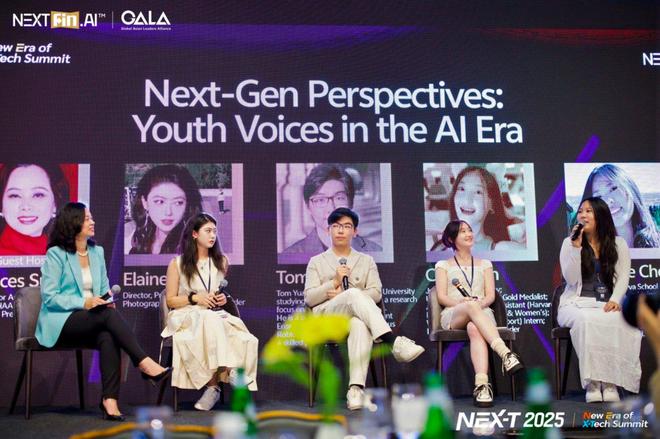
Z世代AI宣言:00后如何用技术守护文化、破解脑科学、管理情绪与反思战争|NEX-T Summit 2025
Tai Mei Ti A P P· 2025-10-27 05:40
Core Insights - The article discusses the perspectives of the new generation on AI and its integration into their interests, professions, and future plans, as presented during the NEX-T Summit 2025 held at Stanford University [3][4]. Group 1: Event Overview - The NEX-T Summit 2025, themed "New Era of X-Tech," gathered over 400 entrepreneurs, investors, scientists, and policymakers to explore the impact of technology and capital on society [3]. - The summit featured a Youth Board aimed at inspiring leadership among the Asian youth and promoting innovation in the AI era [3]. Group 2: Panel Discussion Highlights - The roundtable discussion, moderated by Frances Sun, included four young guests from diverse educational backgrounds, sharing their insights on AI's role in their lives and studies [4][5]. - The participants discussed various applications of AI, their concerns about its implications, and the essential skills young people should develop in the AI age [4][5]. Group 3: Individual Perspectives - Elaine Du emphasized using AI for cultural preservation, highlighting her startup project that combines AI with traditional craftsmanship to document and protect cultural heritage [5][6]. - Tom Yuan shared his interdisciplinary approach, combining computer science and philosophy, and discussed the evolving role of AI in programming and software engineering [8][9]. - Cindy Ren focused on AI's application in neuroscience, proposing the use of deep learning to identify disease patterns and advocating for AI in educational equity [11][12]. - Catherine Chen illustrated AI's integration into her daily life and academic projects, stressing the importance of emotional management for young people in navigating challenges [16][17]. Group 4: Concerns and Aspirations - Concerns raised by the panelists included the potential for AI to exacerbate the digital divide, ethical issues surrounding AI in genetics, and the challenge of distinguishing AI-generated content from human-created works [6][10][13]. - Aspirations included using AI to combat poverty, reduce warfare, and improve healthcare outcomes, with a focus on extending healthy lifespans rather than pursuing immortality [7][14][18].
古城古镇建设切莫一哄而上
Jing Ji Ri Bao· 2025-08-16 21:50
Core Viewpoint - The recent restructuring and revitalization plan for Zhangjiajie Dayong Ancient City in Hunan Province aims to enhance its operations by July next year, following significant financial losses of over 1 billion yuan in four years, highlighting the challenges faced by ancient towns and cities in China [1] Group 1: Development Challenges - Many ancient towns and cities have been developed into cultural landmarks and tourist hotspots, but some have become abandoned or unfinished projects due to blind investment and poor planning [2] - The construction boom has led to substantial waste, with local governments often prioritizing GDP growth over sustainable development, resulting in heavy debt burdens [2] - Over-commercialization has damaged historical integrity, with some areas replacing authentic structures with replicas and displacing original residents, leading to a loss of cultural essence [2] Group 2: Cultural Significance - The core value of ancient towns lies in their historical depth, with culture being the soul of a city and local residents being central to its vibrancy [3] - The construction of ancient towns should focus on protection and transmission of cultural heritage, ensuring that unique historical elements and local traditions are preserved [3] Group 3: Successful Models - Successful examples of ancient town development include Fuzhou's Sanfang Qixiang, which retains original residents and employs minor renovations to preserve historical architecture, and Zhejiang's Wuzhen, which integrates modern cultural events while maintaining its historical character [4] - The construction of ancient towns must be tailored to local conditions, prioritize protection, and involve careful decision-making to avoid a hasty approach that lacks cultural depth [4]
赵一德在渭南调研时强调坚持抓基层打基础兴产业优生态 推动高质量发展不断迈出新步伐
Shan Xi Ri Bao· 2025-08-08 00:32
Group 1 - The core message emphasizes the importance of implementing Xi Jinping's directives for high-quality development, focusing on ecological protection and sustainable practices in the Yellow River basin [1][2][3] - The need for enhanced flood prevention measures and emergency response training is highlighted, indicating a proactive approach to disaster management [1][3] - The promotion of local agricultural products and the integration of various industries to boost farmers' income is stressed, aiming for a more sustainable and profitable agricultural sector [2][3] Group 2 - The discussions at the meetings underscore the significance of grassroots governance and the role of local party committees in ensuring effective implementation of national policies [3][4] - There is a strong focus on supporting the private sector through policy measures aimed at reducing barriers and facilitating easier access to resources for businesses [4] - The commitment to achieving economic stability and growth through targeted initiatives and community engagement is reinforced, with an emphasis on completing development goals for the current planning period [4]
推窗即见景、出门即观演 在红砖建筑中感受千年闽南文化
Yang Shi Xin Wen· 2025-07-24 07:01
Core Insights - The article highlights the systematic protection and renovation of the historical Zhangzhou Ancient City, which has significantly improved its urban environment and cultural heritage [1][2][3] Group 1: Urban Renovation and Cultural Heritage - The renovation project for Zhangzhou Ancient City began in 2014, focusing on restoring the red brick architecture and improving the living environment [1] - The project includes the removal of illegal constructions, restoration of historical sites like the Confucian Temple, and enhancement of the ancient river environment to create a beautiful waterfront landscape [2] - Currently, there are 8 historical buildings and 180 buildings over 50 years old that have been revitalized, including the landmark "Xiangyang Theater," which now serves as a cultural and recreational space for residents [2] Group 2: Community and Quality of Life - The urban renewal efforts have fostered a sense of happiness among residents, with public spaces for cultural activities such as local opera performances [2] - Zhangzhou's overall urban development includes the enhancement of water quality and ecological environment along urban waterways, promoting a poetic living experience [3] - The city has initiated a barrier-free facility project, benefiting over 30,000 residents by improving accessibility for the elderly and disabled [3]