
文旅消费新趋势

Search documents
元旦文旅消费地图:苏粤豫等6地“揽客”超千万
2 1 Shi Ji Jing Ji Bao Dao· 2026-01-04 14:05
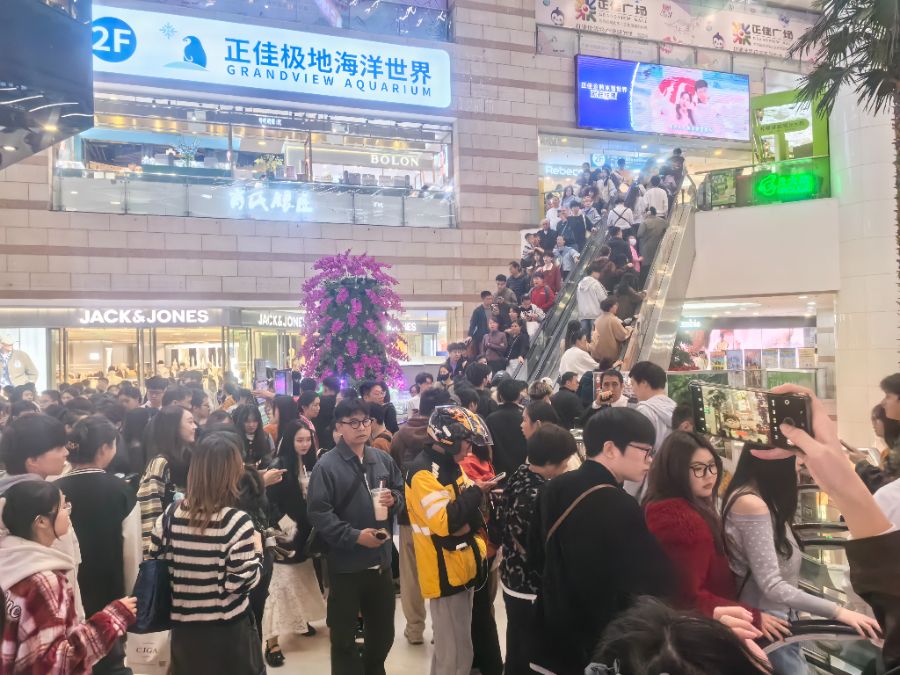
Core Insights - The New Year holiday period from January 1 to January 3, 2026, saw a significant surge in consumer activity, with an estimated 590 million people traveling across regions, marking a 19.5% year-on-year increase [1][2] - Domestic tourism during this period reached 142 million trips, with total spending amounting to 84.789 billion yuan [1][2] - The overall tourism market is showing new trends, including a shift towards emotional value and upgraded quality demands in consumer preferences [2][8] Group 1: Visitor Statistics - Jiangsu, Guangdong, and Henan provinces led in tourist numbers, receiving 19.4318 million, 17.875 million, and 17.437 million visitors respectively [4][5] - Six provinces, including Zhejiang, Hunan, and Fujian, surpassed 10 million visitors during the holiday [4] - In Guangdong, the city of Guangzhou received 3.35 million visitors, while Shenzhen followed closely with 3.086 million [5][6] Group 2: Revenue Generation - Zhejiang, Hunan, Shanghai, and Beijing were the top provinces in terms of tourism revenue, each exceeding 10 billion yuan, with revenues of 19.170 billion, 15.480 billion, 12.271 billion, and 10.970 billion yuan respectively [2][9] - Guangdong and Jiangsu also approached the 10 billion yuan mark, generating 9.980 billion and 9.610 billion yuan respectively [9][10] Group 3: Consumer Trends - The tourism market is experiencing a shift from traditional sightseeing to immersive experiences, including micro-vacations, wellness tourism, and cultural heritage experiences [2][8] - Younger travelers are increasingly favoring destinations that offer unique cultural experiences, with a notable rise in demand for themed parks and local attractions [10][12] - The average spending per visitor in Guangdong during the holiday was 558.3 yuan, reflecting a 3.7% year-on-year increase [11] Group 4: Future Outlook - The consumer market is expected to continue its recovery, with various initiatives planned for 2026, including the introduction of new retail and entertainment experiences [13] - The integration of cultural, commercial, and tourism strategies is anticipated to enhance the quality of consumer experiences in the coming year [13]

新闻1+1丨国庆中秋假期来临 各地文旅有哪些新玩法?
Yang Shi Wang· 2025-09-30 22:20
Core Insights - The article highlights that during the 8-day National Day and Mid-Autumn Festival holiday, the total inter-regional movement of people is expected to reach 2.36 billion trips, averaging approximately 295 million trips per day [1] Group 1 - The tourism and cultural departments across various regions are employing diverse strategies to attract visitors during the holiday [1] - The article raises questions about new trends in tourism consumption and innovative ways to engage tourists during this holiday period [1]
加大优质供给是关键
Jing Ji Ri Bao· 2025-09-21 22:09
Core Insights - The cultural and tourism industry in China is experiencing rapid growth, becoming a new pillar industry with significant government support and policy initiatives aimed at enhancing tourism consumption and high-quality development [1][2] - There is a shift in consumer preferences towards more personalized and immersive travel experiences, moving away from traditional sightseeing [1] - Despite the growth, there are concerns regarding the quality of supply, product homogenization, and inadequate management services that affect consumer experiences [2] Group 1 - The Chinese cultural and tourism industry is recognized as an emerging pillar industry, with government policies encouraging the supply of high-quality tourism products and services [1] - Various regions are innovating in the cultural tourism sector, with initiatives like "So Close, So Beautiful" in Hebei and "Good Guest Shandong" in Shandong, showcasing diverse development [1] - New trends in tourism consumption include a preference for deeper, personalized experiences, such as folk performances and customized travel options for different demographics [1] Group 2 - There are significant challenges in the industry, including low supply quality, serious product homogenization, and a lack of management services that impact consumer satisfaction [2] - Improving the quality of cultural tourism products and services is essential for high-quality development, focusing on addressing basic infrastructure and management service gaps [2] - Differentiation in product offerings is crucial, with an emphasis on leveraging local cultural characteristics to create unique and appealing tourism experiences [2]
构建人与城的文化连接(金台随笔)
Ren Min Ri Bao· 2025-07-31 21:52
Group 1 - The core viewpoint of the articles highlights a shift in young people's travel preferences from traditional sightseeing to immersive experiences that emphasize personal engagement and emotional fulfillment [1][3][4] - The "experience" consumption, represented by cultural and historical venues, is on the rise, indicating a growing trend towards personalized and meaningful travel experiences among the youth [1][2] - Young travelers are increasingly seeking to connect with local culture and history, moving from mere observation to active participation in cultural narratives [3][4] Group 2 - The transformation of public cultural spaces, such as museums and theaters, is essential for enhancing the cultural consumption landscape, which can lead to the development of new cultural products and experiences [4] - Cities are encouraged to integrate cultural elements into their infrastructure to enhance their appeal and foster a deeper connection between people and urban environments [4] - The emphasis on cultural and historical engagement reflects a broader trend of consumption upgrading, where individuals prioritize quality experiences over mere transactions [3][4]