新型文化消费

Search documents
文化投资正当时:大湾区浮现五大趋势四大赛道
2 1 Shi Ji Jing Ji Bao Dao· 2025-11-26 12:46
Core Insights - The Guangdong-Hong Kong-Macao Greater Bay Area (GBA) is emerging as a significant hub for cultural industry investment, with a total of 720 financing events generating approximately 56.41 billion yuan over the past five years [2][6] - The GBA's cultural industry is characterized by a robust ecosystem that integrates culture, finance, and technology, positioning it as a leader in the digital transformation of cultural products [2][5] Investment Trends - The GBA cultural industry is experiencing five major development trends: consumption stratification, cultural industrialization, product digitization, emerging scenarios, and market globalization [2][6] - Investment focus is shifting towards four key areas: cultural-technology integration, digital creative production, cultural "intelligent" manufacturing, and new cultural consumption [6][8] Industry Performance - In 2024, the revenue of Guangdong's cultural industry is projected to exceed 30,252.10 billion yuan, maintaining its position as the largest in the country for 22 consecutive years [3][4] - Guangdong's cultural products and services have successfully entered over 160 countries, accounting for approximately 40% of the national total in cultural exports [3] Competitive Advantages - The GBA boasts a comprehensive cultural manufacturing chain, with significant contributions from cities like Guangzhou and Shenzhen in various cultural sectors [4][5] - The region's financial investment landscape is vibrant, supported by major stock exchanges and numerous cultural industry funds, facilitating substantial capital flow into the sector [5][6] Future Directions - Companies are encouraged to focus on content, technology, and platforms, particularly in areas such as cultural policy implementation, advanced technology, and cultural data platforms [7][8] - The GBA is positioned to support cultural industry expansion globally, leveraging its platforms, funding, and channels to facilitate international outreach [7]
从全国票仓到精品剧目首演地,新型文化消费催熟大湾区文艺市场
2 1 Shi Ji Jing Ji Bao Dao· 2025-09-17 08:59
Core Insights - The Guangdong-Hong Kong-Macao Greater Bay Area is a significant cultural and artistic hub in China, hosting the fifth Cultural Arts Festival with over 100 performances and 19 exhibitions planned for the month-long event [1][2] - Guangdong has become a leading region in the national performing arts market, with over 400,000 performances approved this year, generating more than 6.3 billion yuan in revenue [2] - The region's cultural landscape is enriched by a blend of local and international performances, attracting high-quality productions and artists from around the world [3][5] Industry Overview - The performing arts economy in Guangdong has become a crucial driver of consumption, with related industries such as transportation, accommodation, and dining benefiting significantly from the arts [2] - Policies aimed at fostering high-quality development in the performing arts sector have led to a 44% year-on-year increase in approved performances [2] - The Greater Bay Area is recognized as a vital gateway for cultural exchange, with a robust infrastructure of cultural institutions and venues that support international collaborations [5][8] Market Dynamics - The region's demographic advantages, including a large young population and active cultural consumption, contribute to its status as a major "ticket warehouse" for performances [4][6] - Innovative formats such as immersive theater and integrated cultural experiences are gaining popularity, particularly among younger audiences [6][11] - The presence of world-class venues like the Guangzhou Grand Theatre and Shenzhen Coastal Arts Center enhances the area's appeal for international productions [8][10] Future Prospects - The Greater Bay Area is expected to continue attracting high-quality international productions due to its supportive policies, strong consumer spending, and high appreciation for the arts [8][11] - There is potential for the region to evolve from a high-consumption area to a center for artistic creation, fostering a complete ecosystem for the performing arts [11]
团播的风,吹得火还要吹得远(文化只眼)
Ren Min Ri Bao Hai Wai Ban· 2025-09-07 22:16
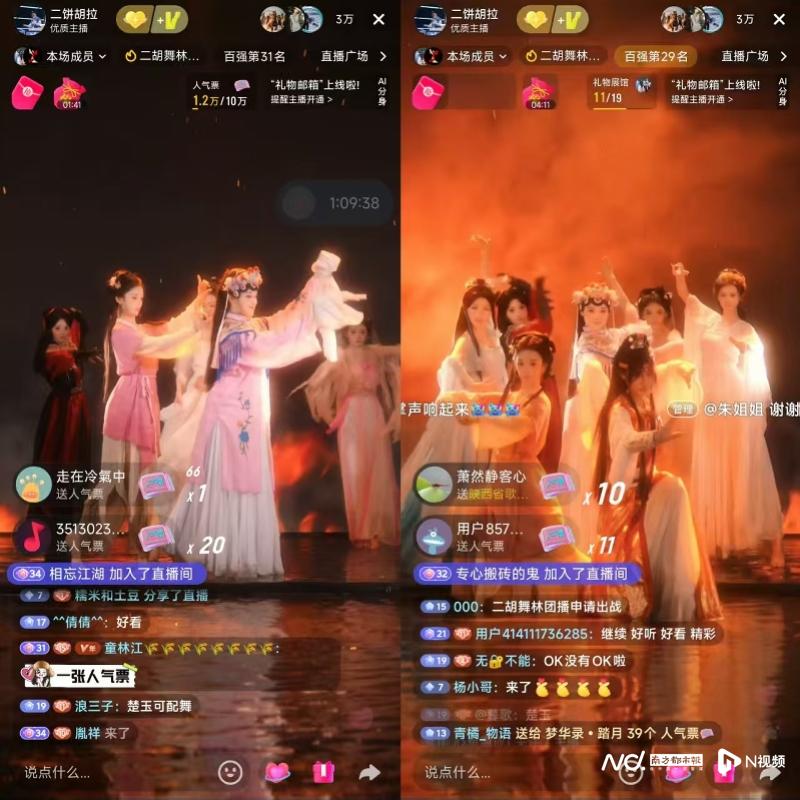
Group 1 - The core concept of "Tuanbo" is a new form of cultural consumption, characterized by multiple hosts performing together in a live streaming format, enhancing interaction with the audience [1] - Tuanbo primarily features group performances by male and female troupes, with diverse styles such as traditional Chinese dance and Hip Hop, and employs high production standards comparable to television programs [1] - The industry faces challenges in optimizing existing shortcomings, increasing quality content supply, and developing sustainable market value for long-term growth [1] Group 2 - MCN institutions and guilds are essential for providing necessary conditions for quality live streaming, including stage design, host training, and team building [2] - Professional troupes entering the Tuanbo space enrich the variety and elevate the average quality of content, offering immersive cultural experiences [2] - Individual hosts are encouraged to focus on enhancing their professional skills, with examples of successful hosts who have a strong background in performing arts [2] Group 3 - Platforms must strengthen management of inappropriate content while supporting quality content; Douyin has upgraded its content management guidelines and introduced support for professional Tuanbo organizations [3] - Industry organizations should provide positive guidance, with initiatives like the recent announcement of quality live streaming rooms, including a dedicated Tuanbo category [3] - The future of Tuanbo requires not only entertainment value but also cultural content, necessitating collaboration among platforms, guilds, hosts, industry organizations, and regulatory bodies for sustainable development [3]
让团播成为健康可持续发展新业态
Sou Hu Cai Jing· 2025-07-31 23:29
Group 1 - The core viewpoint of the articles highlights the rise of group broadcasting (团播) as a new cultural production and consumption form, which is gaining popularity among users and is evolving towards professionalization and standardization [1][2] - Douyin has announced an upgrade to its content management regulations for group broadcasting, signaling its commitment to fostering a healthy development of the industry and protecting the rights of practitioners [1] - Group broadcasting has transitioned from its initial phase to a stage of quality and scale development, creating numerous job opportunities in the process [1][2] Group 2 - The operational structure of group broadcasting typically requires 5-7 front-line hosts and a backstage team that is 1.5 times larger, including various professionals such as operators, lighting technicians, and makeup artists [2] - Douyin's platform is projected to create over 64.55 million job opportunities in 2024, with direct employment exceeding 49.21 million and indirect jobs in the industry chain reaching 15.34 million [2] - The interactive mechanisms established by platforms like Douyin allow young individuals to gain social recognition and economic returns through content creation and live interaction [2] Group 3 - Group broadcasting has faced challenges, leading to Douyin's decision to expel 54 agencies involved in illegal activities and penalize 194 others for misconduct [3] - The industry has evolved from the early "ambiguous economy" to a new form of cultural consumption, supported by diverse audience engagement and the emergence of more robust business models [3] - With content innovation, ecological optimization, and regulatory collaboration, group broadcasting is expected to develop into a sustainable new industry, contributing to cultural prosperity and job growth [3]
包容审慎并重,引导团播业态释放更多正能量
Nan Fang Du Shi Bao· 2025-07-26 02:23
Core Insights - The rise of group broadcasting (团播) has become a significant trend in the short video platform industry, attracting various players due to its immense market potential and generating both excitement and controversy [1][2] Group Broadcasting Overview - Group broadcasting involves multiple participants in a live stream, evolving from grassroots efforts to an industrialized scale over three years, with production quality comparable to small concerts [1][2] - The format allows for diverse presentations, including dance performances and interactive games, providing emotional value to the audience similar to other cultural consumption activities [1] Industry Regulation and Development - New business models like group broadcasting typically transition from chaotic growth to gradual regulation, with platforms like Douyin implementing measures such as the "health score" system to manage inappropriate behavior and ensure compliance [2] - The industry is moving towards a more standardized 2.0 phase, distancing itself from controversial practices and focusing on the rights of broadcasters [2] Economic Impact and Cultural Consumption - The growth of group broadcasting aligns with a broader trend in cultural consumption, particularly as GDP per capita surpasses $10,000, leading to increased demand for entertainment experiences [3] - The emergence of group broadcasting reflects a shift in consumer behavior, with a notable rise in cultural events and experiences, indicating a robust market for new products and services [3] Employment and Production Quality - Group broadcasting contributes significantly to economic development by creating new job opportunities, with a typical production team requiring multiple roles, including hosts, camera operators, and technical staff [5] - High production standards are being adopted, with many broadcasts utilizing equipment comparable to major television productions, attracting professional talent to the industry [5] Future Outlook - Expanding domestic demand and promoting consumption are key focus areas, with the internet providing a platform for innovative business models like group broadcasting to thrive [6] - A balanced approach that allows for the evolution of new business models while addressing public concerns is essential for sustainable growth in the industry [6]