
新能源汽车免征购置税政策调整

Search documents
增程车遭遇双面夹击:不仅纯电车卖得好,燃油车也“复苏”了
3 6 Ke· 2025-12-02 10:28
Core Insights - NIO and Li Auto's Q3 financial reports reflect a structural adjustment in the domestic electric vehicle market, indicating a significant decline in consumer interest for small battery range-extended vehicles [1] - In October, Li Auto delivered 31,767 vehicles, while NIO surpassed 40,000 deliveries for the first time this year, with expectations to maintain this momentum in Q4 [1] - The end of tax exemptions for electric vehicles starting in 2026 is expected to accelerate market reshuffling, influenced by policy changes and shifting consumer demand [1] Group 1: Electric Vehicle Market Trends - The majority of new models launched this year are hybrid, with notable exceptions like NIO's ET9 being fully electric [3] - The trend towards larger battery capacities in hybrid models is evident, with some achieving pure electric ranges exceeding 500 km [3] - The sales of range-extended and plug-in hybrid vehicles have been declining, with a 12% drop in sales year-on-year for range-extended vehicles [9] Group 2: Charging Infrastructure Development - By the end of 2024, charging infrastructure in China is expected to achieve county-level coverage across all provinces, with significant growth in the number of charging stations [5] - As of October, the number of charging facilities reached 18.645 million, with a 49.1% year-on-year increase [5] - Companies like Xpeng and NIO are actively expanding their charging networks to enhance accessibility [5][7] Group 3: Performance of Electric Vehicle Manufacturers - Xpeng's sales grew by 190% in the first three quarters, while NIO and Zeekr also reported significant increases [7] - In contrast, Li Auto's sales decreased by approximately 13% year-on-year, with a notable drop of over 30% in monthly deliveries from October to November [7][9] - Li Auto plans to upgrade its L series to enhance battery capacity and pure electric range, responding to user preferences for electric driving [9][10] Group 4: Traditional Fuel Vehicle Market Dynamics - Traditional fuel vehicle sales have seen a temporary resurgence, with a 1.7% increase in sales year-to-date compared to the previous year [11] - Despite this growth, the market share of traditional fuel vehicles is declining, with projections indicating a drop to 49.9% in the first nine months of this year [11] - The long-term outlook suggests that electric vehicles will continue to replace traditional fuel vehicles, particularly in the high-end market segment [11][13]


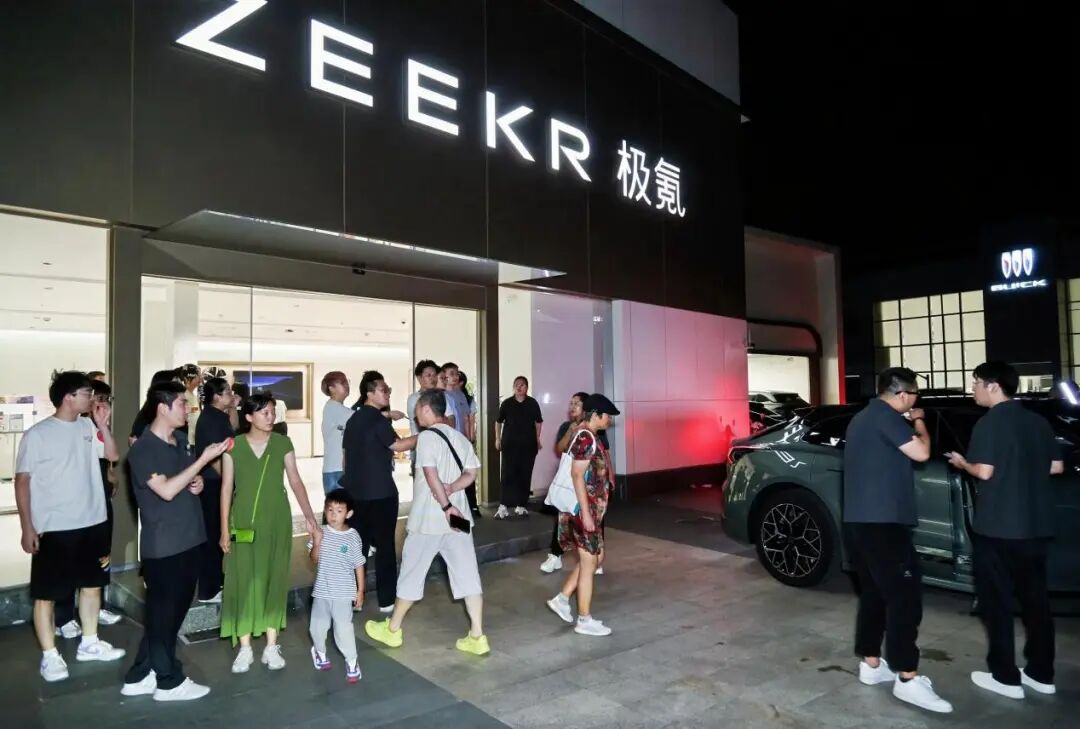
汽车视点 | 超30款新车密集上市,车企抢滩“金九银十”销售窗口
Zhong Guo Jin Rong Xin Xi Wang· 2025-09-16 05:44
Group 1 - The automotive market is experiencing a surge in new car launches, with at least 30 new models expected to be released in September alone, marking the beginning of a competitive sales season in the fourth quarter [1] - The new car launches cover a wide price range from 50,000 to 500,000 yuan, intensifying competition across the entire passenger vehicle market [2] - Several automakers are implementing promotional strategies, including price reductions and financing offers, to stimulate demand during the "Golden September and Silver October" sales period [3] Group 2 - The "Golden September and Silver October" period is traditionally a peak time for car purchases, with the upcoming National Day holiday seen as a critical window for boosting sales [4] - The impending changes to tax policies for electric vehicles are prompting consumers to accelerate their purchasing decisions, as the exemption on vehicle purchase tax will be reduced starting January 2026 [4] - Multiple regional auto shows during the National Day holiday are expected to further energize the market, with over ten cities hosting events that could stimulate local consumption [5] Group 3 - The current competitive landscape in the Chinese automotive market requires companies to focus on product strength, user experience, and differentiation to succeed, rather than relying solely on price promotions [5]



超30款新车密集上市 车企抢滩“金九银十”销售窗口
Xin Hua Cai Jing· 2025-09-16 05:25
Group 1 - The automotive market is entering a peak period for new car launches, with at least 30 new models expected to be released in September alone, including notable models from various brands [1] - The "Golden September and Silver October" sales period is traditionally a peak time for consumers to purchase vehicles, and many automakers are intensifying their efforts to capture market share before the end of the year [1][4] Group 2 - The new car launches cover a wide price range from 50,000 to 500,000 yuan, indicating a competitive landscape across the entire passenger vehicle market [2] - In the entry-level and economy segments around 100,000 yuan, several models are set to launch, targeting young consumers with high cost-performance ratios [2] - The competition is particularly fierce in the 200,000 to 300,000 yuan segment, with the new Aion M7 achieving over 100,000 pre-orders within an hour of its pre-sale launch [2] Group 3 - Multiple automakers are reintroducing promotional policies, leading to a new wave of price reductions, with Tesla recently lowering prices on its Model 3 and Model Y [3] - Experts predict a 10% year-on-year increase in sales for October, driven by the influx of new models and the potential for consumers to advance their purchasing plans due to expiring tax exemptions on electric vehicles [3][4] Group 4 - The tightening of policy windows is prompting consumers to make purchases sooner, as the exemption for vehicle purchase tax for electric vehicles will end in 2025, leading to increased costs for consumers [4] - The upcoming National Day holiday is expected to further stimulate market activity, with numerous regional auto shows planned across major cities [5] Group 5 - The current competitive landscape in the Chinese automotive market requires automakers to focus on product strength, user experience, and differentiation to succeed beyond just price promotions [5] - The ability to stand out with solid product offerings will be crucial for automakers to navigate the industry reshuffling and embrace future opportunities [5]