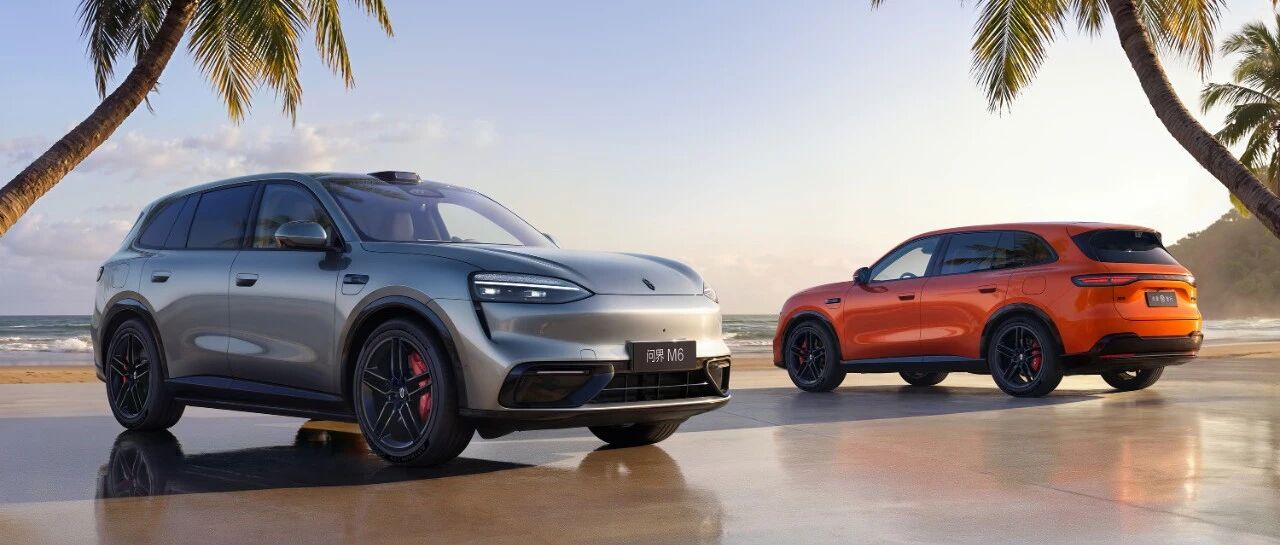
问界M7

Search documents
赛力斯20230331
2026-04-01 09:59
Company and Industry Summary Company Overview - **Company**:赛力斯 (Sailis) - **Industry**: High-end smart electric vehicles Key Financial Metrics - **2025 Revenue**: 165.05 billion CNY, a 13.7% increase year-on-year [2][3] - **Main Business Revenue**: 155.49 billion CNY from the问界 (Wenjie) brand, a 13.2% increase [3] - **Net Profit**: 6.25 billion CNY, a 24.7% increase [2][3] - **Gross Margin**: 29.2%, leading the industry [2][19] - **Debt-to-Asset Ratio**: Decreased by over 10 percentage points [2] Research and Development - **R&D Investment**: 12.51 billion CNY in 2025, a 77.4% increase [2][3] - **R&D Personnel**: Over 9,019 employees, accounting for 41.1% of total staff [3] - **Focus Areas**:问界大单品 (Wenjie flagship products), 魔方平台 (Magic Cube platform), and intelligent robotics [2] Product and Market Strategy - **Sales Volume**: Total sales of 517,000 vehicles in 2025, with问界 brand sales of 430,000 vehicles, a 10.5% increase [3] - **Product Matrix**: Expansion from SUVs to sports and crossover vehicles, aiming for a second 1 million sales within two years [2][3] - **Market Share**: Over 20% in the high-end new energy SUV market in 2025 [3] - **Global Expansion**: Multiple models to be launched overseas in the second half of 2026, targeting Middle East and Central Asia markets [2][13] Innovation and Technology - **New Product Launch**:问界 M6 pre-sale started on March 23, 2026, with over 60,000 orders in 24 hours [2][5] - **Technological Collaboration**: Close relationship with Huawei, leveraging vast driving data (6.13 billion kilometers) for competitive advantage [2][8] - **AI and Robotics**: Focus on embodied intelligence, including humanoid and hybrid robots, expected to debut in 2026 [2][14] Sales and Marketing - **Sales Network**: Over 100 new quality stores added, with 380 user centers covering 218 cities [4] - **User Services**: 312,000 proactive services provided, saving users 495,000 hours of repair time [4] - **Brand Recognition**:问界 ranked first in multiple categories in J.D. Power's 2025 study [3] Financial Health and Risk Management - **Profit Fluctuations**: Q4 2025 net profit decreased due to increased talent acquisition costs and R&D investments [9][10] - **Cost Management**: Plans to mitigate rising raw material costs through supply chain security and operational efficiency [11][12] Future Outlook - **2026 Sales Target**: Focus on maintaining high-end market leadership while pursuing scale growth [11] - **Global Market Strategy**: Aim for overseas sales to account for 30% of total sales in the long term [13] - **Innovation Business**: Plans to integrate AI and robotics into the automotive sector, with a focus on commercializing new technologies [22] Shareholder Engagement - **Shareholder Returns**: Commitment to stock buybacks and dividends, with cumulative dividends nearing 4 billion CNY [17][23] - **Long-term Value Creation**: Focus on sustainable growth and enhancing shareholder value through effective governance [23]
赛力斯:公司信息更新报告:Q4业绩有所承压,M6上市在即业绩改善可期-20260401
KAIYUAN SECURITIES· 2026-04-01 08:24
Investment Rating - The investment rating for the company is "Buy" (maintained) [1] Core Insights - The company experienced pressure on its Q4 performance, but the upcoming launch of the M6 model is expected to improve its performance [1][7] - The company reported a revenue of 165.05 billion yuan for 2025, a year-on-year increase of 13.7%, and a net profit attributable to shareholders of 5.96 billion yuan, reflecting a slight increase of 0.2% [5][8] - The company is focusing on its core business by divesting from the blue electric business and enhancing its marketing and service systems [7] Financial Summary - Q4 revenue reached 6.44 billion yuan, with a quarter-on-quarter increase of 41.4% and a year-on-year increase of 13.3% [5] - The company’s Q4 net profit was 0.42 million yuan per vehicle, a decrease of 1.56 thousand yuan year-on-year [6] - The projected revenues for 2026-2028 are 213.21 billion yuan, 258.72 billion yuan, and 286.57 billion yuan respectively, with expected growth rates of 29.2%, 21.3%, and 10.8% [8][10] - The projected net profit for 2026-2028 is 10.05 billion yuan, 14.80 billion yuan, and 19.77 billion yuan respectively, with growth rates of 68.7%, 47.3%, and 33.6% [8][10] Sales Performance - The company achieved a Q4 sales volume of 154,100 vehicles, a quarter-on-quarter increase of 59.5% and a year-on-year increase of 24.3% [6] - The M7 model significantly contributed to sales, with 74,400 units sold in Q4, marking a quarter-on-quarter increase of 77.1% [6] Future Outlook - The M6 model is set to launch soon, with pre-sales already exceeding 60,000 units within 24 hours, indicating strong market demand [7] - The company plans to accelerate its overseas market development and is actively pursuing innovations in robotics to create new growth avenues [7]

赛力斯(601127):公司信息更新报告:Q4业绩有所承压,M6上市在即业绩改善可期
KAIYUAN SECURITIES· 2026-04-01 05:19
Investment Rating - The investment rating for the company is "Buy" (maintained) [1] Core Insights - The company reported a revenue of 165.05 billion yuan for 2025, a year-on-year increase of 13.7%, while the net profit attributable to shareholders was 5.96 billion yuan, a slight increase of 0.2% [6][9] - The Q4 performance was under pressure, with a revenue of 54.52 billion yuan, showing a quarter-on-quarter increase of 41.4% and a year-on-year increase of 13.3%. However, the net profit for Q4 was 644 million yuan, reflecting a significant decline of 66.2% quarter-on-quarter and 72.8% year-on-year [6][7] - The company is focusing on the upcoming launch of the M6 model, which has already seen over 60,000 pre-orders within 24 hours, indicating strong market interest [8] - The company plans to enhance its overseas market presence and is actively developing innovative robotics technologies to create new growth avenues [8] Financial Summary - The company’s projected revenues for 2026, 2027, and 2028 are 213.21 billion yuan, 258.72 billion yuan, and 286.57 billion yuan, respectively, with year-on-year growth rates of 29.2%, 21.3%, and 10.8% [9][11] - The projected net profit for 2026, 2027, and 2028 is expected to be 10.05 billion yuan, 14.80 billion yuan, and 19.77 billion yuan, with respective growth rates of 68.7%, 47.3%, and 33.6% [9][11] - The company’s gross margin is projected to be 28.0% in 2026, slightly decreasing from 29.1% in 2025 [9][11]
赛力斯:25Q4 销量高增,M6 接力驱动向上-20260401
GUOTAI HAITONG SECURITIES· 2026-04-01 04:25
Investment Rating - The report maintains a "Buy" rating for the company [2][6]. Core Views - The company achieved a revenue of 165.05 billion yuan in 2025, with a net profit attributable to shareholders of 5.96 billion yuan. The launch of the M6 model is expected to drive continued sales growth [2][11]. - The company reported a significant increase in sales volume in Q4 2025, with a total of 176,000 vehicles sold, representing a year-on-year increase of 38.1% and a quarter-on-quarter increase of 24.1% [11]. - The M6 model has received strong pre-sale orders, with over 60,000 units booked within 24 hours of its launch, indicating robust market demand [11]. Financial Summary - The company’s total revenue is projected to grow from 145.18 billion yuan in 2024 to 294.22 billion yuan by 2028, reflecting a compound annual growth rate (CAGR) of approximately 17.1% [5][12]. - The net profit attributable to shareholders is expected to increase from 5.95 billion yuan in 2025 to 15.86 billion yuan in 2028, with a significant growth rate of 21.5% in 2028 [5][12]. - The earnings per share (EPS) is forecasted to rise from 3.42 yuan in 2025 to 9.11 yuan in 2028, indicating strong profitability growth [5][12]. Market Data - The target price for the company's stock is set at 117.80 yuan, with the current price at 90.83 yuan, suggesting a potential upside [6]. - The company has a market capitalization of 158.23 billion yuan and a total share count of 1.74 billion shares [6].
赛力斯(601127):2025年报点评:25Q4销量高增,M6接力驱动向上
GUOTAI HAITONG SECURITIES· 2026-04-01 03:42
Investment Rating - The report maintains a "Buy" rating for the company [6][11]. Core Insights - The company achieved a revenue of 165.05 billion yuan in 2025, with a net profit attributable to shareholders of 5.96 billion yuan. The launch of the M6 model is expected to drive continued sales growth [2][11]. - The company reported a significant increase in sales volume in Q4 2025, with a total of 176,000 vehicles sold, representing a year-on-year increase of 38.1% and a quarter-on-quarter increase of 24.1% [11]. - The M6 model has received strong pre-sale orders, with over 60,000 units booked within 24 hours of its pre-sale launch, indicating robust market demand [11]. Financial Summary - The company’s total revenue is projected to grow from 145.18 billion yuan in 2024 to 294.22 billion yuan by 2028, reflecting a compound annual growth rate (CAGR) of approximately 17.1% [5][12]. - The net profit attributable to shareholders is expected to increase from 5.95 billion yuan in 2025 to 15.86 billion yuan in 2028, with a significant growth rate of 21.5% in 2028 [5][12]. - The earnings per share (EPS) are forecasted to rise from 3.42 yuan in 2025 to 9.11 yuan in 2028, indicating strong profitability growth [5][12]. Market Data - The target price for the company's stock is set at 117.80 yuan, with the current price at 90.83 yuan, suggesting a potential upside [6][11]. - The company has a market capitalization of 158.23 billion yuan and a total share count of 1.74 billion shares [6][11].
【联合发布】一周新车快讯(2026年3月21日-3月27日)
乘联分会· 2026-03-27 08:44
Core Viewpoint - The article provides an overview of new vehicle models set to be launched in March 2026, detailing specifications, pricing, and market segments for various manufacturers, highlighting the competitive landscape in the automotive industry [2][4][5]. Group 1: New Vehicle Launches - Beijing New Energy will launch the Xiangjie S9 and S9T on March 23, 2026, targeting the C NB and C Wagon segments, respectively, with prices ranging from 31.98 to 37.98 million yuan [10][18]. - Chery New Energy will introduce the Zhijie R7 and S7 on March 23, 2026, in the C SUV and C NB segments, with prices between 23.98 and 31.98 million yuan [26][34]. - Seres Automotive will release the Wenjie M7 and M8 on March 23, 2026, in the C SUV and D SUV segments, with prices from 30.98 to 45.98 million yuan [42][49]. - Dongfeng Citroën will launch the Versailles C5X on March 23, 2026, in the B NB segment, with prices ranging from 14.17 to 18.67 million yuan [57]. - Changan Automobile will introduce the Deep Blue S09 and G318 on March 24 and 25, 2026, respectively, with prices starting at 18.59 million yuan [62][73]. - FAW-Volkswagen will launch the Audi A6L on March 25, 2026, in the C NB segment, with prices ranging from 32.29 to 43.59 million yuan [80]. Group 2: Specifications Overview - The Xiangjie S9 features a length of 5,160 mm, width of 2,005 mm, height of 1,492 mm, and a wheelbase of 3,050 mm, with a pure electric range of 721 to 816 km [10]. - The Zhijie R7 has dimensions of 4,982 mm in length, 1,981 mm in width, and 1,634 mm in height, with a wheelbase of 2,950 mm and a pure electric range of 667 to 802 km [26]. - The Wenjie M7 measures 5,080 mm in length, 1,999 mm in width, and 1,780 mm in height, with a wheelbase of 3,030 mm and a pure electric range of 635 to 710 km [42]. - The Versailles C5X has dimensions of 4,805 mm in length, 1,865 mm in width, and 1,505 mm in height, with a wheelbase of 2,785 mm [57]. - The Deep Blue S09 has a length of 5,205 mm, width of 1,996 mm, height of 1,800 mm, and a wheelbase of 3,105 mm, with a pure electric range of 310 km [62]. - The Audi A6L features a length of 5,142 mm, width of 1,887 mm, height of 1,464 mm, and a wheelbase of 3,066 mm [80].





标新立异,问界M6乘胜追击
36氪· 2026-03-26 13:46
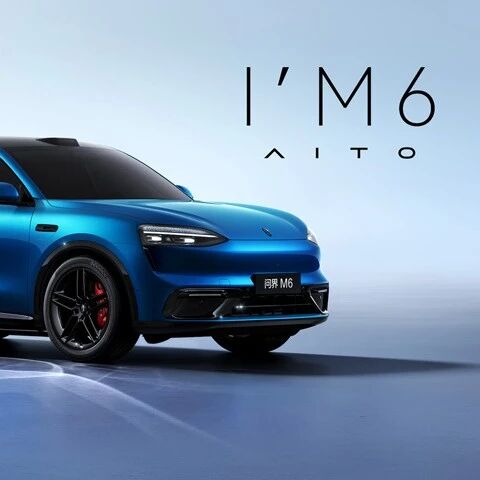
Core Viewpoint - The launch of the AITO M6 redefines the benchmark for high-end SUVs in the 250,000 to 300,000 yuan segment, targeting young consumers with a comprehensive offering of features and technology [2][4][6]. Market Context - The 250,000 yuan SUV market is highly competitive and is projected to grow by 18.7% year-on-year in 2024, capturing 32.5% of the overall SUV market share [9]. - Prior to the M6, the company lacked a strong product in the 250,000 to 300,000 yuan segment, which is crucial for volume sales [10]. Product Features - The AITO M6 offers a range of configurations, including pure electric and extended range versions, with prices starting at 269,800 yuan for the extended range model and 289,800 yuan for the pure electric model [4]. - The vehicle boasts a length of nearly 5 meters and a wheelbase of 2,950 mm, providing ample interior space and comfort for passengers [5][24]. - All models come equipped with high-end features such as panoramic sunroofs, Nappa leather seats, and the HarmonyOS vehicle system as standard [4][5]. Target Audience - The M6 is specifically designed for young families, addressing their need for spaciousness, convenience, and advanced technology [15][22]. - Young consumers prioritize smart cockpit experiences, unique design, and transparent ownership costs, with 87.3% focusing on smart features [22]. Competitive Landscape - The M6 faces competition from models like the Li Auto L6, Tesla Model Y, and Xiaomi Yu7, which are also targeting the same demographic [23]. Safety and Technology - The M6 incorporates advanced safety features, including a comprehensive sensor suite with 896-line dual-path laser radar, enhancing its perception capabilities [31][32]. - The vehicle's design emphasizes safety without compromising on style, featuring a "creative co-pilot" design that allows for personal expression while ensuring passenger safety [27][28]. Sales and Distribution - The company has established a robust distribution network with 1,835 sales outlets and plans to expand to over 2,459 by the end of the year, enhancing its market presence [13]. - The M6 received 60,000 pre-orders within 24 hours of its launch, indicating strong market demand [3][10]. Future Outlook - The introduction of the M6 is expected to strengthen the company's position in the luxury SUV market and enhance consumer awareness regarding safety and quality standards [34][45]. - The company aims to leverage the M6 to further enrich its product matrix and explore new market segments [44].
“车还在厂里,配置已过时” 问界M7激光雷达换代,新车主都成了“大冤种”?
新浪财经· 2026-03-26 09:42
Core Viewpoint - The recent announcement by Hongmeng Zhixing to equip the 2026 Wanjie M7 model with the 896-line dual-laser radar has led to significant backlash from existing car owners, who feel betrayed as their newly purchased vehicles are now considered outdated [2][4][9]. Group 1: Customer Reactions - Many Wanjie M7 owners are expressing their dissatisfaction on platforms like Xiaohongshu and Black Cat Complaints, feeling that they have been "backstabbed" by the brand [4][9]. - A car owner who purchased the Wanjie M7 less than three months ago stated that they chose the model based on its advertised advanced driving system, only to find out that their vehicle is now outdated due to the new radar announcement [4][5]. - Another owner, who had just taken delivery of their vehicle, expressed frustration that their car had become an "old model" before they even received it, highlighting the lack of communication from sales representatives regarding future upgrades [6][8]. Group 2: Product Specifications and Comparisons - The 896-line dual-laser radar is noted to be the highest specification in mass production globally, with a fourfold increase in resolution compared to the previous 192-line radar [5][8]. - The disparity in radar specifications has led to concerns among M7 owners, as other models like the M6 and flagship models can upgrade to the new radar, while M7 owners are left without options [5][9]. Group 3: Brand Reputation and Financial Impact - The ongoing issues with the Wanjie M7 have contributed to a decline in the stock price of its parent company, Seris, which has dropped 46% since its peak in September 2022 [14]. - Despite reporting a revenue increase of 3.67% year-on-year and a net profit growth of 31.56% for the first three quarters of 2025, the brand's reputation is suffering due to frequent product iterations and customer dissatisfaction [14].

今日新闻丨尚界Z7/Z7T、问界M6开启预售!享界S9/S9T、 智界R7、智界新S7、问界M8/M7等车型更新896线激光雷达!
电动车公社· 2026-03-23 14:11
Core Viewpoint - The article discusses the pre-sale of several new electric vehicle models, highlighting their specifications, pricing, and features, indicating a competitive landscape in the electric vehicle market. Group 1: Pre-sale Information - The Shangjie Z7 and Z7T have commenced pre-sale with starting prices of 229,800 and 239,800 yuan respectively [2][5] - The Wenjie M6 has also started pre-sale, with prices ranging from 269,800 to 309,800 yuan [10] Group 2: Vehicle Specifications - The Shangjie Z7 features a sporty coupe design, dimensions of 5036/1976/1465mm, and a wheelbase of 3000mm, positioning it as a mid-large vehicle [4] - The Wenjie M6 maintains a family design but targets a younger demographic, with dimensions of 4960/1985/1736mm and a wheelbase of 2950mm [12][18] Group 3: Technology and Performance - Both the Shangjie Z7 and Z7T will be equipped with 896-line LiDAR and the Huawei Qian Kun intelligent driving ADS 4.1 system [7] - The Shangjie Z7 offers a powertrain with a single motor producing 264kW or a dual motor producing 434kW, with a maximum range of 905km and acceleration from 0-100km/h in 3.44 seconds [8] - The Wenjie M6 features a pure electric version with a single motor producing 227kW or a dual motor producing 340kW, with a range of 760/705km [16] Group 4: Market Positioning - The introduction of the 896-line LiDAR in models like the Shangjie Z7 and Wenjie M6 is expected to enhance their autonomous driving and safety capabilities, with a price increase of approximately 10,000 yuan compared to current models [22]

鸿蒙智行10款新车齐发!全系标配896线激光雷达?
电动车公社· 2026-03-23 14:11
Core Viewpoint - Huawei's HarmonyOS Smart Mobility has launched 10 new car models, showcasing a significant expansion in their automotive offerings and technology integration [2][24]. Group 1: New Model Launches - The new models include the Zhijie R7, Zhijie New S7, Shangjie Z7, Shangjie Z7T, Wenjie M6, Wenjie M7, Wenjie M8, Xiangjie S9, Xiangjie S9T, and Zhijie V9 [2]. - Six of these models are annual facelifts, featuring new color options and the latest 896-line dual-path laser radar, enhancing their assisted driving and active safety capabilities [4][7]. Group 2: Key Features and Pricing - The Shangjie Z7 has a pre-sale price starting at 229,800 yuan, while the Shangjie Z7T starts at 239,800 yuan [8]. - Both models are equipped with Huawei's Tuling platform, Whale 800V high-voltage battery platform, and Harmony ALPS Health Cabin 2.0, with a pure electric version offering a CLTC range of up to 905 km [10]. Group 3: Target Market and Design - The Shangjie Z7/Z7T targets a younger demographic with a sporty design, featuring multiple body color options and a 0-100 km/h acceleration time of 3.44 seconds [12]. - The Wenjie M6, with a pre-sale price starting at 269,800 yuan for the range-extended version and 289,800 yuan for the pure electric version, aims to broaden the market reach of the Wenjie brand [15][17]. Group 4: Strategic Positioning - The Wenjie M6 is designed to appeal to younger consumers, similar to the Shangjie Z7/Z7T, with a focus on a compact and sporty design [18]. - The M6 features a length of 4960 mm and a wheelbase of 2950 mm, positioning it as a more compact and sportier alternative to the Wenjie M7 [18]. Group 5: Industry Implications - Huawei's extensive collaboration with various car manufacturers, including Avita and Lantu, indicates a trend towards the widespread adoption of the 896-line laser radar technology across new models [7][8]. - The integration of Huawei's technology into multiple brands suggests a shift in the automotive industry towards a more collaborative ecosystem, where car manufacturers can leverage Huawei's expertise in smart technology [28][29].