日本主权债务可持续性

Search documents
日本拟推超20万亿日元经济刺激计划
Bei Jing Shang Bao· 2025-11-20 16:16
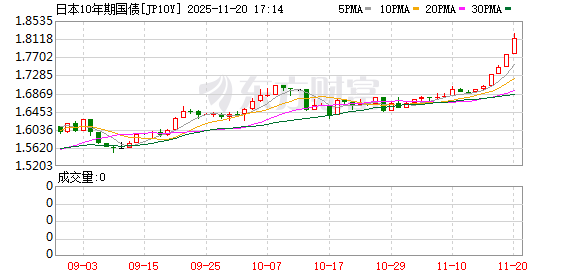
Group 1 - The Japanese government, led by Prime Minister Sanna Takashi, is preparing a significant economic stimulus plan totaling 21.3 trillion yen (approximately 135.4 billion USD), marking the largest such measure since the COVID-19 pandemic [1] - The plan includes 17.7 trillion yen in fiscal spending and 2.7 trillion yen in tax cuts, with funding expected from increased overall tax revenue and additional government bond issuance [1][2] - The total scale of the stimulus plan, including private investment driven by government spending, could reach 42.8 trillion yen [1] Group 2 - Market reactions indicate a lack of confidence in Japan's sovereign debt sustainability, with 10-year Japanese government bond yields rising to their highest level since the 2008 financial crisis [2][3] - Japan's debt burden is approximately 250% of its GDP, with interest payments accounting for about 23% of annual tax revenue [2] - The Japanese yen has depreciated significantly, falling below 155 yen to the dollar for the first time since February, while the Nikkei 225 index experienced its largest single-day drop since April [3] Group 3 - The economic data suggests Japan is facing downward pressure, with a reported 0.4% decrease in real GDP for Q3 2025, marking a return to negative growth since Q1 2024 [3] - The government is under pressure to implement a large spending plan due to weak economic indicators, while simultaneously facing challenges from potential yen depreciation and rising import costs [4] - There are concerns about the possibility of the Japanese Ministry of Finance intervening in the foreign exchange market to support the yen amid extreme volatility [4][5]
日本长期债券遭抛售!日元套利交易若反转 恐殃及全球流动性
Di Yi Cai Jing· 2025-11-20 09:14
Group 1 - The Japanese government has announced a $110 billion fiscal stimulus plan, leading to a sell-off of long-term bonds and a surge in yields, with the 10-year Japanese government bond yield reaching its highest level since the 2008 financial crisis [2][3] - The proposed supplementary budget exceeds 25 trillion yen (approximately $161 billion) to fund the stimulus plan, significantly higher than last year's additional budget of 13.9 trillion yen [3] - Analysts indicate that the rise in Japanese bond yields reflects a lack of confidence in the sustainability of Japan's sovereign debt, which is about 250% of its GDP [4] Group 2 - The market reaction to the stimulus plan has been contrary to traditional economic theory, with rising yields instead of falling ones, indicating growing concerns about Japan's macroeconomic stability [5] - The Japanese yen has depreciated against the dollar, falling below 155 yen for the first time since February, while the Nikkei 225 index experienced its largest single-day drop since April [5] - Japan's economy has shown negative growth, with a 0.4% decrease in real GDP for Q3 2025, raising concerns about the impact of the government's aggressive fiscal policies [5][6] Group 3 - The rise in long-term bond yields and the depreciation of the yen have raised fears of a repeat of past scenarios where yen carry trades faced liquidation, potentially threatening global liquidity and risk assets [7][8] - The correlation between the unwinding of yen carry trades and declines in the S&P 500 index has been noted, with emerging market currencies expected to drop by 1% to 3% within 30 days due to this unwinding [8] - The tightening of liquidity could lead to broader asset sell-offs, particularly affecting U.S. Treasuries and equity ETFs, with technology stocks and cryptocurrencies likely to be the first to react [8][9]