
春节红包行情

Search documents
节后红包行情持续,把握中证A500ETF(159338)、现金流ETF(159399)配置窗口
Sou Hu Cai Jing· 2026-02-26 01:17
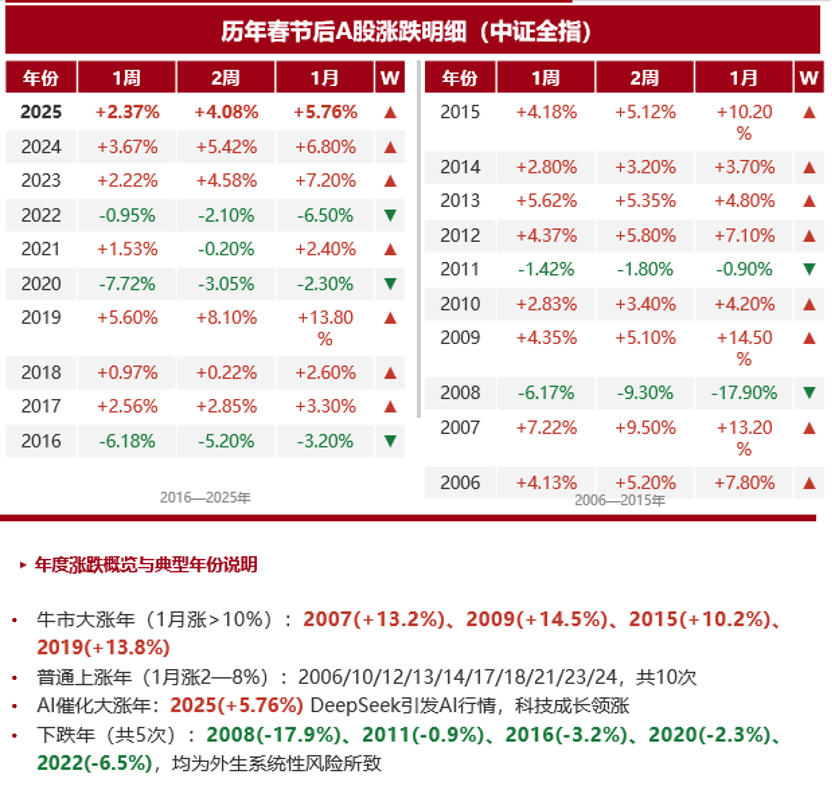
Core Insights - The post-Spring Festival "red envelope" market trend shows a significant historical winning rate, with a 76% success rate in the first two weeks after the festival from 2006 to 2025, which is notably higher than the annual average of approximately 52% [1] - The average gains during the post-festival period are substantial, with a 1-week average increase of 1.6%, 2-week increase of 2.5%, and a 1-month increase of 4.6%. In bull market years, the average gain in January exceeds 13% [1] - The 2025 post-festival AI technology market is expected to drive significant growth, with a projected 1-week increase of 2.37% and a 1-month increase of 5.76%, reaffirming the post-festival effect [1] Historical Performance - The detailed performance of the A-share market post-Spring Festival from 2006 to 2025 shows varied results, with 2025 recording a 1-week gain of 2.37%, a 2-week gain of 4.08%, and a 1-month gain of 5.76% [2] - Other notable years include 2024 with a 1-week gain of 3.67% and a 1-month gain of 6.80%, and 2023 with a 1-week gain of 2.22% and a 1-month gain of 7.20% [2] Investment Strategy - Investors are encouraged to adopt a core-satellite strategy to capitalize on the red envelope market opportunities, with recommended core allocations in the CSI A500 ETF (159338) and cash flow ETF (159399). Satellite allocations may include semiconductor equipment ETF (159516) and oil ETF (561360) [6]

ETF日报:当前钢铁板块或是弹性大且有预期差的底部板块,关注钢铁ETF
Xin Lang Cai Jing· 2026-02-25 12:30
Market Overview - A-shares opened higher and closed with gains, with the Shanghai Composite Index rising by 0.72% to 4147.23 points, Shenzhen Component Index up 1.29%, and ChiNext Index up 1.41% [1][17] - The total trading volume for the day was 2.48 trillion yuan, compared to 2.22 trillion yuan the previous day, indicating a neutral to strong risk appetite in the market [1][17] - Over 3700 stocks in the market saw an increase, with small-cap stocks outperforming large-cap stocks, and growth stocks lagging behind value stocks [1][17] Spring Festival Market Trends - Historical data from 2006 to 2025 shows a consistent trend of gains in the A-share market following the Spring Festival, with an average increase of 1.6% in the first week, 2.5% in the second week, and 4.6% in the first month [3][19] - The success rate of the post-Spring Festival rally is notable, with a 76% win rate in the first two weeks and a 71% win rate in the first month, significantly higher than the annual average of about 52% [3][19] Semiconductor Equipment Sector - The Semiconductor Equipment ETF (159516) saw a significant increase of 4.56% after a volatile trading session [21] - Chinese top chip manufacturers plan to increase advanced chip production from less than 20,000 units currently to 100,000 units within 1-2 years, with a long-term goal of adding 500,000 units by 2030 [7][23] - The semiconductor equipment sector is expected to benefit from the expansion of advanced processes and storage, driven by global AI demand, making it a strong growth narrative [8][24] Real Estate Policy Impact - Shanghai's new real estate policy, "沪七条," aims to lower the threshold for home purchases, which is expected to stabilize housing prices in the outer ring of the city [8][9] - The policy includes reducing the social security requirement for non-local families from three years to one year and increasing the public housing loan limit from 1.6 million to 2.4 million yuan [8][9] - The new policy is anticipated to stimulate demand in the real estate market, benefiting related sectors such as building materials and real estate [9][25] Steel Sector Dynamics - The steel sector experienced a significant rise, with the Steel ETF (515210) increasing by 4.27%, driven by both demand and supply-side catalysts [11][27] - The Ministry of Industry and Information Technology released new guidelines for the steel industry, which are expected to lead to a phase of consolidation and resource allocation towards stronger companies [12][28] - Current low inventory levels and cautious market sentiment suggest potential upward price elasticity for steel if demand catalysts emerge [12][28]
如何布局春节红包行情?两个重要方向都不容错过!
Sou Hu Cai Jing· 2026-02-10 12:54
Group 1: Market Conditions and Trends - The Chinese New Year market rally is expected to be more certain and abundant this year due to the convergence of macroeconomic, policy, and industry factors [2] - Macro liquidity is stabilizing, with a significant reduction in the holdings of broad-based ETFs, indicating a shift towards inflows [2] - The recent rebound in U.S. tech stocks, particularly in the semiconductor sector, is likely to positively influence the A-share market [2] Group 2: Policy Support - Continuous policy support is evident, particularly with the "14th Five-Year Plan" promoting AI technology and its integration into industries [5] - Historical data shows that February has the highest probability of spring market rallies, with small-cap indices showing a 93.8% chance of rising from the Chinese New Year to the Two Sessions [5] Group 3: AI Technology and Applications - AI technology is entering a period of explosive growth, with significant advancements such as ByteDance's Seedance 2.0, which addresses key challenges in video generation [8][11] - The demand for AI-generated content is expected to surge, with the domestic animation and short drama market projected to exceed 22 billion yuan by 2026 [13] Group 4: AI Computing Power - The demand for computing power is increasing as AI applications grow, with major tech companies planning substantial capital expenditures on AI data centers [14][17] - The construction of AIDC (AI Data Centers) is accelerating, with ByteDance and Alibaba significantly increasing their capital expenditures to meet rising demand [18] Group 5: Investment Opportunities - Several sectors are identified for potential investment, including semiconductors, AI power, commercial aerospace, robotics, nuclear power, and photolithography equipment [20][21][22][23][24] - The semiconductor industry is particularly highlighted for its long-term growth potential due to domestic substitution trends and increased funding [20]
如何布局春节红包行情?两个重要方向都不容错过
3 6 Ke· 2026-02-10 12:52
Group 1 - The core viewpoint of the article emphasizes that the upcoming Spring Festival market is supported by multiple favorable factors from macroeconomic, policy, and industry perspectives, making the conditions for a market rally more certain than in previous years [3][9] - Macro liquidity is stabilizing, with significant inflows into broad-based ETFs and a positive sentiment in the market, particularly benefiting small-cap growth and technology themes [3][9] - The policy environment is supportive, with ongoing implementation of the "14th Five-Year Plan" focusing on AI technology and its integration into industries, which boosts market confidence [3][9] Group 2 - AI technology is entering a period of explosive growth, serving as a key driver for the market rally, with significant advancements in AI applications such as ByteDance's Seedance 2.0 [9][10] - The demand for AI-generated content is expected to surge, with the domestic animation and short drama market projected to exceed 22 billion yuan by 2026, driven by increased consumption during the Spring Festival [13][23] - Major tech companies are significantly increasing their capital expenditures, with Google, Amazon, Meta, and Microsoft expected to collectively spend around $650 billion on AI infrastructure by 2026, indicating robust growth in the AI sector [18][20] Group 3 - The AI content generation sector is experiencing a critical window for scaling, with products like Seedance 2.0 addressing key pain points in video production and significantly lowering costs [11][12] - The AI computing power demand is rising sharply, with major tech firms investing heavily in data centers and AI hardware to support their applications, indicating a strong growth trajectory for the sector [14][19] - The article outlines several technology sectors that are likely to see rotation and investment opportunities, including semiconductors, AI power, commercial aerospace, robotics, nuclear power, and photolithography [24]
如何布局春节红包行情?两个重要方向都不容错过!
格隆汇APP· 2026-02-10 11:18
Core Viewpoint - The A-share market is experiencing underlying movements ahead of the Spring Festival, with institutional investors adjusting their portfolios, indicating a more favorable environment for the upcoming market trends [5][7]. Group 1: Market Environment - The Spring Festival market is expected to have more certainty and abundance compared to previous years, driven by macroeconomic, policy, and industrial factors [9]. - Macro liquidity is stabilizing, with a significant reduction in the holdings of broad-based ETFs by over 91%, indicating a shift towards inflows [9]. - The recent performance of major assets like gold, silver, and Bitcoin reflects a positive liquidity environment, which is expected to support the A-share market [9]. - Historical data shows that the small-cap index has a 93.8% probability of rising from the Spring Festival to the Two Sessions, indicating strong seasonal trends [12]. Group 2: AI Technology and Market Drivers - AI technology is entering a period of explosive growth, serving as a core engine for market momentum, with significant advancements in AI applications like Seedance 2.0 [14][18]. - The domestic market for AI content, particularly in animation and short videos, is projected to exceed 22 billion yuan by 2026, with a peak daily consumption of 30 million [20]. - Key catalysts for the AI sector include competitions among platforms during the Spring Festival and the release of new AI models, which are expected to enhance market activity [20]. Group 3: Investment Opportunities - The AI content sector is highlighted as a key area for investment, with companies like Wanjing Technology and Zhaochi Co. being potential beneficiaries [21]. - The demand for computing power is surging, driven by AI applications, with major tech companies expected to increase capital expenditures significantly [23]. - The construction of AIDC data centers is accelerating, with ByteDance and Alibaba planning substantial investments to meet growing demand [27]. Group 4: Sector Rotation Opportunities - Several sectors are identified for potential investment during the Spring Festival, including semiconductors, AI power, commercial aerospace, robotics, and nuclear power, all of which are expected to benefit from ongoing trends and government support [30][32].

市场早盘窄幅震荡,中证A500指数下跌0.03%,2只中证A500相关ETF成交额超58亿元
Sou Hu Cai Jing· 2026-02-10 03:49
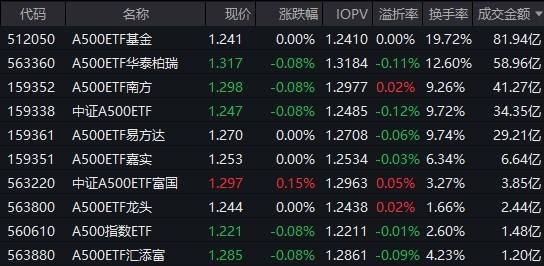
Core Viewpoint - The market experienced slight fluctuations in early trading, with the three major indices showing a minor decline, while the media sector continued to rise, indicating potential investment opportunities in specific sectors [1] Market Performance - The market saw a narrow range of fluctuations, with the CSI A500 index down by 0.03% [1] - The media sector showed sustained growth, while the commercial aerospace concept weakened [1] ETF Trading Activity - Among the ETFs tracking the CSI A500 index, 10 had trading volumes exceeding 100 million yuan, with 2 surpassing 5.8 billion yuan [1] - The A500 ETF fund and A500 ETF Huatai-PB had trading volumes of 8.194 billion yuan and 5.896 billion yuan, respectively [1][2] Investment Sentiment - A brokerage firm indicated that with reduced overseas disturbances and an increase in risk appetite, a "Spring Festival red envelope" market trend is expected [1] - The medium-term outlook suggests a favorable window for bullish strategies until early March, emphasizing the importance of capturing structural opportunities in the A-share market [1]
开盘:三大指数涨跌不一 影视院线板块涨幅居前
Xin Lang Cai Jing· 2026-02-10 02:12
Group 1 - The three major indices showed mixed performance, with the film and theater sector leading in gains [1] - As of the market opening, the Shanghai Composite Index was at 4127.77, up 0.11%; the Shenzhen Component Index was at 14200.76, down 0.05%; and the ChiNext Index was at 3321.88, down 0.33% [1] Group 2 - Financial institutions noted a recovery in A-share market sentiment, with the market showing an upward trend throughout the day [2] - The technology sector, particularly in computing hardware, AI applications, and space photovoltaic, performed well, while dividend sectors lagged [2] - There is an expectation for a "Spring Festival red envelope" market rally due to reduced overseas disturbances and increased risk appetite among investors [2] - Mid-term outlook suggests a focus on structural opportunities in the A-share market, with a recommendation to capitalize on the bullish window until early March [2] - The semiconductor, communication equipment, photovoltaic equipment, and internet services sectors showed strong performance, while mining, gas, traditional Chinese medicine, and liquor sectors underperformed [2] - The effects of growth-stabilizing policies are expected to gradually manifest in the first quarter, which is typically a period of ample liquidity [2] - The market is experiencing a "high-low switch" in capital flow, moving from previously high-performing technology and resource sectors to lower-valued and domestic demand recovery sectors [2] - Optimistic expectations for the post-holiday market are supported by policy catalysts, improved liquidity, and risk release from prior adjustments [2]
股评伴手礼 | 谈股论金
Xin Lang Cai Jing· 2026-02-09 10:02
Group 1 - A-shares experienced a broad-based rally, with approximately 4,400 stocks rising and only about 700 declining, indicating a strong market sentiment [1] - The market's trading volume reached 2.2 trillion, reflecting a healthy balance between volume and price despite a slight decrease compared to previous levels [1] - The technology sector, particularly semiconductor and hardware stocks, saw significant gains, with some stocks like Tianfu Communication rising by as much as 20% [1] Group 2 - Certain sectors such as mining, energy metals, and traditional Chinese medicine showed weaker performance, with banking stocks rising only 0.58% and securities stocks up 0.93%, underperforming the broader market [2] - The market is exhibiting a festive atmosphere ahead of the Spring Festival, with expectations for a "red envelope" market rally being fulfilled [2] - The Shanghai Composite Index closed above the 4,100-point mark, indicating a potential for continued upward movement, although future performance may be characterized by small fluctuations rather than large swings [3] Group 3 - The rebound in U.S. tech stocks is seen as more of a corrective move, with the Dow Jones reaching a historic high while the Nasdaq's increase is viewed as a reflection of concerns over the disproportionate returns on tech investments [3] - Future market operations should focus on timing, with a particular emphasis on the performance of large-cap stocks compared to tech stocks, which may face earnings verification pressures post-Spring Festival [3]
伴手礼 | 谈股论金
水皮More· 2026-02-09 09:47
Market Overview - A-shares experienced a collective rise today, with the Shanghai Composite Index recovering the 4100-point mark, closing at 4123.09 points, up 1.41% [3] - The Shenzhen Component Index rose by 2.17% to 14208.44 points, while the ChiNext Index increased by 2.98% to 3332.77 points [3] - The total trading volume in the Shanghai and Shenzhen markets reached 2.27 trillion yuan, an increase of 106.7 billion yuan compared to the previous trading day [3] Sector Performance - The market saw a broad-based rally, with approximately 4400 stocks rising and only about 700 declining, indicating a strong upward trend [4] - The technology sector was the main focus, driven by significant gains in the Nasdaq index and a notable 8% increase in Nvidia's stock, leading to a surge in related A-share stocks [4] - Notable performers included Tianfu Communication, which saw an intraday increase of 20%, and semiconductor stocks, which generally rose around 4% [4] Adjustments in Other Sectors - Sectors that previously attracted high attention, such as mining, energy metals, and traditional Chinese medicine, showed weaker performance today [5] - Banking stocks rose only 0.58%, while securities stocks increased by 0.93%, underperforming the broader market [5] - The insurance sector stood out within the financial sector, with an intraday increase of about 2% [5] Market Sentiment and Future Outlook - The market is exhibiting a festive atmosphere ahead of the Spring Festival, with expectations for a "red envelope" market rally being fulfilled [6] - The recovery in the market is attributed to prior adjustments that improved the valuation of key stocks, attracting long-term and institutional investors [6] - The Shanghai Composite Index's ability to maintain above 4100 points is crucial for future trends, with expectations of a stable upward movement rather than significant volatility [6] Investment Strategy - Future attention should be on the potential rotation opportunities within large-cap stocks, which may present more certain short-term opportunities compared to technology stocks [7] - The technology sector faces performance verification pressures as the earnings disclosure period approaches, with concerns about the mismatch between investment and returns [7] - The core of A-share investment strategy for 2026 will focus on managing market rhythm effectively [7]

春节“红包行情” 数据大揭秘
Zhong Guo Zheng Quan Bao· 2026-02-09 05:00
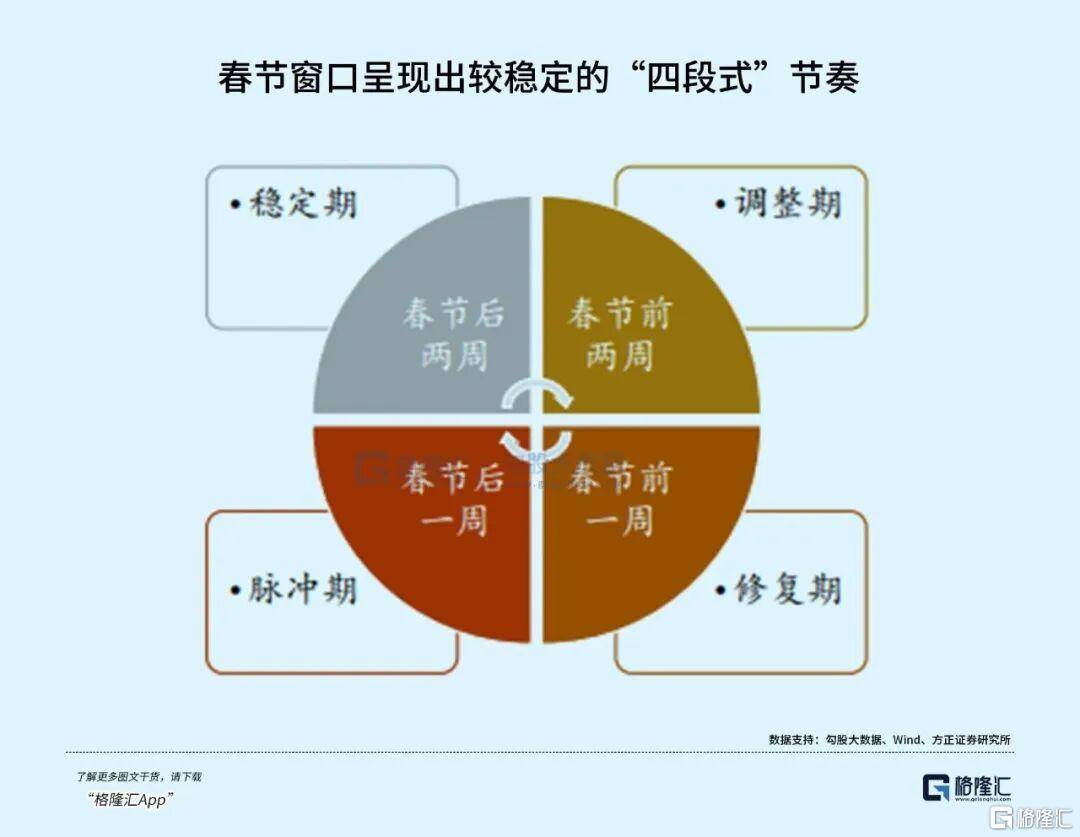
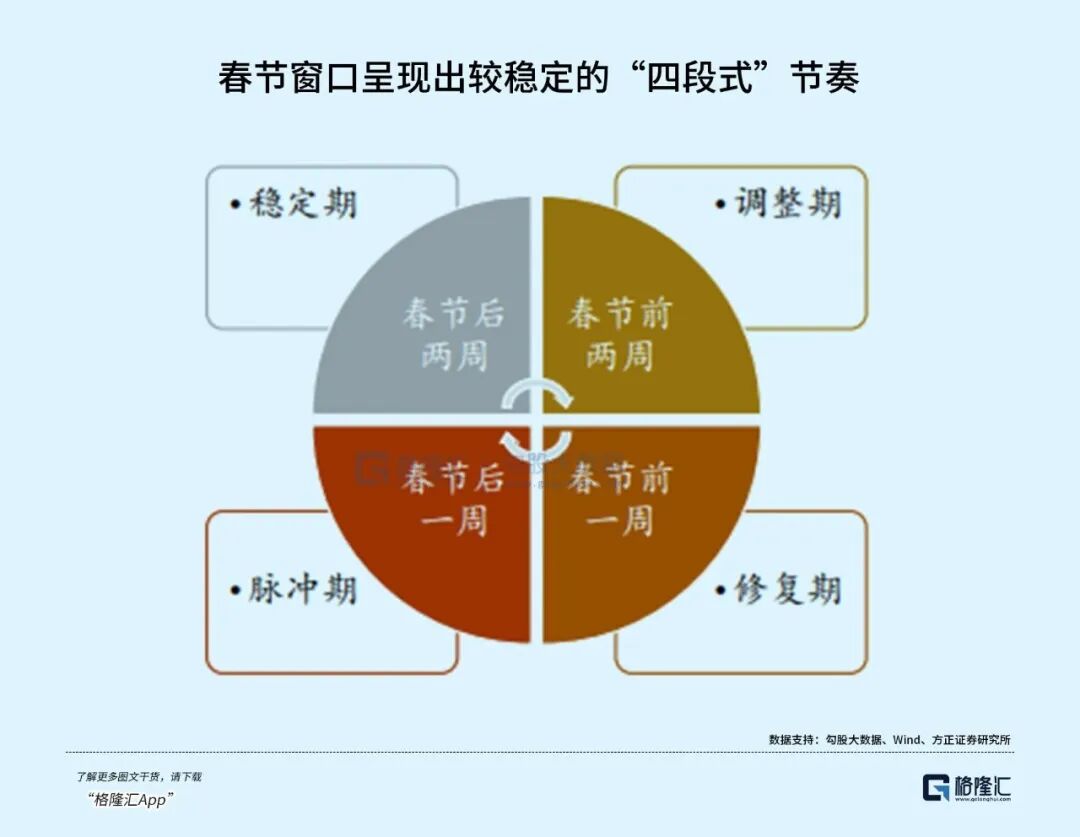
Group 1 - The core concept of "Spring Festival Red Packet Market" refers to the seasonal effect where market sentiment improves, capital becomes active, and indices strengthen around the Spring Festival [2][4] - Historical data shows that the Shanghai Composite Index has a 70% probability of rising in the five trading days before the Spring Festival, indicating a tendency for "red packets" to be issued during this period [6][7] - The performance of the market varies each year, with different patterns observed, such as continuous rises or rebounds after a dip, highlighting the unpredictability of the market [5][9] Group 2 - The post-Spring Festival market also shows a 70% probability of rising, with longer holding periods potentially leading to greater returns, as evidenced by a 7.10% increase in the ten days following the festival in 2019 [7][8] - Market preferences shift before and after the Spring Festival, with large-cap blue chips favored before the festival and small-cap growth stocks becoming more active afterward [8] - There are instances where the market does not perform well before the festival, as seen in 2018, 2020, and 2022, emphasizing that historical trends should be used as references rather than guarantees of future performance [9]
