智能体化

Search documents
早报|哈梅内伊次子当选伊朗最高领袖;深圳龙岗拟首发“龙虾十条”;Kimi付费用户订单暴涨80倍;大润发母公司CEO被免职
虎嗅APP· 2026-03-09 00:30
Group 1 - Iran's new Supreme Leader is appointed, with significant authority over major affairs and military command [2] - Brent crude oil prices have surpassed $100 per barrel, with a daily increase of 7.89%, while WTI crude also crossed $100 with a 10.02% rise [3] - Iran's military secretary has been killed in an attack, indicating escalating tensions in the region [4] - An Iranian radiation sterilization facility was attacked, but no radioactive leaks were reported [5] - Iran has announced plans to expand the scale and depth of its military strikes against U.S. and Israeli targets [15] Group 2 - Apple is set to launch at least three new Ultra devices, including an iPhone Ultra priced around $2000, AirPods Ultra, and MacBook Ultra, with significant upgrades and price increases [6] - Kimi's subscription user orders surged by 80 times, ranking it among the top 10 in Stripe's global payment list, driven by the success of its K2.5 model [16][17] - Shenzhen Longgang district is proposing measures to support the development of OpenClaw and OPC, including subsidies for innovative projects [7][8] Group 3 - The latest search for Malaysia Airlines Flight MH370 has concluded with no findings, covering approximately 7571 square kilometers of the southern Indian Ocean [9][10] - McDonald's CEO faced backlash over a promotional video for a new burger, criticized for appearing disingenuous [12][13] - The Chinese government is set to release February's CPI and PPI data, with expectations of a noticeable increase due to the impact of the Spring Festival and rising oil prices [28]


黄仁勋预测:所有软件都将智能体化;OpenClaw回应爆火丨AIGC日报
创业邦· 2026-03-08 01:11
Group 1 - OpenClaw has gained significant popularity in China, with nearly a thousand developers and AI enthusiasts participating in a cloud installation event at Tencent's headquarters, indicating a new level of adoption for the platform [2] - Peter Steinberger, the founder of OpenClaw, acknowledged the enthusiastic response from the Chinese market by sharing the event on social media [2] - Lin Junyang, a core leader of Qwen, announced his departure from the project, expressing gratitude and emotional reflections on his contributions to Alibaba Cloud [2] Group 2 - Mozilla announced a collaboration with Anthropic to utilize the AI model ClaudeOpus4.6, which identified 22 vulnerabilities in the Firefox browser within two weeks, including 14 classified as high-risk, representing 20% of the total high-risk vulnerabilities expected to be fixed in 2025 [4] - NVIDIA CEO Jensen Huang predicted that all software will become "agentic," transitioning from traditional licensing models to a "Token leasing" approach, emphasizing the need for software companies to evolve into intelligent agent providers [4] - Huang highlighted that future software companies will not rely solely on traditional licensing for revenue but will instead rent "professional agents" to perform specific tasks, leading to a more scalable business model [4]

雷军:未来每周或仅需工作3天,每天工作2个小时;林俊旸发文告别千问;飞驰人生3票房突破40亿;OpenClaw回应爆火丨邦早报
创业邦· 2026-03-08 01:11
Group 1 - OpenClaw has gained significant popularity in China, with nearly a thousand developers and AI enthusiasts participating in its cloud installation at Tencent's headquarters, indicating a new level of adoption in the market [3] - The film "Flying Life 3" has surpassed 4 billion yuan in box office revenue, positioning it among the top 10 in Chinese film history [3] Group 2 - Sushi restaurant Sushi Lang is addressing consumer reports of finding parasitic eggs in tuna, emphasizing its commitment to food safety and compliance with national standards [8] - Longhua Automobile's chairman Wei Jianjun apologized for a design controversy involving a promotional poster, pledging to take full legal and financial responsibility [8][9] Group 3 - Xiaomi's CEO Lei Jun predicts that in the AI era, work hours may reduce significantly, suggesting a future where individuals might only need to work three days a week for two hours each day, enhancing overall quality of life [10] - 360 Group's founder Zhou Hongyi believes that the rapid development of AI will create new job opportunities, particularly for liberal arts graduates who can address ethical and societal issues arising from technological advancements [10] Group 4 - Google has proposed a new compensation package for CEO Sundar Pichai, potentially worth $692 million over three years, making him one of the highest-paid CEOs globally [10] - Meituan and Lenovo have launched OpenClaw remote deployment services, reflecting a significant increase in related search volume by over 300% [10] Group 5 - DJI has made progress in addressing security vulnerabilities in its robotic vacuum, rewarding a researcher with $30,000 for discovering a significant issue affecting around 7,000 devices [12] - NetEase is reportedly halting funding for the studio led by Naoki Yoshida, with employees informed of this decision [12] Group 6 - Huang Renxun, CEO of NVIDIA, predicts that all software will become "agentic," transitioning from traditional licensing models to a system where companies rent out intelligent agents to perform tasks [12] - Tesla is set to build its largest supercharging station to date in California, featuring over 400 V4 charging stations, significantly expanding its charging infrastructure [13] Group 7 - The Ministry of Culture and Tourism of China forecasts that inbound tourist numbers will exceed 150 million by 2025, with a projected growth rate of over 17% [21] - A national representative has suggested measures to combat fraudulent online shopping practices targeting the elderly, highlighting the need for improved consumer protection in the aging population [21]

模力工场 028 周 AI 应用榜:AI “身体”觉醒,从工业前线到情感陪伴
AI前线· 2026-01-15 06:58
Core Insights - The article highlights the upcoming OceanBase Community Carnival, where 模力工场 will showcase its innovations and engage with the community through AI Coding and project sharing [2] - The event aims to foster collaboration and creativity in the AI and open-source space, inviting participants to connect with industry leaders and share ideas [2] Event Schedule - The event will feature a series of talks and discussions, including opening remarks by OceanBase CTO 杨传辉 and presentations on various topics related to AI and open-source ecosystems [5] - Notable sessions include discussions on building customizable AI agents and the evolution of AI technologies [5][6] Industry Trends - The article discusses the shift in AI applications from simple tools to intelligent agents capable of understanding environments and executing tasks autonomously, marking a significant evolution in AI hardware [20] - AI applications showcased include logistics robots and emotional companion robots, indicating a growing trend towards integrating AI into both industrial and consumer markets [20][21] Noteworthy Applications - Applications highlighted include OiiOii, an AI content generation tool that simplifies animation creation, and Walulu, an AI plush toy that offers emotional interaction and offline memory capabilities [16][18] - The advancements in AI hardware are seen as a response to both industrial efficiency needs and emotional companionship demands, reflecting a broader market trend [20][21]
CES 2026:在全球市场谈智能化,长城汽车选择了哪些取舍
Tai Mei Ti A P P· 2026-01-09 08:00
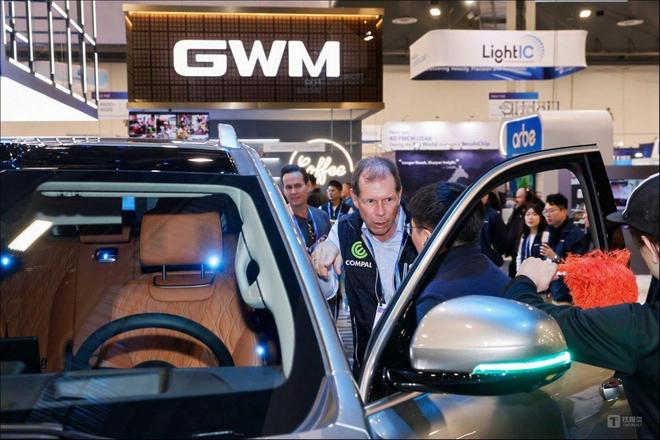
Core Insights - The article highlights the transformation of Chinese automotive companies, particularly Great Wall Motors, from mere participants to key players in the global narrative of smart and localized automotive solutions at CES 2026 [2][3]. Group 1: Globalization and Market Strategy - Great Wall Motors aims to achieve over 500,000 units in overseas sales by 2025, reflecting its strategic global expansion [4]. - The company is adapting its smart driving and cabin ecosystem to local market conditions, recognizing the differences in network infrastructure, regulations, and user habits across regions [4][5]. - Great Wall is implementing a phased approach to introduce its technologies in various markets, prioritizing regions with better network conditions and open ecosystems [4][5]. Group 2: Technology and Product Development - The Coffee OS and Coffee Pilot systems serve as the foundation for Great Wall's unified system logic, which will be adapted for local markets [4]. - Great Wall is developing Coffee G, an overseas version of its Coffee OS, to enhance user interaction and ecosystem integration [6]. - The company is focusing on creating a high degree of interaction and ecosystem compatibility, particularly in regions where existing solutions like CarPlay and Android Auto fall short [6][7]. Group 3: Research and Development - Great Wall has established local R&D teams in various regions to address market-specific needs, including regulatory compliance and rapid response to user demands [9]. - The company is also setting up advanced technology R&D centers in regions like North America and Europe to attract top talent and enhance its technological capabilities [9][10]. Group 4: Market Entry and Consumer Engagement - Great Wall is actively preparing to enter the Middle East market by December 2025, with plans for EU market entry by April 2026 [34]. - The company recognizes the cultural and brand recognition challenges in mature markets like the U.S., where established brands dominate [35]. - Great Wall aims to leverage feedback from potential users in the U.S. to optimize its products and strategies for future market opportunities [14]. Group 5: Smart Driving and User Experience - The company is advancing its smart driving capabilities with a focus on user experience, aiming to transition from traditional interaction models to proactive service models [21][22]. - Great Wall's ASL 2.0 intelligent system is designed to enhance user interaction by understanding user intent and providing seamless assistance [22][32]. - The company plans to launch its first mass-produced vehicle equipped with the ASL 1.0 system in mid-2026, marking a significant step in its smart driving strategy [24][32].

智能体A2A落地华为新旗舰,鸿蒙开发者新机遇来了
量子位· 2025-12-06 03:21
Core Viewpoint - The article discusses the transformative impact of Huawei's HarmonyOS 6 and its integration of AI capabilities, particularly through Agent to Agent (A2A) collaboration, which redefines mobile application interactions and enhances user experience [7][9][39]. Group 1: AI Integration and User Experience - The Mate X7, powered by HarmonyOS 6, showcases the first commercial implementation of A2A collaboration, allowing applications to work together seamlessly [3][5]. - Users can now interact with their devices using natural language, enabling a more intuitive and efficient way to access services without navigating through multiple apps [10][18]. - The A2A protocol allows previously isolated applications to function as a cohesive "smart service team," enhancing the overall efficiency of task completion [21][24]. Group 2: Technical Framework and Development - HarmonyOS 6 introduces a new technical framework that allows for deep integration of AI with hardware, facilitating standardized interactions between different smart agents [25][26]. - The Intents Kit and unified communication protocols are foundational to the A2A collaboration mechanism, enabling precise interpretation of user commands and efficient service delivery [27][28]. - The HMAF framework simplifies the development process for creating intelligent agents, allowing existing applications to evolve without complete redesign [31][32]. Group 3: Market Implications and Strategic Opportunities - The shift from "user finding applications" to "services finding users" represents a significant evolution in the mobile internet landscape, driven by user demand for efficiency [39][40]. - The growing number of HarmonyOS devices, exceeding 27 million, indicates a rapid adoption of this new interaction paradigm, positioning Huawei to capture a significant market share [42][44]. - Huawei's "Tiangong Plan," with an investment of 1 billion RMB, aims to support the development of AI-native services and frameworks, fostering innovation within the ecosystem [45][46].