月球氧化反应机制

Search documents
【人民网】嫦娥六号月球样品中首次发现晶质赤铁矿
Ren Min Wang· 2025-11-18 02:05
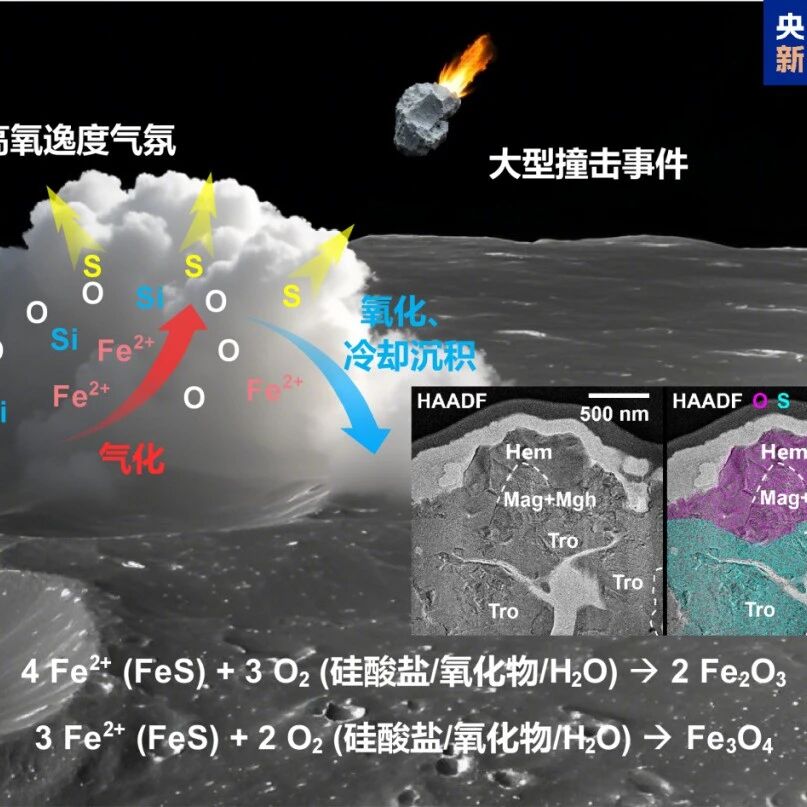
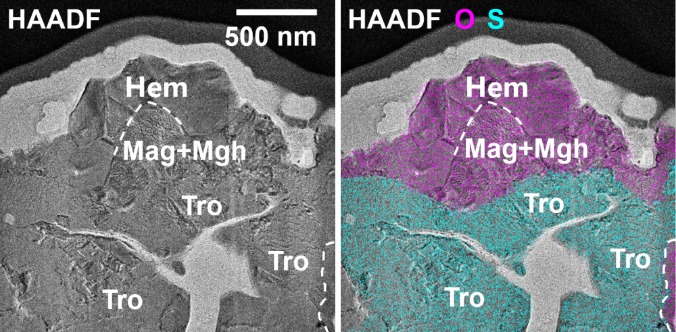
Core Insights - China's research team has made a significant breakthrough in lunar science by discovering micron-sized hematite (α-Fe2O3) and magnetite (γ-Fe2O3) crystals from samples returned by the Chang'e 6 mission, revealing a new lunar oxidation reaction mechanism [1][2] - The study suggests that the formation of hematite is closely related to large impact events in the Moon's history, which created a transient high oxygen fugacity gas environment that oxidized iron elements [2] Group 1 - The research was conducted by a collaboration between Shandong University, the Chinese Academy of Sciences, and Yunnan University, supported by the National Space Administration's lunar sample [1] - The findings have been published in the journal Science Advances, providing important scientific evidence for future lunar research and enhancing the understanding of the Moon's evolutionary history [1] Group 2 - The study indicates that the intermediate products of the oxidation reaction include magnetic magnetite and magnetite, which may serve as mineral carriers for the magnetic anomalies at the edges of the South Pole-Aitken Basin [2] - This research confirms the presence of strong oxidizing substances like hematite on the lunar surface under a highly reduced background, shedding light on the Moon's redox state and the causes of magnetic anomalies [2]

解谜、突破、首次,振奋人心!中国“硬核”科技成果不断“上新”
Yang Shi Wang· 2025-11-17 02:45
Group 1: Scientific Discoveries - China's research team discovered five micro-quasars in the Milky Way that emit ultra-high-energy particle streams, providing significant insights into black holes and cosmic rays [1][5][6] - The phenomenon known as the "knee" structure in the cosmic ray energy spectrum, which has puzzled scientists for nearly 70 years, has been linked to these micro-quasars [4][5] Group 2: Lunar Research - The Chinese National Space Administration announced a breakthrough in lunar research, identifying micro-sized hematite and magnetite crystals from samples collected by the Chang'e 6 mission, revealing new mechanisms of lunar oxidation [6][9] Group 3: Military Developments - The first sea trial of China's 076 amphibious assault ship, the Sichuan, was successfully completed, demonstrating its capabilities and innovative technologies such as electromagnetic catapults [9][11][13] Group 4: Space Missions - The Shenzhou 21 manned spacecraft successfully landed, with the crew having spent 204 days in orbit, setting a new record for the longest single crew duration in space for China [15][16][18] Group 5: Renewable Energy Innovations - China's first high-altitude wind energy project, featuring the world's largest 5000 square meter wind energy capturing parachute, successfully completed its test, marking significant progress in harnessing high-altitude wind energy [21][23][25] Group 6: 6G Technology Development - China has completed the first phase of 6G technology trials, developing over 300 key technology reserves and entering the international standard research phase, with commercial deployment expected around 2030 [25]

【科技日报】嫦娥六号样品揭示全新月球氧化反应机制
Ke Ji Ri Bao· 2025-11-17 02:41
Core Insights - China's research team has made a significant breakthrough in lunar science by discovering micron-sized hematite and magnetite crystals from samples collected by the Chang'e 6 mission, revealing a new lunar oxidation reaction mechanism [1][2] - The findings provide empirical evidence for the impact origin of magnetic anomalies surrounding the South Pole-Aitken Basin, which is the largest and oldest impact basin known in the solar system [2] Group 1: Research Findings - The discovery of hematite and magnetite in lunar samples contradicts the previous belief that the lunar surface is in a "reduced environment" lacking key oxidative evidence [1] - The formation of hematite is proposed to be closely related to large impact events in the moon's history, which create a transient high oxygen fugacity gas environment [1] - The intermediate products of this reaction include magnetic magnetite and magnetite, which may serve as mineral carriers for the magnetic anomalies in the South Pole-Aitken Basin [1] Group 2: Collaborative Efforts - The research was conducted by a team from Shandong University, in collaboration with the Institute of Geochemistry of the Chinese Academy of Sciences and Yunnan University [2] - The study received support from the National Space Administration's lunar sample program and was published in the international journal "Science Advances," providing important scientific basis for future lunar research [2]
月球科研重大突破!
中国能源报· 2025-11-16 02:42
Core Insights - The research team has made a significant breakthrough in lunar science by discovering micron-sized hematite (α-Fe2O3) and magnetite (γ-Fe2O3) crystals in samples returned by the Chang'e 6 mission, indicating a new lunar oxidation reaction mechanism [1][3][5] - This discovery provides empirical evidence for the impact origin of magnetic anomalies surrounding the South Pole-Aitken Basin, enhancing the understanding of the Moon's evolutionary history [3][5] Group 1 - The formation of hematite is closely related to large impact events in the Moon's history, which create a high oxygen fugacity gas environment, leading to the oxidation of iron and the formation of micron-sized crystalline hematite particles [5] - The intermediate products of this reaction include magnetic minerals, which may serve as the mineral carriers for the magnetic anomalies observed in the South Pole-Aitken Basin [5][7] - The South Pole-Aitken Basin, where the Chang'e 6 mission landed, is the largest and oldest known impact basin on rocky bodies in the solar system, providing a unique setting for exploring special geological processes [7] Group 2 - The findings have been published in the international journal "Science Advances," which will serve as an important scientific basis for future lunar research [3] - The successful collection of lunar samples from the South Pole-Aitken Basin by the Chang'e 6 mission in 2024 laid the groundwork for this groundbreaking discovery [7]
月球科研,重大突破!
Shang Hai Zheng Quan Bao· 2025-11-16 01:50
Core Insights - The Chang'e 6 mission has discovered crystalline hematite and magnetite in lunar samples, indicating that the Moon can "rust" despite its harsh environment [1][3] - This research provides evidence of a new oxidation mechanism on the Moon, linked to large impact events, which contrasts with the oxidation processes on Earth [1][3] Group 1: Research Findings - The study confirms the presence of primary hematite particles and their unique structural characteristics, revealing a new lunar oxidation reaction mechanism [1][3] - The formation of lunar hematite is associated with historical large impact events that created a transient high oxygen fugacity environment, leading to the oxidation of iron [3][5] - The intermediate products of this reaction include magnetic minerals, which may be responsible for the magnetic anomalies observed in the South Pole-Aitken Basin [3][5] Group 2: Mission Background - The Chang'e 6 mission successfully collected samples from the South Pole-Aitken Basin, the largest and oldest known impact basin in the solar system, providing a unique geological context for this research [5] - The research was conducted by a collaborative team from Shandong University, the Chinese Academy of Sciences, and Yunnan University, supported by the National Space Administration [5]
月球也会“生锈”?
财联社· 2025-11-16 00:51
Core Insights - The research team has made a significant breakthrough in lunar science by discovering micron-sized hematite (α-Fe2O3) and magnetite (γ-Fe2O3) crystals from samples collected by the Chang'e 6 mission, revealing a new oxidation reaction mechanism on the Moon [1][3][5] Group 1: Research Findings - The formation of hematite is closely related to large impact events in the Moon's history, which create a high oxygen fugacity gas environment that oxidizes iron, leading to the formation of micron-sized crystalline hematite particles [5] - The intermediate products of this reaction include magnetic magnetite and magnetite, which may serve as mineral carriers for the magnetic anomalies at the edge of the South Pole-Aitken Basin [5] - This study provides the first evidence of strong oxidizing substances like hematite existing on the lunar surface under a highly reducing background, shedding light on the Moon's redox state and the causes of magnetic anomalies [5] Group 2: Mission Context - The South Pole-Aitken Basin, where the Chang'e 6 mission landed, is known as the largest and oldest impact basin on rocky bodies in the solar system, providing a unique setting for exploring special geological processes [6] - The successful collection of lunar samples from the interior of the South Pole-Aitken Basin in 2024 laid the groundwork for this groundbreaking discovery [6]

科学与健康|月球也会“生锈”?嫦娥六号月背样品中首次发现晶质赤铁矿
Xin Hua She· 2025-11-16 00:06
Core Insights - The research team from China has discovered that lunar soil and rocks can exhibit signs of "rust," specifically through the identification of micro-sized hematite and magnetite crystals from samples collected by the Chang'e 6 mission [2][4][5] - This finding reveals a new lunar oxidation reaction mechanism and provides empirical evidence for the impact-related origins of magnetic anomalies in the South Pole-Aitken Basin [2][5] Group 1: Research Findings - The study indicates that the formation of lunar hematite is closely linked to large impact events in the Moon's history, which create a transient high oxygen fugacity gas phase environment [4][5] - The presence of hematite and other strong oxidizing substances on the lunar surface under ultra-reducing conditions has been confirmed for the first time, shedding light on the Moon's redox state and the causes of magnetic anomalies [5][7] Group 2: Mission Background - The Chang'e 6 mission successfully retrieved samples from the South Pole-Aitken Basin, the largest and oldest known impact basin on rocky bodies in the solar system, providing a unique context for exploring special geological processes [7] - The research was conducted by a collaborative team from Shandong University, the Chinese Academy of Sciences, and Yunnan University, with support from the National Space Administration of China, and the findings have been published in the international journal "Science Advances" [7]