期权对冲风险

Search documents
PP周报:重回下跌趋势-20251110
Zhe Shang Qi Huo· 2025-11-10 07:52
1. Report Industry Investment Rating No relevant content provided. 2. Core Viewpoints of the Report - Polypropylene is in a phase of downward oscillation, and the price center is expected to decline in the later stage. The PP market is facing supply pressure due to new capacity coming online during the production capacity expansion period and high existing production loads. Although demand has entered the peak season, it fails to meet expectations and is unable to absorb the high output. As a result, the price of polypropylene may continue to move downward [7]. - The price of polypropylene continued to fall this week, with the PP01 contract dropping below 6,500 yuan/ton. The domestic commodity market sentiment has weakened again, putting pressure on commodity prices. The fundamentals of polyolefins have not changed significantly, with supply at a high level and demand in the peak season but lacking sufficient support [9]. 3. Summary According to the Directory 3.1 Basis and Spread - **Basis**: The spot price of plastic standard products has also declined significantly, with the basis strengthening slightly. The East China basis strengthened by 20 to around -100 yuan/ton, the North China basis strengthened by 10 to around -170 yuan/ton, and the South China basis strengthened by 30 to around -100 yuan/ton. The non - standard basis of plastics has a stronger trend than the standard basis [18][19]. - **Regional and Non - standard Spread**: The North China - East China regional spread has fallen to a low level, and the South China - East China regional spread has oscillated. Among the non - standard spreads, the injection molding - drawing spread and the low - melt copolymer - drawing spread have both strengthened, indicating that non - standard products are relatively firm [33][34]. - **Disk Spread**: The 1 - 5 monthly spread has further declined to around -110, at a low level over the years. The L - PP01 spread has remained above 300, and the PP - 701 spread is at a high level, suggesting greater supply pressure for PP. The methanol market pattern is weak, with high imports leading to a record - high port inventory, and the methanol price has continued to decline [52]. 3.2 Domestic Production - end Profits and Supply - **Production Profits**: This week, the oil price has slightly oscillated downward to around $63.5 per barrel (Brent). The oil - based production end profit is at a relatively good level in recent years. In the medium to long term, the supply in North Asia from the Middle East and the United States is expected to increase, putting pressure on the PDH - based PP price, but the PDH - based profit has improved month - on - month. The power coal price has continued to rise, the CTO profit has deteriorated but remains at a high level, and the inland MTO profit has deteriorated under pressure [68]. - **Domestic Production Volume and Load**: In 2025, as of October, the new domestic PP production capacity has totaled 4.155 million tons, with a production capacity growth rate of 9.31%. The planned production capacity for 2025 is 4.905 million tons, and the estimated annual production capacity growth rate is 11%. This week, the PP production volume was 796,500 tons (+7,300 tons), the operating rate was 77.78% (+0.72%), and the supply loss volume was 228,400 tons [99][100][113]. - **Production Scheduling Ratio**: An increase in the drawing production scheduling ratio may indicate that the short - term standard product is stronger than the non - standard product, but the medium - term supply pressure may increase [124]. 3.3 US Dollar Price and Import - Export Profits - **US Dollar Price and Spread**: The prices in Northwest Europe and the Americas have fallen from high levels. The Asian price has continued to be weak. The spread between CFR China and the overseas market has rebounded [135]. - **Import - Export Profits**: Currently, overseas demand is weak, and inquiries are limited. With the increase in shipping costs, enterprises have offered discounts on exports to promote transactions. In terms of imports, although China's price is relatively low globally, the weak external demand has led to a decline in the purchasing capacity of overseas buyers, resulting in an increase in goods flowing to China [152]. 3.4 Downstream Profits and Operating Rates - **Downstream Operating Rates**: This week, the overall downstream operating rate was 53.14%, a month - on - month increase of 0.52%. The operating rate of plastic weaving increased by 0.26%, the BOPP operating rate increased by 0.88%, and the operating rate of PP pipes increased by 0.5%. In the future, the demand for terminal products will be slightly supported by the e - commerce festival and the cold weather, but the peak season is coming to an end [155]. 3.5 Inventory - Production enterprise inventories have increased by 48,000 tons to 599,900 tons, with Sinopec and PetroChina inventories increasing by 163,000 tons. Traders' inventories have increased by 15,000 tons, and port inventories have decreased by 700 tons [216].
活用期权工具 助力企业风险管理
Qi Huo Ri Bao Wang· 2025-10-20 00:46
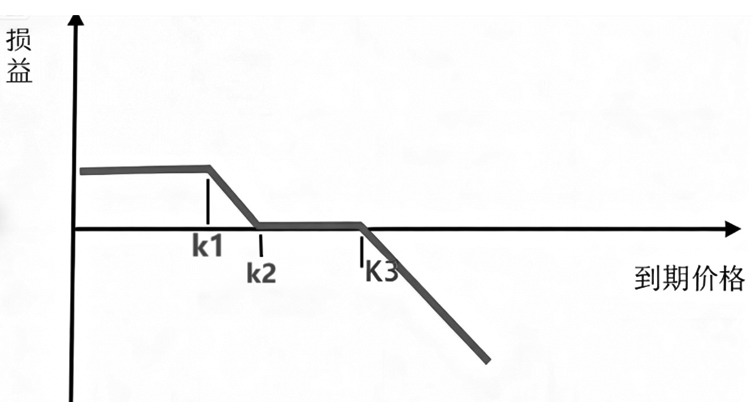
Core Viewpoint - The use of options tools has accelerated in recent years, helping companies manage risks related to raw material procurement prices, product sales prices, and exchange rates, thereby enhancing efficiency and reducing costs [1] Group 1: Risk Management with Options - A stainless steel company faces inventory value fluctuation risks and seeks to hedge against potential depreciation using financial instruments [1] - The company requires a solution that allows for profit generation when inventory values rise, which traditional futures contracts cannot provide, leading to the use of options [1][2] - A specific options strategy, known as the "seagull option," is proposed to mitigate risks while keeping costs low [4] Group 2: Seagull Option Strategy - The seagull option involves buying a put option with a strike price of 12,500 yuan/ton, selling a call option with a strike price of 14,000 yuan/ton, and selling another put option with a strike price of 11,000 yuan/ton [4] - This strategy allows the company to protect against inventory value declines while not incurring additional losses during slight price increases [4][5] - However, the strategy has limitations, including exposure to significant price drops below 11,000 yuan/ton and price increases above 14,000 yuan/ton [5] Group 3: Cost Reduction through Accumulated Purchase Options - A large stainless steel processing company plans to use accumulated purchase options to lock in lower procurement prices while managing the risk of rising costs [6] - The accumulated purchase option has specific terms, including an execution price of 14,050 yuan/ton and a knock-out price of 14,480 yuan/ton, allowing for flexible purchasing based on market conditions [6] - The company successfully saved 9,550 yuan in procurement costs by utilizing this strategy over a 30-day observation period [7] Group 4: Advantages and Risks of Accumulated Purchase Options - Accumulated purchase options are suitable for investors who are optimistic about the long-term outlook but uncertain about short-term price movements [8] - The mechanism of "periodic mandatory purchases" helps investors avoid emotional trading behaviors, promoting disciplined investment habits [8] - However, the primary risk lies in continuous price declines, which can lead to increasing losses for investors [8] Group 5: Importance of Tailored Options Strategies - Companies must accurately assess risk types and select appropriate options products and terms to design personalized hedging solutions in collaboration with professional financial institutions [9]